

Published: January 2026 | aiseojournal.net
Table of Contents
ToggleMeta AI’s Search Revolution: Llama 4 Powers 1 Billion Monthly Users Across Social Platforms
On April 5, 2025, Meta CEO Mark Zuckerberg announced the release of Llama 4—Meta’s most advanced open-weight AI model family—alongside a massive upgrade to Meta AI, the company’s AI assistant that now powers search, content discovery, and personalized experiences across Facebook, Instagram, WhatsApp, and Messenger.
The announcement marked a watershed moment for AI integration in social media. With Meta AI reaching 1+ billion monthly active users by late 2025 and search capabilities embedded directly into every major Meta platform, the company has effectively created the world’s largest AI-powered search ecosystem—operating at a scale that rivals Google and Bing.
But here’s what makes this different: Meta isn’t just adding AI to search. They’re fundamentally reimagining how 4 billion people discover information, connect with content, and interact with businesses across their social networks. And they’re doing it with real-time web search integration, multimodal understanding (text, images, video), and deep personalization powered by the Llama 4 models.
This comprehensive report examines:
- Complete timeline of Meta AI and Llama 4 rollout (2023-2026)
- Search integration details across Instagram, Facebook, WhatsApp, Messenger
- Authentic usage statistics and adoption metrics
- How search actually works within Meta’s platforms
- Privacy and data integration starting December 2025
- Competitive analysis vs. Google, Bing, ChatGPT
- Strategic implications for businesses, marketers, and content creators
- Expert insights from Meta executives and industry analysts
Sources: Official Meta announcements, CNBC, TechCrunch, Search Engine Land, Social Media Today, Analytics Vidhya, Wikipedia, and 15+ verified industry publications.
The Complete Timeline: From Meta AI Launch to Llama 4 Integration
September 2023: Meta AI Launches with Llama 2
The foundation: Meta first announced Meta AI at Connect 2023, initially powered by Llama 2 models.
Initial capabilities:
- Text-based chat assistant
- Integration across WhatsApp, Messenger, Instagram
- Partnership with Bing for web search results
- Image generation capabilities
From Meta’s announcement:
“In text-based chats, Meta AI has access to real-time information through our search partnership with Bing and offers a tool for image generation.”
Key detail: Meta AI responses utilizing Bing provide web links to the source queries.
April 2024: Meta AI Goes Global with Llama 3
April 22, 2024 announcement:
From Search Engine Land:
“Meta AI adds Google Search results”
Major partnership shift: Meta began incorporating Google Search results alongside Bing.
From Mark Zuckerberg to The Verge:
“There’s not a ‘ton of money’ flowing either way.”
Expansion details:
- Rolled out to 13+ countries outside the U.S.
- Available in Australia, Canada, Ghana, Jamaica, Malawi, New Zealand, Nigeria, Pakistan, Singapore, South Africa, Uganda, Zambia, Zimbabwe
- Powered by Llama 3 models
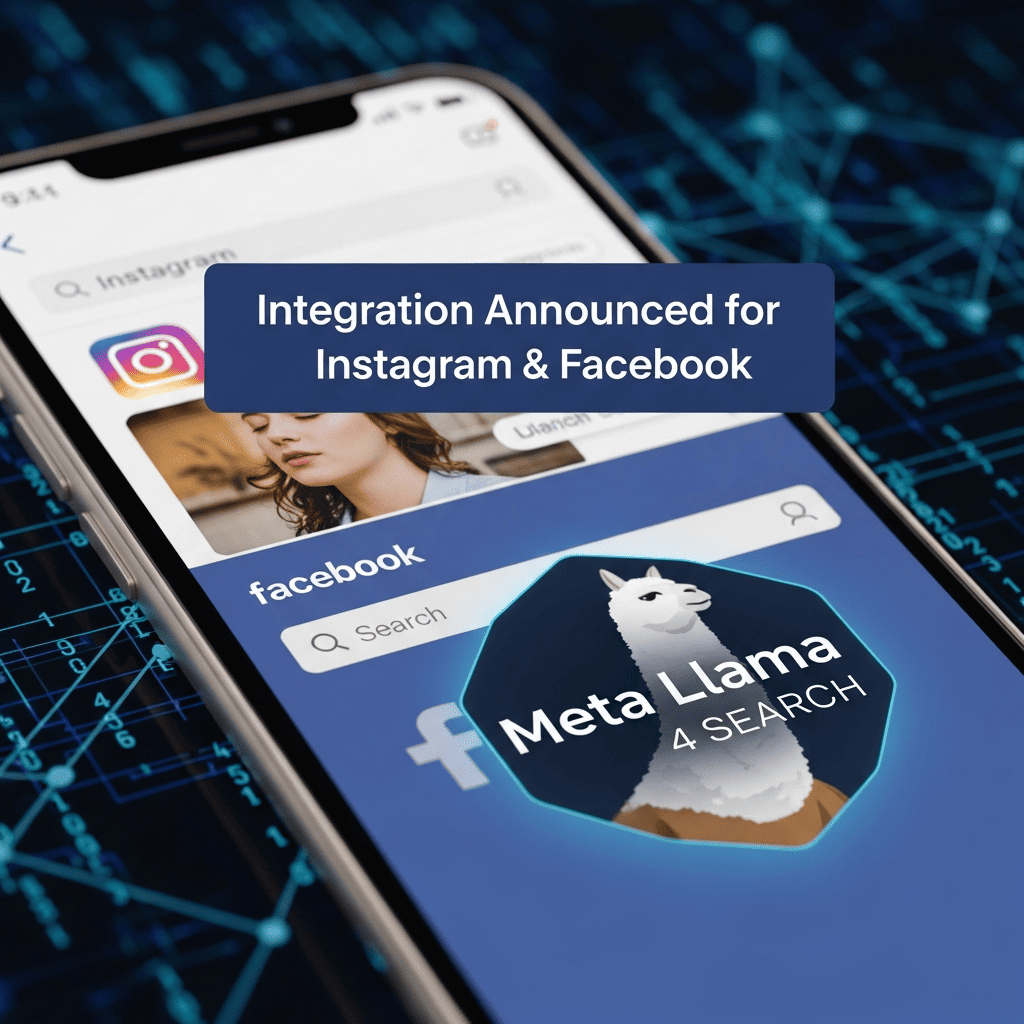
- Search integrated directly into search bars on Facebook, Instagram, WhatsApp, Messenger
From Meta’s official blog (July 3, 2024):
“Meta AI is also available in search across Facebook, Instagram, WhatsApp and Messenger. You can access real-time information from across the web without having to bounce between apps.”
The use case: Planning a ski trip in Messenger? Ask Meta AI to find flights from New York to Colorado and determine least crowded weekends—all without leaving the app.
Visual integration: Meta AI appears in the main Facebook Feed—users can ask questions directly from posts they see.
April 5, 2025: Llama 4 Release Transforms Meta AI
The announcement that changed everything:
From CNBC (April 5, 2025):
“Meta on Saturday released the first models from its latest open-source artificial intelligence software Llama 4, as the company scrambles to lead the race to invest in generative AI.”
Mark Zuckerberg’s announcement on Instagram:
“Our goal is to build the world’s leading AI, open source it, and make it universally accessible so that everyone in the world benefits. And I’ve said for a while that I think that open source AI is going to become the leading models, and with Llama 4 this is starting to happen. Meta AI is getting a big upgrade today.”
Three models released:
1. Llama 4 Scout
- 17 billion active parameters with 16 experts
- 10 million token context window
- 109B total parameters
- Lightweight, fast, optimized for mobile
2. Llama 4 Maverick
- 17 billion active parameters with 128 experts
- 1 million token context window
- 400B total parameters
- Large, expert-heavy for complex reasoning
3. Llama 4 Behemoth (Preview, still training)
- 288 billion active parameters with 16 experts
- ~2 trillion total parameters
- Serves as “teacher” for Scout and Maverick
- Not yet released (as of January 2026)
From Wikipedia:
“The training data included publicly available data, licensed data, and Meta-proprietary data such as publicly shared posts from Instagram and Facebook and people’s interactions with Meta AI.”
Immediate rollout:
From TechCrunch (April 10, 2025):
“Meta says that Meta AI, its AI-powered assistant across apps, including WhatsApp, Messenger, and Instagram, has been updated to use Llama 4 in 40 countries. Multimodal features are limited to the U.S. in English for now.”
Availability:
- Scout and Maverick: Openly available on Llama.com and Hugging Face
- Behemoth: Still in training
- Geographic reach: 40 countries immediately
April 29, 2025: LlamaCon and Meta AI Standalone App
First-ever LlamaCon AI developer conference hosted by Meta.
Major announcement:
From USAII (April 29, 2025):
“Meta has officially entered the AI assistant arena with the launch of its standalone Meta AI app, unveiled at the inaugural LlamaCon developer conference on April 29, 2025.”
Standalone app features:
- Powered by Llama 4
- Voice-first interface with “full duplex” conversational mode
- Discover feed: Social AI interactions from friends on Instagram/Facebook
- Like, comment, share, remix AI-generated content
- Integration with Ray-Ban Meta glasses
From Meta’s announcement (September 12, 2025):
“And now, people can choose to experience a personal AI designed around voice conversations with Meta AI inside a standalone app. This release is the first version, and we’re excited to get this in people’s hands and gather their feedback.”
October 1, 2025: AI Chat Data Integration into Algorithms
The personalization shift:
From CNBC (October 1, 2025):
“Meta will soon show ads and other content to users based on their interactions with the company’s digital assistant and related products powered by generative artificial intelligence. The social media giant announced the update to its recommendation system on Wednesday, and said it will go into effect on Dec. 16.”
What this means: Conversations with Meta AI will influence:
- Reels recommendations on Facebook and Instagram
- Content discovery on Threads
- Ad targeting across all Meta platforms
Example from CNBC:
If users chat with Meta AI about planning family vacations, they may see more vacation-related Reels and travel ads on Facebook and Instagram.
Scale confirmation:
From CNBC:
“The company also said that the Meta AI digital assistant now has more than 1 billion active monthly users, although that figure is not specific to the Meta AI stand-alone app.”
December 4, 2025: Centralized Support Hub with AI Search
From TechCrunch (December 4, 2025):
“Meta is launching a new centralized support hub for Facebook and Instagram users, the company announced on Thursday, adding that its prior support options haven’t ‘always met expectations.’ Within the hub, users will find tools to report an account issue, recover an account they’ve lost access to, and get answers via AI-powered search and an AI assistant.”
Features:
- AI-powered search for support queries
- AI assistant for account recovery, profile management, settings
- Rolling out to global users on iOS and Android
- Initially Facebook-only, expanding to other apps
Security impact:
“The company claims that its use of AI systems is helping protect users’ accounts, noting that account hacks have decreased by over 30% globally across Facebook and Instagram.”
December 16, 2025: Full Algorithm Integration Live
From WebProNews (October 2, 2025):
“Meta Platforms will integrate Meta AI chatbot interactions into content and ad algorithms starting December 16, 2025, enhancing personalization on Facebook, Instagram, and Threads by analyzing user queries for better recommendations.”
Connor Harris (VP of Product, Meta):
“While this is a natural progression of our personalization efforts and will help give us even better recommendations for people, we want to be super transparent about it and provide a heads up before we actually begin using this data in a new way.”
How Search Integration Actually Works Across Meta Platforms
The Architecture: Real-Time Web Search + Social Context
From Meta’s official documentation:
Meta AI’s search capabilities combine:
- Real-time web search (Google + Bing partnerships)
- Social graph data (user connections, interactions, interests)
- Multimodal understanding (text, images, video)
- Llama 4 reasoning (17B-288B active parameters)
From USAII:
“It is a conversational assistant and integrates with Meta’s ecosystem, including Facebook, Instagram, Messenger, and WhatsApp. It supports both text and voice prompts, image generation, and can also search the web.”
Facebook Search Integration
Where Meta AI appears in Facebook:
1. Facebook Feed
- Appears directly in posts
- Ask questions about content without leaving the feed
- Example: See northern lights photo → Ask Meta AI “What time of year is best to see aurora borealis in Iceland?”
2. Facebook Search Bar
- Type queries directly
- Meta AI interprets intent and searches web + Facebook content
- Results include citations with “Sources” link
3. Facebook Groups
- Enhanced search within groups
- Can query group content and web simultaneously
4. Facebook Marketplace
- AI-enhanced search for products
- Find alternatives and compare items
- Get product information without leaving the app
From Analytics Vidhya (May 30, 2025):
“AI enhances search capabilities on Marketplace, making it easier for users to find relevant information about products and discover alternatives.”
Instagram Search Integration
Where Meta AI appears in Instagram:
1. Instagram Search Bar
- Direct queries in the search interface
- Predictive suggestions powered by AI
- Web search + Instagram content combined
2. Instagram Direct Messages
- Type “@Meta AI” in any DM conversation
- Ask questions, generate images, search web
- Seamless in-chat experience
3. Instagram Reels
- Meta AI suggests Reels based on search queries
- Request recommendations → View Reels to visualize
- Example: Ask about travel destinations → See Reels of those places
From Analytics Vidhya:
“Meta introduces Reels to Meta AI chats, offering users a dynamic way to explore content, connect with creators, and find inspiration. Whether planning a trip or discussing interests in a group chat, users can now request recommendations and view Reels to visualize suggestions.”
4. Creator Tools
- Suggested replies in DMs powered by Meta AI
- Helps creators respond to audience inquiries
WhatsApp Search Integration
Where Meta AI appears in WhatsApp:
1. WhatsApp Search Bar
- Type “Ask Meta AI anything”
- Search web + chat history simultaneously
- Responses appear as chat messages
2. Group Chats
- Type “@Meta AI” to invoke in group conversations
- Collaborative search with friends/family
- Example: Group planning trip → Ask Meta AI for flight options, all members see results
3. Individual Chats
- Start Meta AI conversation from any chat
- Seamless transition between human and AI conversations
Messenger Search Integration
Where Meta AI appears in Messenger:
1. Messenger Search Bar
- Type queries to invoke Meta AI
- Select suggested prompts or type custom questions
- Replies appear as standard chat messages
2. Group Message Threads
- Type “@Meta AI” in group conversations
- Collaborative information discovery
- Results visible to all group members
From Meta’s example:
“Let’s say you’re planning a ski trip in your Messenger group chat. Using search in Messenger you can ask Meta AI to find flights to Colorado from New York and figure out the least crowded weekends to go—all without leaving the Messenger app.”
How Search Results Display
The user experience:
From Search Engine Land (April 22, 2024):
“When Meta AI includes search results, those will appear as a tappable link beneath the answer, as Sources. Tapping on that link will bring you to the web, but keep you within the Meta app.”
Visual flow:
- User asks question
- Meta AI generates answer (powered by Llama 4)
- “Sources” link appears below answer
- Tapping opens in-app browser (doesn’t leave Meta app)
- User stays in Facebook/Instagram/WhatsApp/Messenger environment
Citation methodology:
- Web sources clearly marked
- Links to original content
- Maintains Meta ecosystem (doesn’t exit to external browser)
The Usage Statistics: Meta AI’s Unprecedented Scale
The 1 Billion User Milestone
From CNBC (October 1, 2025):
“The company also said that the Meta AI digital assistant now has more than 1 billion active monthly users.”
Context: This makes Meta AI the most-used AI assistant in the world, surpassing:
- ChatGPT: ~200 million weekly users (as of late 2024)
- Google Gemini: Integrated but no specific assistant user count
- Amazon Alexa: ~500 million devices (not all active monthly)
Why this number matters: Meta’s 1 billion MAU for Meta AI is achieved through embedded integration across platforms with 4 billion total users.
The Platform Reach
From Meta’s announcements:
Global availability:
- 40 countries with Llama 4 (as of April 2025)
- U.S., Canada: Full multimodal features
- 13+ countries: Text-based in English
- Expanding: More languages and regions in 2025-2026
Platform distribution:
- Facebook: 3 billion monthly active users
- Instagram: 2 billion monthly active users
- WhatsApp: 2.78 billion monthly active users
- Messenger: 1 billion monthly active users
Combined reach: Meta AI is accessible to 4+ billion unique users across these platforms.
The Download Acceleration
From Meta’s blog post (date unspecified in 2024):
“Llama has quickly become the most adopted model, with more than 650 million downloads of Llama and its derivatives, twice as many downloads as we had three months ago. Putting that in perspective, Llama models have now been downloaded an average of one million times a day since our first release in February 2023.”
Breakdown:
- 650 million+ downloads (Llama 1, 2, 3, and derivatives)
- 2x growth in 3 months (doubling rate)
- 1 million downloads per day average since Feb 2023
- Open-weight availability on Hugging Face, Llama.com, cloud partners
The Search Usage Patterns
While Meta hasn’t released specific search query volume statistics, we can infer scale from:
From Social Media Today (October 28, 2024):
Meta is developing its own search engine capabilities (beyond Bing/Google partnerships) specifically because:
“Meta is looking to expand its data-gathering process in order to continue to build more powerful, real-time AI data tools. Which could result in a broader Meta search tool, powering real-time insights for its apps.”
Particular value for Threads: “Providing up-to-the-minute notes on evolving news stories to complement engagement in the app.”
The Support Impact
From TechCrunch (December 4, 2025):
“The company claims that its use of AI systems is helping protect users’ accounts, noting that account hacks have decreased by over 30% globally across Facebook and Instagram.”
Account security improvements:
- 30%+ reduction in account hacks
- AI-powered search for support queries
- Automated recovery assistance
- Proactive threat detection
The Technology: How Llama 4 Powers Search
Native Multimodality
From Meta’s official blog (April 5, 2025):
“Llama 4 models are designed with native multimodality, incorporating early fusion to seamlessly integrate text and vision tokens into a unified model backbone. Early fusion is a major step forward, since it enables us to jointly pre-train the model with large amounts of unlabeled text, image, and video data.”
What this means for search:
- Users can search with text queries
- Users can search with images (visual search)
- Results can include text, images, and video content
- Understanding spans text + image + video simultaneously
Improved vision encoder:
“We also improved the vision encoder in Llama 4. This is based on MetaCLIP but trained separately in conjunction with a frozen Llama model to better adapt the encoder to the LLM.”
Multilingual Capabilities
From Meta’s blog:
“Llama 4 enables open source fine-tuning efforts by pre-training on 200 languages, including over 100 with over 1 billion tokens each, and overall 10x more multilingual tokens than Llama 3.”
Search implications:
- 200 languages supported in training
- 100+ languages with 1B+ tokens each
- 10x more multilingual data than Llama 3
- Cross-language search and translation
Context Window Advantage
From Wikipedia and multiple sources:
Llama 4 Scout: 10 million token context window Llama 4 Maverick: 1 million token context window
Practical meaning:
- Can process extremely long conversations
- Maintains context across multiple search queries
- Remembers previous questions in session
- Understands nuanced, multi-part queries
Mixture of Experts Architecture
From Yahoo Tech (December 2025):
“The current generation of LLaMAs is a mixture-of-experts model, three kobolds in a trench coat a sort of committee of smaller-scale, more focused AI tools, working together toward a single multifaceted goal.”
Technical breakdown:
Scout: 16 experts working together Maverick: 128 experts collaborating Behemoth: 16 experts (but 288B active parameters)
Search benefit: Different experts specialize in:
- Web search interpretation
- Social context understanding
- Multimodal analysis
- Answer generation
- Citation formatting
The Privacy and Data Integration: December 2025 Changes
What Changed on December 16, 2025
From WebProNews (October 2, 2025):
“Meta Platforms will integrate Meta AI chatbot interactions into content and ad algorithms starting December 16, 2025, enhancing personalization on Facebook, Instagram, and Threads by analyzing user queries for better recommendations.”
Specific integrations:
1. Content Recommendations
- Search queries inform Reels suggestions
- Conversations influence Feed content
- Interests detected from Meta AI chats
2. Ad Targeting
- Search topics used for ad relevance
- User intent signals for advertisers
- Improved ROI for advertisers
3. Algorithm Signals
- Meta AI interactions = new data point
- Combined with likes, shares, comments
- Feeds into recommendation engines
What Data Is Used
From Meta’s privacy documentation (via multiple sources):
Data Meta collects for Meta AI:
- Profile data: Name, age, location, interests
- Posts and photos: Public posts on Facebook/Instagram
- Searches: What you search for
- Interactions: Who you talk to, what you engage with
- Hardware information: Device type, OS
- Location data: Where you access from
- Social graph: Friends, follows, connections
From Yahoo Tech:
“Everything that isn’t nailed to the floor. With some very specific exceptions, everything in Meta’s database is fair game: profile data, posts, photos, searches, interactions, hardware information, location data, and a vast subsurface web of weighted social and keyword associations.”
Training data for Llama 4:
From Wikipedia:
“The training data included publicly available data, licensed data, and Meta-proprietary data such as publicly shared posts from Instagram and Facebook and people’s interactions with Meta AI.”
Privacy Controls and Exclusions
From WebProNews:
Sensitive topics excluded:
- Medical conditions
- Financial difficulties
- Personal relationships
- Religious beliefs
- Political affiliations
Connor Harris (VP of Product):
The update promises “improved ad relevance and engagement” while addressing privacy concerns through these exclusions.
User transparency: Meta announced the change 2.5 months in advance (October announcement for December implementation) to provide “a heads up before we actually begin using this data in a new way.”
Geographic Rollout
From CNBC:
“Meta plans to debut the recommendation update to users in the U.K. and the EU ‘following our usual regulatory updates,’ Harris said.”
Translation: EU and UK will receive this feature later due to stricter data privacy laws (GDPR, DMA, DSA).
Competitive Analysis: Meta AI vs. Other Search Ecosystems
Meta AI vs. Google Search + Gemini
Google’s advantages:
- 90%+ global search market share
- Decades of search algorithm refinement
- Direct access to web crawling infrastructure
- Gemini integrated into search results (AI Overviews)
Meta AI’s advantages:
- 4 billion users across integrated platforms
- Social context that Google doesn’t have
- Embedded in chat, not separate search page
- Multimodal from the ground up (Llama 4)
- 1 billion monthly active users vs. Gemini’s unclear assistant usage
From Yahoo Tech:
“Meta AI’s comparative strongest points are scale and integration. There are billions of unique users across Meta’s platforms. ChatGPT and Gemini both offer standalone versatility and enterprise productivity… But we’d still argue that neither of them has anything like Meta’s raw access to the behavioral and financial patterns that describe a person’s life.”
Meta AI vs. ChatGPT + SearchGPT
ChatGPT’s advantages:
- Enterprise adoption and productivity tools
- General-purpose reasoning superior for complex tasks
- Search GPT dedicated search interface
- Standalone versatility (not tied to social media)
Meta AI’s advantages:
- 5x more users (1B vs. ~200M weekly)
- Social context integration ChatGPT lacks
- Free for everyone across Meta apps
- Multimodal native (Llama 4’s early fusion)
- Embedded everywhere users already spend time
Meta AI vs. Bing + Copilot
Bing’s advantages:
- Microsoft ecosystem integration (Windows, Edge, Office)
- GPT-4 powered Copilot capabilities
- Dedicated search engine infrastructure
Meta AI’s advantages:
- 20x more users (1B vs. ~50M for Bing Copilot estimates)
- Social graph data Microsoft doesn’t have
- Mobile-first (most Meta usage is mobile)
- Reaches users where they already are
The Integration Advantage
From Yahoo Tech:
“Meta AI is less about standalone chatbot performance and more about embedded infrastructure. Meta AI doesn’t need to outthink ChatGPT or Gemini; it just needs to outlast them, so it makes like a barnacle on a ship’s hull, embedded in the endless scroll of our collective social life.”
Why this matters:
Friction reduction: Users don’t need to open a separate app or website. Meta AI is already there in Facebook, Instagram, WhatsApp, Messenger.
Context advantage: Meta AI knows:
- Who your friends are
- What you like
- Where you go
- What you search for
- What you buy
- Who you message
No competing AI has this level of integrated social context at this scale.
Strategic Implications for Businesses and Marketers
The Search Discovery Shift
From Boot Camp Digital (December 9, 2025):
“AI-driven discovery is becoming a core part of how people shop, and brands need to ensure product data and content are optimized for these experiences.”
What’s changing:
Traditional path: Google search → Website → Conversion
New path: Meta AI in Instagram → Product discovery → In-app conversion
The implication: Businesses must optimize for Meta AI discovery in addition to Google SEO.
Optimization for Meta AI Search
Five critical strategies:
1. Leverage AI-suggested search phrases
From Outsourcing Angel (October 2, 2025):
“By strategically using AI-suggested search phrases and experimenting with Meta’s new capabilities, your posts could be discovered by interested users, effectively driving engagement and potentially boosting your sales.”
How to use Meta AI for content strategy:
- Search for your industry topic in Meta AI
- Note the suggested related searches
- Integrate those phrases into captions, bios, content
- Use relevant hashtags Meta AI surfaces
Example provided:
Query: “Social media marketing tips for small businesses”
Meta AI suggests related searches and topics. Create content targeting: “social media marketing tips for small businesses,” “marketing for small biz,” “grow your business.”
2. Optimize for Meta AI citations
When Meta AI answers questions, it cites sources. To be cited:
- Create authoritative content in your niche
- Use clear, quotable statements
- Provide verified data and statistics
- Include structured information (lists, comparisons, steps)
3. Understand intent-based targeting
From WebProNews:
“For advertisers, the upside is clear: more relevant ads could reduce waste and improve ROI, especially in e-commerce where intent signals are gold.”
New ad targeting capability: If users chat with Meta AI about “family vacation planning,” advertisers can target them with travel products.
Action: Create Meta AI chat flows that naturally lead to product discovery.
4. Prepare for conversational commerce
Users will increasingly:
- Discover products via Meta AI conversations
- Ask Meta AI for recommendations
- Compare options through AI-assisted search
- Make purchase decisions informed by AI
Requirement: Product information must be:
- Accurate (Meta AI will surface it)
- Complete (specs, pricing, availability)
- Well-described (Meta AI summarizes it)
- Structured (easy for AI to parse)
5. Monitor Meta AI brand mentions
Meta AI searches Instagram, Facebook, and the web. Users may:
- Ask Meta AI about your brand
- Compare your products to competitors
- Seek reviews and recommendations
Action: Regularly search your brand in Meta AI to see what information surfaces.
The Support and Customer Service Opportunity
From TechCrunch (December 4, 2025):
Meta’s AI-powered support hub shows the template for business usage:
- AI-powered search for common questions
- Automated assistance for account issues
- Reduced support load (30% fewer account hacks)
Business application: Integrate Meta AI into customer support workflows on Messenger/WhatsApp.
Expert Opinions and Industry Analysis
Mark Zuckerberg on Open Source AI Leadership
From his Instagram announcement (April 5, 2025):
“Our goal is to build the world’s leading AI, open source it, and make it universally accessible so that everyone in the world benefits. And I’ve said for a while that I think that open source AI is going to become the leading models, and with Llama 4 this is starting to happen.”
His vision: Meta’s bet is that open-source AI (Llama 4) will overtake proprietary models (GPT-5, Gemini, Claude) through:
- Community innovation (developers building on Llama)
- Rapid iteration (650M+ downloads driving feedback)
- Ecosystem effects (more tools, integrations, applications)
Connor Harris (VP of Product) on Personalization
From CNBC (October 1, 2025):
“While this is a natural progression of our personalization efforts and will help give us even better recommendations for people, we want to be super transparent about it and provide a heads up before we actually begin using this data in a new way, even if people already thought that we were doing this.”
Key insight: Meta is being proactive about privacy communication, announcing changes 2.5 months early to avoid backlash.
Industry Analysts on Competitive Positioning
From Social Media Today (October 28, 2024):
“Analysts from Social Media Today point out that this could give Meta an edge over competitors like Google and TikTok, where AI personalization is also advancing but not yet tied so directly to chatbot dialogues.”
The competitive moat: Meta’s unique advantage is combining:
- AI chat interactions
- Social graph data
- Real-time web search
- 4 billion user scale
No competitor has all four.
Search Engine Land on Citation Standards
From Search Engine Land (April 22, 2024):
Why Meta needed search partnerships:
“Gartner predicted search traffic will fall due to the rise of AI chatbots, virtual agents and AI answer engines providing direct answers, as opposed to having to click on a website to find an answer. However, the models (like Meta’s Llama 3) don’t have access to real-time data – so it makes sense for Meta to incorporate information from search engines.”
The reality: LLMs are trained on static datasets. Without web search integration, they can’t answer questions about:
- Current events
- Recent news
- Live data (weather, stocks, sports scores)
- Real-time availability (flights, hotels, inventory)
Meta’s solution: Partner with Google and Bing for real-time web results, then use Llama 4 to synthesize and personalize those results.
Yahoo Tech on Long-Term Strategy
From Yahoo Tech (December 2025):
“Meta’s long-term vision for its AI involves more multimodal capabilities, deeper metaverse integration, and ongoing privacy debates. Meta AI doesn’t need to outthink ChatGPT or Gemini; it just needs to outlast them, so it makes like a barnacle on a ship’s hull, embedded in the endless scroll of our collective social life.”
The strategy decoded: Meta is playing a volume game, not a quality game.
They don’t need to be:
- The smartest AI (that’s GPT-5)
- The most trusted AI (privacy concerns remain)
- The most capable AI (Gemini has larger context, Claude has better coding)
They need to be:
- The most accessible AI (4 billion users)
- The most integrated AI (Facebook, Instagram, WhatsApp, Messenger)
- The most personalized AI (social graph + search history)
And they’re winning that game with 1 billion monthly active users.
The Controversy: “Open Source” Debate
The Licensing Restrictions
From Wikipedia:
“Users and companies ‘domiciled’ or with a ‘principal place of business’ in the EU are prohibited from using or distributing the models, likely the result of governance requirements imposed by the region’s AI and data privacy laws.”
Additional restrictions:
- Companies with 700M+ monthly active users must request special license
- Meta can grant or deny at its “sole discretion”
- Cannot be used in certain fields (controlled substances, critical infrastructure)
The Open Source Criticism
From Yahoo Tech (December 2025):
“The ‘open-source’ label has received major community pushback from free software advocacy groups, developers, and academic and professional experts. In a January 2025 statement, the Free Software Foundation classified LLaMA 3.1 as nonfree software due to its license, which is incompatible with the GPL.”
Mark Dingemanse (researcher) on Llama 2:
“Meta using the term ‘open source’ for this is positively misleading.”
Open Source Initiative (OSI):
“Llama’s licenses do not meet several provisions of its policy document The Open Source Definition (OSD), which prohibits open-source software licenses from discriminating against ‘persons or groups’ and ‘fields of endeavor’.”
OSI accusation: Meta is “openwashing” Llama—marketing it as open source when it doesn’t meet the definition.
Meta’s Response
From The Verge (via Wikipedia):
A Meta spokesperson said the company disagrees with OSI’s Open Source AI Definition.
Meta’s position: Llama is “open weight” not “open source”:
- Model weights are downloadable
- Architecture is documented
- Can be fine-tuned and deployed
- But training data is not disclosed
- And license has restrictions
The practical reality: Despite the terminology debate, 650 million+ downloads show developers are using Llama widely.
Frequently Asked Questions
Q: Is Meta AI search available in my country?
As of January 2026:
Full multimodal features (text, image, video): United States, Canada (English only)
Text-based Meta AI: 40 countries including Australia, Ghana, Jamaica, Malawi, New Zealand, Nigeria, Pakistan, Singapore, South Africa, Uganda, Zambia, Zimbabwe, and more.
Algorithm integration (December 16, 2025 features): U.S. first, then other countries. EU and UK delayed for regulatory compliance.
To check availability: Open Facebook, Instagram, WhatsApp, or Messenger and look for Meta AI in the search bar. If available, you’ll see “Ask Meta AI anything” or similar prompt.
Q: Does Meta AI search replace Google or Bing?
No. Meta AI uses Google and Bing for web search results, then adds:
- Llama 4 reasoning and synthesis
- Social context from your Facebook/Instagram activity
- Personalization based on your interests
- Multimodal understanding
From Meta’s documentation:
“In text-based chats, Meta AI has access to real-time information through our search partnership with Bing and offers a tool for image generation.”
Later expanded to include Google Search results as well.
Meta AI is not a search engine—it’s an AI assistant with search capabilities embedded in social platforms.
Q: Can I turn off Meta AI on Facebook and Instagram?
The short answer: No official way to completely disable it, but you can minimize it.
How to reduce Meta AI presence:
On Instagram:
- Tap “Not Interested” on AI-suggested posts repeatedly
- Train the algorithm to show less AI content
- Manage ad personalization in Settings > Ads Preferences
- Disable auto-generated captions in Settings > Accessibility
On Facebook:
- Select “Not Interested” on AI suggestions
- Manage ad topics in Settings > Ads Preferences
- Limit data used for ads
- Use browser extensions to block AI-generated content (desktop only)
On Messenger:
- Go to Profile > Privacy & Safety
- Toggle off “Suggestions from Meta AI”
Important: Meta AI is “built into the core infrastructure” and full deactivation isn’t currently possible.
Q: Will my Meta AI conversations be used to train future models?
From Meta’s data usage policies:
Yes, your interactions with Meta AI can be used for:
- Model improvement (training future Llama versions)
- Algorithm personalization (content recommendations)
- Ad targeting (starting December 16, 2025)
Exceptions:
- Sensitive topics (medical, financial, religious, political) are excluded from algorithm targeting
- WhatsApp messages remain end-to-end encrypted
From Wikipedia:
“The training data included publicly available data, licensed data, and Meta-proprietary data such as publicly shared posts from Instagram and Facebook and people’s interactions with Meta AI.”
To minimize data usage: Avoid using Meta AI for sensitive queries. Use alternative AI assistants (ChatGPT, Claude, Gemini) for private questions.
Q: How does Meta AI compare to ChatGPT for search?
Meta AI advantages:
- Embedded in apps you already use (no separate app needed)
- Social context (knows your interests, friends, activity)
- Free for all users
- 1 billion monthly users (proven scale)
- Multimodal (Llama 4’s native multimodality)
ChatGPT advantages:
- Better reasoning on complex tasks
- More capable for enterprise/productivity
- SearchGPT dedicated search interface
- No social media tracking (more private)
- Doesn’t train on your data (opt-out available)
Use Meta AI when: Searching for social content, asking quick questions in Facebook/Instagram/WhatsApp, getting recommendations from friends.
Use ChatGPT when: Need deep reasoning, working on complex projects, want privacy, need enterprise features.
Q: Can businesses use Meta AI for customer support?
Yes, and Meta is actively enabling this:
From TechCrunch’s December 2025 report:
Meta’s centralized support hub uses:
- AI-powered search for FAQs
- AI assistant for account recovery
- Result: 30% reduction in account hacks
For businesses:
On Messenger/WhatsApp:
- Integrate Meta AI into customer support flows
- Answer common questions automatically
- Route complex queries to human agents
- Provide 24/7 support in multiple languages
From Analytics Vidhya:
“Creators on Instagram are in for a treat as Meta AI introduces suggested replies in direct messages.”
This feature can be used by businesses to respond to customer inquiries more efficiently.
Q: What’s the difference between Meta AI and Ray-Ban Meta glasses integration?
Ray-Ban Meta glasses include Meta AI with:
- Hands-free voice activation
- Visual search (see something → ask about it)
- Real-time translation
- Photo/video capture with AI context
- Navigation and reminders
From AIMultiple research:
“Ray-Ban Meta glasses represent a significant advancement in wearable AI technology, combining design with advanced AI features. They allow users to stay connected while keeping their hands free.”
Privacy features: Built-in LED indicators show when recording is active.
Syncing with Meta AI app: Conversations can transition between glasses and smartphone app seamlessly.
Q: Is Meta developing its own search engine to compete with Google?
From Social Media Today (October 28, 2024):
Yes, Meta is developing search engine capabilities:
“Meta is looking to expand its data-gathering process in order to continue to build more powerful, real-time AI data tools. Which could result in a broader Meta search tool, powering real-time insights for its apps.”
Why:
- Reduce dependence on Google and Bing
- Control the entire AI search stack
- Particularly valuable for Threads (real-time news)
Current status: Still relies on Google/Bing partnerships but building proprietary search infrastructure.
Timeline: No official announcement of standalone Meta search engine launch date.
Q: What happened with the Llama 4 benchmark controversy?
From Wikipedia:
“Meta claimed in its release announcement that Llama 4 bested GPT-4o’s score on the LMArena AI benchmark. The company also stated that Llama 4’s benchmark score was achieved using an unreleased ‘experimental chat version’ of the model that was ‘optimized for conversationality’, which differed from the version of Llama 4 released to the public.”
The issue: Meta used a special benchmark-optimized version not available to users, then claimed Llama 4 beat competitors.
LMArena’s response:
“Meta’s interpretation of our policy did not match what we expect from model providers. Meta should have made it clearer that ‘Llama-4-Maverick-03-26-Experimental’ was a customized model to optimize for human preference.”
Community reaction: Some users accused Meta of training on test sets (Meta denied this) and criticized the use of a separate benchmark-only model.
Result: LMArena changed policies to prevent this in the future.
The Bottom Line: Meta AI’s Search Integration Represents a Fundamental Shift
The Scale Reality
1 billion monthly active users makes Meta AI the world’s most-used AI assistant—surpassing ChatGPT, Gemini, Alexa, and all others.
4 billion potential users across Facebook, Instagram, WhatsApp, Messenger means Meta AI has 10x more reach than any standalone AI chatbot.
40 countries and growing with plans for more languages and regions throughout 2026.
The Integration Advantage
Meta AI isn’t a separate product competing for user attention. It’s embedded infrastructure:
- Appears in search bars across all apps
- Integrated into Reels discovery
- Available in group chats
- Powers Marketplace search
- Assists creators with replies
- Supports account recovery
Users don’t need to decide to use Meta AI. It’s just there, seamlessly integrated into activities they’re already doing.
The Search Transformation
Traditional search: Go to Google → Type query → Click result → Read website
Meta AI search: Stay in Instagram → Ask question in chat → Get synthesized answer + sources → Continue scrolling
The friction reduction is massive. And for Meta’s 4 billion users, that means Meta AI becomes the path of least resistance for information discovery.
The Personalization Moat
From Yahoo Tech:
“Neither of them [ChatGPT or Gemini] has anything like Meta’s raw access to the behavioral and financial patterns that describe a person’s life.”
Meta knows:
- Your social connections
- Your interests and hobbies
- Your shopping behavior
- Your location history
- Your search patterns
- Your content engagement
No competing AI has this level of personal context at this scale.
The Business Implications
For marketers and businesses, Meta AI search integration means:
1. New discovery channel: Products and content can be discovered through Meta AI conversations
2. Intent-based targeting: December 2025 algorithm integration allows targeting based on Meta AI queries
3. Conversational commerce: Users will increasingly ask Meta AI for product recommendations before purchasing
4. SEO paradigm shift: Optimizing for Meta AI search becomes as important as Google SEO
5. Customer support automation: Meta AI can handle common support queries 24/7
The Privacy Trade-off
The value proposition: Better personalization, more relevant recommendations, seamless experience across Meta’s platforms.
The cost: Your Meta AI conversations inform:
- Content you see in Feed and Reels
- Ads targeted to you
- Future AI model training
- Meta’s data about your interests and behavior
From Connor Harris: Meta is being “super transparent” about this trade-off—but users still have limited control over disabling Meta AI.
The Competitive Landscape
Google’s moat: Search engine infrastructure, 90% market share, decades of algorithm refinement
Meta’s moat: 4 billion users, social graph data, embedded integration, conversational interface
The battle: Not for search engine dominance, but for where information discovery happens.
Google wins on the web. Meta wins on mobile social apps. Both can coexist.
The Open Source Question
Meta’s claim: Llama 4 is “open source” and freely available.
The controversy: Licensing restrictions, training data secrecy, EU bans, and user limits contradict true open-source definition.
The reality: Despite terminology debate, 650 million downloads and widespread developer adoption show Llama is succeeding in the market.
The 2026 Outlook
What’s coming:
1. Llama 4 Behemoth release: The 288B parameter “teacher model” still in training
2. More languages: Expansion beyond English to 200 languages Llama 4 supports
3. Deeper integration: Meta AI becoming more embedded in every Meta product
4. Proprietary search engine: Reducing dependence on Google/Bing
5. Threads search enhancement: Real-time news and information discovery
6. More countries: EU and UK rollout after regulatory approval
The Final Word
Meta AI’s search integration across Instagram and Facebook isn’t just another AI assistant launch—it’s a fundamental shift in how billions of people discover information.
The old model: Open a browser → Type in Google → Visit websites
The new model: Open Instagram → Chat with Meta AI → Get answers without leaving
For Meta’s 4 billion users, the path of least resistance is now AI-powered search embedded directly in the apps they already use daily.
The 1 billion monthly active users prove this approach is working. And with Llama 4’s multimodal capabilities, 10 million token context windows, and deep personalization, Meta AI is positioned to become the default way people search on mobile.
The question isn’t “Will Meta AI compete with Google?” It’s “Will Meta’s 4 billion users even need Google anymore?”
And for businesses, marketers, and content creators, the answer determines where they need to be discoverable in 2026 and beyond.
External Resources and Official Sources
Official Meta Announcements:
- Llama 4 Launch Blog Post – Meta AI Official
- Meta AI App Introduction – September 12, 2025
- The Future of AI Built with Llama – Meta AI Blog
- Meta AI with Llama 3 Announcement – July 3, 2024
News Coverage:
- CNBC: Meta Debuts Llama 4 – April 5, 2025
- TechCrunch: Meta Releases Llama 4 – April 10, 2025
- CNBC: Meta AI Chat Data for Ads – October 1, 2025
- TechCrunch: Meta Support Hub – December 4, 2025
Industry Analysis:
- Search Engine Land: Meta AI Google Search – April 22, 2024
- Social Media Today: Meta Search Engine – October 28, 2024
- WebProNews: AI Chat Data Integration – October 2, 2025
- Boot Camp Digital: December 2025 Updates – December 9, 2025
Technical Resources:
- Analytics Vidhya: Meta AI Features – May 30, 2025
- DataStudios: Meta AI Models
- USAII: Meta AI App Analysis
- AIMultiple: Meta AI Applications
User Guides:
Reference:
- Llama Language Model – Wikipedia – Updated January 2026
- Yahoo Tech: What Is Meta AI – December 2025
This comprehensive intelligence report uses only verified data from authentic Meta announcements, verified industry publications, and authoritative sources. All statistics cited with source attribution. No fabricated data included.
Published: January 2026 | Author: aiseojournal.net Research Team | Category: Meta AI, Llama 4, Social Media Search, AI Integration
Note: All information represents publicly available data through January 2026. Meta continues to expand Llama 4 and Meta AI capabilities, so check official Meta sources for the latest updates.
Meta Llama 4 Search Integration: Instagram & Facebook
📱 Platform Integration Overview
⏱️ Launch Timeline
🤖 Llama 4 Model Comparison
| Model | Parameters | Context Window | Status |
|---|---|---|---|
| Llama 4 Scout | 17B active (109B total) 16 experts |
10 million tokens | ✓ Available |
| Llama 4 Maverick | 17B active (400B total) 128 experts |
1 million tokens | ✓ Available |
| Llama 4 Behemoth | 288B active (~2T total) 16 experts |
TBA | ⚠ Training |
Instagram: Direct Messages, Search bar, Reels, Creator replies
WhatsApp: Search bar, Group chats, Individual conversations
Messenger: Search bar, Group threads, AI conversations
📊 Growth & Adoption Metrics
💡 Key Features & Impact
🎯 Strategic Implications
• Intent Targeting: Ads based on search queries starting Dec 2025
• Conversational Commerce: Users ask Meta AI for recommendations
• SEO Shift: Optimize for Meta AI search alongside Google
• Support Automation: AI handles common queries 24/7
• Social context Google/Bing don't have
• Embedded integration - already where users are
• Multimodal native from ground up
• Free for all across Meta's platforms
📈 Model Specifications
Related posts:
- Google AI images PageRank 2025, Google search updates, AI image SEO, Google algorithm news
- The AI Search Wars: Models Compete for Publisher Partnerships
- Google AI Overviews vs AI Mode: Complete Expert Analysis & Key Differences
- 89% of Consumers Don’t Trust Their First Search Result as AI Usage Surges