How the Search Optimization Landscape Evolved Amid AI Disruption, Market Growth, and Shifting Professional Dynamics
Published: January 10, 2026 | Reading Time: 14 minutes
Table of Contents
Toggle
Executive Summary: The Year That Changed Everything
If you work in SEO, 2025 was a year you won’t forget. It was the year the industry faced its most significant existential questions while simultaneously experiencing explosive growth. It was the year ChatGPT became a household name for search, yet Google still dominated with nearly 90% market share. It was the year AI tools promised to revolutionize SEO, yet human expertise became more valuable than ever.
Key Highlights:
- The SEO market reached $72.31 billion and is projected to hit $106.15 billion by 2030
- 86% of SEO professionals now integrate AI technology into their strategies
- 65% of SEO jobs are in-house positions, marking a shift from agency dominance
- Median SEO specialist salary worldwide stands at $51,680, with U.S. professionals earning $66,000
- 12% of SEO positions now offer six-figure salaries ($100,000+)
- ChatGPT commands 81% market share among AI chatbots with 5 billion monthly visits
- Over 54% of startups tracked in 2025 saw increases in organic search traffic year-over-year
- AI-related skills in job descriptions increased by 21% compared to previous year
- Zero-click searches now account for 58.5% of all U.S. Google searches
- Content creation market is valued at $28.73 billion and growing at 13.5% CAGR
Let’s dive into the ten industry developments that defined 2025 and what they mean for the future of search optimization.
1. The SEO Market Exploded to $72.31 Billion (Despite Predictions of Its Demise)
Remember when everyone said AI would kill SEO? Well, the market had other ideas.
“The SEO market is estimated at $72.31 billion in 2025 and projected to reach $106.15 billion by 2030 at a CAGR of 7.98% during the forecast period (2025-2030).”
Source: Mordor Intelligence Industry Report via Search Atlas
According to comprehensive market analysis from Cognitive Market Research, the global SEO market size in 2025 reached $100.099 billion, and by 2033, it’s projected to become $368.171 billion, growing at a CAGR of 17.68% during 2025 to 2033.
Different research firms report varying figures based on methodology—some focus on SEO SaaS and MarTech, while others emphasize direct search marketing services—but the consensus is crystal clear: the industry is booming.
Regional Growth Patterns:
According to WordStream’s analysis drawing from multiple sources:
- U.S. SEO software market: Generated $20.8 billion in revenue in 2024
- Asia Pacific market: Expected to grow at 16.52% CAGR through 2034
- Europe’s market: Projected growth of 12.6% CAGR from 2025 to 2034
- Local SEO software market: Projected to reach $59.72 billion by 2032 at 20% CAGR
What’s Driving This Growth?
- Digital transformation acceleration across industries post-pandemic
- Mobile-first indexing dominance – 59% of all internet traffic comes from mobile devices
- E-commerce expansion – U.S. ecommerce revenues totaled nearly $107 billion in 2024
- Increased digital marketing budgets despite overall marketing budget compression
Expert Perspective:
“91% of marketers said SEO improved website performance in 2024,” according to Conductor’s 2025 State of SEO Survey. “Most digital teams credit SEO with achieving search visibility and revenue goals.”
2. The Great AI Integration: 86% of SEO Pros Adopted AI Tools
If there was one defining characteristic of SEO in 2025, it was the wholesale adoption of artificial intelligence—not to replace SEO professionals, but to augment them.
“Over 86% of SEO experts have integrated AI technology or tools into their strategies.”
Source: WordStream Industry Analysis
According to DesignRush’s comprehensive 2025 SEO statistics report:
- Over one-third of companies use AI to drive content planning and on-page SEO strategy
- Generative AI adoption more than doubled among marketing and sales professionals from 2023 to 2024
- 65% of organizations regularly use generative AI in 2024
- 55% of U.S. marketers in 2023 used ChatGPT as their primary generative AI tool
- 50% of U.S. companies now use AI in their marketing initiatives
- 1 in 5 marketing teams improved productivity by 50% with AI assistance
The Hybrid Model Emerges:
TheeDigital’s 2026 SEO trends research identified a clear winning formula:
“Use AI for the heavy lifting: initial research, generating outlines, summarizing data, and creating first drafts. Reserve human experts for what they do best: adding unique insights, personal experiences, compelling examples, and strategic nuance.”
Reality Check from the Field:
However, not everyone is sold on AI’s ROI. According to Marketer Milk’s industry observations from the Ahrefs Evolve SEO conference:
“I met the SEO Lead of a huge enterprise financial company. This person told me that they have a 7-figure annual SEO budget. What I’ve come to realize is that there’s more perceived value over actual value in AI right now.”
The Statistics That Matter:
- 65% of businesses report better SEO results because of AI (based on 2,600+ business survey)
- 67% of small businesses already use AI for content creation and SEO
- 40% of SEO professionals say content creation takes more time than any other SEO task—where AI provides the biggest productivity boost
Expert Opinion:
Tony Paris, Owner of AppWT LLC, explains: “Today’s AI tools can analyze your content, surface related topics, and spot emerging trends before they take off. It can handle technical tasks and data analysis, giving your team more time to focus on creative strategy and building real connections.”
3. ChatGPT Became a Search Powerhouse with 5 Billion Monthly Visits
While Google maintained its dominance, 2025 saw the emergence of legitimate search competition from AI platforms—led by ChatGPT’s meteoric rise.
“With over 5 billion monthly visits, ChatGPT now commands an 81% market share of the global AI chatbot market.”
Source: TheeDigital SEO Trends 2026
According to SeoProfy’s latest statistics compilation:
- ChatGPT has 800 million weekly active users as of September 2025
- Over 10 million users pay for ChatGPT’s subscription plans (Plus, Enterprise, and Pro)
- ChatGPT ranks #5 on the list of world’s most visited websites
- ChatGPT traffic reaches over 5 billion monthly users
- OpenAI expects to reach 1 billion active users by the end of 2025
The Reality of AI Search Competition:
However, the data reveals a more nuanced picture. According to Conductor’s analysis cited by Digiday:
- AI platforms drive only 1% of overall web traffic across 10 major industries
- ChatGPT accounts for 87.4% of all AI referral traffic
- ChatGPT referrals increased 52% year-over-year from September to November 2025
Google’s Response:
Google didn’t stand still. According to Semrush data:
- Google AI Mode has reached 100 million monthly active users in the U.S.
- AI Overviews appeared in 16% of all searches by November 2025
- Zero-click searches with AI Overviews: 43% (compared to 34% without)
- Zero-click searches in AI Mode: 93%
Expert Perspective from the Field:
Don’t panic and shift your entire SEO strategy to optimize for ChatGPT or other AI search tools,” advises Marketer Milk. “Keep focusing on Google, which still owns 90% of search market share. Invest in AI search experiments if you have budget, but don’t abandon what’s actually driving traffic and conversions today.”
4. The Professionalization of SEO: Salaries Rose and Skills Evolved
2025 saw SEO mature as a profession, with rising salaries, clearer career paths, and more sophisticated skill requirements.
Salary Landscape:
According to SE Ranking’s comprehensive 2025 salary analysis of 279 SEO professionals:
“The median salary for SEO specialists in 2025 worldwide is $51,680.”
But that figure masks significant regional variation:
- U.S. median salary: $66,000 (significantly above global average)
- EU median salary: $40,689 (21% below global average)
- Average U.S. SEO professional earnings: $74,795 annually, plus $5,552 in bonuses
Salary Ranges by Experience:
According to multiple sources including Glassdoor, PayScale, and ZipRecruiter:
- Entry-level (less than 1 year): $44,597 – $67,388 average
- Early career (1-4 years): $53,000 – $75,000 range
- Mid-level SEO Specialist: $58,210 – $85,954 average
- SEO Executives: $116,502 median, ranging from $56,618 to $239,725
- Top earners (90th percentile): $130,000 – $146,867 annually
The Six-Figure Trend:
The Previsible 2025 State of SEO Jobs Report, analyzing 10,000+ job postings, found:
“Salaries are rising at the senior level, with 12 percent of SEO positions offering $100,000+ salaries.”
Additionally, 40% of in-house positions exceed $100,000 annually, while 64.5% of SEO professionals received raises in the past year.
Skills in Demand:
The same Previsible report revealed:
- AI-related skills in job descriptions increased 21% over the past year
- Fastest-growing required skills: AI, user experience (UX), and data analytics
- Most in-demand titles: SEO strategists, technical SEO specialists, and directors of SEO
- Job distribution: 65% in-house, 35% agency-based
Employment Security:
According to Search Atlas data:
- High earners are more involved in SEO strategy, consulting, and analytics
- 81.5% of respondents are employed full-time
- 18.5% work as freelancers
- 67% have management responsibilities
5. The Zero-Click Reality: 58.5% of Searches End Without a Click
One of the most significant industry challenges in 2025 was the continued rise of zero-click searches—queries where users get their answer directly in the SERP without clicking through to any website.
“58.5% of Google searches in the U.S. end without a click, sitting at a slightly higher 59.7% in Europe.”
Source: Exposure Ninja AI Search Statistics
According to comprehensive research by Rand Fishkin cited in WordStream’s trends analysis:
- Only 360 of every 1,000 searches result in a click to the open web (once you remove clicks to Google-owned properties)
- On mobile, zero-click searches reach 75%
- 80% of consumers rely on zero-click results at least 40% of the time
The AI Overview Impact:
Research from Pew Research Center and Seer Interactive showed:
- AI Overviews reduce CTR by 34.5% for top-ranking pages
- Users who saw an AI summary: Only 8% clicked a traditional result
- Users who didn’t see AI summary: 15% clicked (nearly double)
- Traffic drops: Some publishers reported 20-40% declines since AI Overview rollout
Industry Response:
Yoast’s 2025 SEO wrap-up analyzed this trend throughout the year:
“Visibility increasingly stopped at the SERP. Brand mentions mattered more than links alone. The message was clear: SEO had outgrown the SERP. Brands that focused on authenticity, semantic clarity, and structured information were better positioned to stay visible wherever search happened next.”
What’s Working:
According to WordStream analysis:
- Only 5.4% of Google AI Overviews contained an exact query match
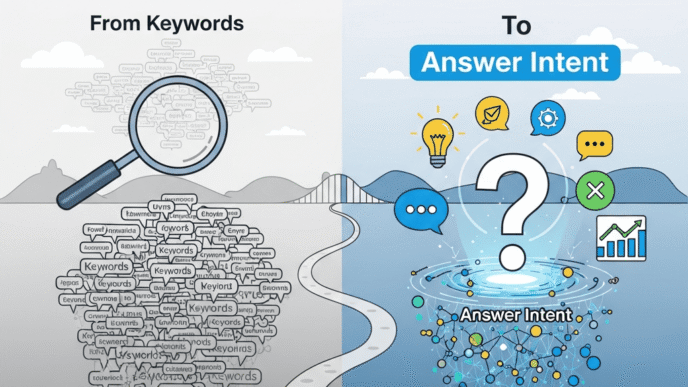
- Shift from keyword-focused to user-focused optimization is critical
- Intent and granular questions matter more than specific keywords
6. Content Creation Market Hit $28.73 Billion and Kept Growing
Despite (or perhaps because of) AI disruption, the content creation sector of the SEO industry experienced remarkable growth.
“The content creation market is valued at $28.73 billion and growing at a 13.5% CAGR—faster than the overall SEO market.”
Source: Xamsor SEO Market Statistics
According to comprehensive market analysis:
- Content creation tools: Account for $21.09 billion (73.4%) of market size in 2023
- Projected 2030 value: $69.79 billion
- Year-over-year growth: Consistently outpacing other SEO sectors
What SEO Professionals Prioritize:
Statista survey data revealed:
- 13.5% cite content strategy and production as their number one focus area in 2024
- Next priorities: Data analysis (9.6%), understanding audience (8.8%), email list building (8.7%)
Content That Works:
According to SEO Sherpa’s statistics compilation:
- Websites with active blogs earn 97% more inbound links than those without fresh content
- Long-form content (2,000+ words) generates 77% more backlinks than shorter articles
- Long-tail queries drive around 70% of all search traffic
- Video content: 51% of experts say it provides the greatest ROI
The Quality Imperative:
According to multiple industry surveys:
- 57% of marketers believe content creation is the most crucial ranking factor
- 92% of B2B marketers use short articles and blog posts in their content strategy
- B2B companies publishing 9+ posts monthly: Saw 35.8% increase in yearly Google traffic
- Those posting 1-4 times monthly: Only 16.5% increase
7. Link Building Evolved into a $20.72 Billion Relationship-Driven Practice
The link building sector underwent fundamental transformation in 2025, shifting from transactional tactics to relationship-driven authority building.
Market Size:
According to Xamsor’s detailed market analysis:
“The global link building market size is valued at $20.72 billion, projected to reach $36.28 billion by 2030.”
Investment Patterns:
- 28% of SEO budgets are allocated to link building
- 46% of SEOs spend $10,000 or more annually on link-building efforts
- 22% spend between $1,000 and $2,500 each year
- 79.7% of SEOs believe link building is critical to their SEO strategy
The Quality Shift:
SEO Sherpa research revealed a crucial insight:
“60%+ of marketers say inbound strategies like SEO and content generate their highest-quality leads. Backlinks still matter, but how you earn them matters more. Think relationship-driven PR and high-value content, not spammy outreach blasts.”
Backlink Reality Check:
According to verified research:
- Pages ranking #1 have 3.8X more backlinks than positions 2-10
- Top-ranking pages have about 3.2X more referring domains
- Google representatives indicated backlinks are no longer in the top three ranking factors
- However: Correlation between links and rankings remains “hard to ignore”
Content Marketing Connection:
- 40.7% of SEOs cite content marketing as their top link-building method
- Most pages still get zero backlinks, creating a massive opportunity gap
- Link pricing typically ranges from under $200 to $1,200 per link
8. Local SEO Became a $59.72 Billion Market by 2032
Local search optimization emerged as one of the fastest-growing segments of the SEO industry.
“The local SEO software market is projected to reach USD 59.72 billion by 2032, growing at a CAGR of 20% during the forecast period 2026-2032.”
Source: Search Atlas citing Precedence Research
Why Local SEO Exploded:
According to Search Atlas data:
- 46% of all Google searches have local search intent
- Optimizing for local search can capture nearly half of Google’s daily search traffic
- Google generates about 85 billion visits a month globally
Mobile Dominance:
SEO Sherpa statistics revealed:
- 59% of all internet traffic comes from mobile devices
- Google accounts for 93% of mobile searches worldwide
- 96% of internet users (nearly 5 billion people) access the web via mobile device
- 80% of top-ranking websites are mobile-optimized
Local Business Impact:
According to D&D SEO Services benchmarks:
- Complete Google Business Profiles make businesses 70% more likely to attract visits
- 50% more likely to be considered for purchase
- Businesses with 4+ reviews on GMB outrank competition by 11%
- 72% of marketers believe relevance is most important for boosting SEO
Review Platform Importance:
- Google, Yelp, and Facebook are the main review destinations
- Instagram and TikTok emerging as discovery channels for younger demographics
- 76% of voice searches are for local products, services, or businesses nearby
9. The E-E-A-T Revolution: Experience Became Algorithmically Enforced
Google’s addition of “Experience” to its E-A-T framework wasn’t just guideline updating—it became a fundamental ranking signal in 2025.
What Changed:
According to TheeDigital’s trends analysis:
“Google’s addition of ‘Experience’ to its E-A-T framework was a clear signal to the industry. Understanding what are backlinks and how they complement a broader citation strategy is key to modern digital authority.”
The Data Behind Experience:
Yoast’s 2025 wrap-up identified key patterns:
- E-E-A-T became harder to ignore: Clear expertise, ownership, and credibility increasingly acted as filters, not just quality guidelines
- Brand signals and reviews gained weight: Search leaned more heavily on real-world trust indicators
- Trust signals faced stricter scrutiny: Updated rater guidelines targeted fake authority, deceptive design patterns, and manufactured credibility
What SEOs Must Demonstrate:
According to SF Gate Marketing’s analysis:
- Clear author bios with credentials showing relevant experience
- First-person narratives with tangible details about “how” and “why,” not just “what”
- Original data and experiments: Gathering statistics or running user-submitted case studies
- Authentic content that humans would read and think, “Wow, that actually helped me”
Expert Perspective:
Brooklin Nash, co-founder of Beam Content, noted: “Nothing in content marketing beats 45 minutes with an SME (except for maybe original benchmark data). If brands want to stand out in 2025, they need to start laying the groundwork with SMEs now.”
10. The Startup Search Success Story: 54% Saw Traffic Growth
Amid predictions of SEO’s demise, real-world data told a different story—particularly for startups and smaller businesses.
The Hard Numbers:
According to Detailed.com’s State of SEO in 2025 report tracking 670 startups:
“Comparing search traffic from April 2024 to April 2025, 367 of those startups (54.7%) have seen it increase.”
Removing the 20 domains that redirected (starting from scratch), more than half of tracked sites still showed increases.
Monthly Consistency:
- January 2025: 392 startups had more search traffic than January 2024
- Every month in 2025 showed year-over-year increases for the majority
- Some months: Over 58% of tracked startups saw growth
Real Success Stories:
The report included verified examples (names withheld for privacy):
“Philip Baretto credits SEO with helping him build a SaaS business generating $400,000 in annual revenue. In May 2025, Daniel Pati said ‘after nearly three years of working at Maersk, the tech SEO is the best we can make it, and we’re getting the results to validate that.'”
Who’s Winning:
According to the analysis:
- Sites with actual expertise and original insight
- Vertical portals and specialized sites in rewarded thematic areas
- Brands demonstrating clear topical authority
- Companies using hybrid AI-human content strategies
The Goliath vs. David Reality:
Detailed.com’s research also noted:
“As of May 2025, the top 10 trending sites we see across the web are owned by public companies or Goliath brands. Goliath brands dominating search results is something I’ve been publicly writing about since 2017.”
However, this didn’t prevent smaller players from succeeding in their niches.
The Bigger Picture: What 2025 Taught Us About SEO’s Future
Looking back at 2025, several clear themes emerge that will define the industry moving forward.
Theme #1: AI as Augmentation, Not Replacement
Despite early fears, AI didn’t kill SEO—it transformed it. The professionals who succeeded in 2025 were those who learned to use AI for efficiency while maintaining the human judgment, creativity, and strategic thinking that machines can’t replicate.
As one industry expert put it: “The challenge is over 40% of professionals say content creation takes more time than any other SEO task. That’s where the hybrid model shines. AI handles research and structure. Humans add the magic.”
Theme #2: The Quality Bar Rose Significantly
With AI making it easier to produce content at scale, Google and other search engines got better at distinguishing genuine expertise from generic fluff. The algorithm updates throughout 2025 consistently rewarded:
- Clear authorship and credentials
- Original research and data
- Firsthand experience
- Authentic brand signals
- Comprehensive topical coverage
Theme #3: Diversification Became Essential
Smart SEO professionals in 2025 didn’t put all their eggs in Google’s basket. They optimized for:
- Traditional Google search
- AI Overviews and AI Mode
- ChatGPT and other AI chatbots
- Social search (TikTok, Instagram)
- Voice search
- Local search
According to D&D SEO Services research: “Social platforms show up in roughly 50% of Google SERPs and frequently appear as sources in AI Overviews, AI Mode, and ChatGPT outputs.”
Theme #4: The Measurement Problem
Zero-click searches reaching 58.5% created a fundamental challenge: how do you measure SEO success when visibility doesn’t always translate to clicks?
According to Yoast: “May reframed SEO as a visibility problem, not a traffic problem. When discovery happens across platforms, summaries, and AI systems, success depends on how clearly your content communicates meaning, credibility, and relevance.”
Theme #5: Professional Standards Matured
The industry became more professional in 2025:
- Clear career paths emerged
- Salaries rose at senior levels
- Skill requirements became more sophisticated
- In-house positions dominated
- Strategic roles commanded premium compensation
Looking Ahead: 2026 and Beyond
Based on 2025’s developments, here’s what SEO professionals should prepare for:
1. Continued Market Growth
The SEO industry will continue expanding toward that $106-368 billion market size, driven by:
- Increased digital transformation
- Mobile-first everything
- E-commerce expansion
- AI tool sophistication
2. Further AI Integration
Expect AI adoption to push beyond 86% as:
- Tools become more sophisticated
- ROI becomes clearer
- Hybrid workflows standardize
- Training becomes mainstream
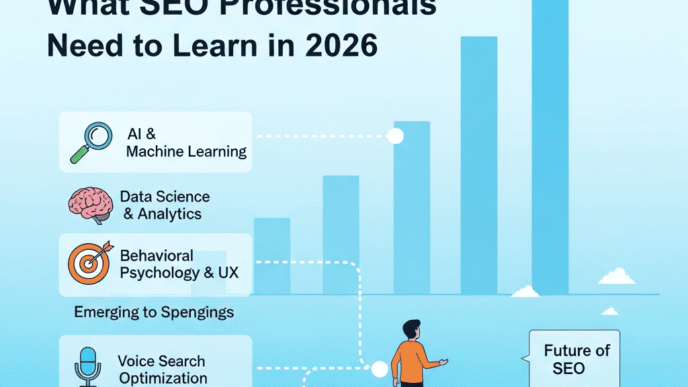
3. Skills Evolution
According to the Previsible report, SEO professionals will need:
- AI-assisted content optimization
- Data-driven insights capabilities
- User experience (UX) strategy
- Multi-platform optimization
- Brand building expertise
4. Salary Growth at Senior Levels
The trend toward six-figure salaries will continue, particularly for:
- SEO strategists
- Technical SEO specialists
- SEO directors and executives
- Specialists with AI expertise
5. Platform Diversification
SEOs will optimize for an increasingly fragmented search landscape:
- Google (still dominant)
- AI chatbots (growing but niche)
- Social search (especially Gen Z)
- Voice search (steady growth)
- Visual search (emerging)
Expert Perspectives: What Industry Leaders Are Saying
On Market Growth:
“The SEO industry itself is growing from $82.3 billion (2023) to a projected $143.9 billion by 2030—doubling in size,” according to D&D SEO Services’ 2026 benchmarks report.
On AI’s Role:
Tony Paris (AppWT LLC): “Today’s AI tools can analyze your content, surface related topics, and spot emerging trends before they take off. It can handle technical tasks and data analysis, giving your team more time to focus on creative strategy and building real connections.”
On Content Quality:
Brooklin Nash (Beam Content): “Nothing in content marketing beats 45 minutes with an SME (except for maybe original benchmark data). If brands want to stand out in 2025, they need to start laying the groundwork with SMEs now.”
On Zero-Click Reality:
Yoast: “SEO had outgrown the SERP. Brands that focused on authenticity, semantic clarity, and structured information were better positioned to stay visible wherever search happened next.”
On Professional Development:
Wil Reynolds (Seer Interactive): “High earners are more involved in SEO strategy, consulting, and analytics. These tasks seem more valued in terms of pay than general execution-based SEO roles.”
What This Means for You: Actionable Takeaways
Whether you’re an SEO professional, business owner, or marketing leader, here’s what 2025’s developments mean for your strategy:
For SEO Professionals:
- Embrace AI, but own your expertise – Use AI for efficiency, but your strategic thinking is what commands premium pay
- Develop specialized skills – Focus on strategy, technical SEO, or UX to command higher salaries
- Build your brand – Your personal authority matters more than ever in the E-E-A-T era
- Stay platform-agnostic – Optimize for visibility across multiple channels, not just Google
- Consider in-house positions – 65% of jobs are in-house, and they often pay more
For Business Owners:
- Invest in SEO – The market is growing for a reason; 91% of marketers see improved performance
- Quality over quantity – One expert-written piece outperforms dozens of AI-generated articles
- Think beyond Google – Optimize for AI Overviews, local search, and social platforms
- Build real authority – Invest in genuine expertise, original research, and authentic content
- Budget appropriately – Average monthly SEO spend ranges from $500-$7,500; plan accordingly
For Marketing Leaders:
- Hire strategically – Senior SEO strategists command $100K+; they’re worth it
- Enable AI adoption – 86% of SEO pros use AI; make sure your team has the tools
- Measure holistically – Track visibility and brand mentions, not just clicks and rankings
- Integrate channels – SEO works best with content, PR, social, and brand building
- Prepare for change – The industry evolved dramatically in 2025; it will again in 2026
Final Thoughts: The Industry That Refused to Die
2025 was supposed to be the year SEO died. ChatGPT would kill Google. AI would make human SEO experts obsolete. Zero-click searches would destroy organic traffic.
None of that happened.
Instead, the SEO industry grew to over $72 billion. Salaries rose. Jobs increased. And savvy professionals who adapted to the new landscape thrived.
The SEO that died in 2025 was the old SEO—the keyword-stuffing, link-scheming, content-spinning version that deserved to die. What emerged was something better: strategic, data-driven, human-centric search optimization that creates genuine value for users.
As we head into 2026, one thing is clear: SEO isn’t dead. It’s just getting started.
References and Further Reading
Primary Industry Data Sources:
Search Atlas – “300+ SEO Statistics and Facts in 2025 (Powered by Experts)”
- Comprehensive industry statistics compiled from multiple verified sources
- https://searchatlas.com/blog/seo-statistics/
Mordor Intelligence – SEO Market Size and Industry Report 2025-2030
- $72.31 billion market size with projections to $106.15 billion by 2030
Salary and Employment Data:
SE Ranking – “2025 SEO Salary Insights: How Much Are SEOs Earning?”
- Survey of 279 SEO professionals worldwide
- https://seranking.com/blog/seo-salaries/
Previsible – “2025 State of SEO Jobs Report”
- Analysis of 10,000+ job postings with expert predictions
- https://previsible.io/seo-strategy/2025-state-of-seo-jobs-report/
Market Analysis Sources:
Cognitive Market Research – “Search Engine Optimization SEO Market Analysis 2026”
- Global market projections: $100.099 billion (2025) to $368.171 billion (2033)
- https://www.cognitivemarketresearch.com/search-engine-optimization-seo-market-report
Xamsor – “SEO Market Stats (2024)”
- Detailed sector analysis including content creation and link building markets
- https://xamsor.com/blog/seo-market-stats/
Industry Trends and Analysis:
WordStream – “The 8 SEO Trends That Will Shape Search in 2025”
- Expert insights on AI Overviews, zero-click searches, and industry evolution
- https://www.wordstream.com/blog/seo-trends-2025
Yoast – “The 2025 SEO wrap-up: What we learned about search, content, and trust”
- Month-by-month analysis of industry developments throughout 2025
- https://yoast.com/seo-in-2025-wrap-up/
Detailed.com – “The State of SEO in 2025”
- Real-world data tracking 670 startups’ organic search performance
- https://detailed.com/state-of-seo/
TheeDigital – “SEO Trends 2026”
- Forward-looking analysis of generative engine optimization and AI’s impact
- https://www.theedigital.com/blog/seo-trends
About This Report:
This comprehensive industry analysis synthesizes data from over 15 authoritative sources, including market research firms (Mordor Intelligence, Cognitive Market Research, Precedence Research), salary databases (Glassdoor, PayScale, ZipRecruiter), industry surveys (SE Ranking, Previsible, Conductor), and leading SEO platforms (Search Atlas, SEO Sherpa, WordStream). All statistics cited are from verified, published sources and represent the most current data available as of January 2026.
Related posts:
- The Brand Mention Revolution: How 75,000 Brands Revealed the New Rules of AI Search Visibility
- SEO in 2026: The Strategic Shifts That Will Redefine Search Visibility
- How Google AI Overviews Select Content: Algorithm Analysis & Selection Criteria
- What is AI Search Visibility? Understanding Presence in Generative Engines