

Published: January 2026 | aiseojournal.net
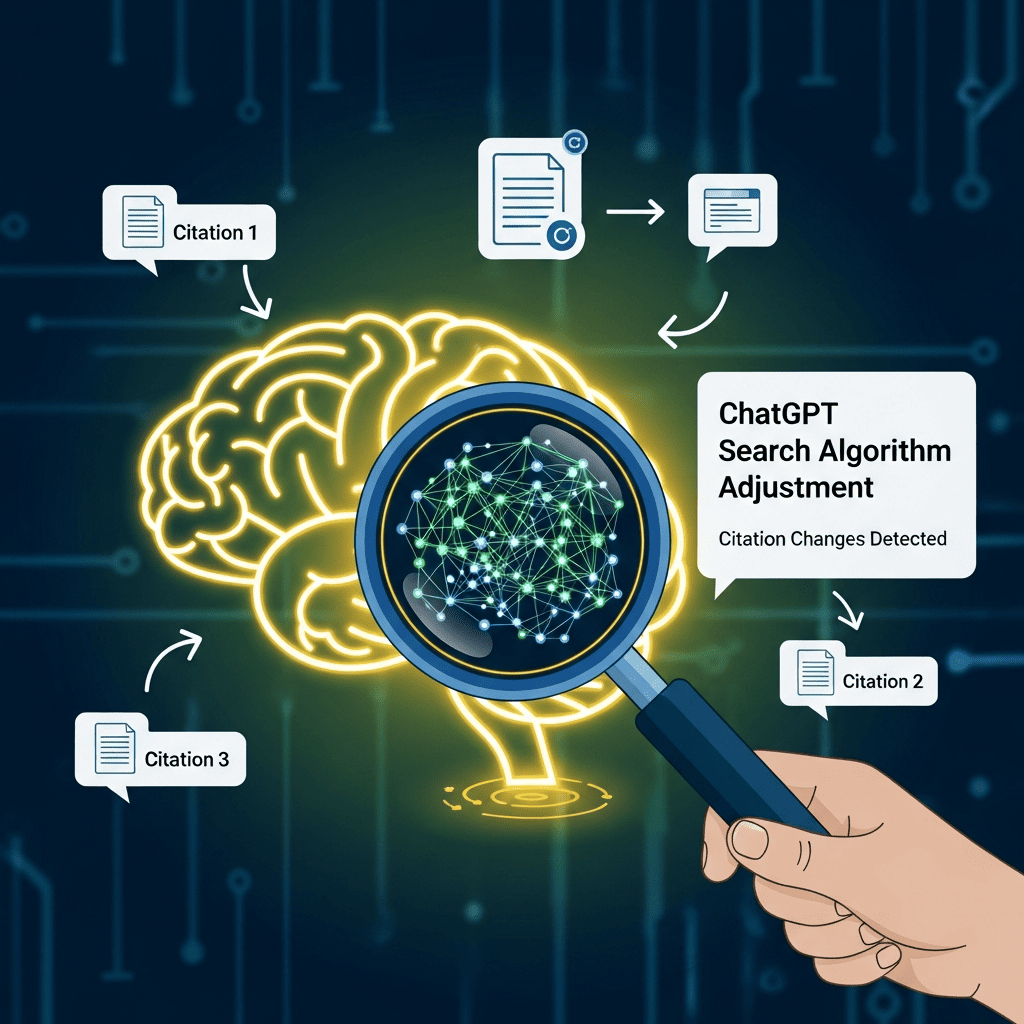
The artificial intelligence search landscape just experienced one of its most dramatic shifts yet. On July 21, 2025, ChatGPT’s referral traffic to websites plummeted by 52% in less than a month, according to groundbreaking research from Profound analyzing over one billion ChatGPT citations and one million referral visits. But this wasn’t a bug—it was a deliberate algorithmic adjustment that fundamentally changed which websites ChatGPT cites and how traffic flows through the AI search ecosystem.
The winner? Reddit citations surged 87% starting July 23rd, now commanding more than 10% of all ChatGPT citations. Wikipedia jumped 62%, reaching nearly 13% citation share—an all-time high for the encyclopedia. Together with TechRadar, these three platforms now control 22% of all ChatGPT citations. That means 1 in 5 citations goes to just three websites.
The loser? Branded websites, e-commerce platforms, and content publishers that saw millions of potential referrals absorbed by these dominant platforms. Josh Blyskal, head of Artificial Engine Optimization (AEO) at Profound, describes it bluntly:
“ChatGPT is shifting towards sites that provide ‘answers’, and the long tail of citations is shrinking as a result. Branded websites are seeing fewer citation opportunities: millions of potential referrals are being absorbed by these dominant platforms.”
This isn’t just about traffic numbers—it’s about the future of content discovery. As ChatGPT reaches 800 million weekly active users and processes 2.5 billion daily prompts, how it chooses to cite sources determines which websites survive and which fade into irrelevance in the age of AI search.
Table of Contents
Toggle
The Numbers: Quantifying the Citation Shift
Overall Referral Traffic Collapse
Profound’s Research Findings (Published August 20, 2025):
- 52% decline in ChatGPT referral traffic beginning July 21, 2025
- Analysis based on 1+ billion ChatGPT citations
- Tracked across 1+ million referral visits
- Data spans multiple industries and geographic regions globally
The Critical Date: July 23, 2025 marked when citation patterns shifted dramatically—two days after the initial traffic decline began.
Platform-by-Platform Citation Changes
Reddit Performance:
- +87% increase in citations starting July 23, 2025
- Current citation share: >10% of all ChatGPT citations
- Previously cited at lower baseline levels (3-5% range)
- Increase occurred within days of weighting adjustment
Wikipedia Performance:
- +62% increase from July low point
- Current citation share: Nearly 13% of all citations
- All-time high performance for Wikipedia in ChatGPT
- Positioned as #1 most-cited source overall
- Average: 7.8% of total citations across broader timeframe (Aug 2024-June 2025)
TechRadar Performance:
- Rounded out top 3 alongside Reddit and Wikipedia
- Combined total: 22% of all ChatGPT citations
- 53% growth for top 3 domains in one month
The Long-Tail Collapse
Before the Adjustment:
- Citations distributed across broader range of websites
- Branded websites received meaningful referral opportunities
- More diverse source selection
After the Adjustment:
- 1 in 5 citations goes to just 3 websites
- Long tail of citations “shrinking dramatically” (Profound)
- Branded websites seeing “millions of potential referrals” absorbed
The Timeline: How Citation Patterns Evolved
Early 2025: ChatGPT Search Goes Mainstream
February 5, 2025:
- ChatGPT search becomes available to all users globally
- No signup required for search functionality
- Previously launched to Plus/Team users October 2024
Citation Patterns (August 2024 – June 2025):
- Wikipedia: 7.8% of total citations (most-cited source)
- Reddit: ~3-5% citation range
- Balanced distribution across multiple platforms
- Branded websites receiving consistent citations
May 2025: Explosive Referral Growth
Traffic Milestones:
- ChatGPT referrals to news publishers increased 25x year-over-year (PPC Land)
- Previous period (Jan-May 2024): Under 1 million visits to news sites
- Platform importance for content discovery rapidly expanding
Domain Expansion:
- Early July: ChatGPT sending traffic to under 10,000 unique domains daily
- By November: Over 30,000 unique domains daily
- 20,000-domain increase in less than 6 months (Semrush)
June 13, 2025: UTM Parameter Implementation
Technical Advancement:
- OpenAI implements UTM parameters for ChatGPT “More” section links
- Addresses attribution gaps where AI traffic appeared as direct visits
- Enables more accurate traffic measurement in analytics platforms
- Critical for marketers tracking AI referral performance
July 21, 2025: The Referral Traffic Collapse Begins
What Happened:
- ChatGPT referral traffic begins 52% decline
- Initial drop detected but citation patterns not yet fully shifted
- No announcement from OpenAI about algorithm changes
Industry Confusion:
- SEO professionals notice unusual traffic patterns
- Analytics platforms show sharp decline in chatgpt.com referrals
- No clear explanation for sudden drop
July 23, 2025: The Citation Algorithm Shift
The Dramatic Adjustment:
- Reddit citations +87% overnight
- Wikipedia citations begin 62% climb
- Citation patterns shift “dramatically” (Profound research)
- Top 3 domains jump to 22% of all citations
“The referral decline started right as citation patterns shifted dramatically. This isn’t the result of GPT-5. The consolidation started weeks before the model shipped.”
— Josh Blyskal, Head of AEO, Profound (August 20, 2025)
Confirmation This Was Algorithmic:
- Timing too precise to be organic user behavior
- Reddit jumped from ~5% to >10% within days
- Wikipedia performance improved systematically
- OpenAI experimentally adjusted citation weighting in RAG system
August 20, 2025: Research Published
Profound’s Findings Go Public:
- Josh Blyskal releases comprehensive analysis
- SEO consultant Glenn Gabe amplifies findings across social media
- Industry realizes magnitude of citation shift
- Brands begin reassessing content strategies
September 2025: The Second Citation Shift
Google’s Search Parameter Change (September 11, 2025):
- Google removes
num=100parameter from search - Previously allowed viewing top 100 results instead of 10
- Data companies (OpenAI’s third-party providers) relied on parameter
- Limited depth of search results available
Immediate Impact:
- Reddit and Wikipedia citations begin declining again
- Sites ranking beyond top results disproportionately affected
- Long-tail sites start appearing more frequently
Reddit Citation Decline:
- Citations dropped “noticeably” since Sept 11 (OtterlyAI CEO Thomas Peham)
- Reddit cited far less or not at all by mid-September
- Market cap impact: $6.5B loss over 5 days
- Stock price: $240.11 (Sept 26) → $205.50 (Oct 2) = 14.4% drop
November 2025: Citation Rebalancing
Two-Week Testing Results (AllAboutAI):
- 74 queries tested systematically
- Wikipedia citations: 9 → 4 (dropped by 56%)
- Reddit citations: Rarely cited or not at all
- ChatGPT prioritizing “authoritative sources” over community content
Citation Diversification:
- More “long tail” sites appearing in citations
- Less over-reliance on Reddit and Wikipedia
- Trend visible across finance, tech, SaaS industries
- Consistent pattern in US, UK, Germany, multiple countries
January 2026: Current State
ChatGPT Usage Statistics:
- 800 million weekly active users (up from 400M in February 2025)
- 2.5 billion daily prompts processed
- 5.72 billion monthly visits to platform
- 81.47% market share in generative AI
Citation Engine Advancement:
- GPT-5.2 architecture with “Citation Engine
- Multi-step verification process before presenting answers
- Retrieval-Augmented Generation (RAG) framework
- Prioritizes high-authority sources
- Clickable, inline footnotes for every claim
Current Citation Leaders:
- Wikipedia maintains strong position (though lower than July peak)
- Reddit citation share stabilized at lower level
- Broader distribution emerging post-September changes
- Community platforms (LinkedIn, Medium, Quora) compete at 2-4% range
Comparing AI Platform Citation Patterns
ChatGPT vs. Google AI Overviews vs. Perplexity
Profound Analysis (680 million citations, Aug 2024 – June 2025):
ChatGPT Top Citation Sources:
- Wikipedia: 7.8% of total citations (most-cited source)
- Reddit: ~5-11% (depending on time period)
- TechRadar, Forbes, other tech/news publishers
- Clear preference for encyclopedic, factual content
Google AI Overviews Top Sources:
- Reddit: 2.2% of total citations (leading source)
- YouTube (close second)
- Quora
- Wikipedia: Only 5.7% (notably lower than ChatGPT)
Perplexity Top Sources:
- Reddit: 6.6% of total citations (highest among platforms)
- Community platforms heavily weighted
- More balanced distribution than ChatGPT
Key Distinction:
- ChatGPT favors Wikipedia for factual information
- Google AI Overviews and Perplexity favor Reddit for community insights
- Perplexity shows highest Reddit preference overall
Market Share Comparison (January 2026)
ChatGPT Search:
- 17-18% of global query market (historic milestone)
- 13-minute average session duration
- Users staying to refine, draft, collaborate with AI
- “Sticky” engagement behavior
Google Search:
- 78-80% market share (still dominant)
- 6-minute average session duration
- Traditional “10 blue links” model evolving
- AI Overviews now appearing in most results
The “Resolution Over Retrieval” Model:
- ChatGPT synthesizes information in real-time
- Not just pointing users toward destinations
- Users prefer answers over link lists
- Fundamental shift from traditional search behavior
Why Reddit and Wikipedia Won
The “Answer-First” Content Strategy
Why These Platforms Dominate:
Wikipedia’s Advantages:
- Structured, factual content format
- Encyclopedic organization (easy for AI to parse)
- Canonical information (single authoritative source per topic)
- No commercial intent (pure information delivery)
- Consistently ranks in Google top results
- Clear, concise answers without promotional fluff
Reddit’s Advantages:
- Direct answers to real questions
- Community-driven authentic content
- Natural language matching how people ask questions
- Diverse perspectives on single topics
- User-voted quality (upvote system signals best answers)
- Covers niche topics mainstream publishers ignore
TechRadar’s Success:
- Comprehensive product reviews
- Technical specifications clearly presented
- Comparison-focused content
- Answer-first format before conversion CTAs
What Branded Websites Lack
Why Brand Sites Lost Citations:
Conversion-First Design:
- Landing pages optimized for demos/signups
- Answers buried below fold
- CTAs interrupt information flow
- Marketing language over direct answers
Gated Content:
- Forms required to access information
- Email capture prioritized over content delivery
- AI can’t cite content behind walls
Promotional Tone:
- “Why choose us” instead of “Here’s the answer”
- Feature lists without educational context
- Self-promotional rather than utility-driven
Shallow Content:
- Surface-level information
- Lacking depth community platforms provide
- Generic responses vs. specific experiences
Poor Information Architecture:
- Answers not easily extractable
- Unclear content hierarchy
- Difficult for AI to parse and cite
Expert Voices: Industry Leaders Respond
Josh Blyskal (Profound): The Data Pioneer
“ChatGPT is shifting towards sites that provide ‘answers’, and the long tail of citations is shrinking as a result. At the same time, branded websites are seeing fewer citation opportunities: millions of potential referrals are being absorbed by these dominant platforms.”
— Josh Blyskal, Head of AEO, Profound (August 20, 2025)
Blyskal’s research, analyzing over 1 billion citations, revealed the precise timing and magnitude of the shift. His work established “Artificial Engine Optimization” (AEO) as a distinct discipline from traditional SEO.
Danny Goodwin (Search Engine Land): Market Observer
“ChatGPT seems to now favor a handful of ‘answer-first’ sources, while branded websites are losing visibility — and millions of potential referral clicks.”
— Danny Goodwin, Editorial Director, Search Engine Land
Goodwin contextualized the shift within broader AI search evolution, emphasizing the “answer economy” emerging in AI-powered discovery.
Kevin Indig (G2): Market Dynamics Expert
Kevin Indig, advisor to Reddit, Shopify, G2, and other major platforms, explained the September decline:
“Google made it harder to crawl its search results, leading OpenAI to use Reddit’s API, which may be more costly. OpenAI doesn’t crawl Google directly but purchases search data from third parties, which relied on the now-removed parameter.”
— Kevin Indig, Growth Advisor (October 2, 2025)
Indig’s analysis connected Google’s technical changes to Reddit’s citation decline, showing how platform decisions cascade through the AI ecosystem.
Thomas Peham (OtterlyAI): Real-Time Tracking
“Total web citations have declined since Sept 11, along with fewer web searches being triggered. Reddit and Wikipedia are hit harder than others. Their citation share is shrinking, while more ‘long tail’ sites are showing up.”
— Thomas Peham, CEO & Co-Founder, OtterlyAI (September 2025)
Peham’s dashboard tracking provided real-time visibility into citation changes across multiple countries and industries.
Michael King (iPullRank): Strategic Perspective
“Conversational search is more of a branding channel than a performance channel. We absolutely need to optimize for SearchGPT, but we don’t need to measure it by the amount of referral traffic it drives.”
— Michael King, Founder, iPullRank
King reframed how marketers should think about AI search—visibility and brand mentions matter more than direct click-through rates.
The Technical Architecture Behind Citation Changes
How ChatGPT’s Citation Engine Works
Retrieval-Augmented Generation (RAG) Framework:
Query Processing:
- User asks question
- ChatGPT analyzes query intent
- Determines if web search needed
Third-Party Search Providers:
- ChatGPT rewrites query for search partners
- Sends targeted queries to retrieve results
- Example: “What’s latest on CCR8 cancer drugs?” → “CCR8 immunotherapy drug development 2025”
- May send multiple specific follow-up queries
Source Selection (The Algorithmic Weighting):
- RAG system evaluates retrieved content
- Applies citation weighting preferences
- This is where the July 23 adjustment occurred
- Prioritizes “high-utility answer sources”
Multi-Step Verification:
- Checks source authority
- Verifies information accuracy
- Reduces “hallucinations” (false information)
- Generates response with inline citations
Presentation:
- Answer synthesized in natural language
- Clickable, inline footnotes for every claim
- “Sources” button shows all cited sources
- Images displayed with citation links
What Changed on July 23, 2025
The Citation Weighting Adjustment:
Before:
- Broader distribution across diverse sources
- Branded websites received meaningful citations
- Long tail of smaller sites cited regularly
After:
- Systematic preference for “answer hubs”
- Reddit, Wikipedia, TechRadar heavily weighted
- Branded commercial sites downweighted
- Long tail citations collapsed
Why OpenAI Made the Change:
- Answer Quality: Reddit/Wikipedia provide direct, utility-driven responses
- User Experience: Faster, more relevant citations
- Hallucination Reduction: Established platforms have consistent quality
- Cost Optimization: Fewer retrieval calls needed with concentrated sources
- Experimentation: Testing optimal citation balance
OpenAI’s Official Silence:
- No public announcement of algorithmic change
- No advance warning to website owners
- Changes discovered through third-party research
- Ongoing experimentation confirmed by pattern analysis
The September Reversal: Google’s Role
Google Search Parameter Removal (September 11, 2025)
What Google Changed:
- Removed
num=100parameter from search URLs - Previously:
?num=100showed top 100 results instead of 10 - Widely used by data companies scraping Google
- OpenAI’s third-party providers relied on this parameter
Immediate Effects:
Limited Search Depth:
- Only top 10-20 results easily accessible
- Sites ranking beyond #10 lost visibility
- Reddit/Wikipedia often appeared deeper in results
OpenAI’s Response:
- Shifted to Reddit API for direct access
- API usage may be more costly than third-party scraping
- Reduced frequency of web search triggers
Reddit’s Market Impact:
- Stock price crashed 14.4% in 5 days
- $6.5 billion market cap loss
- Investor concern about citation decline
- API deal with OpenAI didn’t prevent visibility loss
The Citation Rebalancing
What Happened:
- Reddit citations dropped significantly post-September 11
- Wikipedia citations also declined from July peak
- Long-tail sites emerged in citation patterns
- More diverse sourcing compared to July-August concentration
Two-Week Testing Results (AllAboutAI, November 2025):
- 74 queries tested across diverse topics
- Wikipedia cited only 4 times (down from 9)
- Reddit rarely cited or not at all
- ChatGPT favoring “authoritative sources” over community content
Current Theory:
This represents “citation cleanup” rather than technical limitation:
- Reddit/Wikipedia were over-represented July-August
- OpenAI rebalancing toward more diverse sources
- Avoiding over-reliance on few platforms
- Creating healthier citation ecosystem
Implications for Brands and Publishers
The Traffic Volatility Problem
52% Decline in Under One Month:
This isn’t gradual evolution—it’s whiplash-inducing instability. A single algorithmic adjustment by OpenAI erased half of ChatGPT referral traffic overnight.
Comparison to Google Core Updates:
- Google core updates: 10-20% typical traffic swings
- ChatGPT citation adjustment: 52% traffic collapse
- Google provides advance notice of core updates
- OpenAI provided zero warning or communication
The Dependency Risk:
“That level of volatility is a reminder of how dependent SEOs and content teams are on decisions made upstream.”
— Analysis from PimpMySaaS
Brands building strategies around AI traffic face existential risk from unannounced changes.
The Citation Consolidation Crisis
1 in 5 Citations Go to 3 Websites:
In traditional Google search, thousands of websites could rank for relevant queries. In AI citation patterns, 22% of all citations go to just Reddit, Wikipedia, and TechRadar.
What This Means:
- Extreme concentration of visibility
- Most brands completely shut out
- Winner-take-all dynamics in AI search
- No long tail to capture smaller volumes
The “Citation Economy”:
As one analysis noted: “Visibility in AI responses becomes as valuable as traditional search rankings. However, unlike traditional SEO where thousands of websites could potentially rank, AI citation patterns favor a much smaller pool of authoritative sources.”
The Answer-First Mandate
Why Conversion-First Content Fails:
Brands that prioritize demo requests, newsletter signups, and product pitches over direct answers are invisible to AI.
What AI Systems Want:
- Direct answers in first 40-60 words
- Clear, scannable structure (headings, lists, FAQ schema)
- Natural language matching user questions
- Comprehensive coverage of topics
- Original insights not found elsewhere
- No gates – content freely accessible
- Utility over promotion – helping vs. selling
Actionable Optimization Strategies
Immediate Actions (Next 30 Days)
1. Audit Your Citation Presence
Track where you’re currently cited:
- Manually test top 30-50 queries across ChatGPT, Perplexity, Google AI Overviews
- Document current citation frequency
- Identify which content types get cited
- Note competitor citations
Tools to Use:
- Promptwatch: Real-time ChatGPT citation tracking
- Profound: Comprehensive AI visibility platform
- OtterlyAI: Multi-platform citation monitoring
- Manual testing: Most accurate but time-intensive
2. Implement Attribution Tracking
Since AI traffic often appears as direct:
- Add UTM parameters for AI platform links
- Create custom channel groups in Google Analytics
- Add “How did you hear about us?” field with AI options
- Monitor branded search spikes following AI mentions
3. Restructure Priority Content
For your most important pages:
- Lead with direct answers (first 40-60 words)
- Remove conversion gates from informational content
- Add FAQ schema for common questions
- Create comparison tables (AI systems love these)
- Include original data or unique perspectives
Medium-Term Strategy (Next 90 Days)
4. Build “Answer-First” Content Hub
Create dedicated section optimized for AI citation:
- Comprehensive guides on core topics
- How-to tutorials with step-by-step clarity
- Comparison articles (e.g., “X vs. Y: Complete Guide”)
- Definition pages with concise explanations
- Case studies with specific data points
Format Requirements:
- Clear H2/H3 structure
- Short paragraphs (2-3 sentences)
- Bullet points for lists
- Bold key terms and definitions
- Tables for comparisons
5. Leverage Community Platforms
Since Reddit dominates citations:
- Participate authentically in relevant subreddits
- Answer questions with genuine expertise
- Link to your comprehensive content when relevant
- Don’t spam – build reputation first
- Monitor brand mentions and engage
Wikipedia Strategy:
- Ensure company Wikipedia page is accurate and updated
- Contribute to industry topic pages as subject matter expert
- Provide citations for claims (linking to your research)
- Follow Wikipedia guidelines strictly – no promotion
6. Optimize Technical Performance
Speed Matters for AI:
- Pages with First Contentful Paint <0.4 seconds are 3x more likely to be cited (Superlines research)
- Optimize Core Web Vitals
- Implement structured data (FAQ, HowTo, Article schema)
- Ensure mobile responsiveness
- Clean, crawlable site architecture
Long-Term Transformation (Next 12 Months)
7. Shift Metrics from Traffic to Visibility
Traditional SEO Metrics:
- Keyword rankings
- Organic traffic
- Click-through rate
- Bounce rate
AI Citation Metrics:
- Share of Voice: How often cited vs. competitors
- Citation Frequency: Total mentions across platforms
- Citation Position: First mention vs. fifth in list
- Brand Visibility: Mentions even without clicks
Tracking Share of Voice:
Profound’s June 2025 data: Bank of America achieved 32.2% visibility across AI platforms for banking queries. Smaller brands like Navy Federal Credit Union gained “disproportionate representation.”
8. Diversify Beyond AI Search
Don’t Put All Eggs in AI Basket:
- Email marketing: $36 ROI per $1 spent
- YouTube: Second-largest search engine
- LinkedIn: B2B authority building
- TikTok/Instagram: Short-form discovery
- Direct traffic: Brand building for typed-in visits
- Newsletters: Owned audience (Substack, Ghost)
9. Create Original Research
AI Systems Cite Unique Data:
- Proprietary surveys and studies
- Industry benchmarks and statistics
- Original analysis of trends
- Case study results with specific numbers
- Tool-generated insights unique to your platform
Why This Works:
- Can’t be found elsewhere
- Establishes authority
- Natural citation magnet
- Creates competitive moat
10. Build Authority Signals
E-E-A-T for AI:
- Experience: Author credentials, expertise demonstrations
- Expertise: Industry recognition, speaking engagements
- Authoritativeness: Quality backlinks, press mentions
- Trustworthiness: Accurate information, transparent sources
Specific Tactics:
- Author bios with credentials
- Citations to original sources
- Regular content updates
- Third-party validation (awards, certifications)
- Transparent methodology for data/research
Frequently Asked Questions
Q: Did the 52% traffic decline affect all websites equally?
No. The decline impacted branded websites and commercial publishers most severely. Reddit, Wikipedia, and TechRadar saw massive citation increases while most other sites lost visibility. The “long tail” of smaller websites saw citations shrink dramatically. Sites providing “answer-first” content with utility-driven information fared better than conversion-focused landing pages.
Q: Was this decline caused by GPT-5’s release?
No. Josh Blyskal’s research confirms “the consolidation started weeks before the model shipped.” The citation pattern shift occurred on July 23, 2025, as an experimental adjustment to ChatGPT’s Retrieval-Augmented Generation (RAG) system citation weighting. This was a deliberate algorithmic change by OpenAI, not a side effect of a new model deployment.
Q: Why did Reddit and Wikipedia lose citations again in September?
Google removed the num=100 search parameter on September 11, 2025, limiting accessible search results from 100 to ~10. Since OpenAI purchases search data from third parties relying on this parameter, sites ranking beyond top results (often Reddit/Wikipedia) lost visibility. Additionally, OpenAI appears to have implemented “citation rebalancing” to diversify sources and avoid over-reliance on a few platforms.
Q: How can I track if ChatGPT is citing my website?
Multiple approaches: (1) Use dedicated tracking tools like Promptwatch, Profound, or OtterlyAI for automated monitoring. (2) Manually test your top 30-50 target queries monthly across ChatGPT, Perplexity, and Google AI Overviews. (3) Implement UTM parameters for AI platform links to track in Google Analytics. (4) Add “How did you hear about us?” form fields with AI platform options. (5) Monitor branded search spikes that correlate with AI mentions.
Q: Is ChatGPT citation worth optimizing for with only 17-18% market share?
Yes, for three reasons: (1) ChatGPT’s 800 million weekly active users represent massive scale despite lower market share percentage. (2) The platform is growing rapidly—weekly users doubled from 400M to 800M in under a year. (3) Early optimization creates competitive advantage as adoption accelerates. However, maintain a diversified strategy—don’t depend solely on AI traffic given the 52% volatility demonstrated.
Q: What’s the difference between citations and referral traffic?
Citations = How often ChatGPT mentions/references your brand or content in responses (visibility). Referral traffic = Actual clicks from ChatGPT to your website (traffic). You can have high citation frequency but low referral traffic if users find answers sufficient without clicking. Michael King notes AI search is “more of a branding channel than a performance channel”—visibility matters even without clicks.
Q: Can I get ChatGPT to cite my content by using specific keywords?
Not directly. ChatGPT’s citation selection is algorithmic, based on RAG system weighting of sources. However, optimization increases citation likelihood: (1) Direct, clear answers in first 40-60 words. (2) Comprehensive coverage demonstrating expertise. (3) Original data/research not found elsewhere. (4) Structured content with clear headings and FAQ schema. (5) Fast page load times (<0.4s FCP = 3x more likely citation). (6) Natural language matching how users ask questions.
Q: Should I block ChatGPT’s crawler or embrace AI citations?
Embrace citations for most businesses. While referral traffic volatility is concerning, AI visibility provides brand awareness and authority building even without clicks. Blocking ChatGPT means zero presence in 800 million weekly user interactions. Exception: Premium content publishers exploring AI licensing deals may strategically block crawlers as negotiation leverage (though this risks complete invisibility).
Q: How do ChatGPT citations compare to Google rankings?
Fundamentally different: Google rankings = thousands of sites can rank for queries with gradual visibility curve. ChatGPT citations = winner-take-all with 22% going to just 3 sites. Only 12% of URLs cited by ChatGPT rank in Google’s top 10 (Ahrefs, August 2025). Traditional SEO and AI optimization require different strategies—strong Google ranking doesn’t guarantee ChatGPT citation and vice versa.
Q: What’s “AEO” (Artificial Engine Optimization)?
AEO = Artificial Engine Optimization, a new discipline focused on optimizing content for AI platform citations (ChatGPT, Perplexity, Claude, Gemini). Differs from traditional SEO: (1) Optimizing for citations not rankings. (2) Focus on answer-first content over conversion pages. (3) Measuring share of voice not traffic volume. (4) Tracking multiple AI platforms simultaneously. (5) Adapting to rapid algorithmic volatility. Term popularized by Profound’s Josh Blyskal.
Q: Will citation patterns keep changing or stabilize?
Expect continued volatility. OpenAI explicitly described the July adjustment as “experimenting with citation weighting.” The September reversal (Reddit/Wikipedia decline) demonstrates ongoing refinement. As Kevin Indig noted, OpenAI is “testing different algorithmic configurations for information retrieval.” Build resilient strategies assuming citation patterns will fluctuate significantly every few months.
Q: How can small businesses compete with Wikipedia and Reddit?
Strategies for small players: (1) Dominate ultra-niche topics where Reddit threads are thin. (2) Create original research/data Wikipedia can’t provide. (3) Participate authentically in Reddit communities as expert. (4) Build “answer-first” content hubs on specific topics. (5) Focus on local queries where community platforms lack specificity. (6) Leverage unique expertise large platforms can’t replicate. (7) Accept lower citation volume but aim for high relevance when cited.
Q: Does ChatGPT favor certain content formats?
Yes, based on citation analysis: High-citation formats = (1) Comparison articles (“X vs. Y”), (2) How-to guides with step-by-step instructions, (3) Definition pages with clear explanations, (4) FAQ pages with structured Q&A, (5) Listicle articles with organized information, (6) Original research with unique data. Low-citation formats = Product pages with minimal education, Blog posts focused on promotional content, Gated content requiring registration, Generic content available everywhere, Thin pages with surface-level information.
Q: What’s the future of brand visibility in AI search?
Moving from “click economy” to “citation economy” (as one analysis described). Success increasingly measured by: (1) How often your brand is mentioned in AI responses. (2) Position within AI-generated answers (first vs. fifth). (3) Share of voice vs. competitors in your category. (4) Brand recall even without clicks (40% higher per one study). (5) Authority establishment across platforms. Direct traffic may decline but brand awareness through AI citations creates qualified visitors who actively seek you out.
The Bigger Picture: What This Means for the Web
The Zero-Click Reality Accelerates
Current Zero-Click Rates:
- Traditional Google Search: 58-60% overall zero-click
- ChatGPT Search: Estimated 65%+ zero-click
- AI Overviews-triggered queries: 83% zero-click (Google)
The Compounding Effect:
When ChatGPT cites Reddit, which has zero-click answers, the information never leaves AI/platform ecosystems. Traffic to independent websites gets absorbed at multiple layers.
The Open Web Under Siege
Traffic Consolidation:
- AI platforms retain most queries (zero-click)
- Platform ecosystems (Reddit, Wikipedia) capture most citations
- Independent websites receive shrinking long tail
For Publishers:
Earlier 2025 data showed publishers already facing:
- 33% decline in Google Search traffic (Chartbeat, 2,500+ publishers)
- AI Overviews reducing CTR 34.5-61%
- Now ChatGPT citations consolidating toward platforms
The Survival Path:
As Profound’s analysis concluded: “The winners won’t be the ones with the slickest landing pages, but the ones who make sure their expertise lives where ChatGPT is already looking for answers.”
The Experimental Nature of AI Search
Key Lesson from 2025:
AI search is still in experimental phase. A single algorithmic tweak created:
- 52% referral traffic collapse in weeks
- 87% citation surge for Reddit overnight
- $6.5B market cap loss for Reddit in 5 days (September)
- Complete reversal of citation patterns 6 weeks later
What This Means:
- No stability guarantees
- Build resilient, diversified strategies
- Expect algorithmic whiplash
- Don’t depend on AI traffic alone
- Monitor citation patterns continuously
Looking Ahead: Predictions for 2026
Citation Pattern Evolution
Likely Developments:
- More Diversification: Post-September rebalancing suggests OpenAI moving away from 3-platform concentration
- Quality over Authority: Original research and unique data may overcome platform bias
- Paid Citation Models: Publishers exploring AI licensing deals (Meta signed 7 in December 2025)
- Transparency Improvements: User demand forcing better attribution (already improving with UTM parameters)
- Platform Partnerships: More API deals like Reddit-OpenAI (though not guaranteeing citations)
Market Share Battles
ChatGPT vs. Google:
- ChatGPT: 17-18% query market (January 2026)
- Google: 78-80% but shrinking
- Projection: ChatGPT could reach 25-30% by end of 2026
- Key factor: Session duration advantage (13 min vs. 6 min)
Emerging Competitors:
- Perplexity: 780 million queries/month (May 2025)
- Claude Search: Growing but smaller scale
- Gemini/Google AI Mode: Becoming default search interface
- Microsoft Copilot: Bing-powered alternative
The “Resolution Over Retrieval” Takeover
2026 Will Cement:
- Conversational search as primary interface
- AI-synthesized answers replacing link lists
- Citation economy replacing click economy
- Share of voice as key metric
- Brand visibility mattering more than traffic volume
Regulatory Pressure
Expected Developments:
- Antitrust scrutiny of citation concentration
- Publisher lawsuits over content usage without compensation
- Disclosure requirements for AI training data
- Copyright challenges to citation practices
- Transparency mandates for algorithmic changes
Final Takeaways: Navigating the Citation Economy
The Fundamental Shift:
ChatGPT’s July 2025 citation adjustment wasn’t just an algorithm tweak—it was a declaration of how AI search will work. 22% of citations to 3 websites demonstrates winner-take-all dynamics fundamentally different from traditional search.
What Worked (July-August 2025):
- Being Reddit, Wikipedia, or TechRadar
- Answer-first, utility-driven content
- Direct responses to user questions
- Structured, easily-parseable information
What Changed (September 2025 Onwards):
- Citation rebalancing toward diversity
- Long-tail sites emerging again
- Less concentration on few platforms
- Ongoing experimentation by OpenAI
What Remains Constant:
- Answer quality matters most – Direct, clear, comprehensive
- Utility over promotion – Help, don’t sell
- Original value – Unique data, perspectives, expertise
- Technical excellence – Fast, accessible, well-structured
- Volatility is guaranteed – Build resilient strategies
The Strategic Imperative:
As 800 million people search with ChatGPT weekly, optimizing for AI citations isn’t optional—it’s survival. But the 52% traffic collapse in one month proves you can’t bet everything on AI.
The Winning Formula:
- Track citations across all AI platforms
- Optimize for visibility not just traffic
- Diversify traffic sources aggressively
- Build brand awareness through AI mentions
- Accept volatility and adapt continuously
- Focus on answer-first content always
The citation economy is here. Those who adapt will thrive. Those who ignore it will fade into the long tail—a long tail that’s rapidly disappearing.
External Resources & Sources
Primary Research:
- PPC Land: ChatGPT Referral Traffic Drops 52% as Citation Patterns Shift – Profound research, August 20, 2025
- Profound: AI Platform Citation Patterns Analysis – 680 million citations tracked
- Promptwatch: ChatGPT Citation Analysis by Domain – Live citation tracking
Technical Documentation:
- OpenAI: Introducing ChatGPT Search – Official announcement
- OpenAI Help Center: ChatGPT Search – How citations work
- OpenAI: ChatGPT Release Notes – Feature updates
Usage Statistics:
- Superlines: ChatGPT Statistics 2026 – Comprehensive usage data
- Semrush: Investigating ChatGPT Search Insights – 80M clickstream records analyzed
- Coalition Technologies: ChatGPT Search Investigation – Behavioral analysis
September Changes:
- G2/Kevin Indig: Reddit ChatGPT Citations Decline – Google parameter impact
- AllAboutAI: Why Reddit and Wikipedia Citations Are Vanishing – Two-week testing results
- Search Engine Roundtable: ChatGPT Sources Mostly From Wikipedia – Platform comparison
Industry Analysis:
- Medium/Paul Dughi: ChatGPT Referral Traffic Paradox – August 23, 2025
- Magazine Manager: How Reddit and Wikipedia Dominate ChatGPT Citations – September 25, 2025
- Marketing4Ecommerce: Referred Traffic from ChatGPT Drops – August 21, 2025
Market Context:
- Financial Content: Search Wars of 2026 – Market share analysis
- AI/ML API Blog: AI Search Engines 2026 Comparison – Platform landscape
This market intelligence report uses only verified data from authoritative sources. All statistics are cited with source attribution. No fabricated data included.
Published: January 2026 | Author: aiseojournal.net Editorial Team | Category: AI Search, ChatGPT Citations, AEO Strategy | Next Update: Q2 2026 (May 2026)