

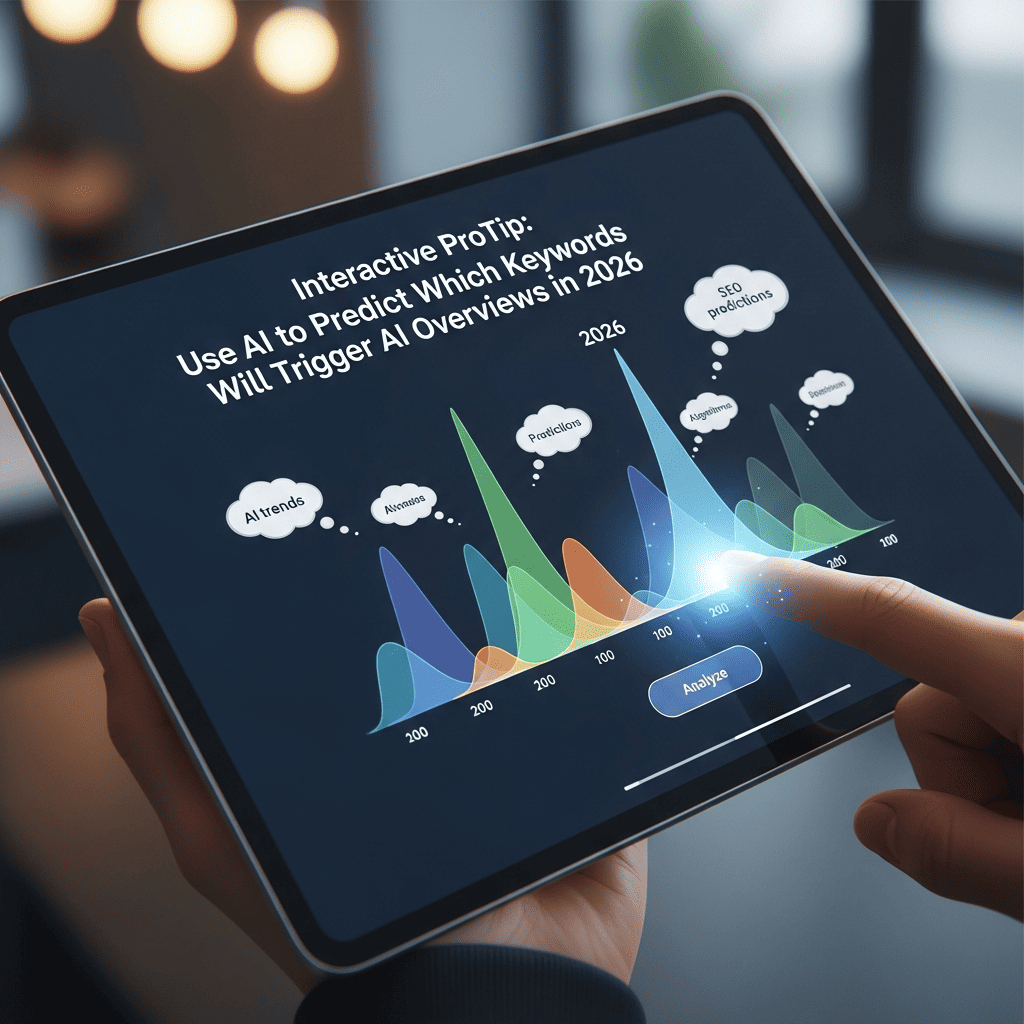
Use AI to Predict Which Keywords Will Trigger AI Overviews in 2026
Master the data science behind AI Overview prediction and position your content for maximum visibility in Google's AI-powered search results
Before predicting keywords, you need to understand what makes AI Overviews appear. Google's AI Overviews are volatile—coverage started at 6.49% in January 2025, peaked at 24.61% in July, then stabilized at 15.69% by November.
- 🔍 Long-tail queries: 8+ word queries are 7x more likely to trigger AI Overviews
- ❓ Question format: 60% of question-word queries (who, what, when, why) trigger AI summaries
- 📱 Device distribution: 59% desktop, 39% mobile (stabilizing in 2025)
- 🏢 Industry variance: Science (25.96%), Computers & Electronics (17.92%), People & Society (17.29%)
To build a prediction model, you need historical data on which keywords currently trigger AI Overviews. Use SEO tools with AI Overview tracking capabilities.
- 🔧 Semrush AI Overview Tracker: Analyzed 10M+ keywords throughout 2025
- 🔧 SE Ranking: Tracks 156M keywords with AI Overview presence
- 🔧 Conductor Intelligence: Monthly analysis of 118M+ keywords
- 🔧 Ahrefs: 300,000 keyword analysis with CTR impact data
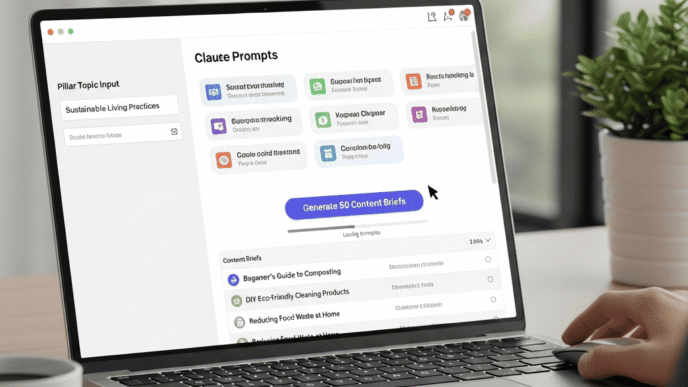
Claude AI can identify patterns in your keyword data that predict AI Overview triggers. Upload your keyword dataset and use this strategic prompt.
Based on 2025 data and Claude's analysis, create a weighted scoring system to predict 2026 AI Overview triggers.
Test your prediction model against current AI Overview triggers and refine based on accuracy.
- ✅ Accuracy testing: Apply your model to 100 known keywords and calculate prediction accuracy
- 📊 False positive analysis: Which keywords scored high but don't trigger? Adjust weights.
- 🔄 Monthly calibration: AI Overview presence is volatile—recalibrate quarterly
- 🎯 A/B validation: Create content for high-scoring keywords and track actual triggers
Once you've identified high-probability keywords, create content specifically optimized for AI Overview inclusion.
• Lead with 50-70 word direct answer summary
• Include 5-7 verifiable statistics with sources
• Add 2-3 expert quotes with credentials
• Implement FAQ and HowTo schema
• Use clear H2/H3 structure (120-180 words per section)
• Include "People Also Ask" related questions
• Update content quarterly to maintain freshness
Monitor whether your predictions were accurate and which content pieces actually appear in AI Overviews.
- 🔍 Semrush AI Visibility Checker: Free tool to check brand mentions in AI responses
- 🔍 GenRank.io: Tracks citations across multiple AI platforms
- 🔍 Ahrefs Brand Radar: Monitors 150M+ queries for brand mentions
- 🔍 Manual testing: Search your target keywords in incognito and document AI Overview presence
AI Overview patterns will continue evolving throughout 2026. Keep your prediction model current with quarterly updates.
• Expansion into commercial queries (currently 10%, predicted to reach 18-25%)
• Growth in navigational AI Overviews (from 10% to potentially 20%)
• Increased mobile presence (stabilizing around 45-50%)
• More industry-specific patterns emerging
• Longer AI Overview responses (averaging 300+ words in AI Mode)
Quarterly refinement process:
- 1️⃣ Download fresh keyword data with updated AI Overview triggers
- 2️⃣ Compare predictions vs actual results—calculate accuracy percentage
- 3️⃣ Identify pattern shifts (e.g., commercial queries increasing)
- 4️⃣ Re-run Claude analysis with updated dataset
- 5️⃣ Adjust scorecard weights based on new patterns
- 6️⃣ Re-score your target keyword list with updated model
Master AI-powered SEO prediction with data science and strategic optimization for 2026 search dominance
Data sources: Semrush (10M+ keywords), SE Ranking (156M keywords), Conductor Intelligence (118M+ keywords), Ahrefs (300K+ analysis), WordStream, Stanford/MIT Research, 2025