



Create Topic Authority Maps Using Claude's 200K Token Context Window
Leverage Claude's massive 200,000-token context (500+ pages) to build comprehensive topical authority maps that dominate search rankings and AI citations
The Shift to Topical Authority
Google's algorithms (BERT, MUM) now prioritize context and topical depth over simple keyword matching. Search engines reward sites that demonstrate comprehensive expertise across interconnected topics, not just isolated articles.
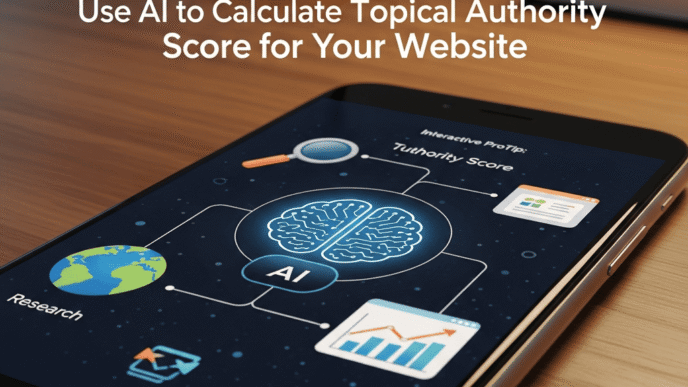
A topical authority map is your strategic blueprint. It organizes content into hierarchical networks of related topics and subtopics, ensuring comprehensive coverage that search engines recognize as expertise.
Sources: Social Champ SEO Statistics 2025, Topical Map Service, eSEOspace
Real-World Results from Topical Maps
Businesses implementing comprehensive topical authority strategies see dramatic improvements:
- ✓295% increase in organic traffic after implementing brand-aligned topical map with internal linking (Topical Map Service)
- ✓100 to 2,600 monthly visitors in under 6 months with map implementation (Topical Map Service)
- ✓Zero to 114K+ organic visits/month after two topical maps and focused publishing (Topical Map Service)
- ✓97% more backlinks earned by businesses with comprehensive topical content (SeoProfy)
- ✓106% traffic increase from refreshing old content with topical depth (Social Champ)
Sources: Topical Map Service 2025, Social Champ SEO Statistics, SeoProfy
What 200,000 Tokens Actually Means
Claude's 200K token context window (standard for all paid plans, with 500K for Enterprise) represents a massive capacity:
- 📄500+ pages of documentation analyzed simultaneously without losing context
- 🗂️Complete website sitemaps with 200-300 pages processed at once
- 📊Competitoranalysis across dozens of sites in single session
- 🧠Maintains perfect memory of all relationships, entities, and hierarchies throughout
Pro Note: Claude Sonnet 4 now offers 1M token context (beta) for processing entire codebases (75,000+ lines) or analyzing hundreds of research papers simultaneously—5x larger than standard.
Sources: Anthropic Claude Documentation, Claude API Docs 2025
Why Context Windows Matter for Topical Maps
Traditional SEO tools and ChatGPT's limited context (8K-32K tokens) force you to break work into small chunks, losing the big picture. Claude's 200K context allows:
- 🔗Holistic entity relationships: Claude maintains awareness of how all topics interconnect across your entire niche
- 🎯Zero topic cannibalization: Processes your complete content inventory to identify and prevent keyword overlap
- 📐4-level hierarchies: Plans pillar → cluster → subtopic → keyword levels without losing context
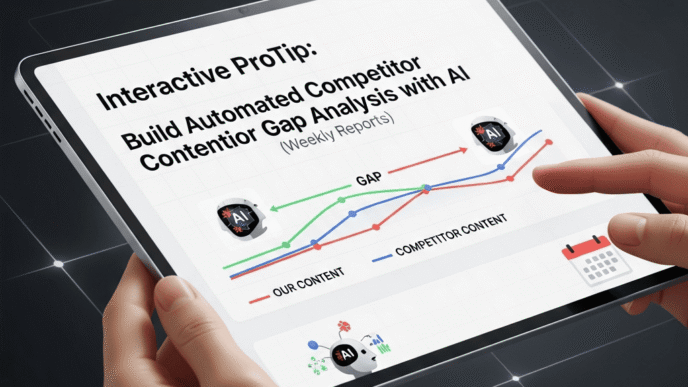
- 🔍Competitor gap analysis: Analyzes your site + 5-10 competitors simultaneously for comprehensive mapping
Sources: Datastudios.org Claude Context Analysis, eesel.ai Claude Context Guide
Define Core Topics
Identify 3-5 main topic categories where you want to build authority. These become your pillar content themes.
Gather Context Data
Upload your existing content inventory, keyword lists, competitor sitemaps, and industry research—up to 500 pages into Claude.
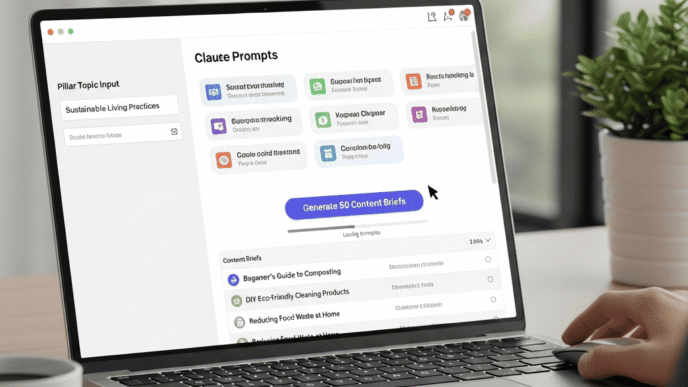
Use Strategic Prompt
Provide Claude with comprehensive instructions to analyze relationships, identify gaps, and create hierarchical structure.
Generate Map
Claude creates 4-level hierarchy: Pillar Topics → Clusters → Subtopics → Individual Keywords with entity relationships.
Add Internal Links
Claude identifies optimal internal linking opportunities connecting all pieces in semantic network.
Export & Implement
Download as spreadsheet and mind map, then execute content strategy with clear priorities.
This prompt leverages Claude's full 200K context to build comprehensive topical authority maps:
• Upload 10-20 competitor sitemaps for gap analysis
• Include your complete existing content (Claude tracks it all)
• Paste keyword lists of 1,000-5,000 terms
• Add industry research reports and trend data
• Claude maintains perfect memory of all relationships throughout
From Map to Traffic: Execution Framework
- 1Phase 1 (Months 1-2): Publish pillar pages establishing core expertise across main topics
- 2Phase 2 (Months 3-6): Launch 3-4 cluster articles per pillar, building topical depth
- 3Phase 3 (Months 7-9): Complete remaining clusters, add subtopic content, strengthen internal links
- 4Phase 4 (Months 10-12): Refresh top performers, add new entities, expand based on performance data
Sources: Keyword.com SEO Statistics, Search Atlas 2025
Measuring Topical Authority Success
- 📊Organic traffic growth: Month-over-month increases (target: 15-25% quarterly)
- 🎯Keyword coverage: Ranking for 100+ keywords in your niche (not just 5-10)
- 🔗Backlink velocity: Natural link acquisition as authority grows (97% more with topical content)
- 💬AI citations: Mentions in ChatGPT, Perplexity, AI Overviews (track with Semrush AI Visibility)
- ⏱️Time on site: Increased engagement as internal links guide users through topic network
- 🏆SERP features: Featured snippets, PAA boxes, AI Overviews appearing for your content
Sources: SeoProfy 2025, Position Digital AI SEO Statistics
Why Topical Maps Win AI Citations
AI engines (ChatGPT, Perplexity, AI Overviews) prioritize comprehensive, authoritative sources. Topical authority maps position your site as the go-to reference.
- 🤖Entity-rich hierarchies: AI models understand topic relationships and cite structured knowledge
- 📚Comprehensive coverage: Sites demonstrating full topical depth get cited more than partial coverage
- 🔗Internal linking signals: Strong topic clusters signal authority to both Google and AI engines
- 💎Long-form content: Articles 2,900+ words average 5.1 citations vs 3.2 for shorter content (SE Ranking)
Sources: Position Digital AI SEO Statistics, SE Ranking November 2025
Master topical authority mapping with Claude's 200K token context—build comprehensive expertise that dominates both traditional search and AI citations
Data Sources: Anthropic Claude Documentation, Topical Map Service, Social Champ, Search Atlas, SE Ranking, Position Digital, SeoProfy, Keyword.com, eSEOspace—2025