

The misconception: when a client repeats an SEO myth, you need a clever comeback. The reality: Google has already written most of the answers down. Your job is to find the right page and send it. This guide takes five claims clients repeat and matches each to what Google’s own guides say. One claim, “SEO is dead”, has no Google statement at all, and we say so. For the basics behind every answer, see our SEO basics guide. The client lines here are paraphrases, not quotes from real people.
At a glance
| Claim | What Google's pages say | Where |
|---|---|---|
| "SEO is just keywords" | Not in Google's guide | Starter Guide [1] |
| "We should be number one by now" | Hours to several months | Starter Guide [1] |
| "Can we pay Google?" | Google never accepts money to rank sites | Hiring page [2] |
| "Any SEO can guarantee number one" | No one can | Hiring page [2] |
| "SEO is dead" | No statement found | None |
Editor’s note, 10 November 2026: this page used to present unnamed “real quotes” with typed-in reaction counts. We could not trace them, so we removed them and rebuilt the page from Google’s documentation.
Table of Contents
ToggleWhich SEO claims does Google answer directly?
Read the workflow as text
- Start: a client makes a claim.
- "It is taking too long" Google: hours to several months. Wait a few weeks before you judge.
- "Can we pay for the top spot?" Google says it never accepts money to include or rank sites.
- "Someone guarantees number one" Google: no one can guarantee it. Run the red-flag list.
- "SEO is just keywords" Google's guide covers crawling, structure, snippets and images too.
- "SEO is dead" No Google statement either way. Check your own Search Console data.
Claim, what is true, what to say
| Claim | What is true | What to say |
|---|---|---|
| SEO is just keywords | Google's guide covers crawling, site structure, useful content, snippets, images and promotion. Keyword stuffing and the meta keywords tag are on its list of things not to focus on [1]. | Keywords are the words readers use. They are one part of a longer job. |
| We should be number one by now | Changes can take effect in a few hours or take several months. Waiting a few weeks is suggested. Not every change shows a noticeable effect. No secret automatically ranks a site first [1]. | We will check Search Console on a set date and report what changed. |
| Can we pay Google to rank us? | Google says it never accepts money to include or rank sites in its results. Advertising has no effect on organic presence [2]. | Ads can bring visits. They do not change organic ranking. |
| Any SEO can guarantee number one | Google's hiring page says no one can. Red flags: guarantees, a claimed special relationship with Google, "priority submit", unsolicited emails, a demand that you link to the SEO [2]. | Ask for a written plan, references and a measure of success instead. |
| SEO is dead | We found no Google statement either way. The Starter Guide describes maintaining SEO over time and keeping content current [1]. | Let us look at your own Search Console data. |
Professional tip
Send the client the one Google page that answers the claim, and name the section. A link ends more arguments than an opinion does.
What Google’s guide says not to focus on
The Starter Guide has a section on things it believes you should not focus on. Here are the ones clients raise most, in our words [1]:
| Idea clients often hold | What Google's guide says |
|---|---|
| The meta keywords tag matters | On the guide's list of things not to focus on. |
| More keyword repeats help | Keyword stuffing is on the same list. |
| A longer page ranks better | Content length targets are on the list. |
| The domain ending (TLD) is a ranking lever | Mostly relevant only for country targeting. |
| There is a duplicate content penalty | On the list of things not to focus on. |
| E-E-A-T is a ranking factor | The guide says it is not. |
Worked example 1: a reply you can send
Hypothetical client email: “We published the new page last week. Why are we not first?” A reply built from Google’s guide:
- “Google says changes can take from hours to several months to show.”
- “It suggests waiting a few weeks before judging the effect.”
- “We will check Search Console on [date] and report what changed.”
The reply promises a check, not a position.
Quick check
Before you reply, ask: which Google page says this? If you cannot name one, say "I think", not "Google says".
Worked example 2: reading a pitch
Hypothetical email: “We guarantee page one in 30 days and have a direct line to Google.” It fails two red flags in one sentence: a guarantee, and a claimed special relationship [2]. Two red flags are enough. Stop there.
Worked example 3: testing “SEO is dead” on your own data
- Open Search Console and the Performance report.
- Compare the last three months with the three months before, for clicks and impressions.
- Note what changed on the site in that time.
- Write one sentence that says what you saw and what you cannot tell from it.
Watch out
Do not say "SEO is dead" is false. We found no Google statement either way. Say what you found, and offer to look at the client's own data.
Test yourself: myth or fact?
Five statements. Pick Myth or Fact for each, then press Check. The answers come from the Google pages we read.
What we found on this page
From our own site
This page used to be called "Real quotes from real SEO professionals". On 10 November 2026 we read its code. It held 16 quotes typed into the page, with no names, dates or sources. Reaction counts were typed in too, and so were headline figures such as "247 stories submitted". The page had no form and no code that sends data, so a visitor could not have submitted a story.
Method: we read the page source in the editor. Limit: we cannot prove where the quotes came from. We can say we could not trace them.
So we removed them. The claims below are common ideas, written as paraphrases. They are not real quotes.
If the client will not let go of a claim
- Send the one page of Google’s guide that answers it.
- Offer a dated check in Search Console, not an argument.
- If the claim is a guarantee, ask for it in writing with the refund terms.
- Stop when the client has seen the source. You cannot win every disagreement.
Frequently asked questions
Are the quotes on this page real?
No. We use paraphrased claims only. The earlier version had unnamed quotes we could not trace, so we removed them.
Can anyone guarantee a number one ranking?
Google’s hiring page says no one can.
Does Google take payment to rank a site?
Google’s hiring page says it never accepts money to include or rank sites in its results.
How long do SEO changes take to show?
Google’s guide says from a few hours to several months, and suggests waiting a few weeks before judging.
Next time a client repeats a myth, send the Google page
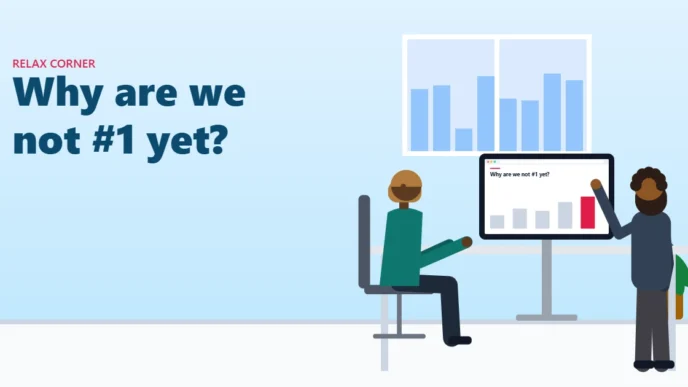
Match the claim to the page, name the section and offer a dated check. For a lighter take on the same conversation, see Why aren’t we #1 yet? Five stages of client grief.
Sources
- Google Search Central, Search Engine Optimization (SEO) Starter Guide. Read on 10 November 2026.
- Google Search Central, Do you need an SEO? (hiring guidance). Read on 10 November 2026.