



March 2026 was one of the most turbulent months in recent SEO history. Three separate Google algorithm events, a deepening AI Overviews CTR crisis, and new data on what it actually takes to survive in modern search combined to reshape the industry’s priorities almost overnight.
Table of Contents
Toggle1. The February Discover Update Completed — And Set the Stage for March
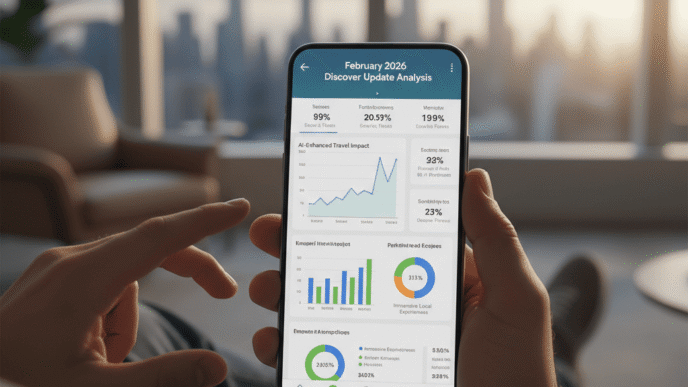
The chaos of March actually began in February. On February 5, 2026, Google rolled out its first-ever Discover-specific core update — a separate algorithm now tuned for interest-based content consumption rather than keyword-based search.
The update had three distinct impacts. Google Discover now places greater weight on geographic relevance, with content aligning to a user’s country or region far more likely to surface in their feed. Sensational or misleading headlines were deprioritised, while in-depth, original, and timely content from niche-authority sites was rewarded.
In the US, the range of domains appearing in Discover feeds visibly shrank. Distribution concentrated, meaning fewer publishers captured more of the visibility — and the gap between those inside and outside that group widened.
The practical lesson: sites relying on aggregating or lightly rewriting existing information saw Discover impressions drop significantly, while publishers investing in original reporting, proprietary data, expert commentary, and first-hand experience saw their Discover visibility increase.
2. The March 2026 Spam Update: Fastest in Google’s History
The March 2026 spam update rolled out and completed in under 20 hours on March 24–25 — the shortest confirmed spam update in the Search Status Dashboard’s history.
The sequencing of spam update followed by core update was not coincidence. Roger Montti, writing for Search Engine Journal, noted that spam fighting is logically part of the broader quality reassessment in a core update — comparable to “clearing the table” before recalibrating core ranking signals.
The spam update targeted scaled content abuse, manipulative link building, and sites publishing templated AI-written pages in bulk to capture long-tail keyword traffic.
3. The March 2026 Core Update: Google’s First Broad Ranking Update of the Year
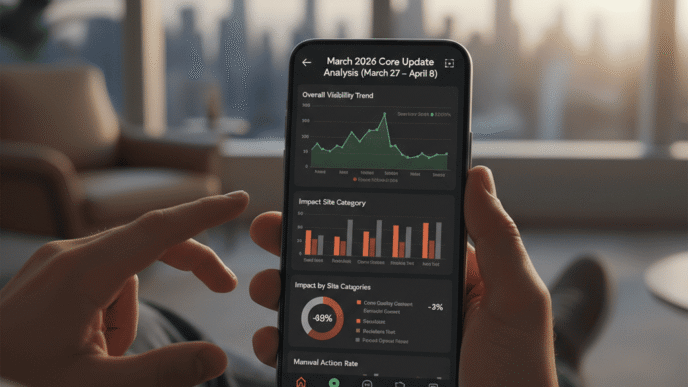
The March 2026 core update began on March 27 at 2:00 AM PT and completed on April 8, making the total rollout 12 days — within Google’s original two-week estimate and faster than the December 2025 core update, which took 18 days.
Google described it as “a regular update designed to better surface relevant, satisfying content for searchers from all types of sites,” but did not publish a companion blog post or announce specific goals.
The Semrush sensor hit a volatility score of 9.4 to 9.5 on a ten-point scale within hours of the launch — among the highest values ever recorded.
SEO consultant Glenn Gabe, who tracked visibility across thousands of previously impacted sites, noted the March update felt less powerful than December 2025’s — which he described as “huge” and “extremely powerful.” The March rollout was more gradual and overall volatility was not off the charts for most monitored sites, though individual sites did see sharp movements in both directions.
What the Data Shows
Sites offering original data saw visibility increases of around 22%, while sites relying heavily on scaled or templated AI-generated content experienced traffic declines of up to 71%.
The update deployed what analysts believe is Google’s Gemini 4.0 Semantic Filter, more accurately identifying content produced at scale without meaningful human editorial oversight. The pattern in ranking data was clear: sites using AI as a production tool — where AI drafts and humans add real expertise, examples, and editorial judgment — performed well. Sites using AI as a replacement for human expertise dropped.
The update also appears to have implemented page-level authority evaluation more aggressively, targeting what analysts call “parasitic SEO” — low-quality content sections published on otherwise authoritative domains to piggyback on a strong domain’s overall trust.
Who Got Hit Hardest
Affiliate sites saw the highest negative impact rate of any category, with 71% experiencing ranking drops. Syndicated content, particularly on Google Discover, also suffered major losses. Yahoo reportedly dropped 47% in Discover traffic, according to Lily Ray, VP of SEO Strategy at Amsive, who noted that “syndicated content has been a BIG problem in Discover for years.
AI content farms lost 60–80% of their traffic. HubSpot reportedly lost 70–80% of organic traffic after years of broad top-of-funnel content with weak product connection.
A New Concept Emerged: Information Gain
The March 2026 update re-weighted what the SEO community calls “Information Gain” — a ranking signal that measures how much genuinely new knowledge a piece of content adds relative to what already ranks for the same query.
The question Google now appears to ask of every page: if this content disappeared from the internet tomorrow, would anyone lose access to information they couldn’t find somewhere else?
4. The AI Overviews CTR Crisis Deepens
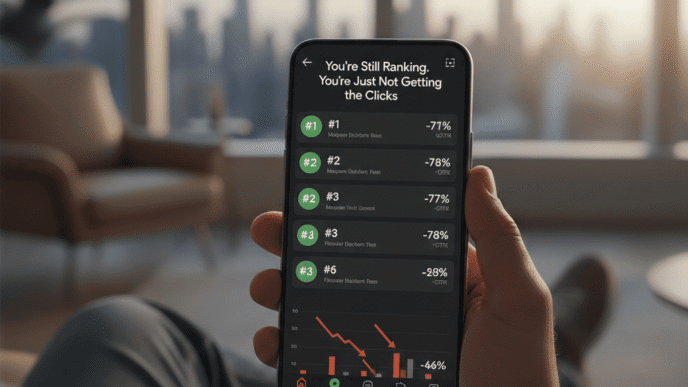
March made one structural problem impossible to ignore: ranking is no longer the same thing as receiving traffic.
Seer Interactive’s analysis of 3,119 informational queries across 42 organisations found that organic CTR dropped 61% for queries where an AI Overview appeared — falling from 1.76% to 0.61% between June 2024 and September 2025.
AI Overviews now appear for 82% of all B2B technology searches, up from 36% a year ago. Pages ranking number one experience an average CTR drop of 34.5% when an AI Overview appears for their target keywords.
But there is a clear upside for those who earn citation. Seer Interactive found that brands cited within AI Overviews earn 35% more organic clicks and 91% more paid clicks than brands not cited on the same queries — meaning one citation inside an AI Overview can generate more qualified traffic than ranking in position three through traditional results.
Lily Ray’s keynote at Affiliate Summit West 2026 framed the shift directly: the core metric is moving from rankings to visibility — how frequently a brand is cited or mentioned in AI-generated answers. Share of voice across LLMs is the new competitive metric.
5. Google Maps Gets Gemini Integration
On March 12, Google announced significant changes coming to iOS and Android users of Google Maps, incorporating Gemini into its maps app to create a more helpful, immersive experience. For businesses with physical locations, this makes keeping Google Business Profiles accurate and up to date more important than ever.
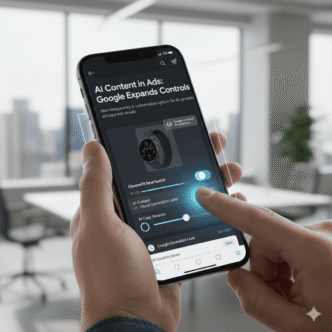
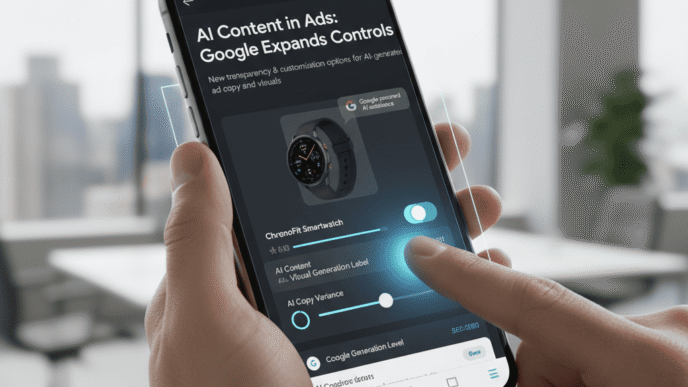
6. AI Content in Ads: Google Expands Controls
Google gave advertisers more control over AI-generated ad copy through expanded text guidelines in AI Max campaigns. The feature is available globally across all languages and verticals, allowing advertisers to implement brand-safe guidelines for the generative AI creating their ad copy.
The Month in Summary: What It All Means
March 2026 produced three separate Google algorithm events in under four weeks — a Discover update, a spam update, and a broad core update — alongside mounting evidence that organic CTR on informational queries is structurally declining due to AI Overviews.
The consistent thread running through all of it: winning in 2026 search is not just about ranking at position one — it is about being the source that Google’s AI trusts to cite. Original, authoritative content that demonstrates genuine expertise is more likely to be pulled into AI Overviews. Thin, summarised content is being excluded.
For publishers, the strategic implication is blunt. Producing more content is no longer a growth strategy. Owning a topic, demonstrating verifiable expertise, and building proprietary assets that cannot be replicated are now the primary competitive moats in organic search.
Sources: Search Engine Journal, Search Engine Land, SE Roundtable, Seer Interactive, Amsive / Lily Ray, Semrush Sensor, Ahrefs, Pew Research Center, Bain & Co, HubSpot State of Marketing 2026.