

Morgan: —okay, I think we’re good. Can you hear me?
Sarah: Yeah, you’re coming through. Little echoey but I can hear you.
Morgan: Sorry, I’m in my car actually. My apartment building lost power like an hour ago and I have a deadline, so… [laughs] …here we are.
Sarah: [laughs] Hey, I’ve done interviews from weirder places. Last week I was in a Starbucks bathroom because it was the only quiet spot.
Morgan: [laughs] Okay, you win. Alright, so— [pause] —you mentioned on Twitter that thing about the AI content disaster? The 500 posts?
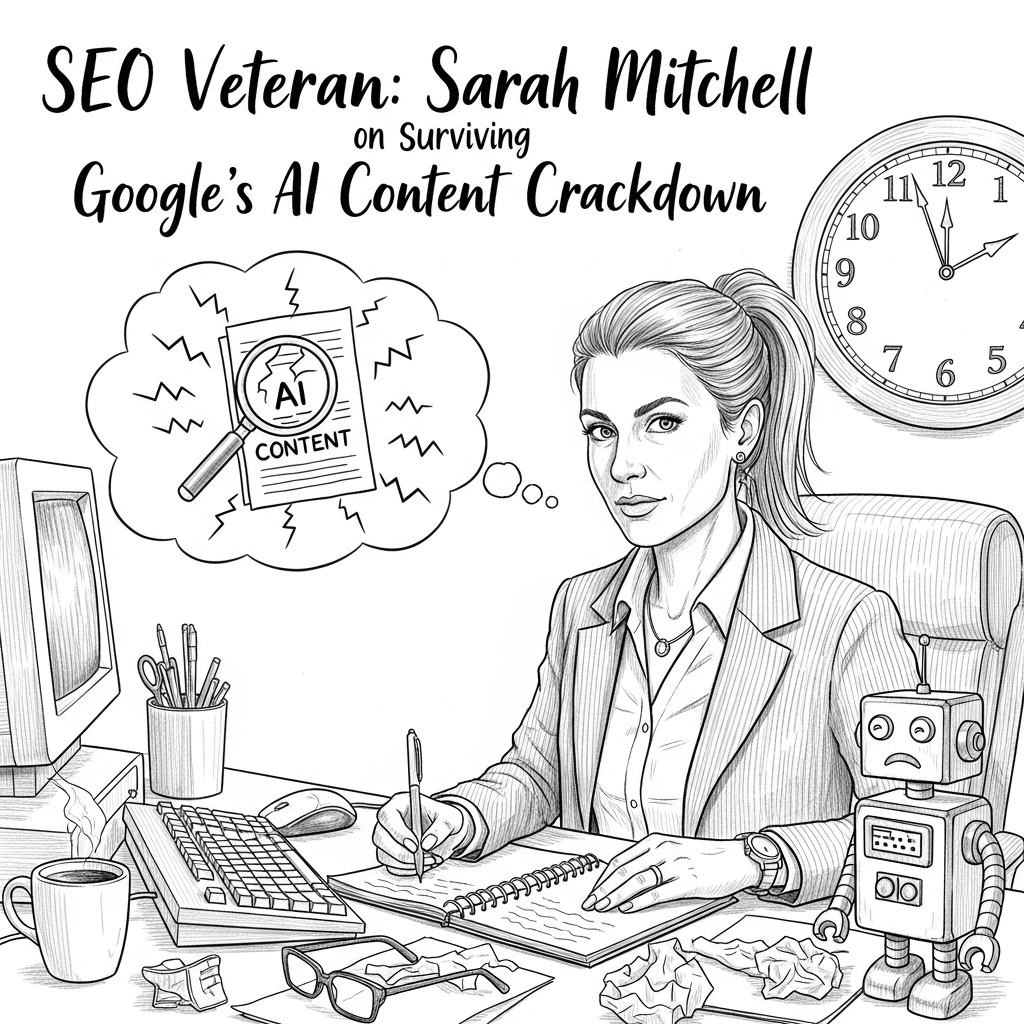
Sarah: Oh god. [long exhale] Yeah. That was… [pause] …that was February through April 2023. Which feels like a lifetime ago now but also like it just happened, you know?
Morgan: I want to hear everything. Start wherever you want.
Sarah: Okay, so… [clears throat] …I should probably give you some context first. This was early 2023, right? ChatGPT had just blown up, everyone’s talking about AI content, and I’m the Content Director at this B2B SaaS company. We did project management software for construction companies.
Morgan: Okay.
Sarah: And we’d been doing content marketing for like three years at that point. Blog posts, case studies, the whole thing. But it was slow. We were publishing maybe 8 to 10 posts a month, and each one took forever. Research, writing, editing, it was like a week per post minimum.
Morgan: That’s pretty standard though.
Sarah: Right! That’s what I thought. But then our CMO— guy named Derek— he comes to me in like late January and he’s like, “I just saw a demo of GPT-4. We need to be doing more content.” And I’m like, “Okay, how much more?” And he goes— [laughs] —he goes, “What if we did 500 posts in three months?”
Morgan: [pause] Wait, 500?
Sarah: 500. I remember just staring at him like… is this guy serious? And he was dead serious. He’d read some article about programmatic SEO and AI content, and he was convinced this was our competitive advantage.
Morgan: What did you say?
Sarah: I said— [pause] —honestly, I can’t remember exactly what I said. Something like “That seems ambitious” which is corporate speak for “That’s insane.” But he was my boss, and he was really excited about it, so… [trails off]
Morgan: So you said yes.
Sarah: I said yes. [pause] God, I wish I hadn’t.
Morgan: Walk me through how you even did it. Like, what was the process?
Sarah: Okay, so I spent like two weeks in February just setting everything up. I created this massive spreadsheet with 500 different long-tail keywords. All construction project management stuff. “How to manage subcontractors in cold weather,” “Best practices for construction site safety,” you know, super specific.
Morgan: Uh-huh.
Sarah: And then I built these really detailed prompts for ChatGPT. I’m talking like 800-word prompts with our brand voice, key points to cover, SEO requirements, everything. I thought I was being smart, you know? Like, if the prompts were good enough, the content would be good.
Morgan: Was it?
Sarah: [laughs darkly] I mean, it looked good. That was the problem. It looked really good. The grammar was perfect, the structure was logical, it hit all the keywords. If you just skimmed it, you’d think a human wrote it.
Morgan: But?
Sarah: But it was… [pause] …it was soulless. Like, there were no real examples, no specific stories, no actual expertise. Just this perfectly formatted, completely generic advice that could have been about anything.
Morgan: Did you notice that at the time?
Sarah: [long pause] Yes and no. Like, I knew it wasn’t as good as our best human-written content. But I told myself it was good enough. And Derek kept pushing me, like “We need to hit these numbers,” so I just… kept going.
Morgan: When did you publish them?
Sarah: We started publishing in early March. Like 8 posts a day, every day, for… god, I don’t even know. Six weeks? Seven? It was relentless.
Morgan: And what happened to your traffic?
Sarah: [pause] It exploded. Like, within two weeks, our organic traffic was up 40%. By week four, we were up 120%. We were ranking for hundreds of new keywords. Derek was ecstatic. He sent this company-wide email being like “Look what the content team accomplished!”
Morgan: That must have felt good.
Sarah: It felt amazing! For like… [pause] …for like six weeks, I felt like a genius. I was getting all this praise, people were asking me to present my process to other teams, I got a bonus. It was… [trails off]
Morgan: When did it fall apart?
Sarah: [exhales sharply] April 18th, 2023. It was a Tuesday. I remember because I was supposed to be off that day— I’d taken a personal day to go to my niece’s birthday party— and my phone starts blowing up around 11 AM.
Morgan: What happened?
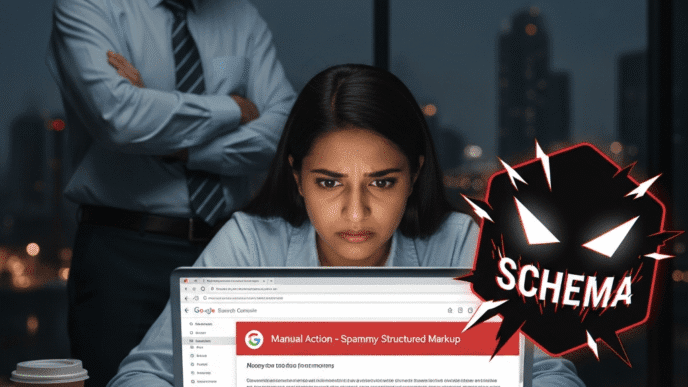
Sarah: Derek called me. And the second I answered, I knew something was wrong. He’s like, “Sarah, did you check Search Console this morning?” And I’m like, “No, I’m off today, what’s going on?” And he goes— [pause] —he goes, “We got a manual action. For spam.”
Morgan: Oh no.
Sarah: Yeah. My stomach just… dropped. I’m standing in my sister’s backyard with all these kids running around, and I’m just frozen. And Derek’s like, “How soon can you get to a computer?”
Morgan: What did you do?
Sarah: I left. Just… left the party. Drove home, opened my laptop, and there it was. Manual action notification. “Google has detected that some pages on your site may be using spammy techniques.” And I’m reading through it, and they’re specifically calling out our blog posts from March and April.
Morgan: All 500 of them?
Sarah: Not all of them, but like… [pause] …350? Maybe 400? Most of them. And the traffic had already started tanking. We were down like 60% from our peak.
Morgan: [low whistle] What did you do first?
Sarah: [laughs] I panicked. Like, full panic mode. I called Derek back and I’m trying to explain what happened, and he’s asking me questions I don’t know the answers to. “Did you disclose these were AI-written?” No. “Did you have humans review them?” Not really. “Can we fix this?” I don’t know.
Morgan: That sounds awful.
Sarah: It was the worst professional moment of my life. Hands down. And then Derek says— and I’ll never forget this— he says, “We need to figure out if this is your fault or Google’s fault.”
Morgan: Ouch.
Sarah: Yeah. [pause] Which is his way of saying “This might be your fault, and if it is, there will be consequences.”
Morgan: What did you tell him?
Sarah: I said— [pause] —I mean, what could I say? I said it was probably both. Google’s guidelines on AI content were still pretty vague at that point, but I also knew I’d cut corners. I hadn’t edited the posts carefully, I hadn’t added real expertise, I’d just… published a bunch of AI slop and hoped for the best.
Morgan: Did he fire you?
Sarah: Not immediately. He put me on this “improvement plan” which is basically like… you’re on thin ice. And he told me I had two weeks to fix the manual action or we’d need to “explore other options.”
Morgan: How do you even fix something like that?
Sarah: [exhales] Okay, so this is where it gets really messy. My first instinct was to just delete all the AI posts. Just nuke them. But our SEO consultant— woman named Andrea— she convinced me that was a bad idea because we’d lose all the legitimate rankings we’d built.
Morgan: So what did you do?
Sarah: We went through every single post. All 500. And we categorized them into three buckets. Posts that were completely unsalvageable— those got deleted. Posts that had good bones but needed work— those got heavily edited by humans. And posts that were actually okay— those got kept but with editor’s notes added.
Morgan: How long did that take?
Sarah: [laughs bitterly] Three weeks. I worked 80-hour weeks. I hired two freelancers out of my own pocket to help. I didn’t sleep. My girlfriend almost left me because I was just… a zombie.
Morgan: And did it work?
Sarah: Eventually. We submitted the reconsideration request on May 12th. Didn’t hear anything for like 10 days. And then on May 23rd, we got the email that the manual action was lifted.
Morgan: That must have been a relief.
Sarah: [pause] Yes and no. The manual action was gone, but our traffic didn’t just bounce back. We’d lost so much trust and authority. It took months to recover. By the time I left the company in September, we were only back to like 70% of our pre-disaster traffic.
Morgan: Wait, you left?
Sarah: [laughs] Yeah. Derek made it pretty clear I wasn’t going to advance there. And honestly, I didn’t want to stay. The whole thing had just… [trails off] …it broke something for me, you know?
Morgan: What do you mean?
Sarah: I mean, I’d spent three months doing something I knew was wrong, or at least questionable, because my boss told me to. And then when it blew up, I was the one holding the bag. And I just thought… [pause] …I can’t do this anymore.
Morgan: Do you think it was your fault?
Sarah: [long pause] Yes. I mean, Derek pushed me to do it, and he was adamant about the numbers, but I’m the one who executed it. I could have pushed back harder. I could have insisted on more human review. I could have… [trails off]
Morgan: But you were doing what your boss told you to do.
Sarah: I know, but that’s not an excuse. I’m the expert, right? I should have known better. And I did know better. I just… chose not to listen to myself.
Morgan: [pause] Can I ask you something?
Sarah: Yeah.
Morgan: Did you ever calculate how much money the company lost?
Sarah: [exhales] Derek did. He told me we lost about $340,000 in pipeline revenue because of the traffic drop. Plus the cost of my time, the freelancers, the consultant fees… it was probably closer to $400K all in.
Morgan: Jesus.
Sarah: Yeah. [pause] I actually wrote him a check for $5,000 when I left. Which was like half my savings at the time. He didn’t ask me to, but I felt like I had to.
Morgan: Did he cash it?
Sarah: [laughs] No. He sent it back with a note that said “Lesson learned for both of us.” Which was… I don’t know. Generous? Passive-aggressive? Both?
Morgan: Where are you working now?
Sarah: I’m at a different company. Smaller, healthier culture. We do AI content still, but it’s like… one post a week, and it goes through three rounds of human editing. Super slow, super careful.
Morgan: How do you feel about AI content now?
Sarah: [long pause] Complicated. I don’t think AI content is inherently bad. I think it can be a tool. But I also think the way most people use it— including the way I used it— is lazy and harmful. Like, if you’re using AI to replace human expertise instead of augment it, you’re going to get burned eventually.
Morgan: Do you think Google’s manual action was fair?
Sarah: [pause] Yeah. I do. I mean, we published 500 posts in six weeks. That’s not natural. That’s not human. And most of them were low-quality. So yeah, we deserved it.
Morgan: That’s a pretty mature take.
Sarah: [laughs] Well, it took me like six months of therapy to get here, so…
Morgan: [laughs] Fair. Do you ever have nightmares about it?
Sarah: Oh god, yes. I still have this recurring dream where I’m trying to edit 500 posts at once and they keep multiplying. And I’m just drowning in AI-generated content that all sounds the same.
Morgan: That’s horrifying.
Sarah: [laughs] It really is. But you know what’s weird? I’m actually kind of grateful it happened.
Morgan: Really?
Sarah: Yeah. Because it taught me… [pause] …it taught me that shortcuts don’t work. Not in SEO, not in content, not in anything. And it taught me to trust my gut. Like, I knew it was a bad idea from the beginning, but I ignored that feeling. I won’t do that again.
Morgan: What would you tell someone who’s thinking about doing what you did?
Sarah: [exhales] Don’t. Just… don’t. If you’re going to use AI for content, use it for outlines, for research, for first drafts. But don’t publish AI content at scale without serious human oversight. It’s not worth the risk.
Morgan: Even if it works for a few weeks?
Sarah: Especially if it works for a few weeks. Because that just makes the fall harder. [pause] Trust me.
Morgan: [pause] Can I ask one more thing?
Sarah: Sure.
Morgan: Do you still talk to Derek?
Sarah: [laughs] No. We’re connected on LinkedIn but we don’t talk. I think we’re both just… embarrassed by the whole thing, you know?
Morgan: Yeah.
Sarah: [pause] Which is fine. Some chapters need to close.
Morgan: [sound of car door opening] Oh shit, sorry, someone just— [muffled voices] —yeah, I’ll be out in a second. [back to Sarah] Sorry, parking enforcement is here and I think they’re about to ticket me.
Sarah: [laughs] Oh no! Go, go!
Morgan: [laughs] Okay, I should— thank you for being so honest about all this. I know it probably wasn’t fun to relive.
Sarah: You know what? It actually kind of was. Like, therapeutic almost. I don’t talk about it much.
Morgan: Well, if you ever want to talk about other disasters, I’m around.
Sarah: [laughs] Let’s hope I don’t have any more disasters.
Morgan: [laughs] Fair enough. Alright, I’m gonna go deal with this parking situation.
Sarah: Good luck! Don’t get towed!
Morgan: [laughs] Thanks! Bye Sarah!
Sarah: Bye!
[end]
Table of Contents
ToggleKey Lessons Learned
“If you’re using AI to replace human expertise instead of augment it, you’re going to get burned eventually.”
1. Scale Without Quality Is a Recipe for Disaster
Sarah’s story demonstrates that publishing 500 AI-generated posts in six weeks might generate short-term traffic gains, but Google’s algorithms (and manual reviewers) will eventually catch on. The 83% traffic drop and $400K in losses far outweighed the brief 120% traffic spike.
2. Listen to Your Gut When Something Feels Wrong
“I knew it was a bad idea from the beginning, but I ignored that feeling. I won’t do that again.”
Even when pressure comes from leadership, SEO professionals need to trust their expertise. Sarah admits she knew the strategy was questionable but executed it anyway—a decision that nearly cost her career.
3. AI Content Requires Rigorous Human Oversight
The difference between Sarah’s failed experiment and her current approach is striking: instead of 8 AI posts per day with minimal review, she now publishes one post per week with three rounds of human editing. Quality and expertise must be the priority, not volume.
4. Manual Actions Don’t Bounce Back Quickly
Even after the manual action was lifted in May, Sarah’s company only recovered to 70% of their original traffic by September. The long-term damage to domain authority and trust takes months—sometimes years—to rebuild.
5. Personal Accountability Matters
“Derek pushed me to do it, but I’m the one who executed it. I could have pushed back harder.”
While organizational pressure plays a role, Sarah took ownership of her decision to prioritize speed over quality. This accountability, though painful, became a turning point in her professional growth.
6. The “Good Enough” Fallacy
AI-generated content that “looked good” and had “perfect grammar” wasn’t actually good enough. Without real examples, specific stories, and genuine expertise, the content was—in Sarah’s words—”soulless.” Google noticed, and so did users.
7. Shortcuts Always Have a Cost
The three weeks of 80-hour workweeks trying to fix the mess, the freelancers hired out-of-pocket, the career setback, the \$5,000 personal check, and six months of therapy—these costs far exceeded any benefit from the initial traffic surge.
About Sarah Mitchell
Sarah Mitchell is a Content Director and SEO strategist with over 8 years of experience in B2B SaaS content marketing. After earning her degree in Communications from the University of Washington, she began her career as a freelance writer before transitioning into in-house content roles.
Sarah’s early career was marked by success—she helped three different startups build their content programs from scratch, with one achieving a 300% increase in organic traffic under her leadership. Her expertise in long-form content strategy and thought leadership made her a sought-after hire in the competitive Seattle tech scene.
The 2023 AI content experiment at ContentScale (her employer at the time) became a defining moment in her career. What started as an ambitious attempt to leverage emerging AI technology for competitive advantage ended in a Google manual action, $400K in losses, and a profound professional reckoning.
“The whole experience taught me that there’s no substitute for genuine expertise and careful craft. AI is a tool, not a replacement for human judgment.”
Since leaving ContentScale in September 2023, Sarah has rebuilt her career with a more measured, quality-focused approach to AI-assisted content. She currently serves as Content Director at a mid-sized construction tech company, where she advocates for sustainable content practices that prioritize expertise and user value over volume.
Sarah now speaks openly about her experience as a cautionary tale for content teams tempted by the promise of AI-generated content at scale. She’s become an advocate for ethical AI use in content marketing, arguing that the technology works best as an assistant to human experts rather than a replacement for them.
In her spare time, Sarah volunteers as a mentor for early-career content marketers and writes about responsible AI practices on her personal blog. She lives in Seattle with her girlfriend and their two rescue dogs.
Editor’s Note: This interview has been edited for length and clarity. The conversation took place in Morgan’s car during a power outage, with minor background noise removed for readability.