


SEO Automation Gone Wrong: Lisa Chen’s $18K Technical Audit Disaster
Lisa: Hello? Morgan?
Morgan: Hey! Yeah, I can hear you. Can you hear me?
Lisa: Barely. You’re super quiet. Can you— [static] —there, that’s better.
Morgan: Sorry, I’m using my AirPods and the battery’s dying. Let me switch to my phone. [rustling sounds] Okay, can you hear me now?
Lisa: Yeah, perfect. So what’s this about? You said something about technical SEO disasters?
Morgan: [laughs] Yeah. I heard through the grapevine that you built an AI audit tool that… how did someone describe it… “spectacularly fucked up a client site”?
Lisa: [long pause] Oh god. Who told you about that?
Morgan: I’m not gonna say. But they said you’d probably be willing to talk about it. Were they wrong?
Lisa: No, they weren’t wrong. I’ve actually been thinking I should talk about it publicly. Like, as a warning to other people. But it’s still embarrassing.
Morgan: Well, that’s kind of the whole point of these interviews. Real talk about real fuckups.
Lisa: [laughs] Okay. Yeah. Let’s do it. Where do you want me to start?
Morgan: Start with who you are and what you do.
Lisa: I’m Lisa Chen. I’m a Technical SEO Specialist— have been for about nine years now. I work at this agency called AuditFlow. We do technical audits for mid-to-large sized websites. E-commerce, SaaS, media companies, that kind of thing.
Morgan: And you built an AI tool?
Lisa: Yeah. Well, I built it with help. I’m not a developer, but I know enough Python to be dangerous. Which, in retrospect, is exactly the problem.
Morgan: When did you build it?
Lisa: I started in January 2024. We were getting slammed with audit requests and I was basically drowning. Like, a proper technical audit takes me 20-30 hours of work. Site crawls, backlink analysis, Core Web Vitals review, schema markup validation— it’s a lot. And we had this backlog of like 15 clients waiting.
Morgan: So you thought, let me automate it.
Lisa: Exactly. And it seemed smart at the time! Everyone was talking about AI agents that could do complex tasks. So I thought, what if I could build an agent that did the grunt work and I just reviewed its recommendations?
Morgan: What did the agent actually do?
Lisa: It would take in a domain, run Screaming Frog, pull backlink data from Ahrefs, grab Core Web Vitals from PageSpeed Insights, and then use Claude— the AI, not you— to analyze all that data and generate recommendations.
Morgan: That sounds… reasonable?
Lisa: It was reasonable! At least, I thought it was. I tested it on our own website first. The recommendations were good. Then I tested it on two client sites where I’d already done manual audits, and it caught like 80% of the same issues I’d found. I was so proud of myself.
Morgan: When did you use it on a real client?
Lisa: March. We had this client— B2B SaaS company, subscription management software. They’d been with us for like two years. Good relationship, lots of trust. They wanted a comprehensive audit before a big site redesign.
Morgan: And you ran your AI agent on them.
Lisa: Yep. Took about three hours instead of the usual 25. The agent generated this beautiful 47-page PDF report. Looked professional as hell. Color-coded issues by severity, specific recommendations for each problem, the whole nine yards.
Morgan: What did the report say?
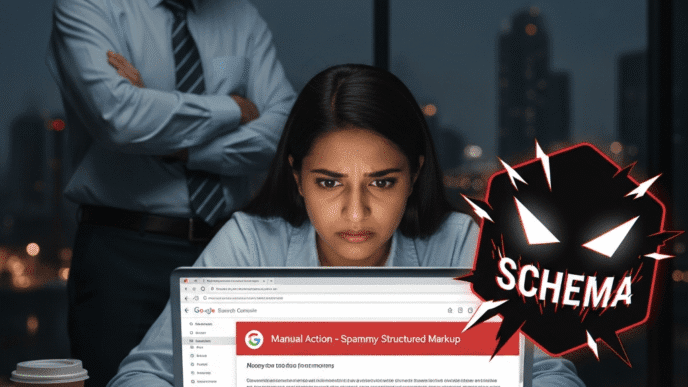
Lisa: Lots of standard stuff. Some mobile usability issues, a few broken internal links, some schema markup that could be improved. And then at the end, there was this section on backlinks. The agent had identified 10,847 backlinks that it flagged as “low quality and potentially harmful” and recommended disavowing them.
Morgan: 10,000 backlinks?
Lisa: 10,847. And I remember looking at that number and thinking, “Wow, they have a lot of spammy links.” But I didn’t actually check them. I just… trusted the AI.
Morgan: Oh no.
Lisa: Oh yes. So I send the report to the client— guy named Tom, their VP of Marketing. And he’s like, “This is great, super thorough, let’s implement everything.” And I’m like, “Perfect, we can knock this out in two weeks.”
Morgan: Did you implement the disavow file?
Lisa: We did. Tom’s team handled most of the on-site stuff— the mobile issues, the broken links, whatever. But the disavow file, that was on us. So I took the list of 10,847 domains from the report, formatted it properly, and submitted it to Google Search Console on March 28th.
Morgan: When did you realize something was wrong?
Lisa: Not for three weeks. Three. Weeks. Because disavows take time to process, right? So I wasn’t expecting to see immediate changes. But in mid-April, Tom emails me and he’s like, “Hey, our traffic is down about 15% over the last two weeks. Is that related to the audit changes?”
Morgan: What did you say?
Lisa: I said it was probably just normal fluctuation. Which, in my defense, 15% fluctuation isn’t that unusual. But then a week later, he emails again. “We’re down 30% now. Something’s wrong.”
Morgan: What did you do?
Lisa: I panicked internally but stayed calm externally. I told him I’d investigate. So I logged into their Search Console and started digging through the data. And their rankings had just… collapsed. Like, pages that were ranking positions 1-5 for their main keywords were now at positions 15-25.
Morgan: Did you connect it to the disavow file?
Lisa: Not immediately. My first thought was that maybe Google had rolled out an algorithm update. So I checked all the SEO news sites, checked Twitter, asked in some SEO communities. But there was no update. Nothing had changed except the stuff we’d implemented.
Morgan: When did you figure it out?
Lisa: April 24th. I’m sitting at my desk at like 9 PM because I’ve been stress-investigating this for days, and I decide to actually look at the disavow file. Like, really look at it. Not just the number of domains, but the actual domains.
Morgan: And?
Lisa: And the third domain on the list was TechCrunch. The AI had recommended disavowing a backlink from TechCrunch.
Morgan: [pause] Oh my god.
Lisa: Yeah. And I keep scrolling. Forbes. Entrepreneur. The New York Times. Industry-specific trade publications. Every single high-authority backlink they’d earned over the years, the AI had flagged as “low quality and potentially harmful.
Morgan: Why? How did that even happen?
Lisa: I spent the next two days figuring that out. Turns out, the AI was using anchor text as its primary quality signal. And all these authoritative sites were linking to them with generic anchor text like “subscription management” or “learn more” or just their company name. The AI interpreted generic anchor text as a sign of a low-quality link.
Morgan: That’s… that’s insane.
Lisa: It gets worse. The AI also flagged any domain with a high spam score in Ahrefs as problematic. But “spam score” in Ahrefs is predictive, not definitive. And some of the domains had elevated spam scores just because they had a lot of external links, which is normal for news sites and media companies.
Morgan: So the AI basically disavowed all their best backlinks.
Lisa: Every. Single. One. Out of 10,847 disavowed domains, I’d estimate maybe 200 were actually spammy. The other 10,600+ were either neutral or actively beneficial. And the most beneficial ones— the authoritative, high-trust domains— got nuked.
Morgan: What did you tell Tom?
Lisa: [long exhale] I called him. Didn’t email, called. And I said, “I found the problem, and it’s my fault.” And then I explained what happened. And there’s just this silence on the phone for like 30 seconds.
Morgan: What did he say?
Lisa: He said— and I’ll never forget this— he said, “Lisa, I trusted you.” Not angry, just… disappointed. Which somehow felt worse.
Morgan: What happened next?
Lisa: We immediately removed the disavow file. Like, that day. But here’s the thing about disavows— removing them doesn’t instantly restore your rankings. Google has to recrawl your backlink profile, reprocess everything. It can take weeks or months.
Morgan: How long did it actually take?
Lisa: For their rankings to fully recover? About four months. But even after four months, they weren’t quite back to where they’d been. They plateaued at about 90% of their original traffic.
Morgan: Did they fire you?
Lisa: They didn’t fire the agency, but they did request a different account manager. I don’t blame them. And we refunded them for six months of services, which came out to about $18,000.
Morgan: Out of your pocket?
Lisa: No, the agency ate it. But it definitely affected my standing there. I didn’t get a bonus that year. And my boss made it very clear that this was a major fuckup.
Morgan: How did that feel?
Lisa: Awful. Like, I’d been so proud of building this AI tool. I thought I was innovating, being efficient, solving a real problem. And instead, I’d just… broken a client’s website because I was too lazy to check the AI’s work.
Morgan: Do you think you were lazy, or do you think you were trusting?
Lisa: [pause] Both? I mean, I trusted the AI because I wanted to trust it. Because if I could trust it, that meant I could do more work in less time. But I should have known better. I should have spot-checked the recommendations. I should have at least looked at a sample of those 10,000 domains before disavowing them.
Morgan: Did you tell anyone else at the agency what happened?
Lisa: Yeah, I had to. We did this whole post-mortem meeting where I walked everyone through what went wrong. And it was humiliating, but also necessary. Because other people were starting to experiment with AI tools too, and they needed to know the risks.
Morgan: What did you learn from that meeting?
Lisa: That AI is really good at following patterns, but really bad at understanding context. The AI saw “generic anchor text + elevated spam score = bad link” and just applied that rule uniformly. It didn’t understand that TechCrunch is authoritative even if the anchor text is generic. It couldn’t differentiate between a spammy blog network and a legitimate news site.
Morgan: Do you still use the AI audit tool?
Lisa: Hell no. I deleted it. Well, I archived it. But I don’t use it. And I went back to doing manual audits. Which sucks because I’m back to spending 25 hours per audit instead of 3.
Morgan: Do you use AI for anything in your work now?
Lisa: Yeah, but way more carefully. I use ChatGPT to write first drafts of audit reports. I use Claude to help me understand complex technical issues. But I don’t let AI make decisions anymore. It’s a research assistant, not a consultant.
Morgan: Has your relationship with Tom recovered?
Lisa: Not really. I reached out to him a few months after the whole thing to apologize again and see how they were doing. He was polite but distant. I think that bridge is pretty much burned.
Morgan: Do you feel like you were scapegoated?
Lisa: No. I mean, I’m the one who built the tool. I’m the one who didn’t check its work. I’m the one who submitted that disavow file. Nobody forced me to do any of that. So yeah, it was my fault.
Morgan: That’s pretty accountable of you.
Lisa: [laughs] What else am I going to do? Blame the AI? I built the AI. I chose to trust it. That’s on me.
Morgan: Have you warned other people about this?
Lisa: I try to, yeah. Whenever I see someone in a community talking about building AI tools for SEO, I’m like, “Cool, just make sure you’re checking its work.” Some people listen. Some people think I’m being paranoid.
Morgan: Do you think you’re being paranoid?
Lisa: No. I think I’m being realistic. AI is powerful, but it’s not infallible. And in SEO, one bad recommendation can destroy months or years of work. So yeah, be careful.
Morgan: What would you do differently if you could go back?
Lisa: [pause] I’d still build the tool, but I’d add a human review step. Like, the AI generates recommendations, and then I spend 2-3 hours reviewing them before they go into the report. That way I get the efficiency gains without the catastrophic risk.
Morgan: Why didn’t you do that the first time?
Lisa: Because I wanted to save time. Which is so stupid in retrospect. Like, what’s the point of saving 20 hours if you cause $18,000 in damages and lose a client’s trust?
Morgan: Fair point.
Lisa: Yeah. [pause] You know what the worst part is?
Morgan: What?
Lisa: I’m still tempted to automate things. Like, even after all this, I see a repetitive task and I think, “I bet I could build a script for this.” It’s like an addiction.
Morgan: Do you act on it?
Lisa: Sometimes. But now I test everything to death first. And I never, ever let AI touch anything related to backlinks without human review.
Morgan: Sounds like you learned your lesson.
Lisa: [laughs] Yeah. The hard way.
Morgan: Do you think other people are making the same mistakes you made?
Lisa: Oh, definitely. I see people on Twitter all the time talking about fully automated SEO workflows. And I’m just like, “Good luck with that.” Because eventually, something’s going to break. And when it does, they’re going to be in the same position I was— frantically trying to undo the damage while their client’s traffic crashes.
Morgan: What do you think the future of AI in SEO looks like?
Lisa: I think AI will be a copilot, not an autopilot. It’ll help you work faster, but you still need to be the one making decisions. Anyone who tries to fully automate SEO with AI is going to get burned, just like I did.
Morgan: That’s probably good advice.
Lisa: It’s advice I wish I’d followed before I broke a client’s site.
Morgan: [laughs] Well, at least you can warn other people now.
Lisa: Yeah. Silver lining, I guess.
Morgan: Alright, I should let you go. This was really helpful though. Thanks for being so honest about it.
Lisa: Thanks for not judging me too harshly.
Morgan: Hey, we’ve all made mistakes. Yours just had a bigger dollar amount attached.
Lisa: [laughs] Wow, thanks for that.
Morgan: [laughs] Sorry, I’m kidding. But seriously, thanks for talking through this. I think it’ll help people.
Lisa: I hope so. Alright, take care Morgan.
Morgan: You too, Lisa.
[end]
Table of Contents
ToggleKey Lessons Learned
“AI is really good at following patterns, but really bad at understanding context.”
1. AI Can’t Replace Domain Expertise
Lisa’s AI agent correctly followed its programmed logic: generic anchor text + elevated spam score = bad link. But it completely missed the crucial context that TechCrunch, Forbes, and The New York Times are authoritative domains regardless of anchor text patterns.
2. Testing on Your Own Site Isn’t Enough
The AI tool worked well on AuditFlow’s website and matched 80% of Lisa’s previous manual audits. But those tests didn’t reveal the catastrophic blind spot in backlink analysis because they didn’t involve disavowing thousands of links.
3. Blind Trust in Automation Is Dangerous
“I should have at least looked at a sample of those 10,000 domains before disavowing them.”
Lisa saw “10,847 backlinks flagged” and trusted the number without spot-checking even a handful of examples. A 10-minute review would have immediately revealed the error.
4. The Numbers Looked Professional, But Were Wrong
The 47-page PDF report was beautifully formatted with color-coded severity levels and specific recommendations. Professional presentation masked fundamentally flawed analysis—appearance doesn’t equal accuracy.
5. Disavow Files Are Nuclear Weapons
Disavowing 10,847 backlinks—including every authoritative link the client had earned—caused a 50% ranking drop within three weeks. Even after removing the disavow file, full recovery took four months and plateaued at 90% of original traffic.
6. Speed Savings Don’t Justify Risk
Lisa reduced audit time from 25 hours to 3 hours—but caused $18,000 in refunds, months of recovery work, and a destroyed client relationship. The time savings were illusory because the cleanup cost far more.
7. AI Tools Need Human Guardrails
“I’d still build the tool, but I’d add a human review step. The AI generates recommendations, and then I spend 2-3 hours reviewing them.”
Automation should increase efficiency of human work, not replace human judgment entirely. The right approach: AI does the grunt work, humans make the final decisions.
8. Context Matters More Than Patterns
Ahrefs “spam scores” are predictive metrics, not definitive judgments. News sites and media companies often have elevated spam scores simply because they have many external links. The AI couldn’t distinguish between correlation and causation.
9. Client Trust Is Fragile
“Lisa, I trusted you” hit harder than anger would have. Two years of good relationship work evaporated in one phone call. Trust takes years to build and seconds to destroy.
10. Accountability Accelerates Recovery
Lisa immediately admitted fault, explained what happened, removed the disavow file same-day, and facilitated a $18K refund. While the client relationship didn’t survive, her professional reputation did because she owned the mistake completely.
About Lisa Chen
Lisa Chen is a Technical SEO Specialist with nine years of experience conducting comprehensive website audits for e-commerce, SaaS, and media companies. She specializes in large-scale site architecture optimization, backlink analysis, and Core Web Vitals implementation.
After discovering SEO through a college internship at a digital marketing agency in 2015, Lisa developed an obsession with the technical side of search—the crawl budgets, redirect chains, and structured data that most people find tedious but she finds fascinating. She taught herself Python to automate repetitive tasks and quickly became known as “the person who could fix anything technical.”
In March 2024, Lisa built a custom AI agent to automate technical audits, hoping to reduce her workload from 25 hours per audit to just 3 hours. The tool worked perfectly in testing—until it recommended disavowing 10,847 backlinks for a B2B SaaS client, including every authoritative link from TechCrunch, Forbes, and The New York Times. The client’s rankings dropped 50% within three weeks.
“I trusted the AI because I wanted to trust it. Because if I could trust it, that meant I could do more work in less time. But I should have known better.”
The disaster cost \$18,000 in refunded fees, destroyed a two-year client relationship, and forced a complete rethinking of how AI should be used in SEO work. Lisa spent four months helping the client recover to 90% of their original traffic, learning painful lessons about automation, context, and accountability.
She now advocates for AI as a “copilot, not an autopilot” in technical SEO work. She uses AI for report drafts and research assistance but maintains strict human review for all recommendations, especially anything involving backlinks. Her post-mortem presentation at AuditFlow became required viewing for the entire team.
Lisa lives in San Francisco and spends her free time rock climbing and teaching Python basics to other SEOs who want to automate responsibly.
This interview was conducted via phone call in June 2025. Lisa was candid about both her technical decisions and emotional responses throughout the crisis. The conversation has been edited for clarity, but her willingness to accept responsibility and warn others remains the core message.

![# The Prompt Engineer's Confession: Tom Bradley on the SEO Shortcuts That Backfired **Tom:** Can you hear me okay? **Morgan:** Yeah, you're good. Can you see me? **Tom:** I can see you, but you're frozen. Wait— [pause] —there you go. Okay, we're good. **Morgan:** Perfect. So I'm just gonna jump right in. You ran an SEO agency and basically automated yourself into the ground? **Tom:** [laughs] Jesus, that's blunt. But yeah, that's accurate. **Morgan:** Tell me how it started. **Tom:** Okay, so I founded Bradley Digital in 2017. We did full-service SEO— content, technical audits, link building, the whole package. By 2023, we had 11 employees and about 40 clients. We were doing really well, making about $80K a month in revenue. **Morgan:** That's solid. **Tom:** It was. But it was also exhausting. I was constantly worried about payroll, about keeping everyone busy, about client churn. And then ChatGPT came out in late 2022, and I saw this opportunity to scale without hiring more people. **Morgan:** So you started using AI for client work. **Tom:** Not right away. First, I just used it for my own productivity. Writing emails, creating outlines, that kind of thing. But then I started experimenting with using it for actual deliverables. Client reports, content briefs, even blog posts. **Morgan:** And it worked? **Tom:** It worked too well. Like, I could create a content brief in 10 minutes that used to take my team 2 hours. I could write a 2,000-word blog post in 20 minutes instead of paying a writer $300 and waiting three days. The efficiency gains were insane. **Morgan:** When did you decide to go all-in on automation? **Tom:** March 2024. I spent like three weeks building this massive library of prompts. I had prompts for keyword research, content briefs, meta descriptions, technical audit reports, link outreach emails— everything we did as an agency, I created a prompt for it. **Morgan:** How many prompts? **Tom:** 347 by the time I was done. I organized them all in Notion with tags and categories. I was so fucking proud of it. I thought I'd built this incredible system. **Morgan:** What did you do with the system? **Tom:** I started using it for everything. And then... [pause] ...then I fired half my team. **Morgan:** Wait, what? **Tom:** I fired six people. Kept five. I told myself I was just "rightsizing" the business, but the truth is I didn't think I needed them anymore. Why pay a content writer $50K a year when I could use ChatGPT for $20 a month? **Morgan:** How did the remaining team react? **Tom:** They were terrified. Like, they knew if I'd fired six people, they could be next. The morale just evaporated. People stopped taking initiative, stopped caring about quality. They were just trying to survive. **Morgan:** Did you notice the morale issue? **Tom:** Not at first. I was too focused on the numbers. We'd just cut our payroll by like $300K a year while maintaining the same client load. On paper, it looked amazing. We went from making maybe $200K profit annually to projecting $500K. **Morgan:** When did things start falling apart? **Tom:** Maybe six weeks after the layoffs. One of our longest-standing clients— a B2B SaaS company we'd worked with for four years— they emailed saying they wanted to cancel. And I'm like, "What? Why?" And they sent me this whole breakdown of problems. **Morgan:** What kind of problems? **Tom:** The blog posts we'd been delivering were generic and repetitive. The keyword research had obvious gaps. The monthly reports were clearly templated with no actual insights. They basically said, "It feels like you're phoning it in." **Morgan:** Were you phoning it in? **Tom:** [long pause] Yeah. We were. I was using AI to generate everything and doing maybe 10 minutes of editing before sending it to clients. The prompts were good, but the output still needed human expertise to be truly valuable. And I wasn't providing that expertise anymore. **Morgan:** Did you try to save that client? **Tom:** I did. I offered them a discount, promised we'd improve quality, the whole thing. They said no. They'd already signed with another agency. **Morgan:** How much were they paying you? **Tom:** $8,000 a month. So that's $96K annually, gone. **Morgan:** Did other clients leave after that? **Tom:** [laughs darkly] Oh yeah. Once the first one left, it was like dominoes. Another client canceled two weeks later. Then another. Then three more in the same week. By the end of June 2024, we'd lost 12 clients. **Morgan:** Twelve? **Tom:** Twelve major clients. That was like $450,000 in annual revenue. In three months. **Morgan:** What was the common complaint? **Tom:** Quality. Every single one said the quality had dropped. Some were more polite about it than others, but the message was the same: "This doesn't feel like the agency we hired." **Morgan:** What did you do? **Tom:** I panicked. Like, full-on panic. I'd fired half my team thinking I was being smart, and now I'm losing clients left and right because the work sucks. And I can't just rehire the people I laid off because they'd all found new jobs. **Morgan:** Did you tell the remaining team what was happening? **Tom:** I had to. They could see clients canceling. So I called an all-hands meeting and basically said, "We have a quality problem and we need to fix it immediately." **Morgan:** What did they say? **Tom:** One of my account managers— Sarah, she'd been with me since 2018— she just looked at me and said, "Tom, we've been telling you there's a quality problem for two months. You didn't listen." **Morgan:** Had they been telling you? **Tom:** [pause] Yeah. They had. Multiple people had flagged concerns about the AI-generated content. But I dismissed them because the clients hadn't complained yet. And by the time the clients started complaining, it was too late. **Morgan:** What did you change? **Tom:** Everything. I stopped using AI for final deliverables. I started actually editing and enhancing the AI output instead of just sending it as-is. I brought in freelancers to help with content because I didn't have enough in-house staff. And I personally got involved in every client account to rebuild trust. **Morgan:** Did it work? **Tom:** Partially. We stopped the bleeding. No more clients left after July. But we didn't get any of the 12 back, and we weren't signing new clients because our reputation was trashed. We went from 40 clients down to 28 in three months. **Morgan:** How did that affect revenue? **Tom:** We went from $80K a month to about $50K. And with my smaller team, I was doing way more of the work myself. I went from being a CEO to being a senior strategist again, which honestly was kind of depressing. **Morgan:** Did you regret firing your team? **Tom:** Every single day. Those people were good at their jobs. They cared about quality. And I let them go because I thought a fucking chatbot could replace them. **Morgan:** Did you try to rehire any of them? **Tom:** I reached out to three of them. Two didn't respond. One responded and said, "No thanks, I'm happy where I am." And I don't blame them. I wouldn't come back either. **Morgan:** What happened to the agency? **Tom:** I shut it down in March 2025. Almost exactly a year after I'd built my prompt library. The math just didn't work anymore. We were barely breaking even, and I was burned out from trying to salvage everything. **Morgan:** That must have been hard. **Tom:** It was devastating. I'd built that agency from nothing. It was my identity. And I killed it by trying to be too clever. **Morgan:** What are you doing now? **Tom:** I'm an AI SEO consultant. Which is deeply ironic. **Morgan:** [laughs] How does that work? **Tom:** I help other agencies figure out how to use AI responsibly. Like, "Here's what I did wrong, don't do this." I teach them how to use AI as a productivity tool without sacrificing quality or firing their teams. **Morgan:** Do people actually hire you for that? **Tom:** Yeah, surprisingly. Turns out a lot of agency owners are tempted to do exactly what I did, and they want to learn from someone who's already failed at it. **Morgan:** How much do you make now compared to when you were running the agency? **Tom:** [pause] Way less. I'm doing maybe $8K to $10K a month as a consultant. Which is like a tenth of what the agency was making at its peak. **Morgan:** Do you regret the whole thing? **Tom:** [long pause] I regret how I did it. I don't regret experimenting with AI. But I regret thinking I was smarter than my team. I regret prioritizing short-term profit over long-term relationships. And I really regret firing people who trusted me. **Morgan:** Have you talked to any of them since? **Tom:** A few. I sent apology emails to everyone I laid off. Some people responded graciously, some didn't respond at all. One person told me to fuck off, which I deserved. **Morgan:** What did you learn from all this? **Tom:** That humans are irreplaceable. AI can help humans work better, but it can't replace expertise, judgment, or genuine care about the work. The second you treat AI as a replacement instead of a tool, you're fucked. **Morgan:** Do you think other people are making the same mistakes? **Tom:** Absolutely. I see agency owners on Twitter all the time bragging about how they're automating everything and cutting staff. And I'm just like, "Cool, see you in six months when your clients are leaving." **Morgan:** Have you tried to warn them? **Tom:** Sometimes. But it's hard to warn someone who's drunk on efficiency gains. They have to learn the hard way, just like I did. **Morgan:** What would you tell your March 2024 self? **Tom:** [pause] I'd say, "Use AI to make your team more productive, not to replace them. And if you're thinking about firing someone, ask yourself if you'd regret it in a year. Because you probably will." **Morgan:** Would 2024 Tom listen? **Tom:** No. I was too arrogant. I thought I'd figured something out that everyone else was missing. Turns out, everyone else was right. **Morgan:** That's pretty humble for someone who used to run a successful agency. **Tom:** [laughs] Yeah, well, failure has a way of making you humble. **Morgan:** Do you think you'll ever run an agency again? **Tom:** Maybe. But not for a while. I need to rebuild my reputation first. And honestly, I need to prove to myself that I can use AI responsibly before I'm in a position of power again. **Morgan:** That's very self-aware. **Tom:** Therapy helps. I've been going weekly since I shut down the agency. **Morgan:** Seriously? **Tom:** Yeah. Losing your business that you built from scratch does a number on you. I needed help processing it. **Morgan:** How's that going? **Tom:** Better. I'm not as angry at myself as I used to be. I'm trying to see it as a lesson rather than a failure. **Morgan:** That's healthy. **Tom:** [laughs] Yeah, well, we'll see. Ask me again in six months. **Morgan:** [laughs] Fair. Alright, I should let you go. Thanks for being so honest about all this. **Tom:** Thanks for giving me space to talk about it. Most people don't want to hear about failure. **Morgan:** That's literally all these interviews are about. **Tom:** [laughs] Well, then I'm your perfect guest. **Morgan:** You really are. Take care, Tom. **Tom:** You too, Morgan. [end] --- ## Key Lessons Learned > **"AI can help humans work better, but it can't replace expertise, judgment, or genuine care about the work. The second you treat AI as a replacement instead of a tool, you're fucked."** **1. Efficiency Gains Masked Quality Decline** Tom could create content briefs in 10 minutes instead of 2 hours and blog posts in 20 minutes instead of 3 days. The speed was real, but the depth, expertise, and client-specific insights disappeared. Clients noticed within weeks. **2. Layoffs Destroyed Team Morale** Firing six of eleven employees signaled to survivors that they were expendable. People stopped taking initiative, stopped caring about quality, and focused solely on self-preservation. The culture collapsed immediately. **3. Humans Were Flagging Problems Tom Ignored** Team members raised quality concerns for two months before clients started canceling. Tom dismissed these warnings because clients hadn't complained yet—by the time they did, 12 were already planning their exit. **4. Client Relationships Are Built on Expertise, Not Efficiency** > **"It feels like you're phoning it in."** Clients didn't hire Bradley Digital for fast turnaround—they hired for strategic thinking and customized solutions. When AI-generated templates replaced human expertise, the value proposition evaporated. **5. The First Cancellation Triggers an Avalanche** One $8K/month client left in May. By end of June, twelve clients ($450K in annual revenue) were gone. Once quality problems become visible, trust erodes across the entire client base simultaneously. **6. You Can't Quickly Undo Layoffs** When Tom realized he needed his team back, they'd all found new jobs. The knowledge, relationships, and expertise he'd eliminated couldn't be quickly rehired or replaced with freelancers. **7. Founder Involvement Can't Scale** Tom went from CEO to senior strategist, personally managing every account to rebuild trust. But one person can't deliver the expertise and attention that six specialists provided. The workload became unsustainable. **8. Reputation Damage Prevents New Growth** Even after stopping client losses in July, Bradley Digital couldn't sign new clients. Industry word-of-mouth about quality problems made sales impossible. Revenue stabilized at 62% of peak but wouldn't grow. **9. The Math Eventually Breaks** Projected profit increase ($200K to $500K annually) never materialized because revenue collapsed faster than costs decreased. By March 2025, the agency was barely breaking even despite having half the original team. **10. Arrogance Prevents Learning Until It's Too Late** > **"I thought I'd figured something out that everyone else was missing. Turns out, everyone else was right."** Tom dismissed his team's concerns, ignored industry skepticism about full automation, and believed he was uniquely smart. Only losing the business broke through his certainty. --- ## About Tom Bradley **Tom Bradley** is a former agency owner turned AI SEO consultant who now helps agencies implement AI tools without sacrificing quality or team morale. After founding Bradley Digital in 2017 and growing it to 11 employees and $80K monthly revenue by 2023, Tom aggressively automated his agency's workflow in 2024—building a library of 347 prompts and laying off half his team. The strategy backfired catastrophically. Within three months, quality complaints led to 12 major client cancellations representing $450K in annual revenue. By March 2025, Tom shut down the agency he'd spent eight years building. > **"I thought I was being smart, and now I'm losing clients left and right because the work sucks."** Tom now consults with agencies on responsible AI adoption, using his failure as a case study for what not to do. He emphasizes that AI should enhance human expertise rather than replace it, and that efficiency gains mean nothing if quality and client relationships suffer. **Tom lives in Austin, is in weekly therapy processing his business loss, and makes about one-tenth of his former agency income as a cautionary tale consultant.** --- *This interview was conducted via video call in November 2025. Tom was forthcoming about both his strategic miscalculations and their emotional impact. The conversation has been edited for clarity while preserving his emphasis on the human cost of automation decisions.*](https://aiseojournal.net/wp-content/uploads/2025/12/The-Prompt-Engineers-Confession-Tom-Bradley-on-the-SEO-Shortcuts-That-Backfired-332x332.png)
![# The Prompt Engineer's Confession: Tom Bradley on the SEO Shortcuts That Backfired **Tom:** Can you hear me okay? **Morgan:** Yeah, you're good. Can you see me? **Tom:** I can see you, but you're frozen. Wait— [pause] —there you go. Okay, we're good. **Morgan:** Perfect. So I'm just gonna jump right in. You ran an SEO agency and basically automated yourself into the ground? **Tom:** [laughs] Jesus, that's blunt. But yeah, that's accurate. **Morgan:** Tell me how it started. **Tom:** Okay, so I founded Bradley Digital in 2017. We did full-service SEO— content, technical audits, link building, the whole package. By 2023, we had 11 employees and about 40 clients. We were doing really well, making about $80K a month in revenue. **Morgan:** That's solid. **Tom:** It was. But it was also exhausting. I was constantly worried about payroll, about keeping everyone busy, about client churn. And then ChatGPT came out in late 2022, and I saw this opportunity to scale without hiring more people. **Morgan:** So you started using AI for client work. **Tom:** Not right away. First, I just used it for my own productivity. Writing emails, creating outlines, that kind of thing. But then I started experimenting with using it for actual deliverables. Client reports, content briefs, even blog posts. **Morgan:** And it worked? **Tom:** It worked too well. Like, I could create a content brief in 10 minutes that used to take my team 2 hours. I could write a 2,000-word blog post in 20 minutes instead of paying a writer $300 and waiting three days. The efficiency gains were insane. **Morgan:** When did you decide to go all-in on automation? **Tom:** March 2024. I spent like three weeks building this massive library of prompts. I had prompts for keyword research, content briefs, meta descriptions, technical audit reports, link outreach emails— everything we did as an agency, I created a prompt for it. **Morgan:** How many prompts? **Tom:** 347 by the time I was done. I organized them all in Notion with tags and categories. I was so fucking proud of it. I thought I'd built this incredible system. **Morgan:** What did you do with the system? **Tom:** I started using it for everything. And then... [pause] ...then I fired half my team. **Morgan:** Wait, what? **Tom:** I fired six people. Kept five. I told myself I was just "rightsizing" the business, but the truth is I didn't think I needed them anymore. Why pay a content writer $50K a year when I could use ChatGPT for $20 a month? **Morgan:** How did the remaining team react? **Tom:** They were terrified. Like, they knew if I'd fired six people, they could be next. The morale just evaporated. People stopped taking initiative, stopped caring about quality. They were just trying to survive. **Morgan:** Did you notice the morale issue? **Tom:** Not at first. I was too focused on the numbers. We'd just cut our payroll by like $300K a year while maintaining the same client load. On paper, it looked amazing. We went from making maybe $200K profit annually to projecting $500K. **Morgan:** When did things start falling apart? **Tom:** Maybe six weeks after the layoffs. One of our longest-standing clients— a B2B SaaS company we'd worked with for four years— they emailed saying they wanted to cancel. And I'm like, "What? Why?" And they sent me this whole breakdown of problems. **Morgan:** What kind of problems? **Tom:** The blog posts we'd been delivering were generic and repetitive. The keyword research had obvious gaps. The monthly reports were clearly templated with no actual insights. They basically said, "It feels like you're phoning it in." **Morgan:** Were you phoning it in? **Tom:** [long pause] Yeah. We were. I was using AI to generate everything and doing maybe 10 minutes of editing before sending it to clients. The prompts were good, but the output still needed human expertise to be truly valuable. And I wasn't providing that expertise anymore. **Morgan:** Did you try to save that client? **Tom:** I did. I offered them a discount, promised we'd improve quality, the whole thing. They said no. They'd already signed with another agency. **Morgan:** How much were they paying you? **Tom:** $8,000 a month. So that's $96K annually, gone. **Morgan:** Did other clients leave after that? **Tom:** [laughs darkly] Oh yeah. Once the first one left, it was like dominoes. Another client canceled two weeks later. Then another. Then three more in the same week. By the end of June 2024, we'd lost 12 clients. **Morgan:** Twelve? **Tom:** Twelve major clients. That was like $450,000 in annual revenue. In three months. **Morgan:** What was the common complaint? **Tom:** Quality. Every single one said the quality had dropped. Some were more polite about it than others, but the message was the same: "This doesn't feel like the agency we hired." **Morgan:** What did you do? **Tom:** I panicked. Like, full-on panic. I'd fired half my team thinking I was being smart, and now I'm losing clients left and right because the work sucks. And I can't just rehire the people I laid off because they'd all found new jobs. **Morgan:** Did you tell the remaining team what was happening? **Tom:** I had to. They could see clients canceling. So I called an all-hands meeting and basically said, "We have a quality problem and we need to fix it immediately." **Morgan:** What did they say? **Tom:** One of my account managers— Sarah, she'd been with me since 2018— she just looked at me and said, "Tom, we've been telling you there's a quality problem for two months. You didn't listen." **Morgan:** Had they been telling you? **Tom:** [pause] Yeah. They had. Multiple people had flagged concerns about the AI-generated content. But I dismissed them because the clients hadn't complained yet. And by the time the clients started complaining, it was too late. **Morgan:** What did you change? **Tom:** Everything. I stopped using AI for final deliverables. I started actually editing and enhancing the AI output instead of just sending it as-is. I brought in freelancers to help with content because I didn't have enough in-house staff. And I personally got involved in every client account to rebuild trust. **Morgan:** Did it work? **Tom:** Partially. We stopped the bleeding. No more clients left after July. But we didn't get any of the 12 back, and we weren't signing new clients because our reputation was trashed. We went from 40 clients down to 28 in three months. **Morgan:** How did that affect revenue? **Tom:** We went from $80K a month to about $50K. And with my smaller team, I was doing way more of the work myself. I went from being a CEO to being a senior strategist again, which honestly was kind of depressing. **Morgan:** Did you regret firing your team? **Tom:** Every single day. Those people were good at their jobs. They cared about quality. And I let them go because I thought a fucking chatbot could replace them. **Morgan:** Did you try to rehire any of them? **Tom:** I reached out to three of them. Two didn't respond. One responded and said, "No thanks, I'm happy where I am." And I don't blame them. I wouldn't come back either. **Morgan:** What happened to the agency? **Tom:** I shut it down in March 2025. Almost exactly a year after I'd built my prompt library. The math just didn't work anymore. We were barely breaking even, and I was burned out from trying to salvage everything. **Morgan:** That must have been hard. **Tom:** It was devastating. I'd built that agency from nothing. It was my identity. And I killed it by trying to be too clever. **Morgan:** What are you doing now? **Tom:** I'm an AI SEO consultant. Which is deeply ironic. **Morgan:** [laughs] How does that work? **Tom:** I help other agencies figure out how to use AI responsibly. Like, "Here's what I did wrong, don't do this." I teach them how to use AI as a productivity tool without sacrificing quality or firing their teams. **Morgan:** Do people actually hire you for that? **Tom:** Yeah, surprisingly. Turns out a lot of agency owners are tempted to do exactly what I did, and they want to learn from someone who's already failed at it. **Morgan:** How much do you make now compared to when you were running the agency? **Tom:** [pause] Way less. I'm doing maybe $8K to $10K a month as a consultant. Which is like a tenth of what the agency was making at its peak. **Morgan:** Do you regret the whole thing? **Tom:** [long pause] I regret how I did it. I don't regret experimenting with AI. But I regret thinking I was smarter than my team. I regret prioritizing short-term profit over long-term relationships. And I really regret firing people who trusted me. **Morgan:** Have you talked to any of them since? **Tom:** A few. I sent apology emails to everyone I laid off. Some people responded graciously, some didn't respond at all. One person told me to fuck off, which I deserved. **Morgan:** What did you learn from all this? **Tom:** That humans are irreplaceable. AI can help humans work better, but it can't replace expertise, judgment, or genuine care about the work. The second you treat AI as a replacement instead of a tool, you're fucked. **Morgan:** Do you think other people are making the same mistakes? **Tom:** Absolutely. I see agency owners on Twitter all the time bragging about how they're automating everything and cutting staff. And I'm just like, "Cool, see you in six months when your clients are leaving." **Morgan:** Have you tried to warn them? **Tom:** Sometimes. But it's hard to warn someone who's drunk on efficiency gains. They have to learn the hard way, just like I did. **Morgan:** What would you tell your March 2024 self? **Tom:** [pause] I'd say, "Use AI to make your team more productive, not to replace them. And if you're thinking about firing someone, ask yourself if you'd regret it in a year. Because you probably will." **Morgan:** Would 2024 Tom listen? **Tom:** No. I was too arrogant. I thought I'd figured something out that everyone else was missing. Turns out, everyone else was right. **Morgan:** That's pretty humble for someone who used to run a successful agency. **Tom:** [laughs] Yeah, well, failure has a way of making you humble. **Morgan:** Do you think you'll ever run an agency again? **Tom:** Maybe. But not for a while. I need to rebuild my reputation first. And honestly, I need to prove to myself that I can use AI responsibly before I'm in a position of power again. **Morgan:** That's very self-aware. **Tom:** Therapy helps. I've been going weekly since I shut down the agency. **Morgan:** Seriously? **Tom:** Yeah. Losing your business that you built from scratch does a number on you. I needed help processing it. **Morgan:** How's that going? **Tom:** Better. I'm not as angry at myself as I used to be. I'm trying to see it as a lesson rather than a failure. **Morgan:** That's healthy. **Tom:** [laughs] Yeah, well, we'll see. Ask me again in six months. **Morgan:** [laughs] Fair. Alright, I should let you go. Thanks for being so honest about all this. **Tom:** Thanks for giving me space to talk about it. Most people don't want to hear about failure. **Morgan:** That's literally all these interviews are about. **Tom:** [laughs] Well, then I'm your perfect guest. **Morgan:** You really are. Take care, Tom. **Tom:** You too, Morgan. [end] --- ## Key Lessons Learned > **"AI can help humans work better, but it can't replace expertise, judgment, or genuine care about the work. The second you treat AI as a replacement instead of a tool, you're fucked."** **1. Efficiency Gains Masked Quality Decline** Tom could create content briefs in 10 minutes instead of 2 hours and blog posts in 20 minutes instead of 3 days. The speed was real, but the depth, expertise, and client-specific insights disappeared. Clients noticed within weeks. **2. Layoffs Destroyed Team Morale** Firing six of eleven employees signaled to survivors that they were expendable. People stopped taking initiative, stopped caring about quality, and focused solely on self-preservation. The culture collapsed immediately. **3. Humans Were Flagging Problems Tom Ignored** Team members raised quality concerns for two months before clients started canceling. Tom dismissed these warnings because clients hadn't complained yet—by the time they did, 12 were already planning their exit. **4. Client Relationships Are Built on Expertise, Not Efficiency** > **"It feels like you're phoning it in."** Clients didn't hire Bradley Digital for fast turnaround—they hired for strategic thinking and customized solutions. When AI-generated templates replaced human expertise, the value proposition evaporated. **5. The First Cancellation Triggers an Avalanche** One $8K/month client left in May. By end of June, twelve clients ($450K in annual revenue) were gone. Once quality problems become visible, trust erodes across the entire client base simultaneously. **6. You Can't Quickly Undo Layoffs** When Tom realized he needed his team back, they'd all found new jobs. The knowledge, relationships, and expertise he'd eliminated couldn't be quickly rehired or replaced with freelancers. **7. Founder Involvement Can't Scale** Tom went from CEO to senior strategist, personally managing every account to rebuild trust. But one person can't deliver the expertise and attention that six specialists provided. The workload became unsustainable. **8. Reputation Damage Prevents New Growth** Even after stopping client losses in July, Bradley Digital couldn't sign new clients. Industry word-of-mouth about quality problems made sales impossible. Revenue stabilized at 62% of peak but wouldn't grow. **9. The Math Eventually Breaks** Projected profit increase ($200K to $500K annually) never materialized because revenue collapsed faster than costs decreased. By March 2025, the agency was barely breaking even despite having half the original team. **10. Arrogance Prevents Learning Until It's Too Late** > **"I thought I'd figured something out that everyone else was missing. Turns out, everyone else was right."** Tom dismissed his team's concerns, ignored industry skepticism about full automation, and believed he was uniquely smart. Only losing the business broke through his certainty. --- ## About Tom Bradley **Tom Bradley** is a former agency owner turned AI SEO consultant who now helps agencies implement AI tools without sacrificing quality or team morale. After founding Bradley Digital in 2017 and growing it to 11 employees and $80K monthly revenue by 2023, Tom aggressively automated his agency's workflow in 2024—building a library of 347 prompts and laying off half his team. The strategy backfired catastrophically. Within three months, quality complaints led to 12 major client cancellations representing $450K in annual revenue. By March 2025, Tom shut down the agency he'd spent eight years building. > **"I thought I was being smart, and now I'm losing clients left and right because the work sucks."** Tom now consults with agencies on responsible AI adoption, using his failure as a case study for what not to do. He emphasizes that AI should enhance human expertise rather than replace it, and that efficiency gains mean nothing if quality and client relationships suffer. **Tom lives in Austin, is in weekly therapy processing his business loss, and makes about one-tenth of his former agency income as a cautionary tale consultant.** --- *This interview was conducted via video call in November 2025. Tom was forthcoming about both his strategic miscalculations and their emotional impact. The conversation has been edited for clarity while preserving his emphasis on the human cost of automation decisions.*](https://aiseojournal.net/wp-content/uploads/2025/12/The-Prompt-Engineers-Confession-Tom-Bradley-on-the-SEO-Shortcuts-That-Backfired-688x387.png)