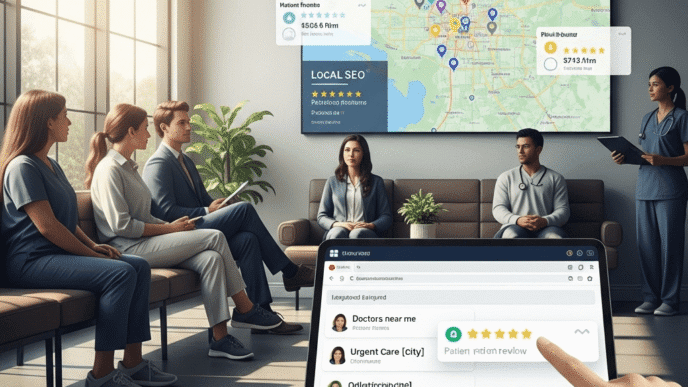





Your practice has a 4.2-star rating on Google. Not bad, right?
Wrong. Dead wrong.
Here’s what that innocent-looking 4.2 actually means: You’re losing 3-5 potential patients EVERY SINGLE DAY to the practice down the street with 4.7 stars—even though their wait times are longer, their doctors less experienced, and their outcomes worse than yours.
Why? Because 94% of patients use online reviews to evaluate healthcare providers, and 84% trust online reviews as much as personal recommendations. Your clinical excellence means nothing if your online reputation doesn’t reflect it.
Welcome to the brutal reality of healthcare reputation management: Your years of medical school, residency, board certifications, and thousands of successful patient outcomes can be overshadowed by three angry one-star reviews from patients who were mad about parking or wait times.
Here’s what keeps healthcare administrators awake at night: One disgruntled patient with 15 minutes and a smartphone can publish a review that reaches thousands of prospective patients. That review sits there permanently, influencing patient decisions for years while you’re powerless to remove it.
But here’s the nightmare scenario most practices face: You’re getting dozens of positive patient interactions daily, but only the angry patients leave reviews. Your online reputation becomes a distorted funhouse mirror showing only the worst 2% of patient experiences while the satisfied 98% stay silent.
Online reputation management strategies for healthcare providers isn’t optional anymore—it’s the difference between a thriving practice with a waitlist and an excellent practice that’s mysteriously losing patients to inferior competitors.
The good news? Patient reviews SEO and reputation management are skills you can master. With the right systems, you can generate hundreds of authentic positive reviews, respond to negative feedback professionally, and turn your online reputation into your most powerful patient acquisition tool.
Ready to transform your online reputation from a liability into a competitive moat competitors can’t cross? Let’s decode exactly how to manage patient reviews for medical practice SEO without violating HIPAA, ethics guidelines, or your own integrity.
Table of Contents
ToggleWhat Is Healthcare Reputation Management and Why Does It Impact Patient Acquisition?
Healthcare reputation management is the systematic monitoring, influencing, and improving of your medical practice’s online presence across review platforms, social media, search results, and patient feedback channels.
The Online Reputation Landscape for Healthcare Providers
Your reputation exists across a complex ecosystem of platforms:
Review platforms (primary impact):
- Google Business Profile (most important—appears in local search)
- Healthgrades (second most-visited healthcare review site)
- Vitals (integrated with WebMD)
- RateMDs (popular in certain regions)
- Yelp (controversial but influential)
- Facebook (social proof and engagement)
- Zocdoc (if you use their platform)
- Specialty-specific (Psychology Today for therapists, Avvo for medical-legal)
Social media (secondary impact but growing):
- Facebook pages and comments
- Instagram (particularly for aesthetic, dental, pediatrics)
- Twitter/X mentions
- LinkedIn for professional reputation
- TikTok (surprisingly influential for younger patients)
Healthcare transparency sites:
- CMS Hospital Compare (mandatory quality reporting)
- Leapfrog Hospital Safety Grade
- State health department inspection results
- Physician Compare (Medicare data)
- Insurance company provider directories
News and media:
- Local news coverage
- Medical malpractice records (public in most states)
- State medical board actions
- Better Business Bureau complaints
The reputation funnel:
Patient googles "dermatologist near me"
    ↓
Sees your Google Business Profile with 4.2 stars
    ↓
Compares to competitor with 4.7 stars
    ↓
Clicks competitor (you never even knew they existed)
Or worse:
Patient googles "Dr. Sarah Chen reviews"
    ↓
First result: "Dr. Chen is terrible" (RateMDs review from 2019)
    ↓
Patient books with different doctor
    ↓
You lose $2,850 lifetime patient value
The Psychology of Online Reviews in Healthcare
Healthcare review behavior differs fundamentally from restaurant or product reviews.
Why healthcare reviews matter MORE:
Higher stakes decision: Choosing a doctor isn’t like choosing a restaurant. Patients are trusting you with their health, sometimes their lives.
Asymmetric information: Patients can’t evaluate medical expertise directly. They rely on proxies: reviews, ratings, credentials, bedside manner.
Emotional vulnerability: Seeking medical care involves fear, anxiety, sometimes embarrassment. Reviews that acknowledge these emotions resonate powerfully.
Cognitive biases affecting healthcare reviews:
Negativity bias: One negative review has 3-5x the impact of a positive review. The human brain is wired to weigh negative information more heavily than positive.
Recency bias: Recent reviews matter more than old ones. A three-year-old 5-star review has less impact than a one-week-old 3-star review.
Availability heuristic: Patients overweight readily available information. A detailed negative review about parking problems creates stronger impression than 50 generic “great doctor” reviews.
Social proof: When choosing between unfamiliar options, humans follow the crowd. 4.8 stars with 200 reviews beats 5.0 stars with 12 reviews—the wisdom of crowds assumption.
Confirmation bias: If first review a patient reads is negative, they’ll selectively focus on other negative reviews to confirm initial impression.
The SEO Impact of Reviews and Ratings
Medical practice reputation directly impacts search engine rankings—not just through review sites, but through Google’s own algorithms.
How reviews affect SEO:
1. Google Business Profile rankings (Local Pack):
Google’s algorithm for local search considers:
- Review quantity (more reviews = stronger signal)
- Review velocity (consistent new reviews = active business)
- Review recency (fresh reviews = current relevance)
- Star rating (higher = more trustworthy)
- Review diversity (multiple platforms = authentic)
- Review engagement (responses = active management)
A practice with 200+ reviews and 4.7+ stars will almost always outrank a practice with 50 reviews and 4.3 stars—even if the lower-reviewed practice has better SEO otherwise.
2. Click-through rate (CTR) amplification:
Star ratings appear in search results (rich snippets). Higher stars = more clicks = Google sees higher relevance = rankings improve further.
Testing shows:
- 4.0-4.5 stars: Baseline CTR
- 4.6-4.8 stars: +25-35% CTR increase
- 4.9-5.0 stars: +40-60% CTR increase (but can seem fake if review count is low)
3. User behavior signals:
Patients who find you through search and read positive reviews:
- Spend more time on your site (lower bounce rate)
- Visit multiple pages (appointment booking, provider bios)
- Complete conversions (schedule appointments)
These positive engagement signals tell Google your site satisfies user intent → rankings improve.
4. Brand signals:
Reviews mentioning your practice name create brand citations across the web, strengthening your brand’s authority in Google’s eyes.
5. Content freshness:
Regular reviews add fresh, unique, user-generated content to your Google Business Profile and review sites—a ranking factor Google values.
For comprehensive understanding of how reputation fits into healthcare SEO, review foundational healthcare SEO strategies and local optimization.
How Do You Generate Authentic Positive Reviews at Scale?
The foundation of doctor rating management is systematic generation of reviews that reflect your actual patient satisfaction.
The Review Generation Timing Strategy
When you ask matters as much as how you ask.
Optimal timing by specialty:
Primary care:
- Best time: 24-48 hours after appointment
- Rationale: Fresh in patient’s mind, but enough time for prescription to work or test results received
- Avoid: Immediately after (patient may be stressed about diagnosis)
Surgical specialties:
- Best time: 2-4 weeks post-procedure
- Rationale: Recovery underway, relief from symptoms evident, but not so far out they forget
- Avoid: Immediately post-op (pain/discomfort) or 3+ months (memory fades)
Dental:
- Best time: 2-7 days after treatment
- Rationale: Procedure complete, discomfort subsided, results visible
- Avoid: Same-day (still numb/uncomfortable)
Mental health:
- Best time: After 4-6 sessions (not after first)
- Rationale: Therapeutic relationship established, patient seeing progress
- Avoid: Early sessions (too soon to judge) or immediately after difficult sessions
Pediatrics:
- Best time: Same day or next day
- Rationale: Parents relieved child is okay, physician interaction fresh
- Avoid: During visit (parents distracted managing child)
Emergency/urgent care:
- Best time: 24 hours after visit
- Rationale: Crisis resolved, gratitude fresh
- Avoid: During visit (patients stressed) or weeks later (forgotten)
Chronic disease management:
- Best time: Quarterly after routine follow-ups
- Rationale: Ongoing relationship, accumulated positive experiences
- Avoid: After bad news or complications
Multi-Channel Review Request Strategy
Don’t rely on one channel—patients have different preferences.
Email request (highest conversion for scheduled visits):
Subject line: “How was your appointment with Dr. Chen?”
Email body:
Hi Jennifer,

Thank you for trusting Dr. Chen and our team with your care yesterday. We hope you had a positive experience.

Your feedback helps other patients make informed healthcare decisions. If you have a moment, would you share your experience?

[Review Us on Google] [Review on Healthgrades]

We read every review and use your feedback to continually improve.

If you had any concerns during your visit, please reach out to our patient advocate directly at [email/phone] so we can address them promptly.

Thank you,
[Practice Name] Team

P.S. Your review doesn't need to be long—even a sentence or two helps!
Conversion rate: 8-15% (higher if appointment went exceptionally well)
SMS request (highest response rate for younger patients):
Message:
Hi Jennifer! Thanks for visiting Dr. Chen yesterday. If you have a moment, we'd love your feedback: [shortened link]. Your review helps other patients. Reply STOP to opt out.
Conversion rate: 12-20% (but more impulsive—quality varies)
In-person request (highest conversion for exceptional experiences):
Script for front desk: “Ms. Johnson, I’m so glad Dr. Martinez was able to help you today. If you’d like to share your experience, we’d really appreciate an online review. Many patients check reviews when choosing a doctor, and your feedback helps them. Here’s a card with a QR code that takes you right to our review page.”
Hand them a business card with QR code linking to Google review.
Conversion rate: 25-40% (but requires excellent visit—don’t ask everyone)
Printed reminder (passive but adds up over time):
Include in:
- Discharge paperwork
- Appointment reminder cards
- Prescription bag inserts
- Checkout receipts
Text: “Satisfied with your care? Please share your experience online. Scan QR code or visit [short URL]”
Conversion rate: 2-5% (low but zero effort)
Patient portal message (high conversion for engaged patients):
After patient logs in to view test results or pay bill:
Portal message: “Welcome back! While you’re here, would you share your experience with Dr. Chen? Your review helps other patients. [Review Link]”
Conversion rate: 10-18% (patients already engaged)
Phone call follow-up (highest quality reviews, most labor-intensive):
For exceptional cases or high-value patients:
Hi Mrs. Davis, this is Rachel from Dr. Patel’s office. We’re following up after your surgery last week. How are you feeling? [Discussion…] I’m so glad to hear you’re recovering well! Would you be willing to share your positive experience in an online review? It really helps other patients considering the same procedure. I can text you a link that makes it easy. Would that be okay?”
Conversion rate: 40-60% (but only for truly satisfied patients)
Pro Tip: Create a “review funnel” with multiple touchpoints. Email 24 hours after visit. If no review after 5 days, send SMS reminder. If no review after 10 days, mention during next visit. Multiple touches increase total conversion rate to 20-30% of satisfied patients.
The Review Landing Page That Converts
Don’t send patients to Google and hope they figure it out—create a dedicated review landing page.
yourpractice.com/leave-review
Page elements:
Headline: “Share Your Experience with [Practice Name]”
Subheadline: “Your feedback helps other patients make informed healthcare decisions”
Multiple review platform options (with logos and buttons):
Google Reviews ⭐ (Most Important)
[Leave Google Review]
Healthgrades 🏥
[Leave Healthgrades Review]
Facebook 👍
[Leave Facebook Review]
[Specialty-specific platform]
[Leave Review]
Brief guidance: “Please share your honest experience. Reviews typically take 1-2 minutes to complete. Thank you for helping others find quality healthcare!”
What to mention (suggested prompts):
- Your overall experience with our team
- How well your concerns were addressed
- The quality of communication
- Whether you’d recommend us to friends/family
HIPAA notice: “⚠️ Please do not include specific medical conditions, treatments, or other health information in your review to protect your privacy.
Alternative option: “Prefer to provide private feedback? [Contact Us Directly]”
Why this works:
✅ Removes friction (patient doesn’t need to search for your practice)
✅ Provides choice (some patients prefer Facebook over Google)
✅ Guides without dictating (suggestions not requirements)
✅ Protects privacy (HIPAA reminder)
✅ Offers alternative for negative experiences (channels complaints privately)
QR code optimization:
Print QR code on business cards linking to this page. Patients can scan immediately while experience is fresh.
Make URL memorable: Use short, simple URL: drchen.com/review not drchen.com/patient-satisfaction-survey-review-submission-form-page
Review Incentive Ethics and Legal Considerations
The question every practice asks: “Can we incentivize reviews?”
The complicated answer: Sort of, but carefully.
What’s NEVER allowed:
❌ Paying for positive reviews
❌ Offering incentives only for 4-5 star reviews
❌ Writing fake reviews (your staff, family, friends)
❌ Gating incentives behind positive reviews
❌ Exchanging services for reviews
❌ Threatening negative reviewers
❌ Soliciting reviews only from happy patients
What’s generally acceptable:
✅ Entering ALL reviewers (positive and negative) into prize drawing
✅ Donating to charity for each review received
✅ Thanking patients who review (without advance promise)
✅ General requests for feedback sent to all patients
✅ Making review process easy and convenient
State-specific regulations:
Some states have additional restrictions. California, for example, has strict rules about patient testimonials. Always check your state medical board guidelines.
FTC guidelines:
Federal Trade Commission requires disclosure of material connections. If you incentivize reviews in any way, reviewers should disclose it.
Google’s policies:
Google prohibits:
- Offering compensation for reviews
- Discouraging negative reviews
- Selectively asking only satisfied customers
- Posting fake reviews
Violations can result in suspension of your Google Business Profile—devastating for local SEO.
Healthgrades, Vitals, RateMDs policies:
Most healthcare review sites explicitly prohibit incentivized reviews of any kind.
The ethical approach:
Focus on making reviews easy, not incentivizing them:
✅ Streamlined review process
✅ Multiple platform options
✅ Follow-up reminders
✅ Asking all patients (not just happy ones)
✅ Responding to all reviews professionally
If you must incentivize:
“For every patient review we receive this month (positive or negative), we’ll donate $10 to [Local Children’s Hospital].”
This:
- Doesn’t selectively incentivize positive reviews
- Benefits community, not reviewer
- Demonstrates values
- Stays within ethical bounds
Pro Tip: The most effective “incentive” is a phenomenal patient experience. Patients who receive exceptional care, feel heard, and have a smooth administrative experience WANT to leave reviews. Focus on experience quality first, review generation systems second.
Automation and Software for Review Management
Scaling review generation requires automation—but maintain the personal touch.
Review management platforms:
| Platform | Best For | Price Range | Key Features |
|---|---|---|---|
| Birdeye | Multi-location practices | $299-$599/month | All-in-one: requests, monitoring, responses |
| Podium | Practices emphasizing text | $289-$599/month | SMS-focused, payments integration |
| Reputation.com | Enterprise healthcare | $2,000+/month | Comprehensive, advanced analytics |
| Weave | Dental and small practices | $399/month | Phone system integration |
| ReviewTrackers | Multi-platform monitoring | $99-$499/month | Monitoring focus, less generation |
| Grade.us | Budget-conscious practices | $50-$200/month | Simple review funnel |
| Swell | Dental practices | $199-$499/month | Industry-specific features |
Essential features to look for:
Automated review requests:
- Trigger based on appointment completion
- Customizable timing (24 hours, 48 hours, 1 week)
- Multi-channel (email + SMS)
- Personalized with patient and provider names
Sentiment analysis:
- Detects likely positive vs. negative before patient posts publicly
- Routes satisfied patients to public review sites
- Routes dissatisfied patients to private feedback form
- Prevents negative reviews from appearing publicly
Multi-location management:
- Separate review funnels for each location
- Location-specific performance tracking
- Centralized response management
- Consistent brand messaging
Response management:
- Unified inbox for all review platforms
- Alert system for new reviews
- Response templates (customizable)
- Approval workflows for larger organizations
Analytics and reporting:
- Star rating trends over time
- Review volume by location/provider
- Sentiment analysis
- Competitive benchmarking
- ROI tracking (reviews → appointments)
Integration capabilities:
- EMR/EHR integration (Epic, Cerner, Athenahealth)
- Practice management systems
- Patient communication platforms
- CRM systems
HIPAA compliance:
- Business Associate Agreement (BAA) offered
- Secure data handling
- Audit trails
- Access controls
DIY alternative (for smaller practices):
If budget is tight, create manual system:
- Appointment completed trigger: Front desk notes patients for follow-up
- 24-48 hours later: Send personalized email template via your email system
- Track in spreadsheet: Patient name, date request sent, whether reviewed
- Follow-up reminder: After 7 days if no review
- Monitor reviews: Set up Google Alerts for your practice name
- Respond manually: Check review platforms 2x per week
Labor-intensive but functional for practices seeing 20-50 patients/week.
Pro Tip: If using automation, add personalization variables beyond just name. “Hi Sarah, thank you for visiting us for your annual check-up yesterday” feels more genuine than “Hi Sarah, thank you for your visit.” Small details prevent automated emails from feeling robotic.
How Do You Monitor Your Online Reputation Across Platforms?
Healthcare review sites proliferate faster than you can manually check them. Systematic monitoring is essential.
Setting Up Comprehensive Reputation Monitoring
The monitoring challenge:
Your reputation exists across:
- 5-10 major review platforms
- 20+ local directory sites
- Social media (Facebook, Instagram, Twitter)
- Health forums (Reddit, patient advocacy groups)
- News and media mentions
- Medical board records
- Malpractice databases
Manual monitoring is impossible at scale.
Google Alerts setup (free but basic):
Create alerts for:
- Your name: “Dr. Sarah Chen”
- Your practice: “Memorial Family Medicine”
- Your name + review: “Dr. Sarah Chen review”
- Common misspellings: “Dr. Sara Chen” “Memorial Family Medecine”
Frequency: Daily digest (to avoid alert fatigue)
Delivers to email: Monitor patient discussions about you across web
Limitations: Doesn’t monitor closed platforms (Healthgrades reviews, Facebook private groups)
Social media monitoring (free with manual effort):
Facebook:
- Monitor your business page reviews
- Search for mentions of your name/practice
- Join local community groups where patients discuss doctors
Instagram:
- Monitor tags and mentions
- Search hashtags (#[yourcity]doctor, #[yourcity]pediatrician)
Twitter/X:
- Search your practice name
- Monitor relevant healthcare hashtags
Reddit:
- Monitor local city subreddit
- Check r/AskDocs and specialty-specific subreddits
TikTok:
- Search your practice name
- Monitor healthcare trend videos that might reference you
Review platform monitoring:
Weekly manual checks:
- Google Business Profile
- Healthgrades
- Vitals
- RateMDs
- Yelp
- Zocdoc (if applicable)
Set calendar reminder: Every Monday morning, check all platforms
Use spreadsheet to track:
| Platform | Last Check Date | New Reviews | Avg Rating | Action Needed |
|---|---|---|---|---|
| 11/25/24 | 3 | 4.7 | Respond to 1 | |
| Healthgrades | 11/25/24 | 1 | 4.8 | None |
Paid monitoring tools (recommended for practices with 3+ providers):
Birdeye, Podium, Reputation.com (listed earlier) all include comprehensive monitoring.
Benefits:
- Single dashboard for all platforms
- Real-time alerts for new reviews
- Trend analysis and reporting
- Competitive monitoring
- Sentiment analysis
Typical cost: $300-$600/month depending on number of locations
ROI justification:
- Prevents negative reviews from sitting unanswered
- Enables faster response to patient concerns
- Identifies trends (recurring complaints)
- Saves 5-10 hours/week of manual monitoring
For a practice losing even 1-2 patients/month due to poor reputation management (valued at $2,850 lifetime value), the tool pays for itself immediately.
Competitive Reputation Benchmarking
Track not just YOUR reputation, but competitors’ too.
Competitive analysis framework:
Identify 3-5 direct competitors:
- Same specialty
- Same geographic area
- Similar target patient demographics
Track monthly:
| Practice | Google Rating | Google Reviews | Healthgrades | Response Rate | Avg Response Time |
|---|---|---|---|---|---|
| Your Practice | 4.6 | 187 | 4.7 | 95% | 18 hours |
| Competitor A | 4.8 | 312 | 4.5 | 60% | 4 days |
| Competitor B | 4.3 | 94 | 4.6 | 30% | Never |
| Competitor C | 4.7 | 203 | 4.8 | 85% | 24 hours |
Insights from competitive analysis:
Opportunity identified: Competitor A has more reviews but responds slowly Your advantage: Emphasize responsiveness in marketing: “We respond to every patient concern within 24 hours”
Threat identified: Competitor C has similar rating but higher Healthgrades score Action needed: Focus review generation efforts on Healthgrades
What to learn from competitor reviews:
Read their negative reviews:
- What complaints are common? (Can you avoid same mistakes?)
- How do they respond? (Can you do better?)
- What issues frustrate patients universally? (Address proactively)
Read their positive reviews:
- What do patients praise? (Table stakes you must match)
- What unique differentiators do they mention? (Can you develop similar?)
- What language do patients use? (Incorporate in your marketing)
Track competitor review velocity:
If competitor suddenly gets 50 new reviews in one month:
- They likely implemented review generation system
- You need to match or exceed their efforts
- Otherwise they’ll outrank you in local search
Pro Tip: Set up monthly “reputation competitive report” comparing your practice to top 3 competitors. Share with leadership to demonstrate ROI of reputation management investment. Seeing “We’re falling behind Competitor A in review volume” motivates action better than abstract metrics.
Setting Up Alert Systems for Crisis Management
Not all reputation issues can wait until Monday morning check.
Immediate alert scenarios:
Tier 1: Emergency (respond within 1 hour):
- 1-star review with serious patient safety allegations
- Social media post going viral (shares >100)
- News article mentioning your practice negatively
- Medical board complaint going public
- Former employee posting damaging information
Tier 2: Urgent (respond within 24 hours):
- Any 1-2 star review
- Multiple negative reviews in short period
- Negative review mentioning discrimination or abuse
- Complaint about billing fraud or insurance issues
Tier 3: Important (respond within 48 hours):
- 3-star reviews with substantive complaints
- Private feedback expressing serious concerns
- Pattern of similar complaints across platforms
Alert system setup:
Email alerts: Most review platforms and monitoring tools can email immediately when new review appears
SMS/text alerts: For Tier 1 emergencies, text alert ensures immediate awareness
Slack/Teams notifications: For larger practices, integrate review monitoring with team communication platform
On-call reputation manager: Designate staff member (office manager, marketing director, practice administrator) as “reputation lead”
- They receive all alerts
- They have authority to respond (or escalate immediately to physician/leadership)
- Clear escalation protocols for serious issues
Response protocol document:
Create written procedures:
- Who monitors alerts?
- Who has authority to respond?
- What responses require physician approval?
- What responses require legal review?
- How to escalate to leadership?
- Crisis communication plan template
Example escalation protocol:
1-2 star review with routine complaint (wait time, staff rudeness):
→ Office manager responds using template within 24 hours

1 star review alleging medical negligence or patient harm:
→ Alert physician immediately
→ DO NOT respond publicly without legal review
→ Contact patient privately if possible
→ Escalate to risk management/malpractice insurance

Multiple negative reviews appearing rapidly (possible attack):
→ Alert practice administrator and physician
→ Investigate whether legitimate or competitor/disgruntled employee
→ Consider legal action if fraudulent
→ Prepare statement if needed
Pro Tip: Create a “reputation crisis kit” with pre-approved response templates for common scenarios, contact information for attorney specializing in healthcare reputation issues, and step-by-step protocols. When crisis hits, you don’t want to be figuring out procedure while reviews pile up.
For broader context on protecting your healthcare practice’s digital presence, review comprehensive healthcare SEO and online visibility strategies.
How Do You Respond to Reviews (Both Positive and Negative) Properly?
Negative review response is the highest-leverage reputation management skill—done right, it turns critics into advocates.
The HIPAA Compliance Landmine in Review Responses
The single biggest mistake healthcare providers make: Confirming patient relationship in review responses.
What you CANNOT do in public review responses:
❌ Confirm or deny someone is/was a patient
❌ Reference any medical condition, treatment, or diagnosis
❌ Discuss appointment dates or details
❌ Mention insurance or billing specifics related to care
❌ Acknowledge any clinical interaction
❌ Apologize for specific medical outcomes
❌ Explain your clinical reasoning or decisions
HIPAA violation examples in review responses:
❌ HIPAA Violation: “Dear Sarah, I’m sorry your knee replacement surgery didn’t meet your expectations. As we discussed, the recovery timeline can be 6-8 weeks. Please call my office to schedule your follow-up appointment.”
Why it’s a violation:
- Confirmed patient relationship
- Revealed medical procedure
- Discussed clinical details
- Acknowledged treatment relationship
Penalty: Up to $50,000 per violation + loss of patient trust
❌ HIPAA Violation: “We have no record of you being a patient at our practice. Perhaps you’re confusing us with another office?”
Why it’s a violation:
- Discussed patient records (even to say they don’t exist)
- Implied person is confused/unreliable
- Still creates question about patient relationship
✅ HIPAA-Compliant Response: “Thank you for your feedback. We take all patient concerns seriously. Please contact our office manager directly at [phone/email] so we can address your concerns privately and appropriately.”
Why it’s compliant:
- Doesn’t confirm or deny patient relationship
- Doesn’t reference medical information
- Offers private resolution channel
- Professional and responsive
The “patient authorization” exception:
Can you respond with details if patient posts their own health information in review?
Legally gray area—most attorneys recommend NO.
Even if patient volunteers information (“I came in for my diabetes check-up”), responding with details still constitutes provider discussing PHI publicly.
Safer approach: Still respond generally and move conversation to private channel where patient can authorize disclosure if they want details discussed.
Response Templates for Different Review Scenarios
Positive review response (spend 2-3 minutes per review):
Short, enthusiastic reviews:
Patient review: “Great doctor! Very friendly staff.”
Your response: “Thank you for the kind words! We’re so glad you had a positive experience with our team. We appreciate you taking time to share your feedback.”
Detailed, specific positive reviews:
Patient review: “Dr. Martinez took so much time explaining my treatment options and answered all my questions without making me feel rushed. The front desk staff was friendly and efficient. I’ve found my new primary care doctor!”
Your response: “Thank you for this wonderful review! Dr. Martinez and our entire team work hard to ensure every patient feels heard and understood. We’re honored to be your healthcare partner and look forward to serving you for years to come. Welcome to our practice family!”
Pro Tip for positive responses:
- Personalize when possible (reference specific staff mentioned)
- Keep it brief but warm (3-5 sentences)
- Respond to ALL positive reviews (not just some)
- Respond within 48-72 hours
- Vary your language (don’t copy-paste identical responses)
Negative review response (spend 15-30 minutes crafting carefully):
Minor complaint (parking, wait time, administrative issues):
Patient review (2 stars): “The doctor was fine but I had to wait 45 minutes past my appointment time. Frustrating when you take time off work.”
Your response: “We sincerely apologize for the extended wait time. We understand your time is valuable, and we strive to stay on schedule. Unfortunately, medical emergencies and complex patient needs sometimes cause delays. We’re implementing new scheduling procedures to improve this. We’d appreciate the opportunity to discuss your experience further. Please contact our office manager at [phone/email]. Thank you for your feedback—it helps us improve.”
Why this works: ✅ Acknowledges problem without defensive excuses
✅ Explains context briefly without blaming
✅ Shows proactive improvement
✅ Offers private resolution
✅ Thanks for feedback (turns complaint into opportunity)
Serious medical complaint:
Patient review (1 star): “Dr. Smith misdiagnosed my condition and now I’m having serious complications. This practice is dangerous.”
Your response: “We take patient safety and quality of care extremely seriously. While we cannot discuss specific medical situations publicly to protect patient privacy, we would like to understand and address your concerns directly. Please contact our office immediately at [phone] or email our patient advocate at [email]. We are committed to ensuring all patients receive safe, high-quality care.”
Why this works: ✅ Demonstrates concern without confirming patient relationship
✅ Doesn’t engage with medical specifics publicly
✅ Offers immediate private communication
✅ Reaffirms commitment to quality
✅ Appropriate seriousness without panic
Follow up privately: After posting public response, have office manager or physician personally call patient to address concerns, document conversation, and involve risk management if needed.
Completely fabricated/competitor attack:
Patient review (1 star): “Terrible experience. Waited 3 hours. Doctor was rude and incompetent. Wouldn’t recommend to anyone.”
Your investigation: No patient by that name in your system. Review posted same day from account with no other activity. Likely fake.
Your response: “We’re sorry to hear you had a negative experience. We would like to investigate this matter but have been unable to locate your appointment in our records. Please contact us directly at [phone/email] with your appointment date and name so we can look into this properly and address your concerns. We strive for excellence in every patient interaction.”
Why this works: ✅ Professional even if fake
✅ Subtly signals this may not be legitimate (“unable to locate”)
✅ Calls reviewer’s bluff (real patients can provide details; fakes can’t)
✅ Shows prospective patients you investigate complaints
If reviewer never responds to your outreach: Flag review to platform as potentially fraudulent (include evidence: no matching patient record, suspicious account, etc.)
Abusive, profane, or threatening reviews:
Patient review (1 star): [Contains profanity, threats, or clearly violates platform policies]
Your response: “We’re unable to address concerns expressed this way. If you’d like to discuss your experience professionally, please contact our office manager at [phone/email].”
Then immediately:
- Flag review to platform for policy violation
- Document for potential legal action if threats continue
- Alert staff about potentially dangerous individual
Pro Tip: Create a “review response library” with 10-15 template responses for common scenarios. Customize each actual response but templates provide starting point, ensure HIPAA compliance, and maintain consistent brand voice. Have templates reviewed by attorney specializing in healthcare law.
The Art of Turning Negative Reviews Into Positive Outcomes
The goal isn’t winning the argument—it’s demonstrating to future patients how you handle problems.
Remember: You’re not responding to the reviewer (they’re already gone). You’re responding for the 100+ prospective patients who will read this exchange.
What prospective patients evaluate:
1. Responsiveness: Did you reply, or ignore criticism?
2. Professionalism: Did you stay calm and professional, or get defensive?
3. Accountability: Did you take responsibility, or make excuses?
4. Problem-solving: Did you offer solutions, or dismiss concerns?
5. Patterns: Is this an isolated complaint, or do multiple reviews mention same issue?
Case study: Turning 1-star into 5-star:
Initial review (1 star): “Worst experience ever. Waited 90 minutes for a 5-minute appointment. Front desk was rude when I complained. Will never return.”
Practice response: “We sincerely apologize for this unacceptable experience. This is far below our standard of care. I’d like to personally discuss what happened and make this right. Please call me directly at [phone] —this is [Name], Practice Manager. We value your feedback and are committed to improvement.”
Private follow-up:
- Practice manager called patient same day
- Listened to full story
- Discovered scheduling system error caused overbooking
- Apologized sincerely
- Offered refund + free visit
- Explained new procedures implemented
Updated review (patient edited to 5 stars): “UPDATE: The practice manager called me personally and handled this professionally. They apologized, explained what went wrong, and offered to make it right. I appreciate their responsiveness and willingness to improve. Everyone has a bad day; how they handle it matters. Giving them another chance.”
Impact:
- Turned detractor into advocate
- Demonstrated responsiveness to all readers
- Showed accountability and improvement
- Created powerful story for prospective patients
Not every negative reviewer will update—but many will if you:
- Respond quickly and professionally
- Reach out privately with genuine concern
- Listen without defensiveness
- Take concrete action to resolve
- Follow up after resolution
- Politely ask if they’d update review based on resolution
Conversion rate: 20-30% of negative reviewers will update review to positive after exceptional recovery.
Should You Ever Ask to Remove or Not Post a Review?
The ethical and legal boundaries:
What you CAN do: ✅ Ask platforms to remove reviews that violate policies (profanity, threats, false information)
✅ Request removal of reviews mentioning specific health information (HIPAA concern)
✅ Report clearly fraudulent reviews (no patient relationship exists)
✅ Ask patient who had bad experience but you resolved: “We’re so glad we could make this right. Would you consider updating your review?”
What you CANNOT do: ❌ Offer payment or services to remove negative review
❌ Threaten legal action against negative reviewer (unless truly defamatory and provably false)
❌ Pressure patients not to leave negative reviews
❌ Make it easier to leave positive reviews than negative ones
❌ Selectively delete negative reviews from your own platform (if you have one)
Legal considerations:
Defamation threshold is HIGH:
- Review must be provably false (not just exaggerated or subjective)
- Must cause demonstrable harm
- Legal costs often exceed benefit of removal
- Streisand Effect: Lawsuit brings more attention to negative review
Better than legal action:
- Respond professionally
- Bury negative review with new positive reviews
- Demonstrate pattern of excellent care
When legal action IS appropriate:
- Systematic attack by competitor posting fake reviews
- Former employee posting false, damaging claims
- Review includes threats or harassment
- Clearly fraudulent campaign to harm business
Pro Tip: Rather than trying to remove negative reviews, focus on generating 10-20 new positive reviews. This buries the negative review, dilutes its impact on average rating, and shows prospective patients that one bad experience isn’t representative.
How Do You Build a Positive Online Reputation Proactively?
Medical practice reputation isn’t just defensive (managing negative reviews)—it’s offensive (building positive presence).
Patient Experience Optimization for Better Reviews
The truth nobody wants to hear: If you’re getting bad reviews, fix the experience FIRST, then worry about review generation.
Common complaints in healthcare reviews:
1. Wait times (mentioned in 43% of negative reviews):
Solutions:
- Realistic scheduling (buffer time between complex patients)
- Text updates: “Dr. Chen is running 20 minutes behind. You can wait or reschedule—your choice”
- Comfortable waiting area (WiFi, beverages, entertainment)
- Transparency: “We sometimes run behind because we give every patient the time they need”
2. Staff rudeness/unhelpfulness (38% of negative reviews):
Solutions:
- Customer service training for all patient-facing staff
- Empathy workshops (remember: patients are scared/uncomfortable)
- Secret shopper audits (see how staff treats strangers)
- Reward staff mentioned positively in reviews
3. Billing confusion/unexpected costs (31% of negative reviews):
Solutions:
- Upfront cost estimates before services
- Clear explanation of what insurance covers
- Payment plans for large bills
- Detailed, understandable billing statements
- Billing advocate available for questions
4. Difficulty getting appointments (29%):
Solutions:
- Online scheduling 24/7
- Same-day urgent appointments
- Extended hours (early morning, evening, weekend)
- Telehealth options for follow-ups
5. Physician rushed/didn’t listen (27%):
Solutions:
- Adequate appointment lengths (15 min minimum, 30 for complex)
- Active listening training for physicians
- Patient satisfaction surveys after visits
- Scribes or EMR optimization (so doctor faces patient, not computer)
Pro Tip: Conduct “experience audits” quarterly. Have someone outside practice (mystery shopper or consultant) go through entire patient journey: calling for appointment, arriving, waiting, seeing doctor, checking out, paying bill. Identify friction points patients experience but staff doesn’t notice.
Building Social Proof Beyond Star Ratings
Diversified reputation assets create trust:
Patient video testimonials:
Why video is powerful:
- Harder to fake than text reviews
- Emotional connection (facial expressions, tone)
- Addresses specific concerns (other patients relate)
- Higher engagement on website and social media
How to get video testimonials:
In-office setup:
- iPad in private consultation room
- Simple script: “Would you mind sharing your experience on camera? It really helps other patients.”
- 60-90 seconds max
- Immediate upload while memory fresh
What to ask:
- “Why did you choose our practice?”
- “What was your main concern before treatment?”
- “How has treatment improved your life?”
- “What would you tell someone considering treatment here?”
Get signed release: Video release form allowing use in marketing
Featured case studies (with consent):
Structure:
- Patient’s initial concern/condition
- Why they chose your practice
- Treatment approach
- Outcome and life improvement
- Photos (if relevant—before/after for cosmetic/dental, functional improvements)
Example: Orthopedic practice:
“From Wheelchair to 5K: Jennifer’s Knee Replacement Journey”
Before: Chronic knee pain limited Jennifer to wheelchair for grocery shopping
Treatment: Dr. Martinez performed total knee replacement with rapid recovery protocol
Outcome: 6 months post-op, Jennifer completed her first 5K race
Testimonial video: Jennifer describing her journey
Impact: This case study addresses fears about recovery, demonstrates outcomes, and creates emotional connection
Physician-generated educational content:
Position doctors as authorities:
Blog articles:
- “5 Signs Your Knee Pain Needs Medical Attention” (by Dr. Martinez)
- “What I Wish Every Patient Knew About Heart Health” (by Dr. Chen)
Social media presence:
- Instagram: Quick health tips with doctor’s face
- LinkedIn: Professional insights and medical news
- TikTok: Breaking down health myths (particularly effective for younger patients)
YouTube channel:
- Procedure explanations
- Patient questions answered
- Office tours reducing anxiety
Why this builds reputation:
- Demonstrates expertise (builds trust before patient even visits)
- Creates content patients share (expanding reach)
- Provides value beyond just services (positions as partner, not vendor)
- Differentiates from competitors (most don’t do this)
Community involvement and PR:
Build reputation through community presence:
Free health screenings:
- Blood pressure checks at community events
- Skin cancer screenings
- Sports physicals for students
- Senior health fairs
Educational seminars:
- “Understanding Diabetes Management” (free workshop)
- “Women’s Heart Health” (February awareness month)
- “Sports Injury Prevention” (before fall sports season)
Local partnerships:
- High school sports team physician
- Corporate wellness programs
- Community organization health advisor
Media coverage:
- Local news health segments (seasonal topics)
- Newspaper health column
- Radio call-in shows
Each appearance builds credibility, generates backlinks to website, and creates reputation assets beyond review sites.
Employee advocacy:
Your staff are reputation ambassadors:
Encourage (don’t require) employees to:
- Share practice content on personal social media
- Write reviews about workplace culture (Glassdoor, Indeed)
- Engage with practice social media posts
- Refer friends and family as patients
Why this matters:
- Prospective employees check Glassdoor reviews
- Happy staff = better patient experience = better patient reviews
- Employees have larger combined social reach than practice account
- Authentic endorsement from staff builds trust
Create “staff spotlight” content:
- Feature front desk staff, nurses, medical assistants
- Shows personality behind the practice
- Humanizes healthcare experience
- Staff feel valued (retention benefit)
Pro Tip: Create “reputation flywheel”: Great patient experience → Positive reviews → More patients → Revenue for staff raises/bonuses → Happy staff → Even better patient experience → More positive reviews. Each element reinforces the others.
Strategic Content Marketing for Reputation Building
Comprehensive educational content demonstrates expertise and builds trust before patients ever visit.
Content types that build reputation:
Condition-specific guides:
- “Complete Guide to Managing Type 2 Diabetes
- “What to Expect: Knee Replacement Surgery”
- “Recognizing and Treating Postpartum Depression”
Each comprehensive guide:
- 2,500-3,500 words
- Medically accurate (physician-reviewed)
- Patient-friendly language
- Downloadable PDF version
- Gated behind email (lead generation)
FAQ pages that rank:
- “Can urgent care treat broken bones?”
- “Do I need a referral to see a specialist?”
- “What’s the difference between MD and DO?”
These pages:
- Rank for question-based searches
- Demonstrate expertise
- Build trust through transparency
- Often lead to appointment booking
Comparison content:
- “Urgent Care vs. Emergency Room: When to Go Where”
- “Physical Therapy vs. Surgery for Knee Pain”
- “Telehealth vs. In-Person Visits: Pros and Cons”
Why comparisons work:
- Help patients make informed decisions
- Position you as educator, not just service provider
- Rank for “vs” comparison searches
- Build trust through objectivity
Seasonal health content:
- “Preparing for Flu Season 2024-2025”
- “Spring Allergy Survival Guide”
- “Summer Safety: Heat Illness Prevention”
Benefits:
- Timely and relevant
- High search volume during peak season
- Positions practice as proactive health partner
- Opportunity for media coverage
For comprehensive healthcare content strategies that build authority, explore patient-focused medical content optimization approaches.
Leveraging Microsites and Specialty Landing Pages
For larger practices or multi-specialty groups:
Create specialty-focused digital properties:
Example: Orthopedic practice with sports medicine focus
Main site: DrMartinezOrthopedics.com
Specialty microsite: SportsInjuryCenter.com
Microsite contains:
- Sports-specific injury content
- Athlete testimonials
- Team physician credentials
- Rapid appointment scheduling
- Separate Google Business Profile
- Own social media presence
Benefits:
- Targets specific patient niche
- Ranks for specialty-specific keywords
- Builds reputation within sports community
- Creates separate reputation asset
- Allows focused marketing
Specialty landing pages (if not full microsite):
/sports-medicine
- All sports injury content
- Athlete-specific patient reviews
- Specialized services (PRP, stem cell, surgery)
- Quick assessment tools (“Is my injury serious?”)
Multiple specialty landing pages:
/joint-replacement/spine-center/hand-and-wrist
Each builds reputation within that specialty niche.
Pro Tip: If you have one subspecialty that’s particularly strong (best outcomes, highest volume, most experienced), create separate microsite for that specialty. This allows you to dominate search for that niche without diluting your general practice reputation.
What Are the Biggest Healthcare Reputation Management Mistakes?
Even well-intentioned practices make costly reputation errors.
Mistake #1: Only Asking Happy Patients for Reviews
The error: Selectively requesting reviews only from patients you know had great experiences.
Why it’s wrong:
Google explicitly prohibits it: “Reviews must reflect the honest opinion and experience of the consumer and must not be written in exchange for payment or other incentives.”
Selective asking violates spirit of honest reviews.
It’s unsustainable: You can’t personally evaluate every patient experience. You’ll miss unhappy patients who leave reviews anyway.
It creates bias: Your reviews will only reflect best experiences, not representative experiences. Potential patients may have unrealistic expectations.
Platform penalties: If Google detects suspicious patterns (sudden review surge, unusual review-to-visitor ratio), they may suspend your listing.
The fix:
Request reviews from ALL patients systematically:
- Automated requests after every appointment
- Don’t cherry-pick based on perceived satisfaction
- Let patients self-select whether to leave reviews
Use feedback routing (ethically):
After appointment, send survey: “How would you rate your experience? ⭐⭐⭐⭐⭐”
If 4-5 stars: “Thank you! Would you mind sharing your experience publicly?” [Links to Google, Healthgrades]
If 1-3 stars: “We’re sorry you weren’t satisfied. Please tell us more so we can improve.” [Private feedback form → office manager]
This isn’t manipulative because:
- You’re asking ALL patients
- Dissatisfied patients get immediate private channel
- You’re not hiding negative feedback; you’re handling it appropriately
- Public reviews more accurately reflect positive experiences
- You still address all negative feedback, just privately first
Mistake #2: Ignoring Negative Reviews
The error: Hoping negative reviews will disappear if you ignore them.
Why it’s catastrophic:
It makes things worse:
- Unanswered negative review sits there indefinitely
- Reviewer may post additional negative reviews on other platforms
- Prospective patients see your non-response as confirmation of complaint
Study data:
- 45% of consumers are more likely to visit a business that responds to negative reviews
- 53% expect businesses to respond within a week
- 30% view businesses that don’t respond as “not caring about customers”
It signals dysfunction: Practices that don’t respond to criticism appear to have poor management, don’t value feedback, or can’t handle difficult situations.
The fix:
Respond to EVERY negative review within 24-48 hours:
Even if you think the review is:
- Unfair
- Exaggerated
- From a difficult patient
- About something outside your control
Response demonstrates:
- You’re monitoring reputation actively
- You take concerns seriously
- You’re professional under criticism
- You offer solutions, not excuses
Remember: Future patients are watching how you handle criticism, not just the criticism itself.
Mistake #3: Getting Defensive or Arguing
The error: Responding to negative reviews with defensive arguments or correcting patient’s “wrong” version of events.
Examples of defensive responses:
❌ Bad Response: “This review is completely inaccurate. Our records show you were only 15 minutes past your appointment time, not 45 minutes as you claim. Perhaps you should check your facts before posting false information.”
Why it’s terrible:
- Argumentative tone
- Dismisses patient’s experience
- Makes practice look petty
- Confirms patient relationship (HIPAA violation)
- Future patients see practice that argues with patients
❌ Bad Response: “We have the best-reviewed practice in the city. One unhappy patient doesn’t represent our quality. Maybe our practice just isn’t the right fit for you.”
Why it’s terrible:
- Arrogant
- Dismissive of patient concern
- Implies patient is the problem
- Damages reputation more than original review
The fix:
✅ Professional response: “We’re sorry you didn’t have the positive experience we strive to provide. We value all feedback and use it to improve our services. Please contact our office manager at [phone/email] so we can address your concerns directly. Thank you for bringing this to our attention.”
Why it works:
- Acknowledges concern without confirming details
- Professional and empathetic
- Offers resolution path
- Demonstrates maturity and customer service orientation
- Leaves positive impression on readers
The mantra: You’re not trying to win the argument. You’re demonstrating professionalism to future patients reading this exchange.
Mistake #4: Buying Fake Reviews
The temptation: “Let’s just buy 50 five-star reviews from Fiverr to boost our rating.”
Why it’s disastrous:
It’s illegal in many jurisdictions:
- FTC prohibits deceptive advertising (including fake reviews)
- Some states have laws specifically criminalizing fake reviews
- Fines up to $50,000+ per violation
Platforms will punish you:
- Google can permanently suspend your Business Profile
- Yelp flags and filters suspicious reviews
- Healthgrades investigates unusual patterns
It’s obvious:
- 20 generic 5-star reviews posted within 2 days from accounts with no other activity
- Reviewers located nowhere near your practice
- Suspiciously similar language and phrasing
- Competitors and patients will notice and report
It destroys trust:
- If discovered (often just a matter of time), reputation damage is catastrophic
- News coverage: “Local Doctor Caught Buying Fake Reviews”
- Legal liability from patients who chose you based on fraudulent reviews
It doesn’t even work well:
- Platforms’ AI detects and removes many fake reviews
- Real patients can tell reviews are inauthentic
- You end up with 4.9 stars from 100 reviews but patients say “something feels off”
The fix:
Generate reviews the right way:
- Excellent patient experience
- Systematic review requests
- Make it easy to leave reviews
- Respond to all reviews
- Be patient—it takes 6-12 months to build substantial review base
There are no shortcuts in reputation management that don’t eventually backfire.
Mistake #5: Not Training Staff on Review Policies
The error: Assuming staff know what they can/can’t do regarding reviews without explicit training.
Common staff mistakes:
Discussing reviews in front of patients: “Did you see that crazy review Mrs. Johnson left? She was such a nightmare!”
Result: Current patient hears this and worries their complaints will be gossiped about.
Promising review incentives: “If you leave us a 5-star review, I’ll waive your copay.”
Result: HIPAA violation, FTC violation, platform policy violation, potential legal liability.
Posting reviews on behalf of family/friends: “My mom works here and they’re great doctors!”
Result: Fake reviews, policy violations, potential profile suspension.
Pressuring patients for positive reviews: “We need more reviews. Can you leave us a 5-star review right now?”
Result: Coercive, uncomfortable for patient, may backfire with negative review.
The fix:
Mandatory staff training on reputation management:
Annual training covering:
- What you CAN do (request reviews from all patients, respond professionally)
- What you CAN’T do (incentivize, fake reviews, discuss patient information)
- HIPAA rules for review responses
- How to handle angry patients before they leave negative reviews
- Escalation procedures (who to contact if patient threatens negative review)
Create written policy document:
[Practice Name] Online Review Policy

1. We encourage all patients to share their honest experiences
2. Staff may request reviews but never incentivize or pressure
3. We do not write reviews on behalf of patients
4. Staff and family may not post reviews about our practice
5. All negative reviews are addressed professionally within 24 hours
6. We never discuss patient reviews publicly
7. We never confirm/deny patient relationships in public responses
8. Violations of this policy may result in termination

I have read and understand this policy: _________________ Date: _______
Regular reminders:
- Monthly team meetings: Review reputation metrics
- Share positive patient reviews with staff (celebrate wins)
- Debrief negative reviews (what can we improve?)
Pro Tip: Designate one staff member as “reputation champion”—they own review monitoring, response coordination, and staff training. This creates accountability and ensures reputation management doesn’t fall through cracks.
Mistake #6: Neglecting Non-Review Reputation Factors
The error: Obsessing over star ratings while ignoring other reputation elements.
Your reputation extends beyond reviews:
Google Business Profile completeness:
- Incomplete hours = patients arrive when you’re closed = negative experience
- Missing photos = less trustworthy appearance
- No services listed = patients don’t know what you offer
- Incorrect address = patients get lost = frustration
Website first impressions:
- Outdated design = “Is this practice still operating?
- Broken links = unprofessional
- Slow loading = patient abandons before seeing content
- No online scheduling = friction in booking
Social media presence (or absence):
- Inactive accounts = “Are they even in business?”
- No response to messages = poor customer service perception
- All promotional, no educational = self-serving
Phone experience:
- Hold time >5 minutes = frustration before appointment even scheduled
- Rude receptionist = negative impression before patient meets doctor
- Difficult to reach = patients choose more accessible competitor
Physical space (for in-person visits):
- Dirty waiting room = concerns about clinical cleanliness
- Uncomfortable seating = negative association with practice
- Outdated magazines from 2015 = feels neglected
The fix:
Comprehensive reputation audit quarterly:
✅ Google Business Profile: Complete, accurate, photos current
✅ Website: Modern design, fast loading, mobile-friendly, easy navigation
✅ Social media: Active, responsive, valuable content
✅ Phone system: Minimal hold, friendly staff, easy to reach
✅ Physical space: Clean, comfortable, professional
✅ Review profiles: Updated information, consistent across platforms
Remember: Reviews are just one element of reputation. Patient experience touches dozens of points, and each contributes to overall reputation.
How Do You Recover from a Reputation Crisis?
Sometimes, despite best efforts, reputation disasters happen. Here’s how to recover.
Identifying a Reputation Crisis vs. Normal Negative Reviews
Normal negative feedback:
- 1-3 negative reviews per month
- Complaints about wait times, billing, staff interactions
- Isolated incidents, not patterns
- Average rating remains stable (4.3-4.7 range)
Reputation crisis:
- Sudden surge of negative reviews (10+ in short period)
- Reviews alleging serious issues (medical negligence, discrimination, safety concerns)
- Media coverage of negative incident
- Viral social media criticism (>1,000 shares/comments)
- Average rating drops below 4.0 or declines >0.3 stars rapidly
- Coordinated attack (multiple fake reviews simultaneously)
Crisis triggers:
Medical incident:
- Poor patient outcome leading to malpractice claim
- Viral post about misdiagnosis or delayed treatment
- Medical board action becoming public
Discrimination allegations:
- Patient claims discriminatory treatment (race, sexuality, disability, age)
- Video/audio of incident posted online
- Civil rights complaint filed
Employee misconduct:
- Staff member behaving inappropriately
- Whistleblower allegations
- Employment lawsuit details going public
Billing fraud accusations:
- Insurance fraud investigation
- Class action lawsuit
- Government enforcement action
Facility issues:
- Health inspection failure
- Safety violation
- Outbreak of infection
Competitor/employee attack:
- Coordinated fake negative reviews
- Former employee posting damaging information
- Competitor sabotage campaign
The Crisis Response Framework
When crisis hits, follow structured response protocol:
Phase 1: Immediate containment (0-24 hours)
Step 1: Assess the situation
- What exactly happened?
- Is allegation true, false, or partially true?
- How widely has it spread?
- What’s the potential impact?
Step 2: Assemble crisis team
- Practice owner/physician leader
- Office administrator
- Marketing/PR lead (internal or consultant)
- Attorney (malpractice, employment, or reputation lawyer depending on issue)
- Insurance carrier (if malpractice related)
Step 3: Halt routine reputation activities
- Pause automated review requests (don’t want happy reviews mixed with crisis)
- Pause social media posting (don’t appear tone-deaf)
- Don’t respond publicly yet (wait for coordinated strategy)
Step 4: Document everything
- Screenshots of all negative reviews/posts
- Timeline of events
- Patient records (if applicable and HIPAA-compliant)
- Staff statements
- Any evidence supporting or refuting claims
Step 5: Private outreach If crisis involves specific patient:
- Attempt private resolution before public response
- Office manager or physician personally contacts patient
- Listen without defensiveness
- Offer appropriate resolution
- Document conversation
Phase 2: Strategic response (24-72 hours)
Step 1: Develop messaging Work with attorney to craft statement that:
- Addresses concern seriously
- Doesn’t admit liability (if legal matter)
- Shows compassion and accountability
- Outlines corrective action if appropriate
- Directs to appropriate channels
Example statement (medical incident): “We are aware of concerns raised about a recent patient experience. Patient safety is our highest priority. While we cannot discuss specific patient situations due to privacy laws, we take all such matters extremely seriously. We have initiated a thorough internal review and are cooperating fully with [relevant oversight body]. We are committed to the highest standards of medical care.”
Step 2: Publish response
- Post statement on website
- Send to all review platforms where crisis is discussed
- Prepare for media inquiries if needed
- Brief all staff on official response (no improvising)
Step 3: Address false information If reviews are provably false:
- Report to platforms with evidence
- Consider legal action if coordinated attack
- Post factual corrections where appropriate
- Engage attorney for defamation claim if warranted
Phase 3: Reputation rebuilding (weeks-months)
Step 1: Resume review generation
- Restart systematic review requests
- Bury negative reviews with new positive reviews
- Target generating 30-50 new reviews in next 2-3 months
Step 2: Enhanced positive content
- Increase social media activity (value-driven content)
- Publish patient success stories
- Share community involvement
- Physician thought leadership content
Step 3: Address root causes
- If crisis revealed legitimate problems, fix them
- Implement new policies/training
- Communicate improvements publicly
- Turn crisis into demonstration of accountability
Step 4: Monitor closely
- Daily reputation monitoring (not weekly)
- Immediate response to any new negative feedback
- Track sentiment trends
- Measure reputation recovery metrics
Step 5: Consider PR campaign For severe reputation damage:
- Hire healthcare PR firm
- Media outreach campaign
- Community events demonstrating values
- Strategic content marketing
- Influencer/referring physician outreach
Recovery timeline:
Minor crisis: 1-3 months to restore reputation
Moderate crisis: 3-6 months with active management
Severe crisis: 6-12+ months; may never fully recover to pre-crisis levels
Case Study: Real Reputation Crisis Recovery
The scenario:
Dr. James Martinez, orthopedic surgeon, faced reputation crisis after patient posted viral TikTok video alleging medical negligence. Video received 2.3 million views, 15,000 shares.
Initial damage:
- Google rating dropped from 4.7 to 3.9 in one week
- 43 new 1-star reviews referencing video
- 200+ negative comments on social media
- Local news picked up story
- New patient appointments down 60%
The crisis response:
Week 1: Containment
- Consulted malpractice attorney and PR firm
- Internal review determined surgery performed correctly; patient had unrealistic recovery expectations
- Attorney advised against detailed public response (could prejudice legal case if patient sued)
- Posted brief statement: “We take patient concerns seriously and have conducted thorough review. Due to patient privacy laws, we cannot discuss specifics. We remain committed to excellent surgical care.”
Week 2-3: Private resolution
- Practice administrator contacted patient directly
- Discovered miscommunication about recovery timeline
- Patient thought 6 weeks = “back to normal”; reality = 6 weeks = resume light activities
- Offered additional PT sessions at no cost
- Patient agreed to add context to viral video
Week 4: Patient updated video Patient posted follow-up: “Update: The practice reached out and we had a good conversation. I may have had unrealistic expectations about recovery. They’ve been helpful with additional PT. Surgery was done well; I just didn’t understand the timeline.”
Months 2-4: Aggressive reputation rebuilding
- Generated 127 new reviews (5-week intensive campaign)
- Average rating recovered to 4.5
- Published patient success stories (video testimonials)
- Launched “What to Expect After Surgery” video series on YouTube
- Enhanced pre-surgery patient education to prevent future expectation mismatches
Results after 6 months:
- Rating: 4.6 (higher than pre-crisis)
- Review volume: 412 (up from 286)
- New patient appointments: Back to pre-crisis levels + 15% growth
- Media coverage: Positive feature in local magazine about transparent patient communication
Key lessons:
- Quick response but strategic (don’t react impulsively)
- Private resolution prevented lawsuit
- Turned crisis into process improvement opportunity
- Aggressive positive content generation buried negative
- Long-term: Better patient education prevents future issues
Pro Tip: Every practice should have crisis response plan in place BEFORE crisis happens. Include: Key contacts (attorney, PR firm, insurance), response templates, decision-making authority, communication protocols. When crisis hits, you don’t have time to figure this out from scratch.
Final Thoughts: Your Healthcare Reputation Roadmap
Here’s the brutal truth about healthcare reputation management: Your clinical skills matter less than ever, and your online reputation matters more than ever.
That sounds depressing, but it’s actually liberating once you accept it.
You can’t control whether a patient has complications. You can’t control whether someone’s unrealistic expectations lead to disappointment. You can’t control whether a competitor posts fake negative reviews.
But you CAN control:
How proactively you generate positive reviews from satisfied patients
How quickly and professionally you respond to negative feedback
How systematically you monitor your online presence
How effectively you build social proof and authority
How well you train your team on reputation management
How transparently you communicate with patients
Your 90-day reputation transformation plan:
Days 1-30: Foundation
- [ ] Claim and optimize all review platform profiles
- [ ] Set up comprehensive reputation monitoring
- [ ] Audit current reviews across all platforms
- [ ] Create HIPAA-compliant response templates
- [ ] Train staff on reputation policies
- [ ] Design review request landing page
Days 31-60: Activation
- [ ] Implement systematic review request workflow
- [ ] Respond to ALL existing reviews (positive and negative)
- [ ] Generate first 20-30 new reviews
- [ ] Create video testimonial recording process
- [ ] Launch patient satisfaction feedback loop
- [ ] Begin monthly reputation reporting
Days 61-90: Optimization
- [ ] Analyze review generation conversion rates
- [ ] A/B test review request timing and channels
- [ ] Develop educational content library
- [ ] Create community involvement initiatives
- [ ] Establish competitive benchmarking
- [ ] Refine based on data and feedback
The reputation flywheel effect:
Great patient experience → Positive reviews → Higher rankings → More patients → Revenue to invest in better experience → Even more positive reviews
Each element reinforces the others. The practice that starts this flywheel spinning wins long-term.
The competitive reality:
Your competitor down the street might be a mediocre physician with terrible outcomes. But if they have 4.8 stars from 300 reviews and you have 4.3 stars from 45 reviews, they’re going to get the patient.
Is that fair? No.
Is that reality? Absolutely.
Can you change it? Yes—starting today.
The good news:
Most healthcare providers ignore reputation management or handle it reactively. If you commit to proactive, systematic reputation building, you’ll outperform 80% of competitors within 6-12 months.
The patients are out there right now, googling “doctor near me” and reading reviews before making decisions.
Will they read about how you handle problems professionally, deliver exceptional care, and value patient feedback?
Or will they read about your competitor who just happens to be better at reputation management?
Your reputation isn’t what you say about yourself. It’s what patients say about you when you’re not in the room.
Time to make sure they’re saying the right things.
Disclaimer: This guide provides general reputation management strategies for healthcare providers. Always ensure practices comply with HIPAA privacy regulations, state medical board rules, FTC advertising guidelines, and platform-specific policies. Review responses should never discuss specific patient information without proper authorization. Consult with attorneys specializing in healthcare law and reputation management before implementing strategies that could create legal risk. Reputation management should never involve fake reviews, paid positive reviews, or suppression of legitimate negative feedback.
Related posts:
- Healthcare SEO: The YMYL-Compliant Guide to Medical Website Optimization in 2025
- HIPAA-Compliant SEO and Analytics: Privacy-First Healthcare Optimization (Dashboard)
- Telehealth and Virtual Care SEO: Optimizing for Online Medical Services
- Hospital and Healthcare System SEO: Multi-Location Optimization Strategy