


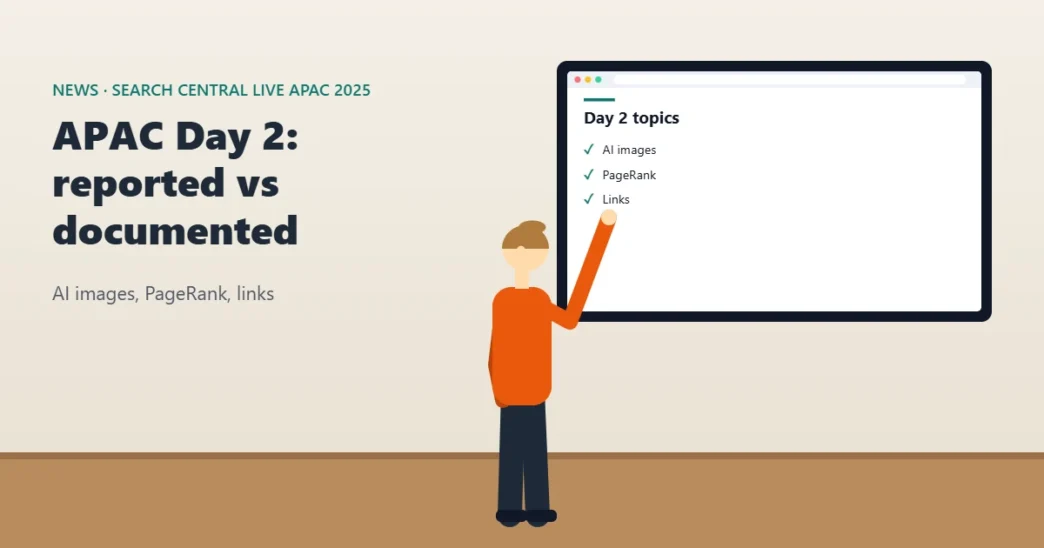
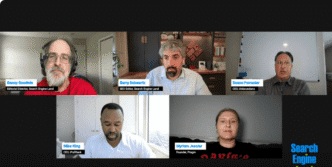
A common mistake is to treat a conference recap as Google policy. The July 2025 recap of Day 2 of Search Central Live APAC is a case in point. Its lines on AI-generated images and PageRank are the writer’s wording, not quotes from the speakers [1]. Our earlier version of this page presented them as direct quotes. That was wrong, and this page corrects it. Here is what was reported, what Google documents and what stays unconfirmed. For image basics, see our complete SEO audit checklist.
What / Who / When
| Item | Detail |
|---|---|
| What | A recap of Day 2 of Google Search Central Live APAC 2025: AI-generated images, PageRank, links and schema. |
| Who | Written by Dan Taylor for Search Engine Journal. Speakers named: Ian Huang, Gary Illyes, Cherry Prommawin, William Prabowo. |
| When | Recap published 24 July 2025. We checked it against Google's own pages on 11 November 2026. |
Correction, 11 November 2026: the earlier version of this page put two sentences in quotation marks as if spoken by Ian Huang and Gary Illyes, and dated the source 28 July 2025. Both were wrong. Those lines are Search Engine Journal’s paraphrase, and the article is dated 24 July 2025 [1]. We also removed words such as “groundbreaking” and “shocking” that the facts did not support.
Table of Contents
ToggleWhat was reported from Day 2
Dan Taylor’s recap for Search Engine Journal covers the second day of Google Search Central Live APAC 2025 [1]. It reports:
- AI-generated images. In the session “Using Images with Ian Huang”, Huang said Google does not care whether images are generated by AI or humans [1]. The recap gives an AI image used by the Google team on Day 1 that had visual errors as an example [1].
- PageRank. The recap says Gary Illyes confirmed that Google still uses PageRank internally, and that it is not the exact algorithm from the 1996 white paper but bears the same name [1]. No direct Illyes quote is given.
- Links. Cherry Prommawin said links are still an important part of the internet and are used for ranking [1].
- Schema. The recap says Gary Illyes said excessive or redundant schema only adds page bloat and is not used as part of the ranking process [1].
Expert quote
Google uses links, and "we use them for ranking" — Cherry Prommawin, Google Search Central Live team, as quoted in Search Engine Journal's Day 2 recap [1]
Google AI-generated images: what Google’s own pages say
| Topic | Reported at the event, per the recap | What Google's pages say |
|---|---|---|
| AI-generated images | Ian Huang said Google does not care whether images are made by AI or humans [1] | AI-generated images in Merchant Center need IPTC DigitalSourceType metadata. Review alt text too [2] |
| PageRank | Gary Illyes confirmed Google still uses it internally. The recap's wording, not a quote [1] | The in-depth Search guide has no mention of it [3] |
| Links | Cherry Prommawin: Google uses links for ranking [1] | Not checked |
| Schema | Gary Illyes: excessive or redundant schema only adds bloat and is not used in ranking [1] | Not checked |
Google’s page on generative AI content tells site owners to review AI-generated content for accuracy, and says the review also covers metadata such as alt text for images [2]. For ecommerce, it says Google Merchant Center has policies for AI-generated content, and that AI-generated images must contain metadata using the IPTC DigitalSourceType TrainedAlgorithmicMedia value [2]. We read the page on 11 November 2026 and found no statement that AI-generated images are penalised in Search.
Read the layers as text
- Google's own pages: AI-generated product images need IPTC DigitalSourceType metadata for Merchant Center, review alt text on AI-generated content, and the Search guide does not mention PageRank.
- A recap, secondhand: Ian Huang on AI images, and Gary Illyes on PageRank, links and schema, as Search Engine Journal reports them.
- Unconfirmed: no direct quotes for the AI-image or PageRank lines, and no Google page we read says either.
Worth knowing
Google's own recap of its APAC 2025 events, dated 31 December 2025, names Bangkok, Hong Kong and Tokyo [4]. The Day 2 recap names no city, so we cannot tell which event it covers.
The other Day 2 items in the recap
The recap covers more than the two lines that drew attention. These items are also secondhand, so we treat them the same way: as a report of what was said, not as Google documentation.
- Robots rules. Gary Illyes explained where robots.txt and meta robots tags fit. The recap says robots.txt controls what crawlers can fetch, and meta robots tags control how fetched data is used downstream [1]. It lists lesser-known directives: “none” (the same as noindex and nofollow together), “notranslate” (Chrome will no longer offer to translate the page) and “noimageindex” (which also applies to video assets) [1].
- Duplicate content. Cherry Prommawin described deduplication in three focus areas. Two are clear in the recap: clustering, which groups duplicate pages using redirects, content similarity and rel canonical, and content checks, which use checksums that ignore boilerplate [1].
- Spam. The recap says Google’s systems identify around 40 billion spam pages each day, using an LLM-based system called SpamBrain [1].
- Google Trends API. Daniel Waisberg and Hadas Jacobi unveiled the Google Trends API, in alpha [1].
- Sessions. The recap lists tracks on structured data, using images and engaging users with video, led by William Prabowo and Ian Huang [1].
What the other items mean for a site owner
Our analysis: the robots point is the most useful to act on. The recap’s split, robots.txt for fetching and meta robots tags for the use of what was fetched, makes a good checklist. For each template on your site, ask whether you are controlling crawling or controlling use, and whether the rule you wrote does the job you meant it to do.
The duplicate-content areas are a reminder to check redirects and canonical tags where pages overlap. We cannot say from the recap how Google weighs each signal, so we would not rank them.
The spam figure and the Trends API are news, not tasks. Note them, but do not change a plan around them. The 40 billion figure is the recap’s, and we found no Google page in what we read that states it.
Our analysis: use the recap as a signal, not as a rule
Our analysis: a recap tells you what one writer heard in a room. It can point you to a question worth testing. It cannot replace a Google page you can link to. On AI images, the safe reading is narrow: Google’s documentation asks you to review content and alt text, and asks Merchant Center sellers to label AI-generated images in metadata. It does not, in what we read, tell you to avoid them.
On PageRank, we cannot confirm anything beyond the recap. The Search guide we read does not mention it [3]. We would not change a link strategy on that line alone.
Watch out
The AI-image and PageRank lines in the recap are the writer's wording. The recap gives no direct quote from Ian Huang or Gary Illyes for them [1]. Do not present them to a client as Google's policy.
What to do now
- Cite Google, not the recap. When you advise a client, link to a Google documentation page.
- Review your AI images. Check them for accuracy and write real alt text, as Google’s page asks [2].
- Sell products? Check the metadata. Merchant Center images that are AI-generated need the IPTC DigitalSourceType value [2].
- Keep your link work as it is. Links are reported as a ranking input [1]. The PageRank line is reported, not documented.
- Audit your robots rules. For each template, note whether the rule controls crawling (robots.txt) or the use of a fetched page (meta robots) [1].
- Check overlapping pages. Look at redirects and canonical tags where two pages say nearly the same thing [1].
Five statements. Pick Myth or Fact for each, then press Check. The answers come from the pages we read on 11 November 2026.
What we do not know yet
Frequently asked questions
Does Google penalise AI-generated images?
We found no Google page that says so. A Search Engine Journal recap reports Ian Huang saying Google does not care whether images are made by AI or humans.
Did Google confirm that it still uses PageRank?
A recap says Gary Illyes confirmed it, in the writer’s wording. The Google Search guide we read does not mention PageRank, so we cannot confirm it from Google’s pages.
What metadata do AI-generated product images need?
For Google Merchant Center, Google’s page says AI-generated images must contain metadata using the IPTC DigitalSourceType TrainedAlgorithmicMedia value.
Can I quote the recap as Google's position?
Not safely. The AI-image and PageRank lines are the recap writer’s wording. Link to a Google page instead.
What does the "none" robots directive do?
The recap says it is equivalent to noindex and nofollow combined into one rule. It describes the benefit as simpler tag management, since the two behave the same.
What is SpamBrain?
The recap calls it Google’s LLM-based spam system and says Google identifies around 40 billion spam pages each day. We found no Google page in what we read that states the figure.
Check your images and your sources before you advise anyone
Review your AI images and alt text, and link to Google’s own pages when you give advice. Our complete SEO audit checklist has a section you can add this to.
Sources
- Search Engine Journal, "Google Search Central APAC 2025: Everything From Day 2", Dan Taylor, 24 July 2025. Read on 11 November 2026.
- Google Search Central, Google Search's guidance on using generative AI content on your website. Read on 11 November 2026.
- Google Search Central, In-depth guide to how Google Search works. Read on 11 November 2026.
- Google Search Central Blog, "Search Central Live APAC 2025 Recap: A Note of Gratitude", Cherry Prommawin and Gary Illyes, 31 December 2025. Read on 11 November 2026.



, this growth pattern is consistent across multiple industries and represents the fastest adoption of any new digital channel in recent history. To put this in perspective: - **January 2025:** 17,076 AI-sourced sessions - **May 2025:** 107,100 AI-sourced sessions - **Growth Rate:** 527% in just five months One standout example saw ChatGPT traffic alone grow from 600 visits per month in early 2024 to over 22,000 visits per month by May 2025—a 3,567% increase for a single platform. **💡 Pro Tip:** Track AI referral traffic in Google Analytics 4 by setting up custom dimensions for referral sources including "chat.openai.com," "perplexity.ai," and "claude.ai" to monitor your own AI discovery performance. ### Industry Distribution The surge isn't uniform across all sectors. High-consultative industries are leading the charge, as documented in [Search Engine Journal's analysis of AI traffic patterns](https://www.searchenginejournal.com/study-chatgpt-ai-tools-gain-ground-in-search-market/536137/): **Top Performing Industries:** 1. **Legal Services** - Complex regulatory questions drive AI consultations 2. **Finance & Banking** - Users seek personalized financial advice and explanations 3. **Healthcare** - Medical inquiries and symptom research dominate queries 4. **Insurance** - Policy comparisons and coverage explanations 5. **SMB Consulting** - Business strategy and operational guidance These five industries collectively account for **55% of all AI-driven sessions**, highlighting users' preference for AI assistance with complex, high-stakes decisions. **💡 Pro Tip:** If you're in a high-trust industry, prioritize creating comprehensive FAQ sections and expert-authored content, as these formats perform exceptionally well in AI discovery scenarios. ## Platform Landscape Analysis ### ChatGPT's Dominance ChatGPT continues to lead the AI traffic generation, but its monopoly is weakening. The platform benefits from: - First-mover advantage in consumer AI - Superior natural language processing - Broad general knowledge capabilities - Strong brand recognition ### Emerging Competitors **Perplexity** has gained significant traction with its search-focused approach, offering: - Real-time web search integration - Source citations and transparency - Specialized research capabilities **Google's Gemini** leverages integration advantages: - Native Google ecosystem integration - Android device pre-installation - Seamless transition from traditional search **Microsoft Copilot** capitalizes on enterprise relationships: - Office 365 integration - Business-focused use cases - Professional workflow optimization **Anthropic's Claude** appeals to quality-conscious users: - Reputation for accuracy and safety - Longer context windows - Nuanced reasoning capabilities ## User Behavior Transformation ### The "Instant Surfacing Era" Traditional SEO operated on a crawl-index-rank cycle that rewarded patience and authority building. AI discovery operates differently, as explained in [Ahrefs' comprehensive study on AI search behavior](https://ahrefs.com/blog/ai-overviews-reduce-clicks/): **Old Model:** Publish → Wait for crawling → Hope for indexing → Optimize for ranking → Generate traffic **New Model:** Create quality content → Get immediately surfaced by AI → Receive targeted referrals This shift means content can be discovered and drive traffic before it even ranks in traditional search engines. **💡 Pro Tip:** Focus on creating content that directly answers specific questions rather than optimizing for broad keywords. AI models excel at understanding intent and context, making traditional keyword density tactics less effective. ### Quality Over Quantity AI platforms prioritize content that is: - **Clear and structured** - Easy for models to parse and understand - **Authoritative** - From recognized experts or institutions - **Comprehensive** - Covers topics thoroughly rather than superficially - **Current** - Up-to-date information that reflects latest developments ## Business Implications ### For SaaS Companies Some SaaS businesses are already seeing over 1% of total traffic from AI platforms. While this might seem modest, it represents: - **High-intent users** who have actively sought AI assistance - **Qualified prospects** who've engaged with AI to solve specific problems - **Bottom-funnel traffic** with higher conversion potential ### For Content Publishers The implications vary significantly by content type: **Winners:** - Educational content creators - How-to and tutorial publishers - Industry analysis and research firms - Expert commentary and opinion sites **Challenges:** - Breaking news publishers (AI prefers verified information) - Listicle and aggregation sites (AI can synthesize directly) - SEO-optimized but thin content creators ### For E-commerce AI discovery is particularly powerful for complex purchase decisions, as highlighted in [Adobe's recent analysis of AI-driven retail traffic](https://searchengineland.com/generative-ai-surging-online-shopping-report-453312): - **Electronics** - Specification comparisons and recommendations - **Healthcare products** - Safety and efficacy information - **Financial services** - Product feature explanations - **Professional services** - Capability and pricing inquiries **💡 Pro Tip:** Create detailed product comparison guides and technical specification sheets, as AI assistants frequently reference these when helping users make purchase decisions. ## Strategic Recommendations ### Immediate Actions (0-3 months) **Content Optimization:** - Restructure existing content with clear headers and bullet points - Add FAQ sections that directly answer common queries - Include expert credentials and authority signals - Ensure information accuracy and currency **Technical Preparation:** - Implement structured data markup - Optimize for featured snippets - Ensure fast loading times and mobile optimization - Create XML sitemaps with updated lastmod tags ### Medium-term Strategy (3-12 months) **Authority Building:** - Develop thought leadership content - Seek expert citations and backlinks - Build relationships with industry authorities - Create comprehensive resource hubs **AI-First Content Creation:** - Design content specifically for AI consumption - Focus on answering complete questions rather than keyword optimization - Create content that provides context and nuance - Develop expertise-driven content series ### Long-term Vision (12+ months) **Platform Diversification:** - Develop relationships with multiple AI platforms - Create platform-specific content strategies - Monitor emerging AI discovery channels - Build direct AI API integrations where possible **Measurement Evolution:** - Develop new KPIs beyond traditional traffic metrics - Track AI mention frequency and context - Monitor brand authority signals - Measure assisted conversions from AI discovery ## Challenges and Considerations ### Attribution Complexity AI-driven traffic often involves multiple touchpoints, as detailed in [Kevin Indig's user experience study of AI Overviews](https://searchengineland.com/google-ai-overviews-user-behavior-study-455511): - Initial discovery through AI - Verification through traditional search - Social proof seeking on platforms like Reddit - Final conversion on the target website This multi-step journey makes traditional attribution models inadequate. **💡 Pro Tip:** Implement UTM parameters for AI referral traffic and set up custom conversion paths in Google Analytics to better understand the full user journey from AI discovery to conversion. ### Content Investment ROI The shift requires significant content strategy changes: - Higher upfront investment in comprehensive content - Longer content development cycles - Greater emphasis on expertise and authority - Reduced reliance on keyword-driven content ### Competitive Dynamics As more businesses optimize for AI discovery: - Competition for AI attention will intensify - Authority and trust signals will become more valuable - First-mover advantages will compound - Smaller players may struggle to gain AI visibility ## Future Outlook ### Growth Projections If current trends continue, AI-referred traffic could represent: - **5-10% of total website traffic** by end of 2025 - **15-20% for high-trust industries** by 2026 - **Major revenue channel** for information-based businesses ### Technology Evolution Expected developments include: - **Improved accuracy** reducing user verification needs - **Better source attribution** providing clearer traffic attribution - **Industry-specific AI models** creating niche opportunities - **Voice and visual AI search** expanding discovery channels ### Market Maturation The AI discovery market will likely evolve through: - **Platform consolidation** as winners emerge - **Specialized AI services** for specific industries - **Direct publisher partnerships** with AI platforms - **New monetization models** beyond traditional advertising ## Conclusion: Preparing for the AI-First Future The 527% surge in AI-driven traffic is not a temporary spike—it's the beginning of a fundamental shift in how people discover and consume information online. Organizations that recognize this trend early and adapt their content and discovery strategies accordingly will capture disproportionate value in the emerging AI-first digital ecosystem. The companies thriving in this new landscape will be those that prioritize authority, clarity, and genuine expertise over traditional SEO tactics. As AI becomes the primary discovery layer for complex information, the winners will be those who can effectively communicate their knowledge through these new channels while maintaining the trust and credibility that AI platforms increasingly value. The question is no longer whether AI will reshape web discovery—it's whether your organization will be ready to succeed in this new reality. --- ## Additional Resources **Essential Reading:** - [Previsible's 2025 AI Traffic Study](https://previsible.io/seo-strategy/ai-seo-study-2024/) - Complete methodology and findings - [Search Engine Land's AI Search Coverage](https://searchengineland.com/generative-ai-surging-online-shopping-report-453312) - Latest industry trends and analysis - [Ahrefs' AI Overviews Research](https://ahrefs.com/blog/ai-overviews-reduce-clicks/) - Technical insights and click-through rate data **Tools for AI Discovery Tracking:** - [Previsible's Free AI Traffic Dashboard](https://previsible.io/) - Monitor LLM referrals in Looker Studio - [SE Ranking's AI Overview Tracker](https://seranking.com/) - Track AI visibility and citations - Google Analytics 4 - Set up custom dimensions for AI referral sources **💡 Final Pro Tip:** Subscribe to AI platform newsletters and developer updates to stay informed about algorithm changes that could affect your content's discoverability in AI search results. *This report is based on analysis from Previsible's 2025 AI Traffic Study, examining 19 GA4 properties across multiple industries and timeframes.*](https://aiseojournal.net/wp-content/uploads/2025/08/AI-Assistants-Drive-527_-Traffic-Spike-332x332.png)
, this growth pattern is consistent across multiple industries and represents the fastest adoption of any new digital channel in recent history. To put this in perspective: - **January 2025:** 17,076 AI-sourced sessions - **May 2025:** 107,100 AI-sourced sessions - **Growth Rate:** 527% in just five months One standout example saw ChatGPT traffic alone grow from 600 visits per month in early 2024 to over 22,000 visits per month by May 2025—a 3,567% increase for a single platform. **💡 Pro Tip:** Track AI referral traffic in Google Analytics 4 by setting up custom dimensions for referral sources including "chat.openai.com," "perplexity.ai," and "claude.ai" to monitor your own AI discovery performance. ### Industry Distribution The surge isn't uniform across all sectors. High-consultative industries are leading the charge, as documented in [Search Engine Journal's analysis of AI traffic patterns](https://www.searchenginejournal.com/study-chatgpt-ai-tools-gain-ground-in-search-market/536137/): **Top Performing Industries:** 1. **Legal Services** - Complex regulatory questions drive AI consultations 2. **Finance & Banking** - Users seek personalized financial advice and explanations 3. **Healthcare** - Medical inquiries and symptom research dominate queries 4. **Insurance** - Policy comparisons and coverage explanations 5. **SMB Consulting** - Business strategy and operational guidance These five industries collectively account for **55% of all AI-driven sessions**, highlighting users' preference for AI assistance with complex, high-stakes decisions. **💡 Pro Tip:** If you're in a high-trust industry, prioritize creating comprehensive FAQ sections and expert-authored content, as these formats perform exceptionally well in AI discovery scenarios. ## Platform Landscape Analysis ### ChatGPT's Dominance ChatGPT continues to lead the AI traffic generation, but its monopoly is weakening. The platform benefits from: - First-mover advantage in consumer AI - Superior natural language processing - Broad general knowledge capabilities - Strong brand recognition ### Emerging Competitors **Perplexity** has gained significant traction with its search-focused approach, offering: - Real-time web search integration - Source citations and transparency - Specialized research capabilities **Google's Gemini** leverages integration advantages: - Native Google ecosystem integration - Android device pre-installation - Seamless transition from traditional search **Microsoft Copilot** capitalizes on enterprise relationships: - Office 365 integration - Business-focused use cases - Professional workflow optimization **Anthropic's Claude** appeals to quality-conscious users: - Reputation for accuracy and safety - Longer context windows - Nuanced reasoning capabilities ## User Behavior Transformation ### The "Instant Surfacing Era" Traditional SEO operated on a crawl-index-rank cycle that rewarded patience and authority building. AI discovery operates differently, as explained in [Ahrefs' comprehensive study on AI search behavior](https://ahrefs.com/blog/ai-overviews-reduce-clicks/): **Old Model:** Publish → Wait for crawling → Hope for indexing → Optimize for ranking → Generate traffic **New Model:** Create quality content → Get immediately surfaced by AI → Receive targeted referrals This shift means content can be discovered and drive traffic before it even ranks in traditional search engines. **💡 Pro Tip:** Focus on creating content that directly answers specific questions rather than optimizing for broad keywords. AI models excel at understanding intent and context, making traditional keyword density tactics less effective. ### Quality Over Quantity AI platforms prioritize content that is: - **Clear and structured** - Easy for models to parse and understand - **Authoritative** - From recognized experts or institutions - **Comprehensive** - Covers topics thoroughly rather than superficially - **Current** - Up-to-date information that reflects latest developments ## Business Implications ### For SaaS Companies Some SaaS businesses are already seeing over 1% of total traffic from AI platforms. While this might seem modest, it represents: - **High-intent users** who have actively sought AI assistance - **Qualified prospects** who've engaged with AI to solve specific problems - **Bottom-funnel traffic** with higher conversion potential ### For Content Publishers The implications vary significantly by content type: **Winners:** - Educational content creators - How-to and tutorial publishers - Industry analysis and research firms - Expert commentary and opinion sites **Challenges:** - Breaking news publishers (AI prefers verified information) - Listicle and aggregation sites (AI can synthesize directly) - SEO-optimized but thin content creators ### For E-commerce AI discovery is particularly powerful for complex purchase decisions, as highlighted in [Adobe's recent analysis of AI-driven retail traffic](https://searchengineland.com/generative-ai-surging-online-shopping-report-453312): - **Electronics** - Specification comparisons and recommendations - **Healthcare products** - Safety and efficacy information - **Financial services** - Product feature explanations - **Professional services** - Capability and pricing inquiries **💡 Pro Tip:** Create detailed product comparison guides and technical specification sheets, as AI assistants frequently reference these when helping users make purchase decisions. ## Strategic Recommendations ### Immediate Actions (0-3 months) **Content Optimization:** - Restructure existing content with clear headers and bullet points - Add FAQ sections that directly answer common queries - Include expert credentials and authority signals - Ensure information accuracy and currency **Technical Preparation:** - Implement structured data markup - Optimize for featured snippets - Ensure fast loading times and mobile optimization - Create XML sitemaps with updated lastmod tags ### Medium-term Strategy (3-12 months) **Authority Building:** - Develop thought leadership content - Seek expert citations and backlinks - Build relationships with industry authorities - Create comprehensive resource hubs **AI-First Content Creation:** - Design content specifically for AI consumption - Focus on answering complete questions rather than keyword optimization - Create content that provides context and nuance - Develop expertise-driven content series ### Long-term Vision (12+ months) **Platform Diversification:** - Develop relationships with multiple AI platforms - Create platform-specific content strategies - Monitor emerging AI discovery channels - Build direct AI API integrations where possible **Measurement Evolution:** - Develop new KPIs beyond traditional traffic metrics - Track AI mention frequency and context - Monitor brand authority signals - Measure assisted conversions from AI discovery ## Challenges and Considerations ### Attribution Complexity AI-driven traffic often involves multiple touchpoints, as detailed in [Kevin Indig's user experience study of AI Overviews](https://searchengineland.com/google-ai-overviews-user-behavior-study-455511): - Initial discovery through AI - Verification through traditional search - Social proof seeking on platforms like Reddit - Final conversion on the target website This multi-step journey makes traditional attribution models inadequate. **💡 Pro Tip:** Implement UTM parameters for AI referral traffic and set up custom conversion paths in Google Analytics to better understand the full user journey from AI discovery to conversion. ### Content Investment ROI The shift requires significant content strategy changes: - Higher upfront investment in comprehensive content - Longer content development cycles - Greater emphasis on expertise and authority - Reduced reliance on keyword-driven content ### Competitive Dynamics As more businesses optimize for AI discovery: - Competition for AI attention will intensify - Authority and trust signals will become more valuable - First-mover advantages will compound - Smaller players may struggle to gain AI visibility ## Future Outlook ### Growth Projections If current trends continue, AI-referred traffic could represent: - **5-10% of total website traffic** by end of 2025 - **15-20% for high-trust industries** by 2026 - **Major revenue channel** for information-based businesses ### Technology Evolution Expected developments include: - **Improved accuracy** reducing user verification needs - **Better source attribution** providing clearer traffic attribution - **Industry-specific AI models** creating niche opportunities - **Voice and visual AI search** expanding discovery channels ### Market Maturation The AI discovery market will likely evolve through: - **Platform consolidation** as winners emerge - **Specialized AI services** for specific industries - **Direct publisher partnerships** with AI platforms - **New monetization models** beyond traditional advertising ## Conclusion: Preparing for the AI-First Future The 527% surge in AI-driven traffic is not a temporary spike—it's the beginning of a fundamental shift in how people discover and consume information online. Organizations that recognize this trend early and adapt their content and discovery strategies accordingly will capture disproportionate value in the emerging AI-first digital ecosystem. The companies thriving in this new landscape will be those that prioritize authority, clarity, and genuine expertise over traditional SEO tactics. As AI becomes the primary discovery layer for complex information, the winners will be those who can effectively communicate their knowledge through these new channels while maintaining the trust and credibility that AI platforms increasingly value. The question is no longer whether AI will reshape web discovery—it's whether your organization will be ready to succeed in this new reality. --- ## Additional Resources **Essential Reading:** - [Previsible's 2025 AI Traffic Study](https://previsible.io/seo-strategy/ai-seo-study-2024/) - Complete methodology and findings - [Search Engine Land's AI Search Coverage](https://searchengineland.com/generative-ai-surging-online-shopping-report-453312) - Latest industry trends and analysis - [Ahrefs' AI Overviews Research](https://ahrefs.com/blog/ai-overviews-reduce-clicks/) - Technical insights and click-through rate data **Tools for AI Discovery Tracking:** - [Previsible's Free AI Traffic Dashboard](https://previsible.io/) - Monitor LLM referrals in Looker Studio - [SE Ranking's AI Overview Tracker](https://seranking.com/) - Track AI visibility and citations - Google Analytics 4 - Set up custom dimensions for AI referral sources **💡 Final Pro Tip:** Subscribe to AI platform newsletters and developer updates to stay informed about algorithm changes that could affect your content's discoverability in AI search results. *This report is based on analysis from Previsible's 2025 AI Traffic Study, examining 19 GA4 properties across multiple industries and timeframes.*](https://aiseojournal.net/wp-content/uploads/2025/08/AI-Assistants-Drive-527_-Traffic-Spike-688x387.png)
 - [Search Engine Land: Google AI Overviews Hurting Click-Through Rates](https://searchengineland.com/google-ai-overviews-hurt-click-through-rates-454428) - [Pew Research Center: Google Users Less Likely to Click When AI Summary Appears](https://www.pewresearch.org/short-reads/2025/07/22/google-users-are-less-likely-to-click-on-links-when-an-ai-summary-appears-in-the-results/) - [Amsive Digital: Google AI Overviews CTR Impact Study](https://www.amsive.com/insights/seo/google-ai-overviews-new-research-reveals-how-to-navigate-click-drop-off/) - [SparkToro: 2024 Zero-Click Search Study](https://searchengineland.com/google-search-zero-click-study-2024-443869) - [Digital Content Next: Google's AI Overviews Linked to Lower Publisher Clicks](https://digitalcontentnext.org/blog/2025/05/06/googles-ai-overviews-linked-to-lower-publisher-clicks/) - [Digiday: AI Platforms Driving More Traffic But Not Offsetting Zero-Click Search](https://digiday.com/media/in-graphic-detail-ai-platforms-are-driving-more-traffic-but-not-enough-to-offset-zero-click-search/) - [Fortune: Google's AI Overviews Quietly Reshaping the Internet](https://fortune.com/2025/07/24/googles-ai-overviews-eating-internet-search-traffic/) - [TechCrunch: Google Denies AI Search Features Are Killing Website Traffic](https://techcrunch.com/2025/08/06/google-denies-ai-search-features-are-killing-website-traffic/) *This report synthesizes data from multiple independent studies conducted throughout 2025, representing the most comprehensive analysis to date of AI Overviews' impact on web traffic and user behavior.*](https://aiseojournal.net/wp-content/uploads/2025/08/Googles-AI-Summaries-Cut-Website-Clicks-332x232.png)
 - [Search Engine Land: Google AI Overviews Hurting Click-Through Rates](https://searchengineland.com/google-ai-overviews-hurt-click-through-rates-454428) - [Pew Research Center: Google Users Less Likely to Click When AI Summary Appears](https://www.pewresearch.org/short-reads/2025/07/22/google-users-are-less-likely-to-click-on-links-when-an-ai-summary-appears-in-the-results/) - [Amsive Digital: Google AI Overviews CTR Impact Study](https://www.amsive.com/insights/seo/google-ai-overviews-new-research-reveals-how-to-navigate-click-drop-off/) - [SparkToro: 2024 Zero-Click Search Study](https://searchengineland.com/google-search-zero-click-study-2024-443869) - [Digital Content Next: Google's AI Overviews Linked to Lower Publisher Clicks](https://digitalcontentnext.org/blog/2025/05/06/googles-ai-overviews-linked-to-lower-publisher-clicks/) - [Digiday: AI Platforms Driving More Traffic But Not Offsetting Zero-Click Search](https://digiday.com/media/in-graphic-detail-ai-platforms-are-driving-more-traffic-but-not-enough-to-offset-zero-click-search/) - [Fortune: Google's AI Overviews Quietly Reshaping the Internet](https://fortune.com/2025/07/24/googles-ai-overviews-eating-internet-search-traffic/) - [TechCrunch: Google Denies AI Search Features Are Killing Website Traffic](https://techcrunch.com/2025/08/06/google-denies-ai-search-features-are-killing-website-traffic/) *This report synthesizes data from multiple independent studies conducted throughout 2025, representing the most comprehensive analysis to date of AI Overviews' impact on web traffic and user behavior.*](https://aiseojournal.net/wp-content/uploads/2025/08/Googles-AI-Summaries-Cut-Website-Clicks-688x387.png)