

Search Central Live APAC 2025 opened in Bangkok in July 2025, Google’s first “Deep Dive” version of the event [2]. Day 1 covered crawling and set the tone for the week. Search Engine Journal’s recap, dated 23 July 2025, is the fullest public account of what Google’s speakers said [1].
Google has published no transcripts. So this report separates what speakers were reported to say from what Google’s own documentation confirms. Several lines in the earlier version of this article did not survive that check.
Updated 18 November 2026: rebuilt with each claim checked against Google’s pages. We removed hype, corrected the crawl budget and llms.txt claims, and labelled reported statements as reported.
In short: Google’s Day 1 message at Search Central Live APAC 2025 was continuity, not upheaval. Speakers said AI Overviews and AI Mode run on the same crawling and indexing systems as classic Search. They added that good SEO still makes you eligible for both [1]. The big numbers about Lens and Gen Z are partly confirmed by Google’s own pages and partly reported only. Robots.txt, not llms.txt, remains the control Google points to [1].
Table of Contents
ToggleWhat happened at Search Central Live APAC 2025 on Day 1?
The event ran over three days at a hotel in Bangkok, each day covering one part of Search: crawling, indexing and serving [1]. Google later called Bangkok its “Deep Dive” pilot and said over 2,500 people had expressed interest [2].
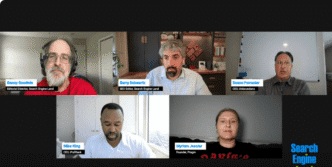
Day 1 had sessions on search trends, AI and crawling, robots.txt and Search Console, according to SEJ [1]. Mike Jittivanich, Google’s director of marketing for South East Asia and South Asia Frontier, gave the keynote. SEJ reports he named three forces: AI innovation, changing user habits and younger generations searching differently [1].
The line most quoted afterwards was that past success no longer guarantees future success in search [1]. The earlier version of this article also said Liz Reid backed this at the event. SEJ’s recap only quotes something she “has put it” before, so we have dropped that framing.
What did Google’s speakers say, and what checks out?
Below are the main Day 1 claims. For each, we show how SEJ reported it, what Google’s own pages say, and how we label it.
AI features use the same systems
Reported: AI Mode and AI Overviews use the same crawling, indexing and serving systems as classic results [1]
Google's pages: No Google page we opened contradicts it; no page states it in these words
Lens is growing fast
Reported: Lens usage grew 65% year on year, with over 100 billion searches in 2025 [1]
Google's pages: Google: Lens grew 65% year over year, more than 100 billion visual searches this year (June 2025) [3]
Gen Z and Circle to Search
Reported: About 10% of younger users' journeys start with Circle to Search or AI entry points [1]
Google's pages: Google: Circle to Search has particularly high engagement among 18 to 24 year olds; no 10% figure on the pages we opened [4]
Status codes and crawl budget
Reported: Only server errors (5xx) consume crawl budget; 4xx codes do not [1]
Google's pages: Google: 5xx and 429 lower the crawl rate; other 4xx codes have no effect on crawl rate [6]
Confirmed: Google's own page says it. Reported: only Search Engine Journal's account. Corrected: Google's documentation says something different.
How did Google say Search itself is changing?
SEJ reports that Google framed the change along two lines: the questions people ask and the answers Google can give [1].
On questions, queries are getting longer and more conversational. Searches of five or more words were said to be growing 1.5 times faster than shorter ones [1]. People also search by voice, by camera and with Circle to Search.
On answers, speakers described AI Overviews as useful when there is no single right answer. They described AI Mode as an end-to-end experience for tasks like shopping or meal planning. They said Google is bringing DeepMind’s reasoning models into Search to power these results [1].
Google’s own data on younger users supports part of this. Its November 2024 page says signed-in users aged 18 to 24 issue more queries each day than other age groups. It also says a third of people who have tried Circle to Search use it weekly [4].
Do AI Mode and AI Overviews use the same systems as classic Search?
According to SEJ, yes. Speakers said Googlebot crawls for both the blue links and the AI features. Other crawlers in the same system feed Gemini and other large language models [1].
Every page still goes through HTML parsing, rendering and de-duplication. Models such as BERT help with understanding and spam detection. The same ranking signals, including RankBrain and MUM, order both classic results and AI answers, SEJ reports [1]. Google has not published this list in one document, so we treat it as reported.
Does Google train its ranking systems on human-written content?
This was the line that drew most attention. SEJ reports that speakers said Google’s machine-learning ranking systems learn from content made by humans. AI-generated text, they said, sits in its own space in the index [1].
Read it carefully. It is about what Google’s models learn from. It is not a statement that AI-written pages are demoted. We found no Google documentation that repeats the line, so it stays a reported quote.
Why Day 1 matters for SEO
This is our analysis. The useful message from Day 1 is that there is no separate playbook for AI features. SEJ reports Google’s speakers saying AI Mode and AI Overviews use the same crawling, indexing and serving systems as the blue links [1]. If you are doing technical SEO and content well, you are already eligible. We compare the two features in AI Overviews vs AI Mode.
The search-behaviour numbers matter more for planning than for rankings. Google’s own page says Lens grew 65% year on year, with more than 100 billion visual searches by June 2025 [3]. If your products are easy to photograph, visual search deserves attention.
The Gen Z figures need more care. Google says Circle to Search has particularly high engagement among 18 to 24 year olds [4]. The specific “10% of journeys” figure appears in SEJ’s recap [1], but we did not find it on the Google pages we opened.
Watch out: Several write-ups of this event, including SEJ’s, describe llms.txt as an IETF working group proposal. It is not. It was proposed by Jeremy Howard on 3 September 2024 [7]. Google’s speakers said it is not a Google initiative [1]. See our guide to managing AI crawlers.
What did Google say about crawl budget and status codes?
Cherry Prommawin described crawl budget as crawl rate limit combined with crawl demand, according to SEJ [1]. Google’s documentation says the same, calling the first part the “crawl capacity limit”. Our crawl budget guide covers both parts [5].
The status code point needs Google’s exact wording. SEJ reported that only server errors consume crawl budget [1]. Google’s documentation puts it differently. Server errors (5xx) and rate-limit signals (429) make Google lower its crawl rate. Other 4xx codes have no effect on crawl rate [6].
Speakers also said many sites saw more crawling as Google’s AI features grew, but that more crawling does not mean better rankings [1].
Quick check: Open the Crawl Stats report in Search Console and look at responses by status. A rising share of 5xx or 429 responses is the thing to fix first, because Google says both slow its crawling [6].
What did Google say about Search Console?
Daniel Waisberg described Search Console as the bridge between Google’s systems and your site, according to SEJ [1].
Three practical points came out of his session. Finalised data is typically two days old, based on Pacific time, and partial data shown before that can differ by up to 1%. New features follow a set path from user need through design, testing and launch. And the recommendations feature is aimed at site owners who are not data experts [1].
The two-day lag matters when you judge a change. Do not read results from the last day or two as final.
What should you do after Day 1?
- Keep one SEO plan. Speakers said there is no separate checklist for AI features [1].
- Fix server errors fast. 5xx and 429 responses lower Google’s crawl rate [6].
- Support visual search. Use clear product images with descriptive alt text. Lens use is growing fast, according to Google [3].
- Use robots.txt for crawler control. It is the standard Google pointed to; llms.txt is not a Google initiative [1].
- Check Search Console with a lag in mind. SEJ reports finalised data is typically two days old [1].
What is still unclear?
- The Gen Z numbers. “Fastest-growing group of searchers” and “10% of journeys” come from SEJ’s account of a session [1]. We found no Google page with the same figures.
- The commercial share of Lens. SEJ reported 1 in 5 Lens searches had commercial intent [1]. Google’s November 2024 page said 1 in 4 [4]. They may come from different periods.
- Slides and recordings. We found none published for Day 1.
Frequently asked questions
What is Search Central Live APAC 2025?
It was Google’s Search Central conference for the Asia-Pacific region. The Bangkok edition in July 2025 was Google’s first three-day “Deep Dive” format, covering crawling, indexing and serving.
Did Google say SEO no longer works?
No. The keynote line was that past success no longer guarantees future success. Speakers also said good traditional SEO keeps you eligible for AI Overviews and AI Mode.
Does Google use llms.txt?
Speakers at the event said llms.txt is not a Google initiative and not something Google plans to adopt. Robots.txt remains the control Google points to.
Do 404 errors waste crawl budget?
Google’s documentation says 4xx codes other than 429 have no effect on crawl rate. Server errors and 429 responses make Google crawl more slowly.
Is Google Lens growing?
Yes. Google said in June 2025 that Lens grew 65% year on year, with more than 100 billion visual searches that year.
Where to go next
Day 2 is covered in our report on what Google said about AI-generated images. To act on the crawl points, read how to fix crawl errors, or start from the technical SEO pillar.
Sources
How we checked this: on 18 November 2026 we read SEJ’s Day 1 recap, Google’s year-end recap of the APAC events, Google’s Lens and Search pages, and Google’s crawling documentation. Statements from the talks rely on SEJ’s account, as Google has published no transcript. We have no relationship with SEJ or Google.
- Search Engine Journal — Google Search Central APAC 2025: Everything From Day 1, Dan Taylor, 23 July 2025
- Google Search Central Blog — Search Central Live APAC 2025 Recap: A Note of Gratitude, Cherry Prommawin and Gary Illyes, 31 December 2025
- Think with Google — Google Lens co-founder: Visual search trends and future outlook, June 2025
- Think with Google — Search innovations transform user behavior, November 2024
- Google — Crawl budget management
- Google — How HTTP status codes affect Google’s crawlers
- llmstxt.org — The /llms.txt file, proposed by Jeremy Howard, 3 September 2024