

Published: July 28, 2025 | Based on Google Search Central APAC 2025 Data
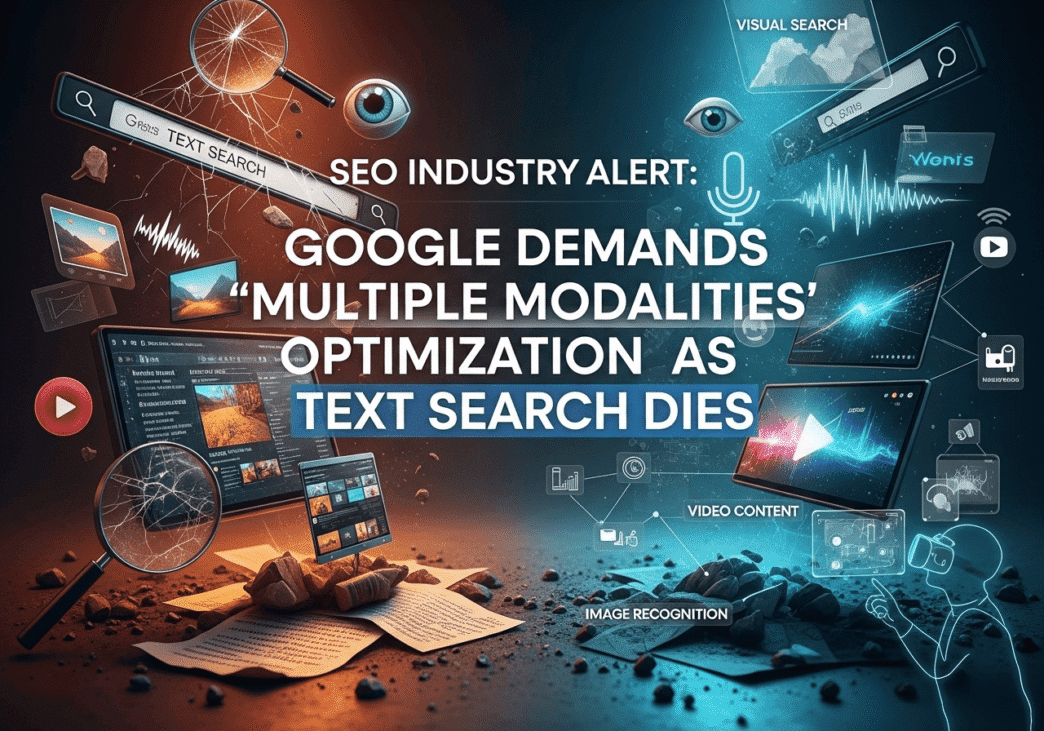
Google’s latest data from Search Central APAC 2025 has revealed a fundamental transformation in search behavior driven by Google’s multi-modal search advancements, forcing the SEO industry to completely rethink optimization strategies beyond traditional text-based approaches.
Table of Contents
Toggle
📊 The Numbers That Changed Everything
Verified data from Google Search Central APAC 2025:
- Google Lens usage surged 65% year-over-year with over 100 billion searches recorded in 2025
- 1 in 5 Lens searches now carry commercial intent – marking visual search as a major revenue channel
- 10% of Gen Z search journeys begin with Circle to Search or other AI-powered experiences rather than typing
- Searches containing 5+ words are growing 1.5X faster than shorter, traditional keyword queries
Mike Jittivanich, Google’s Director of Marketing for South East Asia, emphasized the significance: “Past success no longer guarantees future success in search.
🔍 What “Multiple Modalities” Actually Means
Google engineers revealed that “optimizing for multiple modalities” means preparing content for three distinct search behaviors:
🗣️ Voice Search Optimization
Google’s guidance includes:
- Creating content that answers natural questions
- Using conversational language patterns
- Targeting longer, spoken-style queries
- Including location-based conversational phrases
Example transformation:
- Traditional target: “best pizza NYC”
- Voice-optimized: “Where can I find the best pizza in New York City?”
👁️ Visual Search Optimization
Key requirements revealed:
- Detailed, descriptive alt text for all images
- High-quality, clear visual content
- Text overlays that are easily readable
- Structured data markup for visual elements
Example improvement:
- Basic alt text: “pizza image”
- Visual-optimized: “Wood-fired margherita pizza with fresh basil and buffalo mozzarella on marble serving board”
💬 Conversational Search Optimization
Google’s recommendations:
- Longer, comprehensive content formats
- Question-and-answer structures
- Natural dialogue patterns
- Step-by-step explanatory content
🎯 Industry Response and Analysis
Early Adoption Patterns
While specific performance metrics aren’t yet available, industry observations suggest:
- E-commerce companies are prioritizing product image optimization
- Local businesses are rapidly implementing voice search strategies
- Content publishers are restructuring articles for conversational formats
- SEO agencies are scrambling to develop multi-modal expertise
Technology Platform Updates
Major SEO tools are responding:
- Search Console may add multi-modal performance tracking
- Image optimization tools seeing increased demand
- Voice keyword research becoming a priority
- Alt text analysis tools gaining prominence
🤖 Connection to AI Search Features
Cherry Prommawin from Google explained that AI Overviews and AI Mode rely on the same infrastructure as traditional search, but favor content that serves multiple search behaviors.
Key insight: There’s no separate optimization needed for AI features – excellence in multi-modal optimization naturally makes content eligible for AI-powered search results.
📱 The Gen Z Factor
The data reveals Gen Z as the fastest-growing search demographic, with distinctly different search patterns:
- Higher likelihood of using visual search methods
- Preference for conversational queries over keyword-based searches
- Mobile-first approach to information discovery
- Expectation of immediate, comprehensive answers
⚡ Immediate Implementation Priorities
Based on Google’s guidance, SEO professionals should focus on:
Week 1-2: Content Audit
- Review existing alt text for descriptive quality
- Identify opportunities for FAQ-style content
- Assess conversational content gaps
Week 3-4: Implementation
- Rewrite image descriptions with detailed context
- Add question-based content sections
- Optimize for longer, natural language queries
Ongoing: Monitoring and Adaptation
- Track performance across different search types
- Monitor Google Search Console for new insights
- Stay updated on additional guidance from Google
🔮 Industry Implications
Short-term (Next 3-6 Months):
- Increased demand for multi-modal SEO expertise
- Higher competition for voice and visual search optimization
- Tool development focused on non-text search analysis
Long-term (6-12 Months):
- Potential algorithm updates favoring multi-modal content
- New performance metrics for measuring search success
- Industry standard shifts toward comprehensive optimization
💡 Expert Recommendations
Gary Illyes emphasized that traditional SEO fundamentals remain crucial – multi-modal optimization builds upon, rather than replaces, existing best practices.
Practical advice from Google engineers:
- Start with content quality before technical optimization
- Focus on user intent across all search types
- Maintain SEO fundamentals while adding multi-modal elements
- Test and measure performance across different search behaviors
🎯 Bottom Line for SEO Professionals
The data clearly shows that search behavior is diversifying beyond traditional text queries. While the full impact remains to be measured, early preparation for multi-modal optimization appears to be a strategic necessity rather than an optional enhancement.
Action items based on Google’s guidance:
- Audit current content for multi-modal readiness
- Prioritize image optimization with detailed descriptions
- Develop conversational content formats
- Monitor performance across different search types
The transformation is happening now – the question isn’t whether to adapt, but how quickly and effectively organizations can implement comprehensive multi-modal strategies.
This report is based on verified data and official statements from Google Search Central APAC 2025. Analysis and industry implications represent informed projections based on available information.
Sources:
- Google Search Central APAC 2025 official coverage
- Search Engine Journal conference reports
- Google engineer presentations and statements



, this growth pattern is consistent across multiple industries and represents the fastest adoption of any new digital channel in recent history. To put this in perspective: - **January 2025:** 17,076 AI-sourced sessions - **May 2025:** 107,100 AI-sourced sessions - **Growth Rate:** 527% in just five months One standout example saw ChatGPT traffic alone grow from 600 visits per month in early 2024 to over 22,000 visits per month by May 2025—a 3,567% increase for a single platform. **💡 Pro Tip:** Track AI referral traffic in Google Analytics 4 by setting up custom dimensions for referral sources including "chat.openai.com," "perplexity.ai," and "claude.ai" to monitor your own AI discovery performance. ### Industry Distribution The surge isn't uniform across all sectors. High-consultative industries are leading the charge, as documented in [Search Engine Journal's analysis of AI traffic patterns](https://www.searchenginejournal.com/study-chatgpt-ai-tools-gain-ground-in-search-market/536137/): **Top Performing Industries:** 1. **Legal Services** - Complex regulatory questions drive AI consultations 2. **Finance & Banking** - Users seek personalized financial advice and explanations 3. **Healthcare** - Medical inquiries and symptom research dominate queries 4. **Insurance** - Policy comparisons and coverage explanations 5. **SMB Consulting** - Business strategy and operational guidance These five industries collectively account for **55% of all AI-driven sessions**, highlighting users' preference for AI assistance with complex, high-stakes decisions. **💡 Pro Tip:** If you're in a high-trust industry, prioritize creating comprehensive FAQ sections and expert-authored content, as these formats perform exceptionally well in AI discovery scenarios. ## Platform Landscape Analysis ### ChatGPT's Dominance ChatGPT continues to lead the AI traffic generation, but its monopoly is weakening. The platform benefits from: - First-mover advantage in consumer AI - Superior natural language processing - Broad general knowledge capabilities - Strong brand recognition ### Emerging Competitors **Perplexity** has gained significant traction with its search-focused approach, offering: - Real-time web search integration - Source citations and transparency - Specialized research capabilities **Google's Gemini** leverages integration advantages: - Native Google ecosystem integration - Android device pre-installation - Seamless transition from traditional search **Microsoft Copilot** capitalizes on enterprise relationships: - Office 365 integration - Business-focused use cases - Professional workflow optimization **Anthropic's Claude** appeals to quality-conscious users: - Reputation for accuracy and safety - Longer context windows - Nuanced reasoning capabilities ## User Behavior Transformation ### The "Instant Surfacing Era" Traditional SEO operated on a crawl-index-rank cycle that rewarded patience and authority building. AI discovery operates differently, as explained in [Ahrefs' comprehensive study on AI search behavior](https://ahrefs.com/blog/ai-overviews-reduce-clicks/): **Old Model:** Publish → Wait for crawling → Hope for indexing → Optimize for ranking → Generate traffic **New Model:** Create quality content → Get immediately surfaced by AI → Receive targeted referrals This shift means content can be discovered and drive traffic before it even ranks in traditional search engines. **💡 Pro Tip:** Focus on creating content that directly answers specific questions rather than optimizing for broad keywords. AI models excel at understanding intent and context, making traditional keyword density tactics less effective. ### Quality Over Quantity AI platforms prioritize content that is: - **Clear and structured** - Easy for models to parse and understand - **Authoritative** - From recognized experts or institutions - **Comprehensive** - Covers topics thoroughly rather than superficially - **Current** - Up-to-date information that reflects latest developments ## Business Implications ### For SaaS Companies Some SaaS businesses are already seeing over 1% of total traffic from AI platforms. While this might seem modest, it represents: - **High-intent users** who have actively sought AI assistance - **Qualified prospects** who've engaged with AI to solve specific problems - **Bottom-funnel traffic** with higher conversion potential ### For Content Publishers The implications vary significantly by content type: **Winners:** - Educational content creators - How-to and tutorial publishers - Industry analysis and research firms - Expert commentary and opinion sites **Challenges:** - Breaking news publishers (AI prefers verified information) - Listicle and aggregation sites (AI can synthesize directly) - SEO-optimized but thin content creators ### For E-commerce AI discovery is particularly powerful for complex purchase decisions, as highlighted in [Adobe's recent analysis of AI-driven retail traffic](https://searchengineland.com/generative-ai-surging-online-shopping-report-453312): - **Electronics** - Specification comparisons and recommendations - **Healthcare products** - Safety and efficacy information - **Financial services** - Product feature explanations - **Professional services** - Capability and pricing inquiries **💡 Pro Tip:** Create detailed product comparison guides and technical specification sheets, as AI assistants frequently reference these when helping users make purchase decisions. ## Strategic Recommendations ### Immediate Actions (0-3 months) **Content Optimization:** - Restructure existing content with clear headers and bullet points - Add FAQ sections that directly answer common queries - Include expert credentials and authority signals - Ensure information accuracy and currency **Technical Preparation:** - Implement structured data markup - Optimize for featured snippets - Ensure fast loading times and mobile optimization - Create XML sitemaps with updated lastmod tags ### Medium-term Strategy (3-12 months) **Authority Building:** - Develop thought leadership content - Seek expert citations and backlinks - Build relationships with industry authorities - Create comprehensive resource hubs **AI-First Content Creation:** - Design content specifically for AI consumption - Focus on answering complete questions rather than keyword optimization - Create content that provides context and nuance - Develop expertise-driven content series ### Long-term Vision (12+ months) **Platform Diversification:** - Develop relationships with multiple AI platforms - Create platform-specific content strategies - Monitor emerging AI discovery channels - Build direct AI API integrations where possible **Measurement Evolution:** - Develop new KPIs beyond traditional traffic metrics - Track AI mention frequency and context - Monitor brand authority signals - Measure assisted conversions from AI discovery ## Challenges and Considerations ### Attribution Complexity AI-driven traffic often involves multiple touchpoints, as detailed in [Kevin Indig's user experience study of AI Overviews](https://searchengineland.com/google-ai-overviews-user-behavior-study-455511): - Initial discovery through AI - Verification through traditional search - Social proof seeking on platforms like Reddit - Final conversion on the target website This multi-step journey makes traditional attribution models inadequate. **💡 Pro Tip:** Implement UTM parameters for AI referral traffic and set up custom conversion paths in Google Analytics to better understand the full user journey from AI discovery to conversion. ### Content Investment ROI The shift requires significant content strategy changes: - Higher upfront investment in comprehensive content - Longer content development cycles - Greater emphasis on expertise and authority - Reduced reliance on keyword-driven content ### Competitive Dynamics As more businesses optimize for AI discovery: - Competition for AI attention will intensify - Authority and trust signals will become more valuable - First-mover advantages will compound - Smaller players may struggle to gain AI visibility ## Future Outlook ### Growth Projections If current trends continue, AI-referred traffic could represent: - **5-10% of total website traffic** by end of 2025 - **15-20% for high-trust industries** by 2026 - **Major revenue channel** for information-based businesses ### Technology Evolution Expected developments include: - **Improved accuracy** reducing user verification needs - **Better source attribution** providing clearer traffic attribution - **Industry-specific AI models** creating niche opportunities - **Voice and visual AI search** expanding discovery channels ### Market Maturation The AI discovery market will likely evolve through: - **Platform consolidation** as winners emerge - **Specialized AI services** for specific industries - **Direct publisher partnerships** with AI platforms - **New monetization models** beyond traditional advertising ## Conclusion: Preparing for the AI-First Future The 527% surge in AI-driven traffic is not a temporary spike—it's the beginning of a fundamental shift in how people discover and consume information online. Organizations that recognize this trend early and adapt their content and discovery strategies accordingly will capture disproportionate value in the emerging AI-first digital ecosystem. The companies thriving in this new landscape will be those that prioritize authority, clarity, and genuine expertise over traditional SEO tactics. As AI becomes the primary discovery layer for complex information, the winners will be those who can effectively communicate their knowledge through these new channels while maintaining the trust and credibility that AI platforms increasingly value. The question is no longer whether AI will reshape web discovery—it's whether your organization will be ready to succeed in this new reality. --- ## Additional Resources **Essential Reading:** - [Previsible's 2025 AI Traffic Study](https://previsible.io/seo-strategy/ai-seo-study-2024/) - Complete methodology and findings - [Search Engine Land's AI Search Coverage](https://searchengineland.com/generative-ai-surging-online-shopping-report-453312) - Latest industry trends and analysis - [Ahrefs' AI Overviews Research](https://ahrefs.com/blog/ai-overviews-reduce-clicks/) - Technical insights and click-through rate data **Tools for AI Discovery Tracking:** - [Previsible's Free AI Traffic Dashboard](https://previsible.io/) - Monitor LLM referrals in Looker Studio - [SE Ranking's AI Overview Tracker](https://seranking.com/) - Track AI visibility and citations - Google Analytics 4 - Set up custom dimensions for AI referral sources **💡 Final Pro Tip:** Subscribe to AI platform newsletters and developer updates to stay informed about algorithm changes that could affect your content's discoverability in AI search results. *This report is based on analysis from Previsible's 2025 AI Traffic Study, examining 19 GA4 properties across multiple industries and timeframes.*](https://aiseojournal.net/wp-content/uploads/2025/08/AI-Assistants-Drive-527_-Traffic-Spike-332x332.png)
, this growth pattern is consistent across multiple industries and represents the fastest adoption of any new digital channel in recent history. To put this in perspective: - **January 2025:** 17,076 AI-sourced sessions - **May 2025:** 107,100 AI-sourced sessions - **Growth Rate:** 527% in just five months One standout example saw ChatGPT traffic alone grow from 600 visits per month in early 2024 to over 22,000 visits per month by May 2025—a 3,567% increase for a single platform. **💡 Pro Tip:** Track AI referral traffic in Google Analytics 4 by setting up custom dimensions for referral sources including "chat.openai.com," "perplexity.ai," and "claude.ai" to monitor your own AI discovery performance. ### Industry Distribution The surge isn't uniform across all sectors. High-consultative industries are leading the charge, as documented in [Search Engine Journal's analysis of AI traffic patterns](https://www.searchenginejournal.com/study-chatgpt-ai-tools-gain-ground-in-search-market/536137/): **Top Performing Industries:** 1. **Legal Services** - Complex regulatory questions drive AI consultations 2. **Finance & Banking** - Users seek personalized financial advice and explanations 3. **Healthcare** - Medical inquiries and symptom research dominate queries 4. **Insurance** - Policy comparisons and coverage explanations 5. **SMB Consulting** - Business strategy and operational guidance These five industries collectively account for **55% of all AI-driven sessions**, highlighting users' preference for AI assistance with complex, high-stakes decisions. **💡 Pro Tip:** If you're in a high-trust industry, prioritize creating comprehensive FAQ sections and expert-authored content, as these formats perform exceptionally well in AI discovery scenarios. ## Platform Landscape Analysis ### ChatGPT's Dominance ChatGPT continues to lead the AI traffic generation, but its monopoly is weakening. The platform benefits from: - First-mover advantage in consumer AI - Superior natural language processing - Broad general knowledge capabilities - Strong brand recognition ### Emerging Competitors **Perplexity** has gained significant traction with its search-focused approach, offering: - Real-time web search integration - Source citations and transparency - Specialized research capabilities **Google's Gemini** leverages integration advantages: - Native Google ecosystem integration - Android device pre-installation - Seamless transition from traditional search **Microsoft Copilot** capitalizes on enterprise relationships: - Office 365 integration - Business-focused use cases - Professional workflow optimization **Anthropic's Claude** appeals to quality-conscious users: - Reputation for accuracy and safety - Longer context windows - Nuanced reasoning capabilities ## User Behavior Transformation ### The "Instant Surfacing Era" Traditional SEO operated on a crawl-index-rank cycle that rewarded patience and authority building. AI discovery operates differently, as explained in [Ahrefs' comprehensive study on AI search behavior](https://ahrefs.com/blog/ai-overviews-reduce-clicks/): **Old Model:** Publish → Wait for crawling → Hope for indexing → Optimize for ranking → Generate traffic **New Model:** Create quality content → Get immediately surfaced by AI → Receive targeted referrals This shift means content can be discovered and drive traffic before it even ranks in traditional search engines. **💡 Pro Tip:** Focus on creating content that directly answers specific questions rather than optimizing for broad keywords. AI models excel at understanding intent and context, making traditional keyword density tactics less effective. ### Quality Over Quantity AI platforms prioritize content that is: - **Clear and structured** - Easy for models to parse and understand - **Authoritative** - From recognized experts or institutions - **Comprehensive** - Covers topics thoroughly rather than superficially - **Current** - Up-to-date information that reflects latest developments ## Business Implications ### For SaaS Companies Some SaaS businesses are already seeing over 1% of total traffic from AI platforms. While this might seem modest, it represents: - **High-intent users** who have actively sought AI assistance - **Qualified prospects** who've engaged with AI to solve specific problems - **Bottom-funnel traffic** with higher conversion potential ### For Content Publishers The implications vary significantly by content type: **Winners:** - Educational content creators - How-to and tutorial publishers - Industry analysis and research firms - Expert commentary and opinion sites **Challenges:** - Breaking news publishers (AI prefers verified information) - Listicle and aggregation sites (AI can synthesize directly) - SEO-optimized but thin content creators ### For E-commerce AI discovery is particularly powerful for complex purchase decisions, as highlighted in [Adobe's recent analysis of AI-driven retail traffic](https://searchengineland.com/generative-ai-surging-online-shopping-report-453312): - **Electronics** - Specification comparisons and recommendations - **Healthcare products** - Safety and efficacy information - **Financial services** - Product feature explanations - **Professional services** - Capability and pricing inquiries **💡 Pro Tip:** Create detailed product comparison guides and technical specification sheets, as AI assistants frequently reference these when helping users make purchase decisions. ## Strategic Recommendations ### Immediate Actions (0-3 months) **Content Optimization:** - Restructure existing content with clear headers and bullet points - Add FAQ sections that directly answer common queries - Include expert credentials and authority signals - Ensure information accuracy and currency **Technical Preparation:** - Implement structured data markup - Optimize for featured snippets - Ensure fast loading times and mobile optimization - Create XML sitemaps with updated lastmod tags ### Medium-term Strategy (3-12 months) **Authority Building:** - Develop thought leadership content - Seek expert citations and backlinks - Build relationships with industry authorities - Create comprehensive resource hubs **AI-First Content Creation:** - Design content specifically for AI consumption - Focus on answering complete questions rather than keyword optimization - Create content that provides context and nuance - Develop expertise-driven content series ### Long-term Vision (12+ months) **Platform Diversification:** - Develop relationships with multiple AI platforms - Create platform-specific content strategies - Monitor emerging AI discovery channels - Build direct AI API integrations where possible **Measurement Evolution:** - Develop new KPIs beyond traditional traffic metrics - Track AI mention frequency and context - Monitor brand authority signals - Measure assisted conversions from AI discovery ## Challenges and Considerations ### Attribution Complexity AI-driven traffic often involves multiple touchpoints, as detailed in [Kevin Indig's user experience study of AI Overviews](https://searchengineland.com/google-ai-overviews-user-behavior-study-455511): - Initial discovery through AI - Verification through traditional search - Social proof seeking on platforms like Reddit - Final conversion on the target website This multi-step journey makes traditional attribution models inadequate. **💡 Pro Tip:** Implement UTM parameters for AI referral traffic and set up custom conversion paths in Google Analytics to better understand the full user journey from AI discovery to conversion. ### Content Investment ROI The shift requires significant content strategy changes: - Higher upfront investment in comprehensive content - Longer content development cycles - Greater emphasis on expertise and authority - Reduced reliance on keyword-driven content ### Competitive Dynamics As more businesses optimize for AI discovery: - Competition for AI attention will intensify - Authority and trust signals will become more valuable - First-mover advantages will compound - Smaller players may struggle to gain AI visibility ## Future Outlook ### Growth Projections If current trends continue, AI-referred traffic could represent: - **5-10% of total website traffic** by end of 2025 - **15-20% for high-trust industries** by 2026 - **Major revenue channel** for information-based businesses ### Technology Evolution Expected developments include: - **Improved accuracy** reducing user verification needs - **Better source attribution** providing clearer traffic attribution - **Industry-specific AI models** creating niche opportunities - **Voice and visual AI search** expanding discovery channels ### Market Maturation The AI discovery market will likely evolve through: - **Platform consolidation** as winners emerge - **Specialized AI services** for specific industries - **Direct publisher partnerships** with AI platforms - **New monetization models** beyond traditional advertising ## Conclusion: Preparing for the AI-First Future The 527% surge in AI-driven traffic is not a temporary spike—it's the beginning of a fundamental shift in how people discover and consume information online. Organizations that recognize this trend early and adapt their content and discovery strategies accordingly will capture disproportionate value in the emerging AI-first digital ecosystem. The companies thriving in this new landscape will be those that prioritize authority, clarity, and genuine expertise over traditional SEO tactics. As AI becomes the primary discovery layer for complex information, the winners will be those who can effectively communicate their knowledge through these new channels while maintaining the trust and credibility that AI platforms increasingly value. The question is no longer whether AI will reshape web discovery—it's whether your organization will be ready to succeed in this new reality. --- ## Additional Resources **Essential Reading:** - [Previsible's 2025 AI Traffic Study](https://previsible.io/seo-strategy/ai-seo-study-2024/) - Complete methodology and findings - [Search Engine Land's AI Search Coverage](https://searchengineland.com/generative-ai-surging-online-shopping-report-453312) - Latest industry trends and analysis - [Ahrefs' AI Overviews Research](https://ahrefs.com/blog/ai-overviews-reduce-clicks/) - Technical insights and click-through rate data **Tools for AI Discovery Tracking:** - [Previsible's Free AI Traffic Dashboard](https://previsible.io/) - Monitor LLM referrals in Looker Studio - [SE Ranking's AI Overview Tracker](https://seranking.com/) - Track AI visibility and citations - Google Analytics 4 - Set up custom dimensions for AI referral sources **💡 Final Pro Tip:** Subscribe to AI platform newsletters and developer updates to stay informed about algorithm changes that could affect your content's discoverability in AI search results. *This report is based on analysis from Previsible's 2025 AI Traffic Study, examining 19 GA4 properties across multiple industries and timeframes.*](https://aiseojournal.net/wp-content/uploads/2025/08/AI-Assistants-Drive-527_-Traffic-Spike-688x387.png)