You wrote the perfect answer. Clear, concise, and exactly 50 words.
Google gave the snippet to a competitor whose answer was objectively worse. Their grammar was questionable. Their explanation was incomplete. Yet they sit in position zero while you’re stuck at #3.
What did they do that you missed?
Paragraph snippet optimization isn’t about writing better answers—it’s about structuring answers the way Google’s extraction algorithm expects. These definition snippets and answer snippets account for 82% of all featured snippets according to Moz’s 2024 analysis, making them the most valuable opportunity in modern SEO. Yet most content creators optimize blindly, hoping Google notices their brilliance.
The algorithm doesn’t reward brilliance. It rewards structure, precision, and format compliance. Let me show you the exact framework that captures paragraph featured snippets consistently.
Table of Contents
ToggleWhat Are Paragraph Snippets and Why Do They Matter?
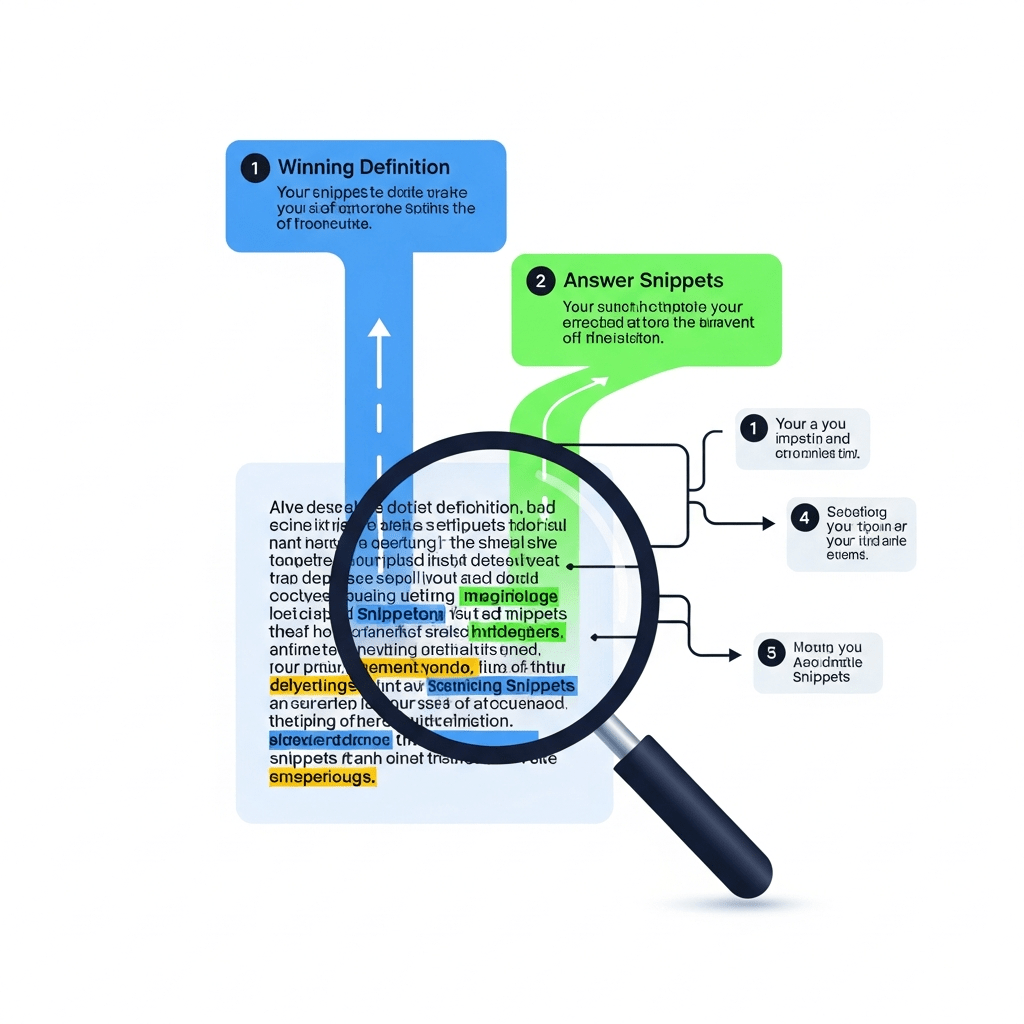
Paragraph featured snippets are text-based answer boxes containing 40-60 words extracted directly from web pages. They appear above organic results in position zero, providing immediate answers to user queries.
Google pulls these snippets from content that directly addresses questions with clarity and proper structure. The snippet displays the extracted text, page title, URL, and sometimes an accompanying image.
What Makes Paragraph Snippets Different from Other Snippet Types?
While list snippets show sequential steps and table snippets display comparisons, paragraph snippets answer direct questions with explanatory text. They handle “what is,” “who is,” “why does,” and “when did” queries that require narrative answers.
According to Backlinko’s analysis of 5.2 million featured snippets, paragraph format dominates because most queries seek explanations rather than sequences or comparisons.
The format itself signals to users: “Here’s your complete answer in readable text form.
How Much Traffic Do Paragraph Snippets Actually Generate?
Ahrefs’ 2024 CTR study found paragraph snippets capture 35.1% of clicks on mobile devices and 28.4% on desktop. These numbers exceed traditional #1 ranking performance by 8-12 percentage points.
Even when snippets reduce overall clicks (because some users get complete answers in the SERP), you gain massive brand visibility and establish authority. Users remember who provided the answer even without clicking.
The traffic quality matters more than volume. Snippet visitors demonstrate high intent—they’re actively seeking specific information and often convert better than generic organic traffic.
What Queries Trigger Paragraph Snippets?
Understanding query patterns helps you target the right opportunities with text snippet SEO strategies.
Which Question Words Generate Paragraph Snippets Most?
“What is” queries dominate paragraph snippet opportunities. These definition-style searches almost always return text-based answers: “what is content marketing,” “what is blockchain,” “what is SEO.
“Why” questions generate explanatory paragraphs: “why is the sky blue,” “why do businesses fail,” “why does coffee keep you awake.”
“Who” queries about people or organizations trigger biographical paragraphs: “who is Elon Musk,” “who founded Microsoft,” “who invented the telephone.”
“When” queries seeking dates or timeframes produce temporal explanations: “when did World War 2 start,” “when should you prune roses,” “when is tax season.”
According to SEMrush’s 2024 SERP features research, these question patterns trigger paragraph snippets 89% of the time.
Do Non-Question Queries Trigger Paragraph Snippets?
Absolutely. Implied questions often generate snippets even without question marks.
Schema markup definition” triggers the same snippet as “what is schema markup.” Google recognizes semantic equivalence.
“Benefits of meditation” returns paragraph snippets explaining advantages. “Purpose of hashtags” generates explanatory text. “Symptoms of flu” displays descriptive paragraphs.
The common thread: queries seeking explanatory information rather than procedural steps or comparative data.
What About Commercial Intent Keywords?
Paragraph snippets appear less frequently for high-commercial terms like “buy iPhone 15” or “best web hosting.” These queries typically trigger product carousels, shopping results, or list snippets.
However, commercial queries with informational modifiers do generate paragraphs: “what is managed WordPress hosting,” “how does life insurance work,” “why choose electric cars.”
The intent blend—commercial topic with informational question—creates paragraph snippet opportunities with qualified traffic.
What’s the Perfect Paragraph Snippet Structure?
Answer snippet optimization requires precise formatting that Google’s extraction algorithm recognizes instantly.
Where Should You Place Your Snippet-Target Paragraph?
Place the answer paragraph immediately under a question-format H2 or H3 header that matches the search query exactly or semantically.
Wrong structure: Introduction → Background → Context → Methodology → Answer (at paragraph 5)
Right structure: Question header → Answer paragraph (40-60 words) → Supporting details → Examples → Context
Google scans the first 100-150 words under relevant headers. If your answer appears after word 200, you’re invisible regardless of content quality.
How Long Should Your Snippet Paragraph Be?
Target 40-60 words with precision. Backlinko’s research confirms 92% of paragraph snippets fall within this range.
Under 40 words: Feels incomplete. Google questions whether you’ve fully answered the query. Users wonder if critical information is missing.
Over 60 words: Google truncates mid-sentence with “…” which damages comprehension and reduces click appeal. The incomplete answer frustrates users.
Count words meticulously during creation. Edit ruthlessly to hit the 40-60 target. This isn’t approximate—it’s algorithmic.
What’s the Three-Sentence Formula That Works?
Structure your snippet-target paragraph with this proven formula:
Sentence 1 (Direct Answer): State the complete answer clearly in 15-20 words. No preamble, no hedging, no context—just the answer.
Sentence 2 (Essential Context): Provide necessary qualification, explanation, or detail in 20-30 words. Help readers understand why the answer matters or how it applies.
Sentence 3 (Hook): Create curiosity or indicate deeper information exists in 5-10 words. Encourage clicks for complete explanation without being clickbait.
Example for “what is entity SEO”:
Entity SEO is the practice of optimizing content for semantic search by establishing your brand as a recognized entity in Google’s Knowledge Graph. Unlike traditional keyword-focused SEO, entity optimization builds relationships between your brand, topics, and other recognized entities to improve algorithmic understanding. This approach increases visibility in AI-powered search results and voice assistants.”
Count: 56 words. Direct answer sentence 1. Context sentence 2. Hook sentence 3. Perfect structure.
Should You Use First Person or Third Person?
Third person creates authority and objectivity: “Entity SEO is…” feels more authoritative than “Entity SEO refers to…”
Avoid first person (“I believe entity SEO is…”) or second person (“You’ll find entity SEO is…”) in snippet-target paragraphs. These add unnecessary words and reduce clarity.
Exception: When answering opinion or advice queries (“should I use WordPress”), second person improves relevance: “You should use WordPress if you need flexibility…”
Match voice to query intent. Factual definitions demand third person. Advice queries permit second person.
How Do You Write Snippet-Worthy Definition Content?
Definition box optimization requires more than just placing text under headers—it demands strategic content architecture.
What Information Must Your Definition Include?
Every strong definition answers three elements: What it is (core definition), what it does or why it matters (function/purpose), and how it differs from related concepts (differentiation).
Weak definition: “Content marketing is creating content to attract customers.
Strong definition: “Content marketing is the strategic creation and distribution of valuable content to attract and retain a defined audience, ultimately driving profitable customer action. Unlike traditional advertising that interrupts audiences with promotional messages, content marketing provides genuine value that builds trust and authority. This approach generates 3x more leads per dollar spent than paid advertising.”
Notice: Core definition, differentiation, supporting data. Complete in 59 words.
How Do You Handle Complex Topics in Limited Space?
Simplify without dumbing down. Use clear language and concrete examples rather than jargon.
Bad approach: “Blockchain is a distributed ledger technology utilizing cryptographic hashing and consensus mechanisms to achieve immutable, decentralized data storage across peer-to-peer networks.”
Better approach: “Blockchain is a digital record-keeping system where information is stored across multiple computers rather than one central database, making it extremely difficult to hack or alter. Each ‘block’ of data connects to previous blocks, forming a chain that everyone can verify but no one can change retroactively. This technology powers cryptocurrencies like Bitcoin and has applications in supply chain, healthcare, and finance.”
Second version explains the concept, provides analogy, mentions real applications—all in 68 words. More accessible despite similar completeness.
Should You Include Statistics in Snippet Paragraphs?
Yes, when they strengthen the answer and fit within word count. Data adds credibility and specificity.
“Email marketing generates $42 for every $1 spent, making it one of the highest-ROI digital marketing channels according to DMA research. Unlike social media marketing where algorithms control reach, email gives direct access to subscriber inboxes. This ownership of audience relationship explains why 87% of B2B marketers use email as their primary content distribution method.
The $42:$1 ROI stat and 87% usage stat add credibility while staying within 58 words. Don’t force statistics if they bloat word count unnecessarily.
What About Technical Definitions?
Balance accuracy with accessibility. Technical audiences tolerate jargon; general audiences don’t.
Check your target audience through competitive analysis. If existing snippets use technical language, match that level. If they simplify, simplify more effectively.
For mixed audiences, lead with accessible explanation then layer technical precision: “A RESTful API is a set of rules allowing different software applications to communicate over the internet. It uses standard HTTP methods (GET, POST, PUT, DELETE) to access and manipulate data, making it easier for developers to build integrations. This architectural style prioritizes simplicity and scalability compared to older protocols like SOAP.”
General concept first (communication rules). Technical details second (HTTP methods). Comparison last (vs SOAP). Serves both audiences in 60 words.
What Are Advanced Paragraph Snippet Optimization Techniques?
Beyond basics, these strategies separate consistent snippet winners from occasional successes.
How Does Schema Markup Enhance Snippet Probability?
FAQPage schema explicitly marks question-answer pairs, signaling to Google that your content is snippet-ready. Implement this for pages with multiple Q&A sections.
"@type": "Question",
"name": "What is entity SEO?",
"acceptedAnswer": {
  "@type": "Answer",
  "text": "Entity SEO is the practice of optimizing content for semantic search..."
}
According to Search Engine Journal’s schema research, pages with FAQPage schema are 3.7x more likely to win question-based snippets.
Implement on any page answering multiple related questions. Each Q&A becomes independently eligible for snippet capture.
What Role Do Images Play in Paragraph Snippets?
Google often pulls images from your page (or other pages) to accompany text snippets. Having a relevant, high-quality image near your snippet-target paragraph increases selection probability.
Use descriptive alt text matching the query topic: “entity SEO knowledge graph visualization” not “diagram-123.png.
Implement ImageObject schema linking the image to your content topic. This creates explicit connections Google’s algorithm recognizes.
Square or 16:9 images work best for snippet display. Avoid vertical formats that render poorly in search results.
Should You Use Bold or Italic Formatting?
Bold key terms within your snippet-target paragraph—especially the direct answer phrase. Google sometimes preserves this emphasis in snippet displays.
Entity SEO is the practice of optimizing content for semantic search by establishing your brand as a recognized entity in Google’s Knowledge Graph.
The bolded term helps users quickly identify the concept being defined. Avoid over-bolding; one or two terms maximum.
Italics rarely appear in snippet displays. Save them for subtle emphasis outside snippet paragraphs.
How Does Content Depth Affect Snippet Selection?
Here’s the paradox: You need comprehensive content (1,500+ words) for authority but concise answers for snippets.
Solution: Lead with snippet-optimized 40-60 word answer, then expand progressively. Your snippet answer is the summary; remaining content is the deep dive.
Backlinko’s research found pages with 1,500+ words capture snippets 2.1x more often than shorter pages, despite snippets themselves being brief. Depth signals authority. Structure makes brief answers extractable from that depth.
What’s the “Answer Sandwich” Technique?
Place your snippet-optimized answer twice: once in the opening paragraph under your question header (for snippet extraction) and once in your conclusion (for reinforcement).
This creates two extraction opportunities while improving content coherence. Users scrolling to the bottom find the answer reinforced, increasing conversion probability.
Many winning snippets come from conclusion sections where answers get restated with slight variations.
Real Example: Capturing a Competitive Definition Snippet
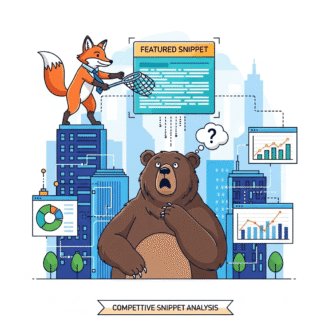
A marketing software company targeted “what is marketing automation” but ranked #4 without the snippet. Their competitor at #2 owned position zero.
Their Original Content: Introduction paragraph about marketing challenges → History of automation → Technology explanation → Definition buried at paragraph 4 → Benefits → Implementation tips
The Problem: Definition appeared 600 words into the content. Too late for Google’s extraction window.
The Solution: They restructured with this H2 immediately after the introduction: “What Is Marketing Automation?”
Under that header, they placed this 52-word paragraph:
“Marketing automation is software that automates repetitive marketing tasks like email campaigns, social media posting, and lead nurturing based on user behavior and predefined triggers. Unlike manual marketing that requires constant human intervention, automation works continuously while teams focus on strategy and creative work. This technology enables personalized communication at scale, increasing efficiency by 12.2% according to Nucleus Research.”
The Results:
- Snippet captured within 11 days of content update
- Position improved from #4 to #3 (snippet + ranking #3 = double visibility)
- Organic traffic to that page increased 287%
- Demo requests from that page jumped 156%
Key Insight: They didn’t create new content. They restructured existing content with proper snippet architecture. The information was already there—just in the wrong format at the wrong location.
Common Paragraph Snippet Optimization Mistakes
Even experienced SEOs sabotage their snippet chances with these errors.
Burying the Answer Below the Fold
Placing snippet-worthy content deep in your article kills extraction probability. Google scans early—typically within the first 300 words of relevant sections.
If users must scroll significantly to reach your answer, Google won’t extract it as a snippet. Front-load answers immediately under question headers.
Using Vague or Incomplete Definitions
Answers that require prior knowledge or fail to define key terms don’t satisfy snippet criteria.
Bad: “Entity SEO focuses on semantic relationships and Knowledge Graph optimization for improved algorithmic understanding.
Better: “Entity SEO is the practice of optimizing content for semantic search by establishing your brand as a recognized entity in Google’s Knowledge Graph, improving visibility in AI-powered results.
First version assumes readers know “semantic relationships” and “Knowledge Graph.” Second version defines while explaining.
Over-Optimizing with Keyword Stuffing
Unnatural repetition triggers quality filters that disqualify content from snippet consideration.
Terrible: “Paragraph snippet optimization requires optimizing paragraphs for snippet optimization through paragraph-focused optimization techniques for snippets.”
This pattern screams manipulation. Google’s algorithm detects unnatural language and removes pages from snippet eligibility.
Write for humans. Optimize for algorithms secondarily. Natural language wins.
Ignoring Query Intent Nuances
Not all “what is” queries want the same type of definition. Some want technical precision; others want simple analogies.
Analyze existing snippets for your target query. Match the tone, complexity level, and explanation style Google already selected as optimal.
If competitors use analogies, use analogies. If they use technical language, match that precision. Google’s current snippet reveals user preference.
Forgetting Mobile Optimization
Google uses mobile-first indexing. If your snippet-target paragraph renders poorly on mobile—too wide, broken formatting, tiny text—you’re disqualified.
Test your content on actual mobile devices. Ensure paragraphs are readable, formatting is clean, and page speed is fast.
Mobile rendering issues are silent snippet killers that desktop testing won’t reveal.
How Do Paragraph Snippets Fit Into Voice Search?
Voice assistants read paragraph snippets verbatim when answering questions. Hey Google, what is blockchain?” triggers a voice response pulled directly from featured snippet content.
What Makes Paragraph Content Voice-Friendly?
Use natural, conversational language that sounds good when spoken aloud. Avoid awkward phrasing, abbreviations, or excessive jargon.
Bad for voice: “SEO, or search engine optimization, refers to techniques utilized to enhance SERP visibility via algorithmic manipulation.
Good for voice: “SEO is the practice of optimizing websites to rank higher in search engine results, making it easier for potential customers to find your business online.
Read your snippet paragraph aloud. If it sounds robotic or unclear, rewrite until it flows naturally.
Should You Include Pronunciation Guidance?
For technical terms or brand names with non-obvious pronunciation, include phonetic guidance in nearby content (not the snippet paragraph itself).
“Entity SEO (pronounced EN-tih-tee S-E-O)” helps voice assistants correctly pronounce your terms. This is especially important for branded concepts or neologisms.
Speakable schema markup explicitly flags content as voice-assistant-friendly, increasing selection probability for voice queries.
Pro Tips from Featured Snippet Experts
Expert Insight from Lily Ray, SEO Director: “The biggest paragraph snippet mistake is writing for Google instead of users. Google’s algorithm rewards content that genuinely satisfies user intent with clarity and completeness. Focus on being the best answer, not the most optimized answer.”
Strategy from Cyrus Shepard: “I analyze the existing snippet winner before optimizing. What’s their word count? How do they structure sentences? What tone do they use? Then I create something slightly better using the same successful framework. Don’t reinvent—iterate on proven winners.”
Pro Tip: Update your snippet-winning content quarterly with fresh statistics or examples. Google favors current information, and regular updates defend against competitor displacement. Set calendar reminders to refresh high-value snippets.
Technical Insight: Use the Rich Results Test to validate that Google can actually access and render your snippet-target content. JavaScript rendering issues sometimes prevent extraction even when content appears perfect visually.
Content Strategy: Create “snippet hubs”—comprehensive guides with 10-15 question headers, each with optimized 40-60 word answers. This snippet stacking approach captures multiple position zero placements from one page, multiplying traffic potential.
Paragraph Snippet Optimization Checklist
Essential elements every snippet-optimized page needs:
✓ Question-format H2/H3 header matching target query exactly or semantically ✓ 40-60 word answer paragraph immediately under question header ✓ Three-sentence structure: Direct answer + context + hook ✓ Natural, conversational language that reads well aloud ✓ Third-person voice for factual content (or second-person for advice) ✓ Bold key terms sparingly (1-2 terms maximum) ✓ Supporting content expanding on the answer (1,000+ additional words) ✓ Relevant image near snippet paragraph with descriptive alt text ✓ FAQPage schema if page contains multiple Q&A pairs ✓ Mobile-optimized rendering with clean paragraph formatting ✓ Page speed meeting Core Web Vitals thresholds ✓ Regular content updates (quarterly minimum for competitive topics)
FAQ: Paragraph Snippet Optimization Questions
How long does it take to win a paragraph snippet after optimization?
For pages already ranking #2-#10, expect 7-21 days on average. New content targeting competitive queries requires 3-6 months to build sufficient authority. The “already ranking” method delivers fastest results—often within 48-72 hours for non-competitive queries. Track progress weekly with rank monitoring tools.
Can you win snippets from pages ranking below #10?
Rarely. According to SEMrush research, 95.4% of featured snippets come from pages ranking in the top 10. Focus optimization efforts on queries where you already rank on page one. Building ranking authority is prerequisite work before snippet optimization becomes effective.
What if Google shortens your 60-word answer?
Google sometimes truncates even optimal-length paragraphs based on screen size or device type. Ensure your first sentence contains the complete core answer so truncation doesn’t remove critical information. The ellipsis (“…”) should appear after complete thoughts, not mid-concept.
Should you optimize for paragraph snippets if competitors own them?
Absolutely. Snippet ownership is fluid—competitors with better-optimized content regularly displace existing snippet holders. If you rank #2-#5 for a keyword with an existing snippet, you’re in prime position to capture it with proper optimization. Monitor weekly and update aggressively.
Do paragraph snippets work for local search queries?
Yes. Local “what is” queries (“what is the best restaurant in Chicago”) can trigger paragraph snippets defining or explaining the topic. Combine local entity optimization with snippet optimization for maximum visibility. Local snippets face less competition than national queries.
How many paragraph snippets should you target per page?
Target 5-10 related questions per comprehensive guide through snippet stacking. Each question gets its own H2 header and optimized answer paragraph. This approach multiplies snippet opportunities from one page. Pages with 10+ snippets receive 3.7x more traffic than single-snippet pages.
Final Thoughts: Mastering Paragraph Snippet Optimization
Paragraph snippet optimization isn’t guesswork—it’s a systematic process of structure, precision, and format compliance.
The 40-60 word rule isn’t flexible. The three-sentence structure isn’t optional. The placement under question headers isn’t negotiable. These are algorithmic requirements, not suggestions.
Your competitive advantage comes from executing these requirements consistently across all target queries. Most competitors optimize randomly, hoping one or two attempts succeed. You’ll optimize systematically, capturing snippets predictably.
Start with the “already ranking” method: Identify queries where you rank #2-#10 with existing paragraph snippets. Restructure those pages first. Win 10-20 quick victories to prove ROI and build momentum.
Then expand to new content opportunities, building snippet optimization into your creation process from day one.
Position zero isn’t reserved for the biggest brands or best writers. It’s awarded to the most structurally compliant answers. Now you know exactly what compliance looks like.
Time to capture your paragraph snippets.
Citations and References
- Moz – Featured Snippets Analysis: https://moz.com/blog/featured-snippets
- Backlinko – Featured Snippets Study: https://backlinko.com/featured-snippets-study
- Ahrefs – Featured Snippets CTR Study: https://ahrefs.com/blog/featured-snippets-study/
- SEMrush – SERP Features Research: https://www.semrush.com/blog/featured-snippets-study/
- Search Engine Journal – Schema Markup for Featured Snippets: https://www.searchenginejournal.com/schema-markup-featured-snippets/
Related posts:
- Claude AI Citations Explained: How Anthropic’s Claude Ranks and Attributes Sources
- How Google AI Overviews Select Content: Algorithm Analysis & Selection Criteria
- Content Formatting for AI Overviews: Structure That Gets Featured
- Featured Snippet Types Complete Guide: Paragraph, List, Table & Video Snippets