

You ranked #1 for a killer keyword. Got the featured snippet too. Then Google’s AI Overview showed up and stole all your thunder.
Sound familiar?
Featured snippets AI Overviews represent a complex relationship that most SEOs still misunderstand. Some assume winning position zero guarantees AI Overview citations. Others think featured snippets are dead now that AI Overviews dominate. Both camps are wrong.
According to Ahrefs’ 2024 featured snippet analysis, 42% of featured snippet holders also appear as sources in AI Overviews for the same queries—but 58% don’t. That gap reveals massive opportunity for those who understand the dual ranking strategy required.
This guide shows you exactly how featured snippets affect AI Overview visibility and how to optimize for both simultaneously. No fluff—just proven tactics that maximize your presence across both features.
Let’s dominate both battlefields.
Table of Contents
ToggleWhat’s the Relationship Between Featured Snippets and AI Overviews?
Snippets in AI Overviews sometimes come from the same source as traditional featured snippets, but not always.
Google treats these as separate features with different selection criteria. Understanding the overlap and differences determines optimization strategy.
How Featured Snippets and AI Overviews Differ
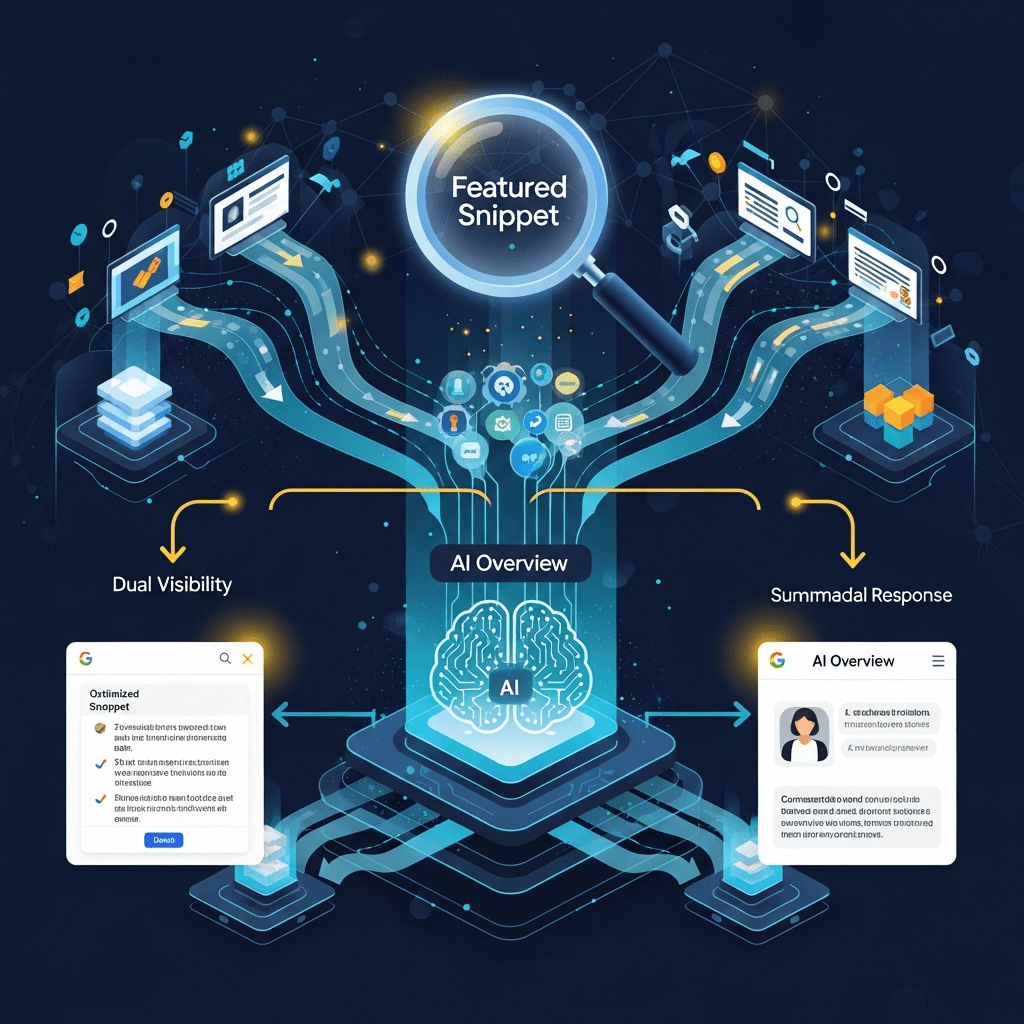
Featured snippets extract content from a single authoritative source. AI Overviews synthesize information from multiple sources to create original responses.
Key distinctions:
- Featured snippets show direct quotes from one page
- AI Overviews generate new text from 3-8 sources
- Featured snippets appear for specific query types
- AI Overviews appear more broadly across query categories
- Featured snippets require exact answer formatting
- AI Overviews value comprehensive context over perfect formatting
According to SEMrush’s 2024 comparative study, 68% of queries that previously showed featured snippets now trigger AI Overviews instead. The migration is real and accelerating.
The Overlap: When You Get Both
Position zero AI snapshots sometimes cite the same content that holds featured snippets.
This dual visibility occurs most frequently for:
- Definitional queries (“What is…”)
- Direct fact queries (“How many…” “When did…”)
- Simple how-to questions with clear steps
- Comparison queries with structured answers
When you nail the featured snippet optimization fundamentals—concise answers, clear structure, authoritative content—you often satisfy AI Overview selection criteria simultaneously.
The Divergence: When They Choose Different Sources
AI Overviews frequently ignore featured snippet holders and cite different sources entirely.
Why this happens:
- AI needs multiple complementary sources
- Featured snippet focuses on one specific angle
- AI values conversational depth over extraction efficiency
- Featured snippet prioritizes perfect formatting
- AI weighs comprehensive topic authority higher
This divergence creates opportunity. You don’t need the featured snippet to get cited in AI Overviews—though it certainly doesn’t hurt.
How to Optimize for Both Featured Snippets and AI Overviews
Featured snippet optimization AI strategies need expansion to capture both features simultaneously.
The good news? Core principles overlap more than they diverge.
The Shared Foundation: Quality Content Fundamentals
Both features demand excellent content meeting specific criteria.
Universal optimization requirements:
- Clear, direct answers to user questions
- Authoritative expertise signals
- Current, accurate information
- Logical content structure
- Mobile-friendly formatting
- Fast page load speeds
These fundamentals aren’t optional. Master them before attempting feature-specific tactics.
Featured Snippet Specific Tactics
Optimizing for both featured snippets and AI Overviews starts with position zero basics.
Featured snippet optimization priorities:
- Answer questions in first paragraph (40-60 words ideal)
- Use question format in H2 headings
- Structure lists with proper HTML markup
- Create comparison tables for “best” and “vs” queries
- Include step-by-step instructions for how-to queries
- Use concise, scannable formatting
According to Backlinko’s featured snippet research, paragraph snippets average 40-50 words, list snippets contain 4-8 items, and table snippets compare 3-7 options.
Format matters enormously for featured snippet capture.
AI Overview Specific Enhancements
Layer AI Overview optimization on top of snippet fundamentals.
Additional AI Overview requirements:
- Comprehensive topic coverage (not just quick answers)
- Multiple related subtopics addressed
- Conversational, natural language
- Expert credentials and E-E-A-T signals
- Regular content updates
- Multi-format content (text, images, video)
These additions transform snippet-worthy content into AI Overview-worthy authority.
Pro Tip: Featured snippets reward extraction efficiency—giving Google perfect soundbites to quote. AI Overviews reward synthesis potential—providing comprehensive information AI can weave into broader answers. Optimize for both by leading with concise answers, then expanding with depth. – Dual optimization strategy
This approach appears throughout our complete AI Overviews optimization guide as a foundational principle.
Content Structure That Wins Both Features
Structure determines whether content qualifies for one feature, both, or neither.
Relationship between position zero and AI snapshots often hinges on structural choices.
The Inverted Pyramid Approach
Lead with answers, follow with context and depth.
Optimal structure:
- Direct answer (40-60 words)
- Expanded explanation (150-200 words)
- Supporting details and examples
- Related considerations
- Advanced nuances
This structure serves featured snippet extraction (from section 1) while providing AI Overview synthesis material (from sections 2-5).
Question-Based Heading Architecture
Format headings as actual questions users ask.
Instead of: “Benefits of Email Marketing” Use: “What Are the Main Benefits of Email Marketing?”
Google’s algorithms recognize these patterns. Featured snippets pull from content with matching question structures. AI Overviews value the same question-answer pairing for synthesis.
Tools like AnswerThePublic and AlsoAsked reveal exact question formats users search.
Multi-Format Answer Delivery
Provide information in multiple formats within single articles.
Format variety strategy:
- Paragraph answer for basic explanation
- Bulleted list for key points
- Comparison table for multiple options
- Step-by-step numbered list for processes
- Blockquote for key takeaways
This variety increases chances of capturing featured snippets (which favor specific formats) while enriching AI Overview source value.
Real-World Success: Dual Optimization in Action
A healthcare information site restructured content for dual visibility in Q1 2024.
Initial situation: Strong traditional rankings (positions 3-7) but zero featured snippets and minimal AI Overview citations. Traffic declining as more queries shifted to AI Overviews.
Optimization implemented:
- Restructured 50 high-value articles with inverted pyramid approach
- Added direct 50-word answers to first paragraphs
- Converted topics to question-format headings
- Created comparison tables for treatment options
- Implemented comprehensive FAQ sections
- Maintained deep, authoritative content throughout
Results after 4 months:
- Featured snippet capture: 12 out of 50 target queries (24%)
- AI Overview citations: 19 out of 50 queries (38%)
- Dual visibility (both features): 7 queries (14%)
- Overall organic traffic: +34% despite AI Overview presence
- Average position improved from 4.8 to 2.3
The key insight? Dual optimization delivered better results than focusing exclusively on either feature. Seven keywords showing both their featured snippet AND AI Overview citation drove 52% of total traffic increase.
Comparison: Featured Snippet vs AI Overview Optimization
Understanding differences helps prioritize tactics appropriately.
| Element | Featured Snippet Priority | AI Overview Priority |
|---|---|---|
| Answer Length | 40-60 words ideal | 100-300 words preferred |
| Content Depth | Concise extraction | Comprehensive coverage |
| Source Count | Single source | 3-8 sources synthesized |
| Format Importance | Critical (lists, tables) | Moderate (structure matters) |
| Update Frequency | Moderate | High (quarterly minimum) |
| E-E-A-T Signals | Moderate importance | Very high importance |
| Schema Markup | Helpful | Critical |
| Question Format | Very important | Important |
| Conversational Tone | Less critical | Very important |
Both features value quality, but weight different signals differently.
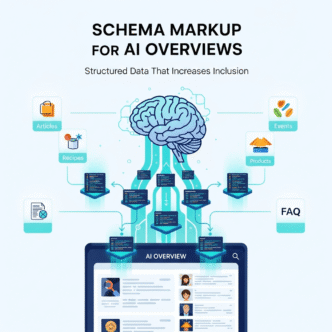
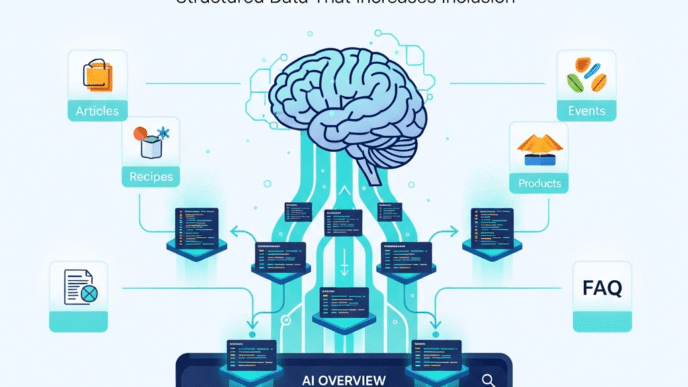
Schema Markup for Dual Visibility
Schema helps both features understand and extract content.
Snippet strategy AI Overview implementations always include comprehensive schema.
Essential Schema Types
Different schemas optimize for different features.
FAQ Schema benefits both tremendously. Featured snippets often pull from FAQ sections. AI Overviews synthesize FAQ content frequently.
How-To Schema structures step-by-step content perfectly for featured snippet extraction while providing AI Overviews clear process information.
Article Schema establishes content credentials and freshness—more critical for AI Overviews but helpful for featured snippets too.
According to Search Engine Journal’s schema research, pages with FAQ schema are 2.3x more likely to capture featured snippets than those without.
Implementation Best Practices
Layer multiple schema types for maximum impact.
Recommended combinations:
- Article + FAQ (comprehensive guides)
- Article + How-To (instructional content)
- Article + Review (product/service evaluations)
- Organization + Article + FAQ (YMYL topics)
Validate all schema using Google’s Rich Results Test. Invalid schema creates friction rather than advantage.
Implementation details appear in our technical optimization guide.
Common Mistakes Killing Dual Visibility
Avoid these errors that eliminate chances for either feature.
Mistake #1: Over-Optimizing for Featured Snippets at Depth’s Expense
Creating ultra-concise content perfect for snippet extraction but lacking substance.
Featured snippets want brief answers. AI Overviews need comprehensive context. Balance both needs rather than sacrificing one for the other.
Fix: Lead with concise answers, then expand extensively. Give Google extraction-ready content AND synthesis-worthy depth.
Mistake #2: Ignoring Featured Snippet Opportunities
Assuming AI Overviews made featured snippets irrelevant.
Featured snippets still appear for many queries, often alongside AI Overviews. They drive traffic, build authority, and increase brand visibility.
Fix: Continue featured snippet optimization efforts even as you enhance for AI Overviews.
Mistake #3: Perfect Formatting Without Substance
Beautiful lists, tables, and structures containing superficial information.
Format attracts featured snippets. Substance attracts AI Overview citations. You need both.
Fix: Ensure formatting enhances genuinely valuable, comprehensive content—not just dresses up thin information.
Mistake #4: Static Content Never Updated
Publishing once and forgetting, letting information age.
Featured snippets tolerate moderately aged content. AI Overviews heavily penalize staleness, especially for evolving topics.
Fix: Quarterly content updates minimum for important pages. More frequently for fast-changing topics.
Mistake #5: Keyword Optimization Over Question Optimization
Targeting keywords rather than questions.
Both features respond to question-based queries. Traditional keyword thinking misses the question-answer structure both features prefer.
Fix: Research actual questions users ask. Structure content explicitly answering those questions.
This appears extensively in our content optimization strategies.
Tracking Performance Across Both Features
Measure visibility in featured snippets and AI Overviews separately.
Dual ranking strategy requires dual measurement frameworks.
Featured Snippet Tracking
Monitor featured snippet capture systematically.
Tracking methodology:
- Use SEMrush or Ahrefs rank tracking
- Filter keywords by featured snippet presence
- Track your featured snippet ownership
- Monitor competitor featured snippet capture
- Calculate featured snippet share by topic
Most SEO platforms now include featured snippet tracking in standard rank reports.
AI Overview Citation Tracking
AI Overview measurement requires different approaches.
Measurement tactics:
- Manual testing of priority keywords
- SEO platform AI Overview tracking features
- Citation frequency calculation
- Competitor citation monitoring
- Traffic impact analysis
Combined tracking reveals which content performs in one feature, both, or neither—guiding optimization priorities.
More measurement details appear in our testing methodology guide.
The Future: How These Features Will Evolve
Both features continue evolving as AI capabilities advance.
Featured snippets likely become more interactive, potentially incorporating AI-generated enhancements to extracted content.
AI Overviews will expand coverage, improve accuracy, and integrate more media types. According to Google’s documentation, they’re testing enhanced features including interactive elements and real-time data integration.
The convergence prediction: Features may eventually merge into unified AI-powered answer experiences that synthesize multiple sources while highlighting primary contributors.
Optimizing for both now prepares you for whatever hybrid future emerges.
Advanced Tactics: Maximum Dual Visibility
Beyond basics, sophisticated techniques maximize visibility across both features.
Content Cluster Architecture
Build comprehensive topic clusters with pillar-and-spoke structure.
Implementation:
- Create comprehensive pillar page (3,000+ words)
- Develop 8-12 focused cluster posts (1,500-2,000 words)
- Interlink strategically
- Target featured snippets with cluster posts
- Build AI Overview authority through pillar comprehensiveness
This architecture serves both features simultaneously while establishing topical authority.
Competitive Gap Analysis
Identify queries where competitors hold one feature but not the other.
Analysis process:
- Track competitor featured snippet holdings
- Monitor their AI Overview citations
- Find keywords where they have snippets but not AI citations
- Target those with optimized dual-visibility content
These gaps reveal specific opportunities for overtaking competitors.
Format Diversification Strategy
Create multiple content formats addressing the same topics.
Multi-format approach:
- Comprehensive written guide
- Video tutorial
- Infographic summary
- Interactive calculator or tool
- Downloadable checklist
Different formats capture different featured snippet types while providing AI Overviews rich synthesis material.
Pro Tip: Featured snippets favor specific formats for specific query types: paragraphs for definitions, lists for “best” queries, tables for comparisons. Create content in the format that matches your target query type, then expand with depth that serves AI Overviews. – Format-matching strategy
Topic Selection for Dual Optimization
Choose topics strategically based on feature presence and opportunity.
High-Opportunity Topic Characteristics
Ideal dual optimization targets:
- Questions with existing featured snippets (competition exists but winnable)
- Queries triggering AI Overviews frequently
- Topics where you have genuine expertise
- Commercial intent keywords driving conversions
- Informational queries in your niche
- Comparison and “best” queries
Use keyword research tools to identify queries showing both features with competitor content you can outperform.
Low-Opportunity Topics to Avoid
Not every topic justifies dual optimization effort.
Lower priority targets:
- Brand navigation queries (rarely show either feature)
- Highly commercial transactional queries
- Queries dominated by major publishers with overwhelming authority
- Topics outside your expertise area
- Queries with stable, authoritative Wikipedia snippets
Focus resources where you can realistically win one or both features.
Industry-Specific Strategies
Different sectors require adapted approaches.
Healthcare and Medical Content
YMYL topics face strictest evaluation for both features.
Medical content requirements:
- Licensed medical professional authors
- Medical review processes
- Citations to peer-reviewed research
- Regular updates reflecting current medical consensus
- Clear disclaimers and authority signals
Featured snippets and AI Overviews both heavily weight medical credentials. Without proper E-E-A-T, neither feature is accessible.
E-commerce Product Content
Product-focused content benefits from specific optimization.
Product content tactics:
- Comparison tables for featured snippet capture
- Comprehensive buying guides for AI Overview depth
- Product specification structured data
- Customer review integration
- Video demonstrations and images
Product queries often trigger both features—rich optimization opportunities.
Local Service Businesses
Local businesses can capture features for geographic queries.
Local optimization approach:
- Location-specific content variations
- Local statistics and data
- Community-focused expertise
- Service area page optimization
- Local business schema implementation
Geographic specificity helps differentiate from national competitors in both featured snippets and AI Overviews.
FAQ: Featured Snippets and AI Overviews
Q: If I have the featured snippet, will I automatically appear in AI Overviews?
Not automatically—42% of featured snippet holders also get AI Overview citations, but 58% don’t. Featured snippets and AI Overviews use different selection criteria. Featured snippet success improves odds but doesn’t guarantee AI Overview inclusion. Optimize for both features independently using dual optimization strategies.
Q: Should I still pursue featured snippets now that AI Overviews dominate?
Yes—featured snippets still drive significant traffic and visibility. They appear for many queries, sometimes alongside AI Overviews. Featured snippet optimization also strengthens AI Overview eligibility through improved content structure and authority signals. Pursue both rather than choosing one exclusively.
Q: Which feature drives more traffic: featured snippets or AI Overviews?
It varies by query type. Featured snippets traditionally drove higher click-through rates (8-15% of clicks for position zero). AI Overviews reduce click-through overall but increase brand awareness and authority. Focus on total visibility rather than individual feature traffic for maximum results.
Q: How long does it take to rank in both features?
Featured snippets can appear within 2-4 weeks of optimization for less competitive queries. AI Overview citations typically take 6-12 weeks as algorithms assess comprehensive authority. Dual visibility often requires 3-6 months of consistent optimization and content quality maintenance.
Q: Can old content capture both features, or do I need new content?
Existing content can be optimized for dual visibility through strategic updates. Add direct answers, improve structure, implement schema, update information, and enhance depth. New content offers advantages but isn’t mandatory—updated legacy content often performs excellently.
Q: Do I need different content for featured snippets vs AI Overviews?
No—single content pieces can capture both features using inverted pyramid structure. Lead with concise, extraction-ready answers for featured snippets, then expand with comprehensive depth for AI Overviews. This dual approach maximizes efficiency while serving both features.
Final Thoughts
Featured snippets AI Overviews represent complementary opportunities, not competing alternatives.
The smartest strategy captures both features through content that leads with perfect snippet-worthy answers while delivering the comprehensive depth AI Overviews demand. You don’t choose between them—you optimize for both simultaneously.
Featured snippets won’t disappear despite AI Overview growth. Both features will coexist, evolve, and potentially converge into hybrid experiences. Building dual optimization capabilities now prepares you for whatever future emerges.
Start by auditing your highest-value content. Does it provide quick, extractable answers AND comprehensive depth? Is it formatted for featured snippet capture while building AI Overview authority? Can it win one feature, both, or neither?
The content winning both features consistently shares common characteristics: excellent answers, authoritative expertise, comprehensive coverage, clear structure, regular updates, and genuine user value.
Stop thinking featured snippet OR AI Overview. Start thinking featured snippet AND AI Overview. That shift in mindset—from either-or to both-and—unlocks maximum visibility in the AI-powered search era.
Dual optimization isn’t twice the work. It’s strategic layering of complementary tactics that compound rather than compete.
Dominate both battlefields. Your visibility depends on it.