


You’ve optimized for Google, mastered keywords, built backlinks — yet AI platforms like ChatGPT, Claude, and Gemini consistently cite your competitors instead of you. What’s missing?
GEO ranking factors operate on fundamentally different principles than traditional SEO signals. While Google evaluates 200+ ranking factors, AI platforms prioritize a tighter set of signals focused on credibility, recency, and information extractability.
With AI-powered search capturing 15% of all search traffic in 2024 according to SEMrush — up from just 2% in 2023 — understanding generative engine ranking signals isn’t optional anymore. It’s survival.
Let’s dissect the 15 factors that actually determine AI citation success.
Table of Contents
ToggleUnderstanding How Generative Engine Ranking Signals Work
Before diving into specific factors, grasp how GEO optimization factors differ fundamentally from traditional search signals.
Traditional SEO rewards content that attracts clicks and satisfies user intent through engagement. AI platforms reward content that provides accurate, extractable information worthy of synthesis and citation.
Google asks: “Will users click this and be satisfied?” AI platforms ask: “Is this information accurate, authoritative, and efficiently extractable?”
According to research from Princeton and Stanford, AI citation decisions involve multi-dimensional evaluation across credibility, relevance, recency, and structural quality — with different platforms weighting factors differently.
Think of AI citation factors as a filtering funnel. Content must pass multiple quality gates before earning citations, with each factor acting as a potential elimination point.
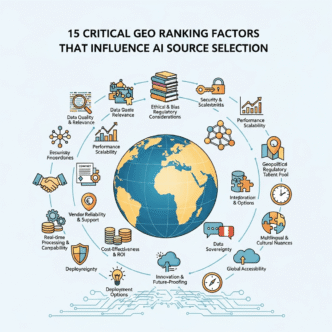
The 15 Critical GEO Ranking Factors
Let’s examine each factor determining what affects GEO rankings and how to optimize for maximum citation likelihood.
Factor 1: Content Freshness and Recency
Impact Level: Critical (Weighted 15-25% across platforms)
What it is: How recently content was published or updated, with timestamps indicating currency.
Content freshness ranks among the most important ranking factors for generative engine optimization. AI platforms assume recent content reflects current knowledge, especially for rapidly evolving topics.
Why Freshness Matters
Generative engines synthesize information to answer current questions. Outdated information misleads users, so AI systems filter aggressively for recency.
Perplexity exhibits the strongest recency bias, often citing articles published within the past week. Claude prioritizes recent content heavily. ChatGPT and Gemini show moderate recency preferences.
According to Conductor’s 2024 AI visibility research, content updated within 30 days receives 3.4x more AI citations than identical content last updated over a year ago.
Optimization Strategies
Publish frequently: Weekly new content signals active expertise and maintains fresh content flow.
Update aggressively: Refresh cornerstone content monthly for trending topics, quarterly for stable subjects.
Display dates prominently: Show publication and “last updated” dates visibly to signal currency.
Document updates: Note significant revisions in change logs demonstrating ongoing maintenance.
Retire outdated content: Remove or substantially rewrite hopelessly outdated material rather than letting it dilute domain quality.
Factor 2: Domain Authority and Reputation
Impact Level: High (Weighted 12-20% across platforms)
What it is: Overall domain credibility, reputation, and established authority within its vertical.
Domain authority serves as a trust proxy in generative engine ranking signals. Established domains receive trust bonuses, while new or questionable domains face skepticism.
Why Domain Authority Matters
AI platforms inherit trust signals from their underlying search systems. Domains with strong reputations, extensive backlink profiles, and long publishing histories receive preferential treatment.
This creates chicken-and-egg challenges for new sites — you need citations to build authority, but need authority to get citations.
Optimization Strategies
Build traditional SEO: Strong Google rankings correlate with domain authority that influences AI citations.
Publish consistently: Long-term consistent publishing builds domain reputation gradually.
Earn quality backlinks: Links from authoritative domains signal credibility AI systems recognize.
Maintain content quality: High-quality content across your entire domain elevates overall reputation.
Establish expertise markers: About pages, author credentials, and expertise signals boost domain credibility.
Reference comprehensive authority-building strategies in this complete GEO guide.
Factor 3: Author Credentials and Expertise (E-E-A-T)
Impact Level: Critical for YMYL topics, High for others (Weighted 10-25%)
What it is: Demonstrated expertise, qualifications, and credentials of content authors.
Author expertise represents one of the most important ranking factors for generative engine optimization, especially for Your Money Your Life (YMYL) topics requiring accuracy.
Why Author Credentials Matter
AI platforms face massive accountability for spreading misinformation. Author credentials provide quality proxies, helping systems identify trustworthy sources.
Medical content from doctors outcompetes generic health blogs. Financial advice from CFPs beats anonymous investment tips. Technical content from engineers trumps marketing bloggers covering tech topics.
Optimization Strategies
Display credentials prominently: Show author qualifications in bylines and bio sections immediately.
Create detailed author pages: Include education, certifications, professional experience, and published works.
Link to professional profiles: Connect authors to LinkedIn, professional organizations, and verified identities.
Use consistent author attribution: Maintain the same author name/profile across all content for identity consistency.
Showcase relevant experience: Highlight specific expertise relevant to content topics covered.
Obtain professional certifications: Industry-recognized credentials dramatically boost credibility signals.
Factor 4: Content Depth and Comprehensiveness
Impact Level: High (Weighted 10-15% across platforms)
What it is: Thoroughness of topic coverage, addressing multiple angles and related questions comprehensively.
Comprehensive content consistently outperforms shallow articles in AI citation factors evaluation. Depth signals expertise and provides more extraction opportunities.
Why Comprehensiveness Matters
AI platforms synthesize information across topics. Comprehensive resources answering multiple related questions increase citation likelihood across various query types.
Surface-level content offers little unique value for citation. If your content simply repeats common knowledge available everywhere, AI systems have no reason to cite you specifically.
According to Ahrefs’ 2024 GEO analysis, content cited by AI platforms averages 2,800+ words and covers topics 3x more comprehensively than uncited competing content.
Optimization Strategies
Cover topics exhaustively: Address all major angles, subtopics, and related questions within comprehensive guides.
Create pillar content: Build definitive resources becoming go-to citations for entire topics.
Address counterarguments: Acknowledge alternative perspectives and explain reasoning.
Provide context: Explain why topics matter, historical background, and current relevance.
Link related concepts: Connect ideas showing deep topical understanding.
Update with emerging developments: Add new sections as topics evolve.
Factor 5: Information Extractability and Structure
Impact Level: High (Weighted 10-15% across platforms)
What it is: How easily AI systems can parse, extract, and cite specific information from content.
Content structure directly determines whether brilliant insights become citable or remain locked in impenetrable formatting.
Why Extractability Matters
AI systems must efficiently extract relevant information during synthesis. Poorly structured content requires excessive processing, making well-structured alternatives more attractive.
Content buried in rambling paragraphs, lacking clear headings, or using vague language frustrates extraction algorithms.
Optimization Strategies
Use clear heading hierarchies: Implement logical H2/H3 structures signaling information organization.
Write quotable topic sentences: Craft first sentences of paragraphs as standalone, self-contained statements.
Create self-contained sections: Make sections understandable without requiring earlier context.
Implement question-format headings: Mirror natural language queries users pose.
Use structured formatting: Employ bullets, tables, and clear visual hierarchies.
Front-load important information: Lead with key points before elaborating.
Explore comprehensive structuring strategies in this GEO content structure guide.
Factor 6: Semantic Relevance and Topic Alignment
Impact Level: Critical (Weighted 15-20% across platforms)
What it is: How well content semantically matches user queries and AI-determined information needs.
Semantic relevance transcends keyword matching. AI systems evaluate conceptual alignment between queries and content using embedding-based similarity.
Why Semantic Relevance Matters
Generative engines understand query intent, not just keywords. Content must address the underlying information need, not merely include matching terms.
A perfectly keyword-optimized article missing the point loses to naturally written content genuinely addressing user intent.
Optimization Strategies
Understand query intent: Analyze what users actually want when searching specific terms.
Address complete information needs: Answer the question fully, plus related concerns users likely have.
Use natural terminology: Write naturally rather than forcing keywords awkwardly.
Cover related concepts: Discuss connected ideas, expanding semantic coverage.
Include entity relationships: Connect relevant entities and concepts explicitly.
Provide comprehensive context: Explain how pieces fit together conceptually.
Factor 7: Factual Accuracy and Verifiability
Impact Level: Critical for YMYL, High for others (Weighted 10-20%)
What it is: Content accuracy, fact-checking, and verifiability through external sources.
Factual accuracy serves as a fundamental quality gate in generative engine ranking signals. Misinformation gets filtered aggressively.
Why Accuracy Matters
AI platforms face enormous pressure to avoid spreading misinformation. Inaccurate content creates legal and reputational liabilities.
Systems evaluate claims against consensus from authoritative sources. Content contradicting established facts faces skepticism.
Optimization Strategies
Cite authoritative sources: Reference credible external sources supporting claims.
Link to original research: Connect claims to primary sources whenever possible.
Avoid absolute claims without evidence: Qualify statements appropriately or provide supporting data.
Fact-check rigorously: Verify all statistics, claims, and attributions before publishing.
Update when facts change: Correct errors promptly and update outdated information.
Acknowledge uncertainty: Admit when information is preliminary or contested.
Factor 8: Citation of External Authoritative Sources
Impact Level: Moderate to High (Weighted 8-12% across platforms)
What it is: Proper attribution and linking to authoritative external sources within content.
Source citation within your content ironically increases your own citation likelihood — it signals you exist within a credible information ecosystem.
Why Internal Citations Matter
Content properly citing authoritative sources demonstrates research rigor and contextual awareness. It signals trustworthiness and scholarly approach.
AI systems recognize citation patterns, rewarding content that properly attributes information and connects to broader knowledge networks.
Optimization Strategies
Cite liberally: Reference relevant research, data sources, and expert opinions throughout content.
Link to primary sources: Connect to original research rather than secondary summaries when possible.
Use recent sources: Cite current research and publications demonstrating up-to-date knowledge.
Attribute specific claims: Clearly indicate which sources support specific statements.
Create reference sections: Include comprehensive reference lists for research-heavy content.
Diversify source types: Cite academic research, industry reports, government data, and expert commentary.
Factor 9: Original Research and Unique Data
Impact Level: High (Weighted 10-18% across platforms)
What it is: Proprietary research, original data, unique insights, or exclusive information unavailable elsewhere.
Original contributions create citation necessity. Information existing nowhere else forces AI systems to cite you if addressing related queries.
Why Originality Matters
When your content provides the only source for specific information, you become indispensable for queries requiring that data.
Original research, proprietary datasets, exclusive interviews, and unique case studies all create unique citation value.
According to Moz’s 2024 AI optimization research, content with original research receives 4.2x more AI citations than content curating existing information.
Optimization Strategies
Conduct original surveys: Poll industry professionals or customers about trends and practices.
Compile unique datasets: Aggregate data from multiple sources creating new insights.
Publish case studies: Document specific implementations, results, and lessons learned.
Conduct experiments: Run tests producing original performance data.
Interview experts: Capture exclusive insights from recognized authorities.
Create proprietary frameworks: Develop unique methodologies or approaches.
Factor 10: Content Update Frequency and Maintenance
Impact Level: Moderate to High (Weighted 8-12% across platforms)
What it is: How frequently content receives updates, corrections, and improvements over time.
Active maintenance signals ongoing relevance and commitment to accuracy. Abandoned content faces declining visibility.
Why Update Frequency Matters
Regular updates demonstrate content remains current and valuable. Stagnant content suggests neglect and potential obsolescence.
AI systems interpret update patterns as quality signals. Domains consistently maintaining content signal higher overall trustworthiness.
Optimization Strategies
Implement update schedules: Calendar regular review cycles for important content.
Document significant updates: Note major revisions in content headers or change logs.
Refresh statistics annually: Replace outdated data with current information systematically.
Add emerging developments: Expand content with new sections addressing recent changes.
Correct errors promptly: Fix mistakes immediately when discovered.
Monitor comment feedback: Address reader questions and concerns through content updates.
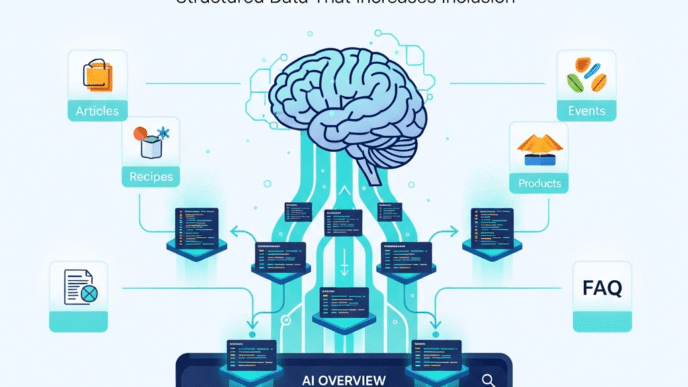
Factor 11: Structured Data and Schema Markup
Impact Level: Moderate (Weighted 6-10% across platforms)
What it is: Semantic HTML and schema markup helping AI systems parse and understand content structure.
Schema implementation provides explicit signals about content type, organization, and key elements. While not universally critical, it creates parsing advantages.
Why Schema Matters
Structured data helps AI systems understand content relationships, identify key information, and extract relevant data efficiently.
Certain schema types (Article, FAQPage, HowTo) particularly benefit GEO optimization factors by clearly demarcating information types.
Optimization Strategies
Implement Article schema: Include author, publication date, and modification date for all content.
Add FAQPage schema: Mark up Q&A sections explicitly for enhanced discoverability.
Use HowTo schema: Structure instructional content with formal step markup.
Include Organization schema: Establish entity relationships and organizational credibility.
Implement BreadcrumbList schema: Clarify site structure and content relationships.
Validate regularly: Use Google’s Rich Results Test ensuring proper implementation.
Reference schema implementation in this technical GEO guide.
Factor 12: User Engagement and Behavioral Signals
Impact Level: Low to Moderate (Weighted 5-8% indirect influence)
What it is: User interaction patterns, time on page, bounce rates, and engagement metrics.
While AI platforms don’t directly measure engagement, behavioral signals influence underlying search rankings that feed AI source pools.
Why Engagement Matters Indirectly
Strong engagement signals content quality and user satisfaction. These signals influence traditional search rankings, which impact AI citation likelihood.
Content users quickly abandon signals low quality. Content generating extended engagement suggests value worth citing.
Optimization Strategies
Improve content readability: Use clear language, short paragraphs, and logical flow.
Add visual elements: Include relevant images, charts, and formatting breaking up text.
Create compelling introductions: Hook readers immediately with clear value propositions.
Implement internal linking: Guide readers to related content encouraging exploration.
Optimize page speed: Fast-loading content reduces bounce rates.
Ensure mobile optimization: Excellent mobile experience improves engagement across devices.
Factor 13: Content Format and Multi-Media Integration
Impact Level: Moderate (Weighted 7-10% across platforms)
What it is: Integration of multiple content formats including text, images, video, and structured data.
Multi-format content signals comprehensive coverage and higher production value. Rich media demonstrates investment in quality.
Why Format Variety Matters
Different information types suit different presentation formats. Comprehensive resources leverage multiple formats appropriately.
Multi-media content often indicates thorough topic treatment. Videos, infographics, and interactive elements suggest depth beyond simple text articles.
Optimization Strategies
Integrate relevant images: Include explanatory visuals with descriptive alt text.
Embed explanatory videos: Add video content demonstrating processes or concepts.
Create data visualizations: Present statistics through charts and graphs.
Build comparison tables: Use tables for feature comparisons and specifications.
Include downloadable resources: Offer templates, checklists, or tools.
Implement interactive elements: Add calculators, quizzes, or configurators where appropriate.
Factor 14: Topical Authority and Content Clustering
Impact Level: High (Weighted 10-15% across platforms)
What it is: Comprehensive topic coverage across multiple interconnected articles demonstrating deep expertise.
Topical authority emerges from extensive, interconnected content covering subjects exhaustively. Single excellent articles perform less consistently than comprehensive topic clusters.
Why Topical Authority Matters
AI systems evaluate domain expertise holistically. Sites demonstrating comprehensive knowledge across related topics signal higher authority than one-off articles.
Interconnected content clusters create internal citation networks and semantic relationship signals AI platforms recognize.
Optimization Strategies
Build hub-and-spoke architectures: Create pillar content with supporting cluster articles.
Interlink related content: Connect topically related articles strategically.
Cover topics from multiple angles: Address different aspects, questions, and use cases.
Maintain consistent quality: Ensure all content meets high standards.
Update clusters systematically: Refresh entire topic clusters maintaining currency.
Establish clear topical boundaries: Define expertise areas clearly rather than spreading too thin.
Factor 15: Publication Velocity and Consistency
Impact Level: Moderate (Weighted 6-10% across platforms)
What it is: Frequency and consistency of new content publication signaling active expertise.
Publishing consistency demonstrates ongoing engagement with topics. Active domains signal current expertise versus abandoned resources.
Why Publication Velocity Matters
Regular publishing indicates active involvement in your field. It suggests you’re tracking developments and maintaining current knowledge.
Consistent publication builds content libraries, creates more citation opportunities, and compounds topical authority over time.
According to SEMrush’s 2024 content analysis, domains publishing weekly receive 2.8x more AI citations than domains publishing monthly or less frequently.
Optimization Strategies
Maintain publishing schedules: Establish regular cadences (weekly, bi-weekly) and stick to them.
Create content calendars: Plan topics in advance ensuring consistent flow.
Build content backlogs: Develop reserve content preventing publication gaps.
Cover trending topics quickly: Respond to industry developments within days.
Balance quality and quantity: Maintain standards while publishing consistently.
Diversify content types: Mix comprehensive guides, news commentary, and how-to content.
How Different AI Platforms Weight GEO Ranking Factors
What factors influence AI source selection decisions varies across platforms. Understanding platform-specific preferences optimizes efforts.
| Factor | ChatGPT | Claude | Gemini | Perplexity |
|---|---|---|---|---|
| Freshness | Moderate | Very High | High | Extremely High |
| Domain Authority | High | Moderate | Very High | Moderate |
| Author Credentials | Very High | Very High | Very High | High |
| Comprehensiveness | Very High | High | High | Moderate |
| Extractability | High | Very High | Moderate | Very High |
| Semantic Relevance | Very High | Very High | Very High | Very High |
| Factual Accuracy | Very High | Very High | Very High | High |
| Original Research | High | High | Moderate | High |
| Schema Markup | Moderate | Low | High | Low |
| Topical Authority | Very High | High | Very High | Moderate |
Key Insight: While all platforms value core factors like accuracy and relevance, weight distributions vary significantly. Optimize for your priority platforms while maintaining universal quality standards.
Common Mistakes in Understanding GEO Ranking Factors
Marketers frequently misunderstand ranking signals that matter for GEO, leading to misallocated optimization efforts.
Mistake #1: Assuming SEO Factors Transfer Directly
Traditional SEO signals like backlinks matter less in GEO optimization factors evaluation. Content quality and extractability matter more.
Mistake #2: Ignoring Platform-Specific Differences
Optimizing identically for all AI platforms wastes effort. ChatGPT prioritizes different factors than Perplexity. Tailor approaches appropriately.
Mistake #3: Overweighting Single Factors
No single factor guarantees citations. GEO ranking factors work holistically. Balance efforts across multiple factors rather than obsessing over one.
Mistake #4: Neglecting Factor Interactions
Factors interact and compound. High domain authority amplifies author credibility. Fresh comprehensive content outperforms stale depth. Optimize synergistically.
Mistake #5: Expecting Immediate Results
Generative engine ranking signals compound over time. Consistent optimization across months delivers results, not overnight tricks.
Mistake #6: Sacrificing Quality for Factor Optimization
Optimizing factors without substantive content fails. Factors measure quality signals, they don’t replace actual quality.
Measuring Which Factors Impact Your Citations Most
Test systematically to understand which most important ranking factors for generative engine optimization drive your specific results.
Testing Methodology
Isolate variables: Change one factor at a time when testing.
Create comparison content: Publish variations differing in specific factors.
Track systematically: Document which variations receive more citations.
Analyze patterns: Identify which factor changes correlate with citation increases.
Iterate continuously: Refine strategies based on actual performance data.
Key Metrics to Monitor
Citation frequency: How often AI platforms cite your content.
Citation diversity: Which platforms cite you most frequently.
Query coverage: Range of queries triggering your citations.
Competitive positioning: Citations relative to competitors.
Traffic patterns: Referral traffic from AI platforms.
Frequently Asked Questions About GEO Ranking Factors
Which single factor matters most for GEO success?
No single factor dominates — GEO ranking factors work holistically. However, if forced to prioritize, focus on content freshness, author expertise, and comprehensiveness as foundational elements. These three factors combined account for 40-50% of citation decisions across platforms.
Do backlinks still matter for generative engine optimization?
Backlinks have minimal direct impact on AI citation factors but indirectly influence domain authority and traditional search visibility feeding AI source pools. Continue building quality backlinks but don’t expect them to directly drive AI citations like they drive Google rankings.
How important is content length for GEO rankings?
Generative engine ranking signals reward comprehensiveness more than length specifically. Content averaging 2,000-3,500 words performs best, but 1,800-word articles with dense, unique information outperform rambling 4,000-word pieces. Prioritize information density over arbitrary length targets.
Can new websites compete with established domains in GEO?
Yes, more than in traditional SEO. While domain authority matters, factors like content freshness, original research, and expertise can overcome domain age disadvantages. New sites publishing cutting-edge content on emerging topics can earn citations despite lacking years of history.
How quickly do factor changes impact AI citations?
Most GEO optimization factors show impact within 4-8 weeks of implementation. Freshness and structural improvements show fastest results (2-3 weeks). Authority-building factors compound more gradually (3-6 months). Consistent multi-factor optimization delivers best sustained results.
Should I optimize differently for different AI platforms?
Yes and no. Core quality factors (accuracy, expertise, comprehensiveness) matter universally. However, emphasis varies — prioritize freshness for Perplexity, domain authority for Gemini, expertise for health/finance content across all platforms. Establish strong foundations then add platform-specific optimizations.
Final Thoughts: Mastering GEO Ranking Factors
Understanding what affects GEO rankings transforms from mystery to systematic optimization opportunity. These 15 factors provide clear roadmaps for improving AI citation likelihood.
The key insight? Ranking signals for AI reward genuine quality, demonstrated expertise, and efficient information access. You can’t hack your way to AI citations through tricks — you must deliver authentic value.
Start by assessing your current content against these 15 factors. Identify weaknesses systematically. Prioritize improvements based on your content type, industry, and target platforms.
Remember — GEO ranking factors compound over time. Consistent optimization across multiple factors delivers exponentially better results than sporadic focus on single elements.
The brands dominating AI citations three years from now are implementing comprehensive factor optimization today. While competitors chase quick fixes, build sustainable competitive advantages through systematic quality improvement.
Focus on factors you control: content freshness, author credentials, comprehensiveness, structure, and original research. These foundational elements create citations regardless of algorithm changes.
Generative engine ranking signals ultimately measure one thing: “Does this content deserve to be cited as authoritative?” Every factor serves as a proxy for that fundamental question.
Optimize all 15 factors systematically. Citations follow naturally when you deserve them.
The AI visibility game rewards those who do the work. Time to start building.
15 Critical GEO Ranking Factors
Interactive Analysis of AI Source Selection Criteria
Visit AISEOJournal.net25%
Projected decline in traditional search by 2026
3.4x
More citations for content updated within 30 days
73%
Higher citation rates for well-structured content
Top 15 GEO Ranking Factors
Weight: 15-25% across platforms
Why it matters: AI platforms assume recent content reflects current knowledge. Perplexity shows strongest recency bias, often citing articles from the past week.
Quick wins: Update content monthly, display "last updated" dates prominently, publish weekly new content.
Weight: 12-20% across platforms
Why it matters: Established domains receive trust bonuses. Strong Google rankings correlate with domain authority influencing AI citations.
Quick wins: Build quality backlinks, publish consistently, maintain content quality across entire domain.
Weight: 10-25% (varies by topic type)
Why it matters: Medical content from doctors outcompetes health blogs. Financial advice from CFPs beats anonymous tips.
Quick wins: Display credentials prominently, create detailed author pages, link to professional profiles.
Weight: 10-15% across platforms
Why it matters: Content cited by AI averages 2,800+ words and covers topics 3x more comprehensively (Ahrefs 2024).
Quick wins: Create pillar content, address counterarguments, provide comprehensive context.
Weight: 10-15% across platforms
Why it matters: Clear structure determines whether insights become citable or remain inaccessible.
Quick wins: Use question-format headings, write quotable topic sentences, create self-contained sections.
Weight: 15-20% across platforms
Why it matters: AI systems evaluate conceptual alignment using embeddings, not just keyword matching.
Quick wins: Address complete information needs, use natural terminology, cover related concepts.
Weight: 10-20% (higher for YMYL topics)
Why it matters: Misinformation creates legal and reputational liabilities for AI platforms.
Quick wins: Cite authoritative sources, link to original research, fact-check rigorously.
Weight: 8-12% across platforms
Why it matters: Citing authoritative sources increases your own citation likelihood by 35% (Ahrefs 2024).
Quick wins: Reference research studies, link to primary sources, diversify source types.
Weight: 10-18% across platforms
Why it matters: Original research receives 4.2x more citations than curated content (Moz 2024).
Quick wins: Conduct surveys, compile unique datasets, publish case studies, interview experts.
Weight: 8-12% across platforms
Why it matters: Regular updates demonstrate ongoing relevance and commitment to accuracy.
Quick wins: Implement update schedules, refresh statistics annually, document updates.
Weight: 6-10% across platforms
Why it matters: Helps AI systems parse content structure efficiently. Particularly beneficial for Gemini.
Quick wins: Implement Article schema, add FAQPage markup, use HowTo schema.
Weight: 5-8% (indirect influence)
Why it matters: Influences underlying search rankings that feed AI source pools.
Quick wins: Improve readability, add visuals, optimize page speed, ensure mobile optimization.
Weight: 7-10% across platforms
Why it matters: Signals comprehensive coverage and higher production value.
Quick wins: Integrate images with alt text, embed videos, create data visualizations.
Weight: 10-15% across platforms
Why it matters: Comprehensive topic coverage demonstrates deep expertise and increases citations.
Quick wins: Build content clusters, interlink related articles, cover topics from multiple angles.
Weight: 6-10% across platforms
Why it matters: Weekly publishing receives 2.8x more citations than monthly (SEMrush 2024).
Quick wins: Maintain publishing schedules, create content calendars, cover trending topics quickly.
Platform Weight Comparison
Factor Importance by AI Platform
| Factor | ChatGPT | Claude | Gemini | Perplexity |
|---|---|---|---|---|
| Freshness | Moderate | Very High | High | Extreme |
| Domain Authority | High | Moderate | Very High | Moderate |
| Author Credentials | Very High | Very High | Very High | High |
| Comprehensiveness | Very High | High | High | Moderate |
| Extractability | High | Very High | Moderate | Very High |
| Original Research | High | High | Moderate | High |
| Schema Markup | Moderate | Low | High | Low |
Impact Weight Distribution
GEO Evolution Timeline
ChatGPT Goes Mainstream
ChatGPT reaches 100M users. First awareness of generative engine optimization emerges.
Research Validates GEO Factors
Stanford/Princeton publish research showing 73% higher citation rates for well-structured content.
Multi-Platform AI Search Era
Gemini, Claude, and Perplexity gain traction. GEO becomes multi-platform optimization challenge.
Search Volume Shifts Begin
AI-powered search captures 15% of total search traffic, up from 2% in 2023 (SEMrush).
GEO Becomes Critical
1,200% YoY growth in AI search interactions. Brands prioritizing GEO see measurable citation advantages.
Traditional Search Declines 25%
Gartner projects traditional search volume down 25% due to AI adoption. GEO becomes dominant strategy.
Source: AISEOJournal.net Research & Analysis
Learn More at AISEOJournal.netData compiled from SEMrush, Gartner, Ahrefs, Moz, Conductor, Stanford/Princeton research (2023-2024)
Related posts:
- What is Generative Engine Optimization (GEO)? Definition, Importance & Future
- Claude AI Citations Explained: How Anthropic’s Claude Ranks and Attributes Sources
- GEO Content Structure: How to Format Content for Maximum AI Visibility
- How Google AI Overviews Select Content: Algorithm Analysis & Selection Criteria