

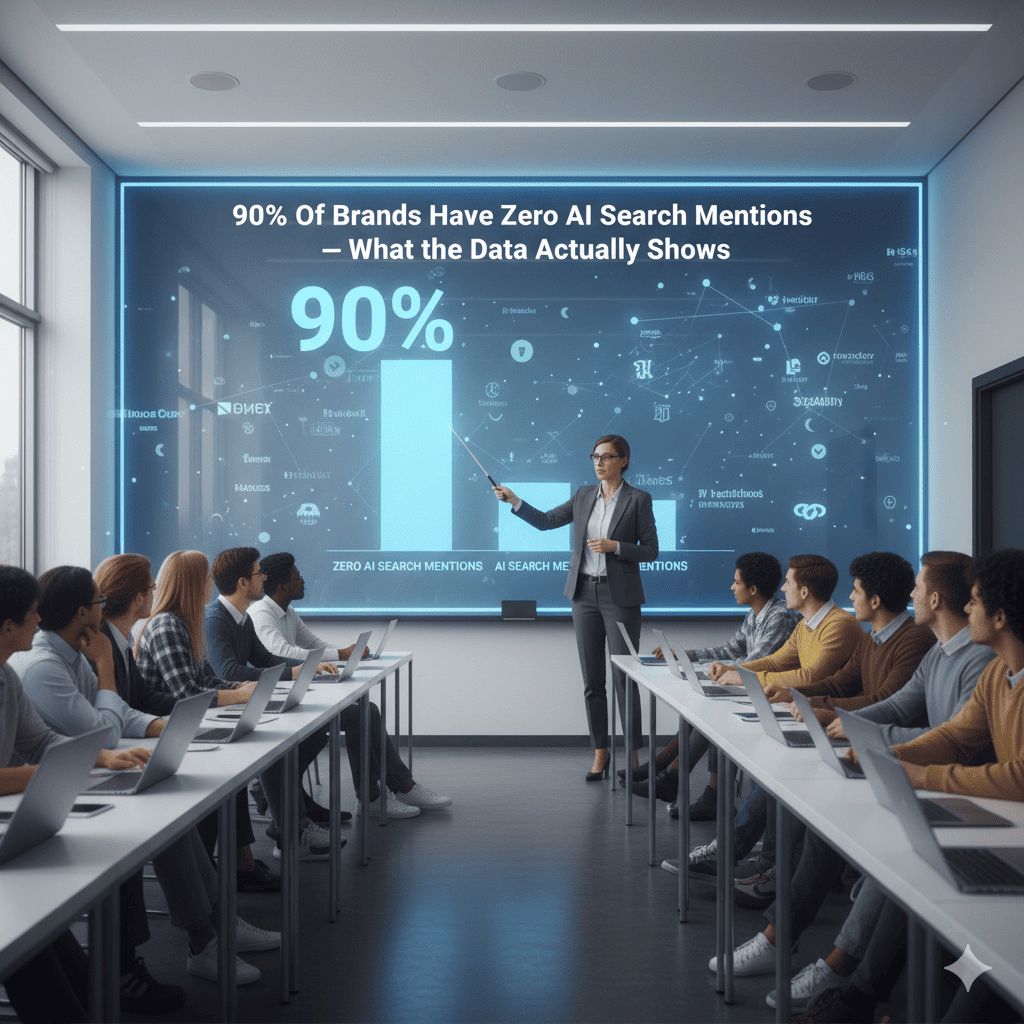
A new study just handed the SEO industry something it rarely gets: actual numbers. Not predictions, not assumptions — data from 107,011 AI responses across eight platforms. The findings are more striking than most practitioners expected.
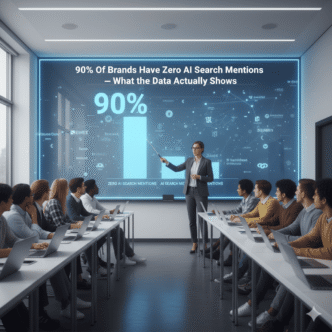
- 89.8% of 177 brands tested had zero AI mention rate in Q1 2026 — only 18 brands registered any AI visibility at all (Victorious, May 2026)
- The study tracked both mention rate and citation rate separately across ChatGPT, Perplexity, Gemini, Google AI Overview, Google AI Mode, Microsoft Copilot, Claude, and Meta AI
- AI visibility patterns differ sharply by vertical — healthcare, SaaS, and financial services lead; legal and ecommerce show opposite imbalances
- Each AI platform draws from a different source pool — being visible on one does not guarantee visibility on others
- Google’s Personal Intelligence update may be compounding early AI visibility gains — first-mover advantage is real and narrowing
- The window to claim AI search visibility before incumbents dominate is still open — but not for long
The Study Nobody Else Has Done
Most of what the industry believes about AI search visibility is assumption dressed as insight. Victorious — a five-time Search Agency of the Year — decided to test those assumptions against real data.
The methodology is straightforward and replicable. 177 brands were selected across five verticals: healthcare, SaaS, financial services, ecommerce/retail, and legal services. Vertical-specific prompts were run across eight AI platforms — ChatGPT, Perplexity, Gemini, Google AI Overview, Google AI Mode, Microsoft Copilot, Claude, and Meta AI — generating 107,011 AI responses to analyse (Victorious Q1 2026 Quarterly Search Report, May 2026). Search Engine Journal
Two signals were tracked for every response — mention rate (brand named in the answer) and citation rate (brand domain linked as a source). Tracking them separately turned out to be the decision that produced the most useful findings.
For the same 177 brands, domain-level organic performance was tracked in Semrush across Q1 2026, including traffic trends and Authority Scores. That gave every brand three comparable measures: mention rate, citation rate, and Authority Score.
Finding 1 — The Visibility Gap Is Larger Than Anyone Thought
Here is the headline number. Of the 177 brands tested, only 18 had any AI mention rate above zero in Q1 2026 — meaning 89.8% of brands were largely absent from AI search across all eight platforms measured. They were not mentioned, not surfaced as sources, not used as examples (Victorious Q1 2026 Quarterly Search Report, May 2026). Search Engine Journal
That number deserves unpacking. The industry conversation around AI search visibility has treated it as a race already well underway — as if the dominant brands have locked in their positions and latecomers are scrambling. The data says something different.
With only 18 of 177 brands registering any AI mentions at all, brands willing to take AI visibility seriously now will be competing against a small number of incumbents in their vertical — not against the entire category (Victorious Q1 2026 Quarterly Search Report, May 2026). Search Engine Journal
That is genuinely useful intelligence. First-mover advantage is not gone. It is available.
Finding 2 — Vertical Determines Your Visibility Pattern
Once the data was broken down by vertical, three distinct patterns emerged. They are worth understanding individually because the strategy implications differ significantly.
Healthcare, SaaS, and Financial Services — Mentioned and Cited
Healthcare brands benefit from clear entity identifiers — names, locations, specialties, and network affiliations — which reinforce the signals AI platforms use to evaluate expertise and authority. SaaS brands are commonly featured on third-party platforms such as G2, Reddit, and LinkedIn, where products are discussed by users and reviewers. Financial Services benefits from strong editorial media presence on platforms like MarketWatch, Bankrate, and NerdWallet — common sources AI platforms turn to for financial questions (Victorious Q1 2026 Quarterly Search Report, May 2026). Search Engine Journal
Financial Services was also the only vertical where citation slightly exceeded mention — suggesting AI platforms trust the content more than they trust the specific brands behind it yet.
Ecommerce and Retail — Mentioned More Than Cited
Ecommerce posted the widest gap in the dataset. AI platforms recognise these brands but pull source material from marketplaces, aggregators, and review sites rather than the brands’ own domains. The challenge for ecommerce brands is giving AI platforms content worth citing on their own domain — instead of leaving the field to Amazon, Reddit, and review aggregators (Victorious Q1 2026 Quarterly Search Report, May 2026). Search Engine Journal
Legal Services — Cited But Rarely Mentioned
Legal services posted the inverse pattern. AI platforms regularly source content from legal sites but rarely credit the firm behind the article. Closing that gap means building the entity signals that connect a piece of content back to a recognisable firm (Victorious Q1 2026 Quarterly Search Report, May 2026). Search Engine Journal
AI Trend Watch
Two findings from the study have direct implications for how AI search visibility will evolve over the next two to three quarters.
Each AI platform uses a different source pool. ChatGPT, Perplexity, Gemini, and Copilot show preferences for specific types of content — meaning visibility on one platform does not transfer automatically to others (Victorious Q1 2026 Quarterly Search Report, May 2026). A brand optimising for Google AI Overviews alone is leaving significant AI search real estate unaddressed. Search Engine Journal
Personalisation may be compounding early gains. Google’s Personal Intelligence update pulls signals from a user’s Gmail and Photos into AI Mode responses, biasing results toward brands the user has already encountered. If that effect holds, brands that win a user’s first AI interaction on a topic could compound their visibility faster than later entrants (Victorious Q1 2026 Quarterly Search Report, May 2026). Search Engine Journal
That second finding is the one to watch. Compounding visibility means early movers do not just hold an advantage — they widen it automatically over time.
What Earns AI Visibility — The Pattern Across Verticals
Three factors appear consistently across the 18 brands that do show up in AI search results. None of them are surprising in isolation. The combination is what matters.
| Factor | What It Looks Like | Vertical Examples |
|---|---|---|
| Structured entity signals | Clear name, location, specialism, credentials | Healthcare, Legal |
| Third-party validation | G2, Reddit, LinkedIn, review platforms | SaaS, Ecommerce |
| Editorial media presence | Coverage on authoritative publications AI trusts | Financial Services |
Source: Victorious Q1 2026 Quarterly Search Report, May 2026
Brands absent from AI search typically lack one or more of these. The good news is that all three are buildable.
Implications
For SEO practitioners: Mention rate and citation rate are now measurable signals — not theoretical constructs. Run your own brand against the eight platforms in this study using vertical-specific prompts. The gap between where you appear and where you should appear is your GEO priority list.
For content teams: The legal services finding is instructive for any brand where content is strong but entity attribution is weak. Publishing authoritative content is necessary but not sufficient — AI platforms need clear signals connecting that content back to a named, structured entity. Author schema, organisation markup, and consistent NAP signals all contribute.
For agencies: The platform-specific source pool finding changes how AI visibility audits should be scoped. A single-platform audit (typically Google AI Overviews) understates the full picture significantly. Clients operating across multiple markets or verticals need cross-platform visibility mapping as a baseline.
For site owners: With only 18 of 177 brands earning AI search mentions, there is still meaningful white space in most verticals (Victorious Q1 2026 Quarterly Search Report, May 2026). If your competitors are not yet visible in AI search — and statistically most of them are not — the cost of acting now is low and the window is real. Search Engine Journal
Pro Tip: Start with a mention audit across ChatGPT, Perplexity, and Google AI Overview using your five most commercial query types. Note whether your brand appears as a mention, a citation, or neither. That three-platform baseline takes under an hour and tells you where to focus first.
Pro Tip: If you operate in ecommerce or retail, the priority is citeable content on your own domain — not just brand recognition. AI platforms already know your brand. They are choosing to cite Amazon and Reddit instead. Original research, buying guides with proprietary data, and structured product comparisons are the content types most likely to earn direct citations.
Final Thoughts
The Victorious study does something most AI search commentary does not — it replaces assumption with evidence. The 89.8% absence rate is not a warning about the future. It is a description of the present, and the present is an opportunity.
The brands currently earning AI search visibility share three traits: structured entity signals, third-party validation, and editorial media presence. None of those require a budget most practitioners do not have. They require consistency, structured implementation, and — critically — starting before the 10% who are already visible extends its lead further.
The data says first-mover advantage is still available. That window will not stay open indefinitely.