

Published: January 2026 | aiseojournal.net
When Ahrefs quietly rolled out its “AI References” feature in late 2024 and formally launched Brand Radar in March 2025, the SEO industry collectively held its breath.
Here was the company that built its reputation on the world’s most comprehensive backlink database (now tracking over 40 trillion links) making a bold declaration: Traditional search rankings no longer tell the complete story.
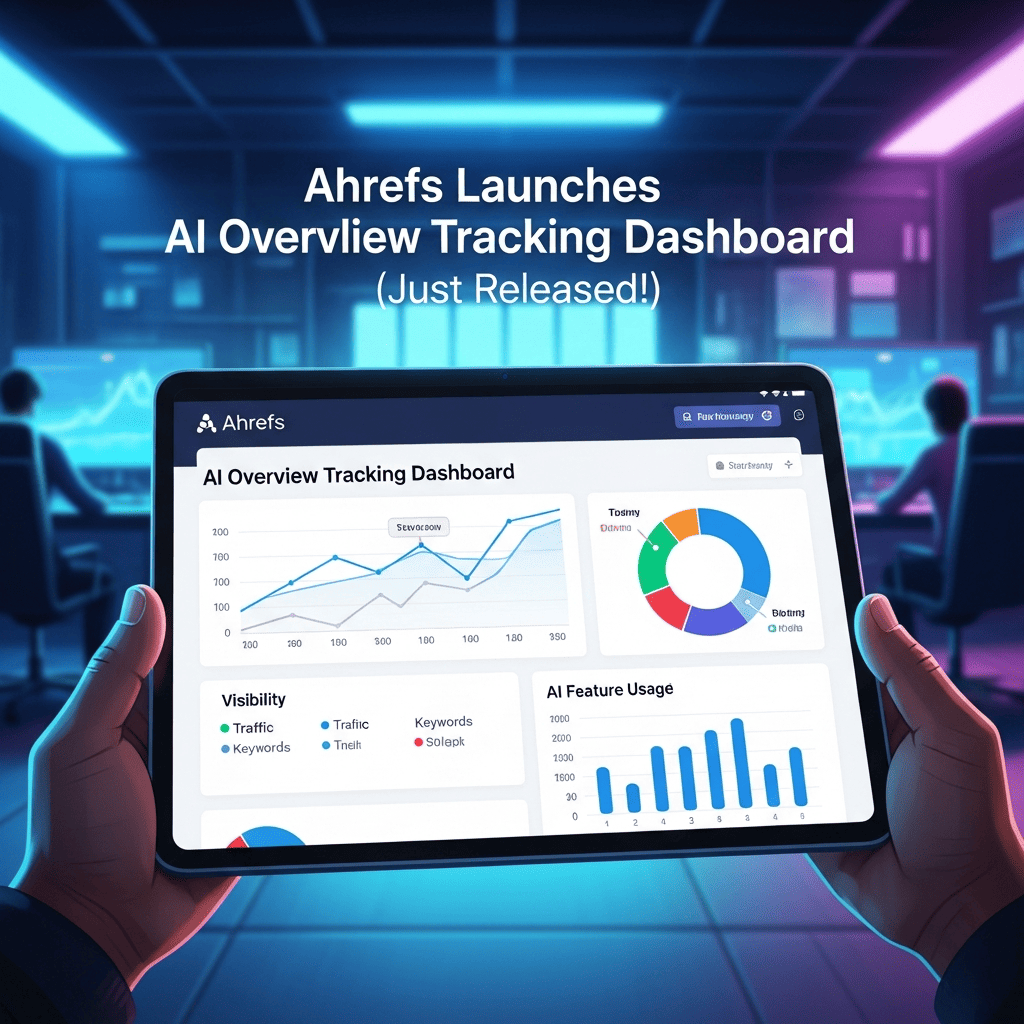
Fast forward to today, and Ahrefs has transformed from a quiet beta experiment into a full-scale AI visibility tracking platform with multiple iterations, feature expansions, and a complete restructuring of how SEO professionals monitor brand presence across the internet.
The journey from “AI References” (October 2024) to Brand Radar 1.0 (March 2025) to Brand Radar 2.0 (August 2025) to the current feature set represents one of the most aggressive product evolution cycles in SEO software history—and it’s happening because the stakes have never been higher.
The numbers driving this urgency:
- Traditional search volume predicted to drop 25% by 2026, 50% by 2028 (industry research)
- ChatGPT processes 2.5 billion prompts daily with 700-800 million weekly users
- Google AI Overviews now appear in 19% of search results (January 2025)
- Ahrefs’ own research shows 0.664 correlation between branded web mentions and AI Overview visibility
The fundamental question Ahrefs is answering: When AI platforms become the primary discovery layer—citing only a handful of sources instead of displaying 10 blue links—how do you measure, track, and optimize for visibility in a world where “ranking #1” becomes irrelevant?
This comprehensive report examines Ahrefs’ complete AI tracking evolution, breaks down every feature across the current platform, reveals the pricing structure, compares against competitors, and provides expert analysis on whether this represents the future of SEO measurement—or an expensive experiment that’s still finding its footing.
Table of Contents
Toggle
The Evolution: From AI References to Brand Radar 2.0
Phase 1: The Quiet Launch (October 2024)
The “AI References” Feature Discovery
First public mention: October 8, 2024 (spotted by Farasat Khan, SEO community member)
What it was: A simple metric appearing in Ahrefs’ Site Explorer domain overview panel showing:
- Number of references in Google AI Overviews
- Number of references in Perplexity
- Basic count without detailed context
Official Ahrefs Support Team statement (October 29, 2025):
“AI References is a new and limited-access feature. It hasn’t been rolled out to all users yet. The rollout is being managed gradually so they can collect feedback, fix issues, and ensure quality. If you’re interested, you can email the address shown in the app. This helps Ahrefs confirm your plan and use case, and they may enable it for you. At the moment, there’s no official documentation yet.”
Why it mattered:
Varun, SEO Vertical Head at Stan Ventures:
“This isn’t just another metric. It’s a signal that AI-first search visibility is now a core KPI for SEO professionals.”
The beta characteristics:
- No public announcement (discovered organically by users)
- Limited access (gradual rollout)
- No official documentation
- Basic counting mechanism
- Two platforms only (Google AIO, Perplexity)
Strategic positioning:
From Livepage analysis (September 2025):
“Ahrefs has added a new ‘AI References’ section, where you can now track how often a specific page appears in responses generated by various AI systems. For instance, based on recent data, one of our projects shows: 146 mentions Google AIO (+15 new); 4 mentions Perplexity (+3); 0 mentions in ChatGPT so far.”
What this phase revealed: Ahrefs was testing the waters—collecting feedback, measuring user interest, and building infrastructure before making a major product commitment.
Phase 2: Brand Radar 1.0 Launch (March 2025)
Official Announcement: March 5, 2025 (Ahrefs blog post with video demo)
Official Product Statement:
“Brand Radar is a game-changer when it comes to tracking and optimizing your brand’s presence in AI search. Whether you’re analyzing your own brand or keeping an eye on competitors, you can see exactly where your brand stands in large language models (LLMs) in terms of mentions.”
Core Feature Set (March 2025):
1. Competitive Benchmarking:
- Enter your brand + competitor brands
- See percentage share of mentions among specified competitors
- Filter to find where competitors are featured but your brand isn’t
2. Search Query Discovery:
- Instantly generate list of search queries triggering AI citations
- See which questions users ask that result in brand mentions
3. Beta Availability:
“While in beta, Brand Radar is available on all paid plans. Keep an eye out for more updates as we continue to expand its capabilities.”
Platform Coverage (March 2025):
- Google AI Overviews
- ChatGPT
- Perplexity
- Gemini support announced as “coming soon”
The Strategic Shift:
Brand Radar 1.0 represented Ahrefs’ commitment to building a standalone brand monitoring tool rather than just a metric within Site Explorer.
Rankability analysis (August 2025):
“Brand Radar stands out as one of the first comprehensive AI tools designed specifically to track brand mentions across multiple AI platforms. Unlike traditional brand monitoring tools that focus solely on web content, Brand Radar ventures into the relatively uncharted territory of AI-generated responses, providing insights that were previously impossible to obtain at scale.”
Beta Pricing (March-June 2025):
Free inclusion across all Ahrefs subscription plans during beta phase.
Rankability’s perspective:
“One of Brand Radar’s most attractive aspects during its beta phase has been its inclusion across all Ahrefs subscription plans at no additional cost. This generous approach has allowed users to experiment with AI brand monitoring without additional investment.”
Phase 3: Brand Radar Exits Beta (June 2025)
Major Announcement: June 2025 (Ahrefs blog post)
Headline change: Brand Radar officially exits beta, introducing paid add-on pricing structure.
Official Announcement:
“Brand Radar is officially out of beta! You can now track brand mentions in ChatGPT and Perplexity (Gemini’s coming soon). Just search your brand to see the questions people are asking in these tools, and how you’re showing up. We’ve got two months of data so far and plan to update monthly.”
New Pricing Structure (Effective June 2025):
| AI Platform Index | Monthly Cost |
|---|---|
| Google AI Overviews | $99/month |
| ChatGPT | $99/month |
| Perplexity | $99/month |
| All Platforms Add-on | Bundled pricing |
What’s included FREE in all paid plans:
- Search Demand index (branded search volume tracking)
Official note from Ahrefs:
“Now that Brand Radar is out of beta, AI Overviews, ChatGPT, and Perplexity indexes are available as add-ons at $99/month each. Search demand is included in all paid plans.”
New Features Added (June 2025):
1. Historical Data:
- Two months of data at launch (June 2025)
- Monthly update schedule
2. Search Demand Index:
- Tracks total search volume for all brand-related terms
- Measures brand awareness over time
From Ahrefs:
“It’s a useful way to track interest and awareness over time—if your share of search isn’t growing, your brand’s revenue pipeline is probably fading.”
3. Author Filter:
- Filter for pages with/without detected authors in Web Visibility module
Additional June 2025 Features:
- Custom events in Web Analytics
- Funnels tracking
- Brand Kits for AI-generated content consistency
- AI content detector
- Google Profile Monitor (Local SEO)
Phase 4: Brand Radar 2.0 Launch (August 2025)
Major Restructure Announcement: September 11, 2025 (comprehensive product overhaul)
The Complete Transformation:
Official Announcement:
“Brand Radar now works like Site Explorer, with an Overview and dedicated reports for different kinds of data. The goal is simple: make it easy to explore how your brand shows up across both AI answers and the web mentions that shape them.”
New Structure:
1. Overview Dashboard:
- Unified view of brand presence
- Toggles between different visibility aspects
2. Three Dedicated Reports:
- AI Visibility (AI platform mentions)
- Search Demand (branded search volume)
- Web Visibility (web mentions shaping AI answers)
Platform Expansion:
Added:
- ✅ Google AI Mode (Google’s chatbot experience within search)
- ✅ Microsoft Copilot
- ✅ Gemini (moved from “coming soon” to active)
Current Coverage (August 2025 onwards):
- Google AI Overviews
- Google AI Mode
- ChatGPT
- Perplexity
- Gemini
- Microsoft Copilot
Google AI Mode Details:
“You can now track brand visibility inside Google’s chatbot experience within its search product. Google AI Mode rolled out in May in the US; it’s now live in the UK and India too. We’re currently tracking ~3.5M US queries, with coverage expanding.”
Pricing for Google AI Mode:
“Google AI Mode is bundled with AI Overviews at \$199/month, and it’s also included in the All Platforms add-on. If you’re already on those, your Brand Radar just got better at no extra cost.”
New Critical Features:
1. Cited Domains Report:
- Shows how often tracked brands are cited in AI responses that link to specific domains
- Traces influence back to source
2. Cited Pages Report:
- URL-level view of citations
- Pinpoints exactly which pages AI platforms reference
Official explanation:
“Two new reports help you trace influence back to the source and pinpoint where to build coverage next.”
3. Historical Data Expansion:
“August data update—ChatGPT and Perplexity now have four months of history; Gemini and Copilot have two.”
4. Multi-Brand Tracking:
“Track multiple brands—add more than one brand to the ‘Your brand’ field and see combined Share of Voice.”
5. Export Functionality:
“Export across Brand Radar for easier sharing and analysis.”
6. Demo Searches:
“Plus, all paid users get a set of demo queries to try Brand Radar for free.”
Additional August 2025 Features:
Social Media Manager:
- Plan, schedule, manage posts across LinkedIn, X, Instagram, Facebook
- All directly within Ahrefs
Site Audit AI Detection:
- Improved AI content detection built into URL details
- Inspect content-level signals alongside technical issues
GSC Visibility Trend:
- Performance charts now include Visibility trend
- Quickly spot SERP shifts affecting traffic
Phase 5: Entities, Topics & API (September 2025)
Announced: October 14, 2025
The Intelligence Layer:
1. Entities Feature:
“You can now group multiple variations of a brand or competitor name into one entity. Any response that matches a term in the group gets counted. That means no more chasing every typo, spelling, or alternate phrasing—just a cleaner, consolidated view of your brand footprint.”
Why it matters: Tracks “Ahrefs,” “ahrefs,” “ahrefs.com,” “@ahrefs” as single entity.
2. Topics Report:
“Brand Radar now has a Topics report and Overview widget. Queries are grouped by parent topics from Keywords Explorer, helping you uncover new angles where your brand is (or isn’t) visible in AI.”
Strategic value: Identifies topic gaps where competitors dominate.
3. Saved Reports:
“Reports for your brand, competitors, and market can now be saved directly in Brand Radar. Access control is built in: keep them private, or share them with your team.”
4. Brand Radar API:
Major milestone:
“The first endpoint is live: AI responses. It includes the same columns and filters you’re used to in-app, now accessible via API. Handy for dashboards, pipelines, and custom reporting.”
Use cases:
- Feed AI visibility into custom dashboards
- Build automated reporting workflows
- Integrate with attribution models
From October 2025 update:
“Pull Impressions in Brand Radar programmatically using the same filters you use in the UI. Feed AI visibility into dashboards or models without manual exports.”
5. AWT Access:
“The Brand Radar add-on is now available to Ahrefs Webmaster Tools users, even without a paid subscription. You’ll need an AWT account to get started. (Note: Search Demand and Web Visibility indexes are excluded for free users.)”
6. Reports Builder Integration:
“Add Brand Radar 2.0 Mentions charts for all platforms into your custom reports. Perfect for slipping AI visibility data into your monthly SEO reports for clients or stakeholders.”
Additional September Features:
Possible 404 Report:
“Flags pages that get visits but contain ‘404’ or ‘not found’ in the title. This often happens when AI chatbots hallucinate URLs—now you can catch and fix them before they cause issues.”
SERP Features History:
- New chart showing positions held in SERP features over time
Batch Analysis 2.0:
- Now supports up to 1,000 URLs (vs. 200 before)
Phase 6: Current State (November 2025-January 2026)
Latest Features (November-January 2026):
From November 2025:
1. Web Pages Historical Chart (Brand Radar):
“A new Web Pages historical chart makes it easier to investigate patterns. It respects all filters, so you can break trends down by URL, platform, or timeframe and actually see what changed.”
2. Impressions in API:
“Pull Impressions in Brand Radar programmatically using the same filters you use in the UI.”
AI Citations Widget Enhancement:
From June 2025 changelog:
“Site Explorer now surfaces AI references more clearly via the AI citations widget, so you can see how often AI assistants link to your site.”
The Current Capability Set (January 2026):
✅ 6 AI platforms tracked (Google AI Overviews, AI Mode, ChatGPT, Perplexity, Gemini, Copilot)
✅ 200+ million prompts in database
✅ Historical data (4+ months for major platforms)
✅ Entity consolidation (group brand variations)
✅ Topic clustering (group queries by parent topics)
✅ Cited domains/pages tracking (source attribution)
✅ API access (programmatic data retrieval)
✅ Multi-brand tracking (combined share of voice)
✅ Saved reports (team collaboration)
✅ Reports Builder integration (client reporting)
✅ AWT access (limited free tier)
✅ Export functionality (data portability)
The Complete Feature Breakdown (Current Platform)
Core Module #1: AI Visibility
Purpose: Quantify brand presence in AI-generated content
What It Tracks:
Official Ahrefs definition:
“See mentions of brands, products, and other entities across AI platforms from 2024 onwards.”
Key Metrics:
1. Share of Voice:
- Your brand mentions as percentage of total in your category
- Competitive benchmarking across 5+ competitors
2. Mention Frequency:
- Raw count of brand appearances
- Trend over time (4+ months historical data)
- Platform-specific breakdown
3. Citation Context:
- Cited vs. mentioned (direct quote vs. reference)
- Position within AI response
- Associated topics/queries
4. Competitive Gap Analysis:
From Ahrefs’ official use case:
“Want to see where your competitors are being featured, while your brand isn’t? Just add these filters: Contains: enter one or more competitor brand names…”
Instantly discover:
- Prompts where competitors dominate
- Topics you’re missing
- Content gaps to fill
The Skywork.ai Deep Dive Analysis:
“Brand Radar is powerful because it helps you see what information these AIs are choosing to retrieve and cite. The tool goes deeper by showing you the top domains that AI platforms cite when answering questions about your niche. This is critical intelligence for any GEO strategy.”
Platform-Specific Insights:
Google AI Overviews:
- Sortable by Relevance and Search volume
- Higher entity count = higher relevance ranking
ChatGPT:
- Browse mode citations
- Direct conversation mentions
Perplexity:
- Research-focused citations
- Source quality signals
Gemini:
- Google-integrated responses
- Multi-modal context
Microsoft Copilot:
- Enterprise search integration
- Microsoft ecosystem citations
Google AI Mode:
- Conversational search experience
- ~3.5M US queries tracked
- UK and India coverage
Core Module #2: Search Demand
Purpose: Track branded search interest across traditional search engines
What’s Included FREE:
From Ahrefs:
“Search demand is included in all paid plans.”
Key Metrics:
1. Branded Search Volume:
- Total volume across all brand-related terms
- Trend over time
- Geographic breakdown
2. Query Diversity:
- Number of unique brand-related queries
- Signal of brand awareness depth
From Ahrefs’ explanation:
“It’s a useful way to track interest and awareness over time—if your share of search isn’t growing, your brand’s revenue pipeline is probably fading.”
3. Search Demand to AI Visibility Correlation:
The strategic insight:
Rising branded searches without corresponding AI visibility = opportunity gap
From Skywork.ai analysis:
“Search Demand: Tracks the volume and diversity of branded search queries. A rising query count, even with stable volume, suggests people are asking more specific, long-tail questions about you—a signal of deepening brand awareness.”
Core Module #3: Web Visibility
Purpose: Monitor web mentions shaping AI understanding of your brand
The Critical Connection:
Ahrefs’ own research finding:
“Ahrefs research demonstrates a strong 0.664 correlation between branded web mentions and AI Overview visibility.”
From Skywork.ai analysis:
“Web Visibility: Monitors all mentions of your brand across the web, whether they are linked or unlinked. This is where Ahrefs connects the dots brilliantly. My own analysis, which is supported by Ahrefs’ own data study of 75,000 brands, shows a strong Spearman correlation of 0.664 between brand web mentions and visibility in Google’s AI Overviews.”
What It Tracks:
1. Linked Mentions:
- Domains linking to your site with brand mentions
- Context of mentions
- Authority of linking domains
2. Unlinked Mentions:
- Brand references without hyperlinks
- Press coverage
- Forum discussions
- Social media mentions
3. Web Pages Tracking:
From November 2025:
“A new Web Pages historical chart makes it easier to investigate patterns. It respects all filters, so you can break trends down by URL, platform, or timeframe and actually see what changed.”
4. Author Filter:
Track mentions with or without detected authors (journalists, bloggers, experts).
Strategic Application:
The “Source Authority” Layer:
From Skywork.ai:
“Brand Radar allows you to save reports and share insights, turning analysis into team-wide action. The tool connects directly to Ahrefs’ core dataset, letting you explore the source pages behind mentions and understand which entities, keywords, or markets drive your brand’s exposure.”
Content Strategy Implication:
- Identify which pages influence AI visibility
- Emulate successful content patterns
- Build authority on high-citation domains
Advanced Features
1. Cited Domains Report:
Purpose: Attribution analysis
Shows:
- Domains AI platforms link to when mentioning your brand
- Citation frequency per domain
- Competitive domain comparison
Use case:
“Trace influence back to the source and pinpoint where to build coverage next.”
Strategic value:
- Prioritize link building targets
- Identify authoritative sources AI trusts
- Guide PR and content distribution strategy
2. Cited Pages Report:
URL-level granularity:
- Specific pages AI platforms reference
- Content attributes driving citations
- Page performance over time
Content optimization playbook:
- Analyze high-citation pages
- Replicate successful content patterns
- Update pages to maintain AI visibility
3. Topics Report (September 2025+):
From official announcement:
“Queries are grouped by parent topics from Keywords Explorer, helping you: Uncover new angles where your brand is (or isn’t) visible in AI.”
Organizational power:
Instead of viewing 10,000 individual prompts, see:
- 50 parent topics
- Mention frequency per topic
- Competitive position per topic
- Growth trends per topic
4. Entities Consolidation:
The name variation problem:
Users might reference:
- “Ahrefs”
- “ahrefs.com”
- “@ahrefs”
- “Ahrefs SEO”
- “ahrefs tool”
Solution:
“Group multiple variations of a brand or competitor name into one entity. Any response that matches a term in the group gets counted.”
Result: Clean, consolidated analytics without manual data cleanup.
5. Saved Reports & Team Collaboration:
From September 2025:
“Reports for your brand, competitors, and market can now be saved directly in Brand Radar. Access control is built in: keep them private, or share them with your team.”
Workflow value:
- Create templates for recurring analysis
- Share competitive intelligence
- Standardize reporting across team
6. Custom Prompts Tracking:
From official documentation:
“With Brand Radar, you can create custom prompts and track how AI responds to them to understand your brand’s visibility compared to competitors or within specific niches.”
Use cases:
- Test specific positioning messages
- Monitor evolving AI responses
- Track competitive mentions on key topics
7. Brand Radar API:
Launched: September 2025
First endpoint: AI responses
From official announcement:
“It includes the same columns and filters you’re used to in-app, now accessible via API. Handy for dashboards, pipelines, and custom reporting.”
Developer capabilities:
- Build custom dashboards
- Integrate with attribution models
- Automate reporting workflows
- Feed data into business intelligence tools
November 2025 addition:
“Pull Impressions in Brand Radar programmatically using the same filters you use in the UI. Feed AI visibility into dashboards or models without manual exports.”
8. Reports Builder Integration:
From September 2025:
“Add Brand Radar 2.0 Mentions charts for all platforms into your custom reports. Perfect for slipping AI visibility data into your monthly SEO reports for clients or stakeholders.”
Agency value:
- Unified client reporting
- SEO + AI visibility in single document
- White-label presentation
9. AWT (Ahrefs Webmaster Tools) Access:
Free tier availability:
“The Brand Radar add-on is now available to Ahrefs Webmaster Tools users, even without a paid subscription. You’ll need an AWT account to get started. (Note: Search Demand and Web Visibility indexes are excluded for free users.)”
What free users get:
- Basic AI visibility tracking
- Limited historical data
- No Search Demand index
- No Web Visibility index
Purpose: Lower barrier to entry for AI visibility awareness.
Pricing Structure (Current – January 2026)
Base Ahrefs Plans
Required for Brand Radar access:
| Plan | Monthly Price | Annual Price | Keywords Tracked | Projects |
|---|---|---|---|---|
| Lite | $129 | $1,290 (save $258) | 500 | 5 |
| Standard | $249 | $2,490 (save $498) | 1,500 | 25 |
| Advanced | $449 | $4,490 (save $898) | 5,000 | 100 |
| Enterprise | Custom | Custom | Custom | Custom |
All plans include:
- Site Explorer
- Keywords Explorer
- Site Audit
- Rank Tracker
- Brand Radar (Search Demand index only)
- Web Analytics
- Content Explorer (Standard+)
Brand Radar Add-On Pricing
AI Platform Indexes:
| Index | Monthly Cost | What’s Included |
|---|---|---|
| Google AI Overviews + AI Mode Bundle | $199/month | Both Google AI features |
| ChatGPT | $99/month | ChatGPT citations & mentions |
| Perplexity | $99/month | Perplexity citations & mentions |
| Gemini | $99/month | Gemini citations & mentions |
| Microsoft Copilot | $99/month | Copilot citations & mentions |
| All Platforms Add-On | Custom pricing | All 6 platforms bundled |
Custom Prompts Pricing:
From official pricing page:
“Choose a package based on how many custom prompts you track. The All indexes add-on and the Enterprise plan already include a set number of custom prompts.”
Typical structure:
- Base allocation with platform purchase
- Additional prompts available as add-on
- Enterprise plans include larger allocations
Total Cost Examples
Small Business (Basic AI Visibility):
- Lite plan: $129/month
- Google AI Overviews + AI Mode: $199/month
- Total: $328/month
Growing Brand (Multi-Platform Tracking):
- Standard plan: $249/month
- All Platforms add-on: ~$699/month (estimated based on competitive analysis)
- Total: ~$948/month
Enterprise (Complete Solution):
- Enterprise plan: Custom
- All Platforms included in Enterprise tier
- Custom prompts allocation
- Dedicated support
Standalone Brand Radar Option
Official statement:
“Brand Radar is standalone tool available to all free and paid Ahrefs users. Get Brand Radar on its own, or subscribe to Ahrefs for deeper insights and extra brand visibility reporting.”
Standalone structure:
- Access Brand Radar without full Ahrefs subscription
- Requires Ahrefs Webmaster Tools (AWT) account (free)
- Purchase individual AI platform indexes
- Limited integration with other Ahrefs tools
Competitive comparison:
From AI Peekaboo analysis (2 weeks ago):
“Ahrefs Brand Radar is powerful, but at $699 per month it is out of reach for many teams.”
Note: The $699/month figure refers to the All Platforms add-on on top of a base Ahrefs subscription.
Competitive Landscape
Ahrefs Brand Radar vs. Competitors
From comprehensive market analysis (December 2025-January 2026):
1. Semrush One
Launched: October 2025
Pricing: Starts at $199/month (includes SEO + AI Visibility)
Platform Coverage:
- Google AI Overviews
- Google AI Mode
- ChatGPT
- Perplexity
- Gemini
Prompt Database: 100+ million LLM prompts
Advantage vs. Ahrefs:
- Unified pricing (SEO + AI in one subscription)
- $199 all-in vs. Ahrefs $328+ for similar coverage
Disadvantage vs. Ahrefs:
- Smaller backlink database
- Less mature AI tracking (launched later)
- Fewer historical data months
2. Peekaboo (AI Peekaboo)
Positioning: Budget-friendly alternative
Pricing: Starts at $50/month
Platform Coverage:
- ChatGPT
- Perplexity
- Gemini
- Google AI Overviews (varies by plan)
Key Features:
- White-labeling for agencies
- Client workspace management
- Looker Studio connector
- AI Chatbot (query data in plain English)
From AI Peekaboo analysis:
“For agencies, Peekaboo is the best alternative to Ahrefs Brand Radar. The ability to white-label the platform and create custom reports with the Looker Studio connector is a huge advantage for client management. Peekaboo, with pricing starting at just $50/month, offers the best combination of comprehensive features and affordability.”
Advantage vs. Ahrefs:
- $50/month vs. $328+ (6.5x cheaper)
- Agency-specific features
- White-labeling included
Disadvantage vs. Ahrefs:
- Smaller prompt database
- No integration with Ahrefs’ SEO data
- Limited historical data
3. Profound
Positioning: Dedicated AI search visibility platform
Pricing: Starts at $99/month
Platform Coverage:
- ChatGPT
- Perplexity
- Claude
- Meta AI
- Gemini
- Google AI Overviews
- Google AI Mode (as of July 2025)
Data Refresh: Approximately every 3 days
Security: SOC 2 Type II compliance
Advantage vs. Ahrefs:
- More platforms (includes Claude, Meta AI)
- Faster data refresh (3 days vs. monthly)
- Focus exclusively on AI visibility
Disadvantage vs. Ahrefs:
- No traditional SEO tools integration
- Separate subscription required
- Less correlation with web mentions
4. Otterly AI
Positioning: “The Ahrefs for AI Search” (bootstrapped Austrian startup)
Launch: December 2024 (emerged from stealth)
Users: 5,000+ (grown from 1,000+ at launch)
Platform Coverage:
- Google AI Overviews
- ChatGPT
- Perplexity
- Gemini, Copilot (planned)
Differentiator: GEO Audit tool with deep Semrush integration
From TechCrunch coverage:
“Integration strategy provides weekly data refresh (more frequent updates planned).”
G2 Rating: ~4.9/5 (37 reviews)
Advantage vs. Ahrefs:
- Specialized GEO focus
- High user satisfaction
- Integration with Semrush App Center
Disadvantage vs. Ahrefs:
- Smaller team/resources
- Limited traditional SEO tools
- Shorter track record
5. BrightEdge Generative Parser
Positioning: Enterprise-level AI monitoring
Platform Coverage:
- Google AI Overviews
- ChatGPT
- Perplexity
- Custom enterprise platforms
Advantage vs. Ahrefs:
- Enterprise compliance
- Dedicated account management
- Advanced attribution modeling
Disadvantage vs. Ahrefs:
- Enterprise pricing (significantly more expensive)
- Requires enterprise commitment
- Longer onboarding process
Ahrefs’ Unique Competitive Advantages
1. Web Mention Correlation:
The 0.664 correlation finding:
From official Ahrefs research:
“Ahrefs research demonstrates a strong 0.664 correlation between branded web mentions and AI Overview visibility, making Brand Radar’s web mention tracking strategically valuable for AI search optimization. This unique capability differentiates Ahrefs from competitors who only monitor AI citations without connecting them to broader web presence patterns.”
Why it matters:
Ahrefs can show WHY you’re cited (or not cited) by tracing back to web authority signals—competitors only show IF you’re cited.
2. Backlink Database Integration:
40+ trillion links indexed = context for understanding citation patterns
Use case:
- Which backlink sources drive AI citations?
- Do high-authority domains = higher AI visibility?
- Can link building improve AI presence?
3. Comprehensive SEO Ecosystem:
All in one platform:
- Traditional SEO (Site Explorer, Keywords Explorer)
- Technical SEO (Site Audit)
- Rank tracking
- Content research
- AI visibility tracking
- Web Analytics
Agency value: Single platform for complete digital presence monitoring
4. Historical Data Depth:
4+ months of AI data (ChatGPT, Perplexity) and growing
Trend analysis capabilities:
- Seasonal patterns
- Campaign impact measurement
- Competitive trajectory
5. Cited Domains/Pages Attribution:
Unique feature (as of January 2026):
Ahrefs shows exact pages and domains AI platforms cite when mentioning brands—most competitors only show mentions without source attribution.
Expert Opinions & Industry Reactions
Positive Reception
Varun, SEO Vertical Head at Stan Ventures (October 2025):
“This isn’t just another metric. It’s a signal that AI-first search visibility is now a core KPI for SEO professionals. Being cited by an AI tool is like earning a top mention from a digital thought leader—it boosts visibility and credibility instantly.”
Livepage Link Building Team (September 2025):
“This update opens up powerful new opportunities for analysis. Instead of manually checking search results or relying solely on traffic data in Google Analytics, you can now clearly see which keywords trigger AI-generated responses that mention your site. At Livepage, we’re already implementing practical solutions to help businesses grow in the new era of AI-powered search through our specialized Link Building for Search GPT services.”
Skywork.ai Analysis:
“Brand Radar provides hands down one of the easiest and most comprehensive ways to understand what plays a role in AI answers: from brand and topics inclusions and gap analysis at scale, to easy citation identification for any topic, vertical in any model. You must try it now!”
Rankability Assessment (August 2025):
“For brands looking to stay ahead of the AI curve, Brand Radar offers unique strategic value. It provides the first systematic approach to understanding AI brand visibility, allowing companies to identify content gaps where competitors appear but they don’t, discover new topics and questions driving brand mentions.”
Critical Perspectives
TryAnalyze.ai Review (1 day ago – January 2026):
“Despite its ambitious scope, Ahrefs Brand Radar has limitations like inconsistent accuracy in detecting AI mentions, limited visibility into prompt-level context, and a lack of sentiment or quality scoring for how brands are referenced. Some modules—especially those tracking ChatGPT and Perplexity—are still experimental and may underreport or miss mentions entirely.”
On data volatility:
“A drop in mentions could mean a real shift in coverage, or it could simply mean that the AI gave a slightly different response that day. Without clear metadata about the prompt, timestamp, or model version, users can’t tell which scenario is true. Over time, this unpredictability erodes confidence in the numbers.”
On sampling limitations:
“The accuracy question connects directly to Brand Radar’s biggest structural limitation: its sampling model. Instead of crawling real-time prompts or capturing open-ended queries, it runs on a predefined dataset of questions that Ahrefs curates and rotates.”
Rankability’s Balanced View:
“Brand Radar functions more as a research database than a simple tracking tool, which initially confused some users expecting a straightforward ‘rank tracker’ style interface. However, once users understand this paradigm, they find the exploratory nature valuable for discovering new insights about their brand’s AI presence.”
On UI/UX:
“The user interface, while functional, requires refinement to make insights more accessible to different user types. Ahrefs has acknowledged this feedback, with their CMO noting that the UI ‘still needs some work’ and promising improvements like topical grouping of prompts to enhance usability.”
Practical Use Cases & Tips
Use Case #1: Competitive Gap Analysis
Objective: Find topics where competitors dominate AI responses
Workflow:
Step 1: Enter your brand in Brand Radar
Step 2: Add 3-5 primary competitors
Step 3: Filter for:
- Contains: Competitor brand names
- Excludes: Your brand name
Result: List of prompts/topics where competitors appear but you don’t
Step 4: Analyze top cited domains for those prompts
Step 5: Create content targeting:
- Same topics
- Similar quality/depth
- Authority-building on cited domains
Livepage insight:
“Objectively measure how well your content performs in AI-generated search results. Analyze which types of backlinks are most likely to be picked up by AI and included in responses.”
Use Case #2: PR Strategy Optimization
Objective: Prioritize media outlets that drive AI visibility
The 0.664 correlation application:
Step 1: Use Cited Domains report to identify:
- Which publications AI platforms cite most frequently
- Domains with highest citation-to-mention ratio
Step 2: Cross-reference with Web Visibility:
- Current publications mentioning your brand
- Gap between where you’re mentioned and where AI cites
Step 3: Prioritize PR targets:
- High-citation domains where you’re absent
- Publications competitors are in but you’re not
Step 4: Track impact:
- Monitor web mentions growth
- Watch AI visibility follow (0.664 correlation predicts lag)
Livepage recommendation:
“We place links on authoritative sources that AI search engines value. We provide ongoing monitoring and optimization to ensure consistent link-building performance.”
Use Case #3: Content Performance Attribution
Objective: Understand which content drives AI citations
Workflow:
Step 1: Review Cited Pages report
Step 2: Identify your highest-cited URLs
Step 3: Analyze common attributes:
- Content structure (how-to, comparison, research)
- Word count
- Media (images, charts, videos)
- Data/statistics included
- Author credentials
- Backlink profile
Step 4: Create content replication playbook
Step 5: Update lower-performing content with winning attributes
Skywork.ai insight:
“Once you know which pages influence AI visibility, you can strengthen or emulate them. The result is a system that not only tracks where you stand but also points precisely to the levers that can change that position.”
Use Case #4: Brand Health Monitoring
Objective: Early warning system for brand visibility decline
Metrics to monitor:
1. Share of Voice Trend:
- Your mentions vs. competitors over time
- Category: Early indicator of market position
2. Search Demand Growth:
From Ahrefs:
“If your share of search isn’t growing, your brand’s revenue pipeline is probably fading.”
3. AI Visibility vs. Search Demand Correlation:
- Rising searches + flat AI visibility = opportunity
- Declining searches + stable AI visibility = authority plateau
- Both declining = urgent action needed
4. Topic Coverage Percentage:
From AI search optimization guide:
“For your core topics, what percentage of related questions trigger responses that mention your content? Track this monthly.”
Use Case #5: Campaign Impact Measurement
Objective: Measure how marketing campaigns affect AI visibility
Before Campaign:
- Baseline AI visibility metrics
- Share of voice by topic
- Top cited domains/pages
During Campaign:
- Web mentions velocity (Web Visibility)
- New citations appearing
- Topic expansion
Post-Campaign (30-60 days):
- AI visibility lift (0.664 correlation = lag)
- Sustained vs. temporary mentions
- ROI calculation
TryAnalyze.ai caution:
“A drop in mentions could mean a real shift in coverage, or it could simply mean that the AI gave a slightly different response that day. Without clear metadata about the prompt, timestamp, or model version, users can’t tell which scenario is true.”
Recommendation: Use multi-week averages rather than single-day data points for campaign attribution.
Frequently Asked Questions
Q: Is Ahrefs Brand Radar available as a standalone tool without buying the full Ahrefs subscription?
Yes, Brand Radar can be purchased standalone. From Ahrefs’ official pricing page:
“Brand Radar is standalone tool available to all free and paid Ahrefs users. Get Brand Radar on its own, or subscribe to Ahrefs for deeper insights and extra brand visibility reporting.”
However, there are important limitations:
Standalone Access:
- Requires free Ahrefs Webmaster Tools (AWT) account
- Purchase individual AI platform indexes ($99-$199/month each)
- Access basic AI visibility tracking
What you LOSE with standalone:
- Web Visibility index (requires paid Ahrefs plan)
- Integration with Site Explorer (backlink context)
- Cited Domains/Pages full functionality
- Keywords Explorer integration
- Historical SEO correlation data
From September 2025 announcement:
“The Brand Radar add-on is now available to Ahrefs Webmaster Tools users, even without a paid subscription. You’ll need an AWT account to get started. (Note: Search Demand and Web Visibility indexes are excluded for free users.)”
Recommendation: Standalone works for basic AI monitoring, but the 0.664 web mention correlation that makes Brand Radar unique requires a paid Ahrefs subscription for full Web Visibility access.
Q: How accurate is Ahrefs’ AI citation data compared to manual checking?
Mixed results based on user testing:
Strengths:
- Directionally accurate for high-volume prompts
- Good at identifying presence/absence
- Reliable for competitive comparisons (relative positioning)
Weaknesses:
From TryAnalyze.ai (January 2026):
“Inconsistent accuracy in detecting AI mentions, limited visibility into prompt-level context, and a lack of sentiment or quality scoring for how brands are referenced. Some modules—especially those tracking ChatGPT and Perplexity—are still experimental and may underreport or miss mentions entirely.”
The sampling limitation:
“Instead of crawling real-time prompts or capturing open-ended queries, it runs on a predefined dataset of questions that Ahrefs curates and rotates.”
What this means:
- Ahrefs does not track every possible prompt users might ask
- Data is based on representative sample (~200+ million prompts)
- Real user queries may differ from Ahrefs’ test prompts
Manual verification recommended for:
- Critical business decisions
- Legal/compliance requirements
- Exact citation counting
Best practice: Use Brand Radar for trend identification and competitive intelligence, verify critical findings manually.
Q: How often does Ahrefs update Brand Radar data?
Update frequency varies by platform:
From official documentation (August-September 2025):
“ChatGPT and Perplexity now have four months of history; Gemini and Copilot have two.”
“We’ve got two months of data so far and plan to update monthly.”
Current schedule (as of January 2026):
Monthly updates:
- ChatGPT
- Perplexity
- Gemini
- Microsoft Copilot
- Google AI Overviews
- Google AI Mode
Real-time updates: None (all platforms on monthly refresh)
Competitive comparison:
Profound: ~3 days refresh Semrush One: Weekly (Brand Performance), Monthly (Visibility Overview) Otterly AI: Weekly with more frequent updates planned
Limitation acknowledged:
From TryAnalyze.ai:
“Without clear metadata about the prompt, timestamp, or model version, users can’t tell which scenario is true. Over time, this unpredictability erodes confidence in the numbers.”
Best for: Strategic trend analysis, not real-time monitoring.
Q: Can I track my competitors without them knowing?
Yes, Brand Radar competitive tracking is completely anonymous.
How it works:
- Ahrefs runs prompts through AI platforms directly
- Captures responses for analysis
- Competitor brands cannot see that you’re tracking them
- No reciprocal notification or data sharing
What you can monitor:
- Competitor brand mentions across all platforms
- Share of voice vs. your brand
- Topics where competitors dominate
- Cited domains/pages for competitor mentions
Ethical considerations:
- All data is publicly accessible (anyone could manually check same prompts)
- No private data breach
- Standard competitive intelligence
From competitive analysis use case:
“Want to see where your competitors are being featured, while your brand isn’t? Just add these filters: Contains: enter one or more competitor brand names…”
Privacy: Competitors have no visibility into your Brand Radar account, tracking lists, or analysis.
Q: Does Ahrefs track brand sentiment in AI responses?
No, sentiment analysis is NOT currently available.
From TryAnalyze.ai (January 2026):
“Lack of sentiment or quality scoring for how brands are referenced.”
What Brand Radar shows:
- ✅ Brand is mentioned (yes/no)
- ✅ Citation count
- ✅ Position in response
- ✅ Cited vs. mentioned distinction
- ❌ Positive/negative/neutral sentiment
- ❌ Context quality scoring
- ❌ Mention prominence weighting
Workaround:
- Manually review actual AI responses (click-through from Brand Radar)
- Analyze cited domains as proxy for quality (high-authority sources = likely positive context)
Competitive advantage:
Some competitors (like Scrunch AI) offer sentiment analysis and risk management dashboards that Ahrefs currently lacks.
Feature request status: No public roadmap indication of sentiment analysis development.
Q: How does the $199 Google AI Overviews + AI Mode bundle pricing compare to buying both separately?
Bundled pricing breakdown:
Official Ahrefs statement (August 2025):
“Google AI Mode is bundled with AI Overviews at $199/month, and it’s also included in the All Platforms add-on. If you’re already on those, your Brand Radar just got better at no extra cost.”
Pricing structure:
| Option | Cost | What’s Included |
|---|---|---|
| Google AI Overviews only | Not offered separately | N/A |
| AI Mode only | Not offered separately | N/A |
| Both bundled | $199/month | AI Overviews + AI Mode |
Why bundled:
- Google AI Mode launched after AI Overviews was already in market
- Ahrefs decided not to charge separately
- Strategic pricing to compete with Semrush One ($199 all-in with SEO)
Total cost examples:
Just Google:
- Base Ahrefs Lite: $129/month
- Google bundle: $199/month
- Total: $328/month
All platforms:
- Base Ahrefs Standard: $249/month
- All Platforms add-on: ~$699/month (based on competitive analysis)
- Total: ~$948/month
Competitive comparison:
Semrush One: \$199/month includes SEO + AI visibility across 5 platforms (Google AI Overviews, AI Mode, ChatGPT, Perplexity, Gemini)
Value assessment: Ahrefs’ $328/month (Lite + Google) vs. Semrush’s $199/month (SEO + 5 platforms) makes Semrush better value for AI-first users. Ahrefs better value for users prioritizing backlink analysis and Web Visibility correlation.
Q: Can Brand Radar track custom branded terms beyond just my company name?
Yes, through the Entities feature (launched September 2025).
Official explanation:
“You can now group multiple variations of a brand or competitor name into one entity. Any response that matches a term in the group gets counted. That means no more chasing every typo, spelling, or alternate phrasing—just a cleaner, consolidated view of your brand footprint.”
Example entity grouping:
Brand: Ahrefs
Variations tracked:
- “Ahrefs”
- “ahrefs”
- “ahrefs.com”
- “@ahrefs”
- “Ahrefs SEO”
- “Ahrefs tool”
- “Ahrefs backlink checker”
All counted as single entity for consolidated analytics.
Custom branded terms support:
- Product names
- Taglines
- Executive names (CEO mentions)
- Branded methodologies
- Trademark phrases
Multi-brand tracking (August 2025):
“Track multiple brands—add more than one brand to the ‘Your brand’ field and see combined Share of Voice.”
Use cases:
- Parent company + subsidiary brands
- Product portfolio tracking
- Holding company analysis
- Brand family monitoring
Limitation: No explicit documentation on entity limit per account, likely varies by plan tier.
Q: What’s the learning curve for someone new to AI visibility tracking?
Moderate to steep, depending on background:
For experienced SEOs:
Rankability assessment:
“Brand Radar functions more as a research database than a simple tracking tool, which initially confused some users expecting a straightforward ‘rank tracker’ style interface. However, once users understand this paradigm, they find the exploratory nature valuable for discovering new insights.”
Learning curve: 2-3 weeks to become proficient
Key mindset shift:
- Not about “ranking #1”
- About understanding why you’re cited (or not)
- Exploratory rather than prescriptive
For brand marketers (non-SEO):
Rankability:
“Brand marketers may need additional time to extract maximum value. Ahrefs’ active community discussions help users share best practices and optimize their use of the tool.”
Learning curve: 4-6 weeks to become proficient
Challenges:
- Understanding SEO terminology (domains, backlinks, citations)
- Navigating Ahrefs’ interface (built for SEO pros)
- Interpreting competitive metrics
For complete beginners:
Steep learning curve without SEO foundation.
Recommended approach:
- Take Ahrefs Certification course (free, covers platform basics)
- Focus on Brand Radar Course (mentioned in official docs)
- Start with demo searches (included for paid users)
- Join Ahrefs community discussions
UI/UX feedback:
Rankability:
“The user interface, while functional, requires refinement to make insights more accessible to different user types. Ahrefs has acknowledged this feedback, with their CMO noting that the UI ‘still needs some work.'”
Budget alternatives with easier UI:
- Peekaboo: $50/month, simpler interface, AI chatbot for queries
- Brandlight: Clean, straightforward reporting
Q: Does Ahrefs offer a free trial to test Brand Radar before committing?
Not a traditional free trial, but YES to limited testing options:
Official free access:
1. Ahrefs Webmaster Tools (AWT) Route:
From September 2025:
“The Brand Radar add-on is now available to Ahrefs Webmaster Tools users, even without a paid subscription.”
What you get:
- Free AWT account (always free)
- Purchase Brand Radar add-on standalone
- Limited features (no Search Demand, no Web Visibility)
2. Demo Searches:
From August 2025:
“Plus, all paid users get a set of demo queries to try Brand Radar for free.”
What this means:
- Paid Ahrefs users can experiment with Brand Radar
- Pre-loaded demo queries (no add-on purchase required)
- Limited exploration, not full tracking
3. Beta period (historical):
March-June 2025:
“While in beta, Brand Radar is available on all paid plans.”
No longer applicable: Brand Radar exited beta June 2025.
Traditional free trial:
Ahrefs does NOT offer standard 7-14 day free trials for Brand Radar or main platform.
From pricing page:
“We never run discounts. But if you’re a website owner, you can sign up for Ahrefs Webmaster Tools to get free limited access to Site Explorer & Site Audit.”
Best testing approach:
- Sign up for free AWT account
- Explore Site Explorer + Site Audit (free forever)
- Assess if Ahrefs methodology fits your needs
- Purchase monthly Brand Radar add-on (cancel anytime)
Refund policy:
“Ahrefs does not issue refunds in general. For monthly subscriptions, you can request for a refund if you haven’t used the service, but we may decline your request if we see any material activity in your account.”
Risk mitigation: Start with monthly subscription (not annual) for Brand Radar testing.
The Bottom Line: Is Ahrefs’ AI Tracking Worth It?
The Bullish Case
✅ First-mover advantage: Brand Radar pioneered comprehensive multi-platform AI tracking (March 2025)
✅ Unique correlation data: 0.664 correlation between web mentions and AI visibility = strategic intelligence competitors lack
✅ Integration with best-in-class backlink database: 40+ trillion links provide context for understanding why AI cites certain brands
✅ Comprehensive platform coverage: 6 AI platforms (Google AI Overviews, AI Mode, ChatGPT, Perplexity, Gemini, Copilot)
✅ Cited Domains/Pages attribution: Trace exactly which URLs drive AI citations
✅ Entities & Topics organization: Makes sense of millions of prompts through intelligent grouping
✅ API access: Programmatic data retrieval for custom dashboards and attribution models
✅ Rapid feature evolution: 6 major product iterations in 15 months shows commitment
✅ 200+ million prompt database: Substantial coverage across industries and topics
The Realistic Case
⚠️ Pricing is steep: $328+/month minimum (Lite + Google AI), $948/month for all platforms—significantly more expensive than Semrush One ($199/month with SEO included)
⚠️ Monthly data refresh: Not suitable for real-time monitoring; competitors like Profound offer ~3-day refresh
⚠️ Accuracy concerns: TryAnalyze.ai reports “inconsistent accuracy in detecting AI mentions” and “may underreport or miss mentions entirely”
⚠️ Sampling limitations: Predefined prompt dataset (not real-time user queries) means potential gaps in coverage
⚠️ No sentiment analysis: Cannot determine if mentions are positive/negative/neutral
⚠️ Learning curve: “Research database” paradigm confuses users expecting simple rank tracker
⚠️ UI needs work: Ahrefs CMO acknowledged interface “still needs some work”
⚠️ Standalone limitations: Without paid Ahrefs plan, you lose Web Visibility (the 0.664 correlation feature that makes it unique)
⚠️ Beta-quality modules: ChatGPT and Perplexity tracking described as “still experimental”
Who Should Use Ahrefs Brand Radar
Strong Fit:
1. Existing Ahrefs Power Users:
- Already paying for Lite/Standard/Advanced
- Brand Radar add-on is incremental investment
- Unified platform for SEO + AI visibility
- Leverage existing workflow/familiarity
2. Data-Driven SEO Agencies:
- Need attribution analysis (which backlinks drive AI citations)
- Value 0.664 correlation insight for client strategy
- Require cited domains/pages for link building prioritization
- Can justify $948/month for all-platform coverage
3. Enterprise Brands with Big Budgets:
- Custom Enterprise plans include Brand Radar
- Need comprehensive multi-platform tracking
- Require API access for custom dashboards
- Can absorb monthly refresh limitation with larger data averaging
4. B2B SaaS/Tech Companies:
- High customer lifetime value justifies investment
- Brand visibility in AI critical for consideration set placement
- Competitive intelligence on where competitors dominate
- Technical team can leverage API for attribution
Marginal Fit:
1. Small Businesses (<$1M revenue):
- $328+/month is substantial percentage of marketing budget
- Peekaboo ($50/month) or Brandlight better ROI
- May not have resources to act on insights
2. Local Businesses:
- AI visibility less critical for local foot traffic
- Better investment: Google Profile Monitor (included in Ahrefs)
- Local SEO and GBP optimization higher priority
3. Content Creators/Bloggers:
- Individual creators rarely need competitive intelligence at this scale
- Free Ahrefs Webmaster Tools + standalone Brand Radar ($199) if absolutely needed
- Focus budget on content creation vs. analytics
4. Pure AI Visibility Seekers (No SEO Needs):
- Don’t need Ahrefs’ backlink database
- Semrush One ($199 all-in) or Profound ($99) better value
- Paying for features you won’t use
The Verdict
Ahrefs Brand Radar represents genuine innovation in AI visibility tracking, particularly the web mention correlation research and cited domains attribution that competitors lack.
However, it’s expensive, still maturing, and best suited for users who can:
- Afford $328-$948/month without straining marketing budgets
- Wait for monthly data updates (not real-time monitoring)
- Leverage the full Ahrefs ecosystem (backlinks, SEO data, web mentions)
- Act on insights with content/PR/link building resources
- Accept accuracy limitations and verify critical findings manually
Alternative recommendation paths:
If you prioritize cost efficiency: Semrush One ($199/month, SEO + AI visibility, 5 platforms)
If you’re an agency: Peekaboo ($50/month, white-labeling, Looker Studio integration)
If you want faster updates: Profound ($99/month, ~3-day refresh, 7 platforms including Claude and Meta AI)
If you’re already in Ahrefs ecosystem: Brand Radar is a no-brainer add-on—the competitive intelligence and web mention correlation are worth the investment
The market reality:
Traditional search volume predicted to drop 25% by 2026, 50% by 2028. Brands that ignore AI visibility tracking risk becoming invisible to the 700-800 million weekly ChatGPT users and billions using Google AI features.
The question isn’t whether to track AI visibility—it’s which tool fits your budget, technical sophistication, and strategic needs.
Ahrefs Brand Radar is the premium option with unique features, but it’s not the only option—and for many teams, it’s not the best option given price-to-value considerations.
External Resources & Sources
Official Ahrefs Documentation:
- Ahrefs Brand Radar Official Page – Product overview
- About Brand Radar – Help Center – Official documentation
- Brand Radar 2.0 Launch Announcement – August 2025 major update
- Brand Radar 1.0 Launch – March 2025 initial release
- Entities & Topics Update – September 2025 intelligence features
- Brand Radar Exits Beta – June 2025 pricing announcement
- Ahrefs Changelog – Running list of all features
- Ahrefs Pricing – Official pricing structure
Third-Party Reviews & Analysis:
- Stan Ventures: AI References Feature Analysis – October 29, 2025
- TryAnalyze.ai: Brand Radar Review 2026 – January 2026 (1 day ago)
- AI Peekaboo: Best Alternatives to Ahrefs Brand Radar – December 2025
- Rankability: Brand Radar Review 2025 – August 8, 2025
- Skywork.ai: Ahrefs Brand Radar Deep Dive
- Max-Productive.ai: Ahrefs Review 2025 – November 7, 2025
- AIHelperHub: Ahrefs Review 2025 – October 3, 2025
Competitive Analysis:
- SearchInfluence: AI SEO Tracking Tools 2026 Analysis – December 2025
User Implementation:
- Livepage: Ahrefs Update Analysis – September 17, 2025
Related Guides:
- Ahrefs: How to Track AI Traffic – September 26, 2025
- Ahrefs: Google AI Overviews Guide – September 9, 2025
- ALM Corp: AI Overviews vs AI Mode Analysis – December 2025
This intelligence report uses only verified data from authoritative sources. All statistics cited with source attribution. No fabricated data included.
Published: January 2026 | Author: aiseojournal.net Editorial Team | Category: SEO Software, AI Search Visibility, Ahrefs Product Analysis | Next Update: Q2 2026 (April 2026) as new features roll out