

Capturing a featured snippet feels like winning the lottery. Then watching it vanish two weeks later feels like someone stole your winning ticket while you were celebrating.
Here’s the harsh reality about maintaining featured snippets: winning position zero is the easy part. Keeping it while competitors study your format, content, and strategy? That’s where most SEO pros fail spectacularly.
The difference between one-week wonders and long-term snippet owners comes down to systematic defense strategies, not luck. Let’s decode the playbook that protects your position zero real estate.
Table of Contents
ToggleWhy Do Featured Snippets Disappear So Quickly?
Featured snippets operate in a constant state of volatility. Google reassesses position zero every time it recrawls competing pages, which in competitive niches happens daily.
According to Ahrefs’ snippet volatility study, the average featured snippet changes hands every 3-4 months. In highly competitive niches, that drops to 4-6 weeks. Your snippet today could be gone by next month.
Keeping snippet position requires understanding why snippets disappear: competitor optimization, content freshness signals, user engagement drops, algorithm updates, or quality threshold changes.
What Makes Featured Snippet Retention So Difficult?
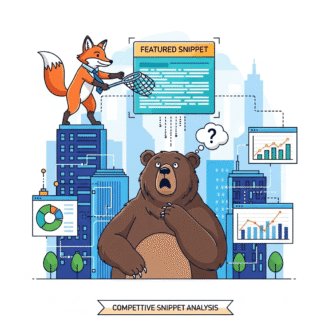
The moment you capture a snippet, you paint a target on your back. Competitors reverse-engineer your content structure, improve on your answer, and optimize specifically to steal your position zero.
Snippet position defense battles aren’t fought once—they’re continuous warfare. Your static content competes against fresh updates, expanded answers, and better formatting from competitors who know exactly what they need to beat.
Google’s algorithm also raises quality bars over time. A snippet that performed well six months ago might fall below current standards without updates, even if no competitors challenge it directly.
How to Monitor Featured Snippet Holdings Effectively?
Daily Position Tracking
Set up automated rank tracking specifically for queries where you hold snippets. Tools like SEMrush or Ahrefs can alert you immediately when snippet positions change.
Monitor both desktop and mobile snippet holdings separately. According to BrightEdge, mobile and desktop snippets differ 23% of the time in competitive niches.
Track not just your snippets but also queries where you rank top 10 without the snippet. These represent immediate threats—if competitors optimize and capture snippets, they’ll leapfrog your organic position.
Competitor Surveillance
Identify the 5-10 sites most likely to challenge your snippets based on domain authority and content overlap. Set up alerts when they publish new content or update existing pages targeting your snippet keywords.
Use tools like Visualping or ChangeTower to monitor specific competitor pages that rank near your snippet-holding content. When they update, you’ll know within 24 hours.
Analyze competitor snippet captures in your niche even if they don’t directly challenge your holdings. Their successful tactics reveal what Google currently rewards.
What Content Updates Protect Featured Snippet Positions?
Quarterly Refresh Cadence
Retaining position zero demands regular content refreshes minimum every 90 days. Update statistics, refresh examples, and revise outdated information even when core advice remains valid.
Add a “Last Updated” date prominently at the top of snippet-holding pages. This signals freshness to both users and Google’s crawlers.
According to SEMrush’s content decay analysis, pages updated quarterly retain featured snippets 3.2x longer than pages left untouched for 12+ months.
Strategic Enhancement Updates
Don’t just refresh dates—actually improve your answers. Add new subsections addressing related questions that didn’t exist when you originally published.
Expand list snippets from 6 items to 8 items if you can add legitimate value. Enhance table snippets with additional comparison columns. Deepen paragraph snippets with extra clarifying sentences.
Monitor “People Also Ask” boxes related to your snippet queries. When new related questions appear, integrate those answers into your content to capture additional snippet opportunities.
How Do User Engagement Signals Impact Snippet Retention?
Google tracks user behavior after snippet exposure. High bounce rates, low time-on-page, or immediate return-to-SERP signals indicate your snippet answer didn’t satisfy user intent.
Featured snippet retention correlates strongly with engagement metrics. If users consistently find your snippet helpful, Google maintains your position zero even when competitors optimize similarly.
Improve engagement by ensuring your snippet answer leads naturally into expanded content below. Users who click through should find immediate additional value, not repetition of the snippet text.
Click-Through Rate Optimization
Test different page titles and meta descriptions for snippet-holding pages. Higher CTR from non-snippet queries signals content quality that supports retention.
Add compelling calls-to-action within the first screen of content after your snippet text. Encourage scrolling, clicking internal links, or engaging with interactive elements.
Monitor Search Console CTR data for snippet queries. Declining CTR often precedes snippet loss by 2-4 weeks, giving you warning time to optimize.
What Formatting Changes Strengthen Snippet Defense?
Mobile-First Snippet Optimization
With 59% of searches happening on mobile, your snippet must render perfectly on small screens. Test on actual devices monthly.
Simplify table snippets to 2-3 columns maximum. Break long list items into shorter, mobile-friendly phrases. Ensure paragraph snippets don’t exceed 3 lines on mobile displays.
Google increasingly prioritizes mobile snippet quality over desktop. A snippet that breaks on mobile won’t survive long regardless of desktop performance.
Schema Markup Maintenance
Keep your structured data current with Google’s evolving specifications. Deprecated schema properties or outdated markup formats signal technical neglect.
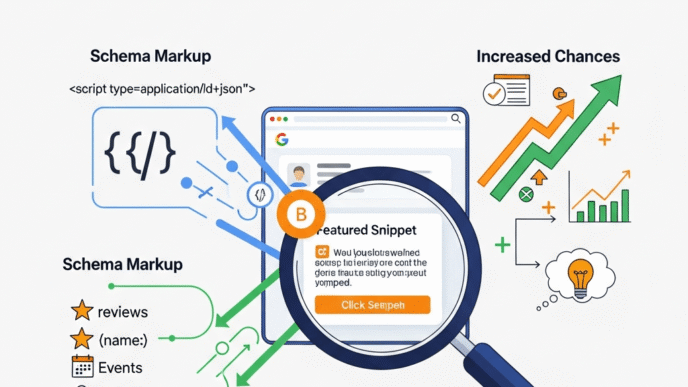
Add FAQPage, HowTo, or relevant schema types to snippet-holding content. While schema doesn’t guarantee snippets, it signals content organization that Google rewards with better retention.
Validate schema markup quarterly using Google’s Rich Results Test. Fix any errors or warnings immediately—these technical issues compound over time and weaken snippet positions.
How to Defend Against Competitor Snippet Theft?
Content Superiority Maintenance
Your snippet answer should be noticeably better than competitors’, not just formatted better. Depth, accuracy, and recency all factor into protecting snippet rankings.
When competitors update their competing content, review their changes and enhance your own answer to maintain superiority. Match their improvements plus add something they missed.
Build comprehensive content around your snippet answers. Google favors snippets from pages that thoroughly cover topics over pages with isolated perfect answers in thin content.
Strategic Internal Linking
Strengthen snippet-holding pages with internal links from high-authority pages on your site. This signals importance and distributes page authority specifically to your snippet content.
Create content clusters around your snippet topics, linking related pages to your snippet-holders. This topical authority boost helps maintain position zero against challenger sites.
Link to your featured snippet guide from snippet-holding pages to create authority networks that reinforce your snippet positions.
What Role Does Content Depth Play in Snippet Longevity?
Comprehensive content retains snippets longer than thin content with perfect formatting. Google’s algorithm increasingly rewards pages that serve as definitive resources.
Maintaining featured snippets requires balancing concise snippet answers with thorough content depth. Your 50-word snippet should be extracted from a 2,000+ word comprehensive guide, not a 300-word thin post.
According to Backlinko’s content length study, pages holding featured snippets average 1,890 words. This depth signals expertise and comprehensive coverage that Google trusts long-term.
Building Content Authority
Cite authoritative sources throughout your content, not just in the snippet section. Demonstrated research and sourcing signals quality that strengthens retention.
Include expert quotes, case studies, or data from recognized industry sources. This E-E-A-T signal helps Google trust your snippet answers as authoritative.
Update citations and sources regularly. Broken links, outdated studies, or defunct sources signal content decay that threatens snippet holdings.
How Do Algorithm Updates Affect Snippet Retention?
Major algorithm updates often shuffle snippet assignments as Google recalibrates quality thresholds and relevance signals. Your snippets face re-evaluation during these periods.
Monitor Google Search Central updates and SEO industry news for announced algorithm changes. Proactively audit snippet-holding content around update rollouts.
Snippet position defense during algorithm updates requires rapid response. The first site to optimize for new ranking factors often captures disputed snippets from competitors caught flat-footed.
Core Update Preparation
Audit snippet-holding pages for E-E-A-T signals before major core updates. Add author bios, expertise credentials, and source citations to strengthen authority signals.
Review content accuracy and factual correctness. Algorithm updates increasingly punish even minor inaccuracies that previously went unnoticed.
Test page speed and Core Web Vitals monthly. While not direct snippet factors, poor technical performance can trigger broader ranking drops that include snippet losses.
Real-World Featured Snippet Retention Examples
A health and fitness site maintained the “how to do a plank” snippet for 18 months by updating the content six times with new video embeds, form correction tips, and progression variations. Each update added value without changing the core snippet answer.
An e-commerce blog held “what is dropshipping” for two years by expanding from 1,200 to 3,500 words, adding comparison tables for dropshipping platforms, and refreshing statistics quarterly. The original snippet text remained unchanged.
A local services site protected “how to unclog a toilet” by systematically addressing every related question in PAA boxes, creating a comprehensive resource that dominated both the snippet and surrounding real estate.
What Metrics Indicate Snippet Position Risk?
Early Warning Signals
Declining impressions for snippet queries in Search Console often precede actual snippet loss by 2-3 weeks. Google may be testing alternative snippets or reducing snippet display frequency.
Position instability in organic rankings below the snippet signals vulnerability. If your position 1 ranking drops to 3-4, your snippet becomes easier for competitors to challenge.
Increasing competition in “People Also Ask” sections related to your snippet queries indicates growing competitor attention to your topic area.
Critical Risk Thresholds
CTR below 5% for snippet queries suggests user dissatisfaction with your answer. Google notices and begins testing alternatives.
Bounce rates above 70% from snippet traffic indicate answer-content mismatch. Users finding your snippet helpful should engage with deeper content, not immediately leave.
Time-on-page under 45 seconds for snippet-sourced traffic signals thin value beyond the snippet itself. Enhance content depth to improve this metric.
How to Recover Lost Featured Snippets Quickly?
Immediate Response Protocol
Analyze the new snippet holder’s content within 24 hours of losing position zero. Identify what they improved—formatting, depth, recency, or answer quality.
Update your content immediately to match their improvements plus add distinctive value they lack. Speed matters—the faster you respond, the faster Google may reassess.
According to Moz’s snippet recapture research, 67% of lost snippets can be recovered within 30 days if comprehensive updates occur within the first week.
Enhanced Content Strategy
Don’t just match the new snippet holder—significantly exceed their content quality. Add unique data, original research, or expert insights they can’t easily replicate.
Expand your answer format if possible. If they captured the snippet with a paragraph, consider whether a combination of paragraph plus list or table provides superior value.
Build supporting content that links to your snippet-candidate page. Fresh internal links signal active development and topical authority to Google’s algorithm.
Comparison Table: Snippet Retention Strategies
| Strategy | Update Frequency | Effort Level | Retention Impact |
|---|---|---|---|
| Content Refresh | Quarterly | Medium | High (3.2x retention) |
| Competitor Monitoring | Weekly | Low | Medium (early warning) |
| Engagement Optimization | Ongoing | High | High (sustained quality) |
| Schema Maintenance | Quarterly | Low | Medium (technical signal) |
| Internal Linking | Monthly | Medium | Medium (authority boost) |
What Advanced Tactics Protect High-Value Snippets?
Multi-Format Snippet Coverage
Create multiple content assets targeting the same query from different angles. If you lose the primary snippet, a secondary page might capture it instead of a competitor.
Build FAQ schema sections that generate additional snippet opportunities around your main snippet topic. Dominating position zero plus multiple PAA boxes creates defensive moats.
Develop video content that can win video snippets for the same queries where you hold text snippets. Multi-format dominance makes competitor displacement exponentially harder.
Competitive Content Saturation
Publish comprehensive content on every related sub-topic around your main snippet query. This topical saturation strategy claims search real estate competitors need to build authority.
Answer every “People Also Ask” question related to your snippet queries with dedicated, optimized content. Control the entire question-answer ecosystem around your core topics.
Build glossary pages defining every term related to your snippet topics. These authority signals reinforce your site’s expertise in Google’s topic modeling.
How Does Snippet Position Affect Overall SEO Strategy?
Keeping snippet position generates authority signals that lift all rankings across related queries. Snippet holders often see broader traffic increases beyond the specific snippet query.
Featured snippet ownership builds brand visibility and trust that compounds over time. Users begin recognizing your domain as the authoritative source for your topic area.
According to HubSpot’s snippet impact study, maintaining 10+ featured snippets correlates with 23% higher overall organic traffic compared to sites with zero snippet holdings.
Strategic Snippet Prioritization
Not all snippets deserve equal retention effort. Prioritize high-traffic commercial intent queries over informational curiosity queries with minimal conversion potential.
Calculate snippet value: (query volume) × (CTR) × (conversion rate) × (average order value). Defend high-value snippets aggressively; let low-value snippets go if retention costs exceed benefits.
Focus retention efforts on snippets that generate qualified traffic rather than vanity metrics. A snippet driving 1,000 qualified visitors monthly beats one generating 10,000 unqualified visits.
What Role Does Content Freshness Play in Retention?
Freshness matters differently across topics. Time-sensitive queries (news, trends, current events) require frequent updates; evergreen topics need less frequent but still regular refreshing.
Google’s QDF (Query Deserves Freshness) algorithm identifies queries where recent information matters. Retaining position zero for these queries demands more aggressive update schedules.
Test update frequency by monitoring snippet stability. If snippets hold 12+ months without updates, you’re in an evergreen niche. If they churn every 4-6 weeks, freshness dominates your niche.
Content Dating Strategies
Display “Last Updated” dates prominently for snippet-holding content. Users and Google both use this signal to assess content currency.
Actually update content when you change dates—changing dates without real updates signals manipulation that can trigger manual review or algorithmic penalties.
Document what changed in each update for transparency. This builds user trust and provides content for social promotion when major updates occur.
Pro Tips from Featured Snippet Retention Experts
“Defending snippets requires weekly check-ins, not monthly reviews. The sites that keep snippets longest treat retention as an ongoing process, not a post-win celebration.” — Cyrus Shepard, Zyppy SEO
“Your snippet content should be so good that competitors can’t beat it by just reformatting. Quality always outlasts tactics in long-term snippet wars.” — Lily Ray, Amsive Digital
“Monitor snippet query variations obsessively. Losing one snippet often predicts losing related snippets unless you intervene.” — Kevin Indig, Growth Advisor
How to Scale Snippet Retention Across Hundreds of Snippets?
Systematic Monitoring Systems
Build spreadsheets or databases tracking all snippet holdings with columns for: query, page URL, capture date, last update, competitor threats, and priority level.
Automate weekly reports showing snippet position changes, impression trends, and CTR variations. Manual checking doesn’t scale beyond 20-30 snippets.
Use tools like DataStudio or Tableau to visualize snippet portfolio health. Quick visual dashboards reveal patterns and risks faster than spreadsheet analysis.
Team-Based Retention Workflows
Assign snippet ownership to specific team members for dedicated monitoring and maintenance. Distributed responsibility scales better than single-person bottlenecks.
Create update queues prioritized by risk level and value. High-priority snippets get weekly reviews; low-priority snippets get quarterly attention.
Document retention playbooks for each snippet type so any team member can execute updates following proven formulas.
What Tools Automate Featured Snippet Defense?
Rank Tracking Tools
SEMrush Position Tracking monitors snippet positions with daily updates and alerts for losses. Set up separate projects for snippet-focused tracking.
Ahrefs Rank Tracker flags snippet changes and shows historical position data. Use this to identify patterns in seasonal snippet volatility.
AccuRanker provides real-time snippet tracking with mobile vs. desktop differentiation. Critical for noticing subtle platform-specific losses.
Content Analysis Platforms
Clearscope or MarketMuse analyze competing content and suggest improvements to maintain topical authority that supports snippet retention.
Frase.io monitors SERP changes and alerts you when new content ranks near your snippets, providing early competitor warnings.
SurferSEO compares your snippet content against current top-rankers, highlighting areas where your content may be falling behind competitor updates.
How Do Seasonal Trends Affect Snippet Stability?
Queries with seasonal search volume see snippet turnover aligned with demand cycles. Holiday-related snippets change more frequently as searcher behavior shifts.
Plan snippet defense around seasonal peaks relevant to your niche. Update holiday content snippets 4-6 weeks before seasonal traffic spikes begin.
Track year-over-year snippet patterns to predict when competitive pressure increases. Historical data reveals when competitors typically optimize for seasonal opportunities.
Critical Mistakes That Lose Established Snippets
Neglecting mobile formatting: Letting table or list snippets break on mobile after a site redesign causes instant snippet loss when Google recrawls.
Over-optimization: Stuffing keywords or artificially manipulating snippet text to hit exact word counts triggers quality filters that strip snippets.
Ignoring content drift: Letting your snippet answer gradually become outdated while the rest of your page updates creates answer-content mismatches Google penalizes.
Format experimentation on live pages: Testing dramatic format changes on snippet-holding pages risks losing position zero. Test on separate pages first, then migrate successful formats.
Frequently Asked Questions
How long can featured snippets realistically be maintained?
Featured snippet longevity varies dramatically by niche competitiveness and update frequency. Evergreen topics with minimal competition can maintain snippets for 2+ years with quarterly updates. Competitive niches typically see 3-6 month retention before requiring significant refreshes. The longest documented snippet holdings exceed 4 years, but these are exceptional cases in low-competition niches with exceptional content quality.
What percentage of lost snippets can be recovered?
Research indicates 60-70% of lost snippets can be recaptured within 30 days if you respond quickly with comprehensive updates. Maintaining featured snippets is easier than initial capture, but recovery success depends on why you lost the snippet. Losing to better content requires significant enhancement, while losing to algorithm changes often recovers automatically after adapting to new signals.
Should I focus on quantity or quality of snippet holdings?
Quality trumps quantity for commercial purposes. Ten high-value snippets driving qualified traffic outperform 100 low-value informational snippets generating curiosity traffic. However, quantity builds topical authority signals that strengthen your site’s overall snippet eligibility. Optimal strategy: prioritize quality for commercial queries, scale quantity for topical authority building.
How do snippet positions interact with organic rankings?
Holding the featured snippet while ranking position 5-7 organically is common and often stable. Paradoxically, ranking position 1 doesn’t guarantee snippet ownership. However, dropping below position 10 almost always results in snippet loss. Maintaining top-3 organic rankings provides the best snippet defense foundation, but isn’t absolutely required for retention.
Do featured snippets decline in importance with AI Overviews?
Traditional snippets and AI Overviews currently coexist with different trigger patterns. AI Overviews dominate informational queries while traditional snippets still appear for commercial and transactional queries. Protecting snippet rankings remains valuable as AI Overviews cite similar high-quality, structured sources that win traditional snippets. Optimizing for both simultaneously future-proofs your position zero strategy.
What’s the ROI of aggressive snippet retention efforts?
Depends entirely on snippet value. High-volume commercial queries justify significant retention investment—even dedicating hours weekly to defend a snippet driving $10K+ monthly revenue. Low-value snippets may not justify time beyond basic quarterly updates. Calculate per-snippet ROI using (traffic × conversion rate × customer value) – (retention costs) to guide resource allocation decisions.
Final Thoughts
Capturing featured snippets feels like a victory, but maintaining them reveals who actually understands position zero dynamics. The difference between temporary wins and long-term ownership comes down to systematic defense, not luck.
Maintaining featured snippets requires treating position zero as ongoing campaigns rather than completed projects. Weekly monitoring, quarterly updates, and rapid competitor response separate sustainable snippet portfolios from flash-in-the-pan wins.
The competitive landscape only intensifies as more sites discover snippet opportunities. Your advantage lies in building retention systems that scale across dozens or hundreds of snippets while competitors still celebrate individual captures.
Start by auditing your current snippet holdings today. Which ones face the highest competitive threat? Which drive the most valuable traffic? Prioritize accordingly and build your defense strategy around protection, not panic.
The sites dominating position zero in 2025 and beyond won’t be those that capture the most snippets—they’ll be those that keep them longest through disciplined, systematic retention strategies.