

Table of Contents
ToggleIntroduction: The New Frontier of Search Visibility
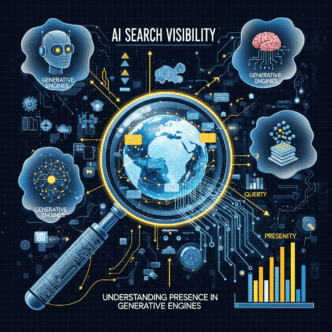
The landscape of search is undergoing its most dramatic transformation since Google’s inception. As artificial intelligence reshapes how people discover information, a staggering 58% of internet users now regularly interact with AI-powered search platforms like ChatGPT, Perplexity, Google’s AI Overviews, and Microsoft’s Bing Copilot. This seismic shift isn’t just changing user behavior—it’s fundamentally rewriting the rules of digital visibility.
Traditional search engine optimization focused on ranking in position one through ten on search engine results pages. But in the age of generative AI, the game has changed entirely. When ChatGPT synthesizes an answer from multiple sources, or when Perplexity curates a response with inline citations, your brand’s visibility isn’t measured by ranking position—it’s measured by whether you’re cited at all, how prominently you’re featured, and how often AI engines consider you an authoritative source.
The stakes couldn’t be higher. Brands that appear consistently in AI-generated responses capture mindshare at the precise moment of information discovery. Those that don’t risk becoming invisible to an entire generation of searchers who may never click through to traditional search results. According to recent industry research, over 40% of queries on AI search platforms result in zero clicks to external websites—the information is consumed entirely within the AI interface.
This fundamental shift from click-based metrics to impression and citation-based performance requires entirely new approaches to measurement and optimization. The familiar comfort of Google Analytics dashboards, Search Console rankings, and click-through rates must now be supplemented—and in some cases replaced—by tracking citation frequency, impression share across AI platforms, source attribution quality, and your competitive position in generative responses.
In this comprehensive guide, you’ll discover everything you need to build a sophisticated AI search visibility tracking system. We’ll explore the essential metrics that matter in generative search engines, evaluate the leading tools and platforms for measurement, walk through building custom dashboards that provide actionable insights, and establish proven frameworks for tracking your performance over time. Whether you’re optimizing for ChatGPT, Perplexity, Google AI Overviews, Bing Copilot, or emerging platforms like Claude and Gemini, you’ll gain the knowledge to measure what matters and improve your visibility where your audience is actually searching.
The future of search visibility is being written right now. Those who master measurement will master the market.
Understanding AI Search Visibility: Core Concepts
What is Generative Engine Optimization (GEO)?
Generative Engine Optimization represents the evolution of search optimization for the AI era. While traditional SEO focuses on improving rankings in search engine results pages, GEO concentrates on optimizing content to be discovered, cited, and attributed by large language models and AI-powered search platforms.
The fundamental difference lies in how information is processed and presented. Traditional search engines crawl web pages, index content, and display ranked lists of links based on relevance signals. AI search engines go several steps further—they understand queries contextually, synthesize information from multiple sources, generate original responses, and attribute information to source materials through citations and links.
When Perplexity answers a user’s question about “best practices for remote team management,” it doesn’t just link to the top ten articles. Instead, it comprehends the query’s intent, extracts relevant information from authoritative sources, synthesizes a coherent answer, and provides citations to the original content. Your goal with GEO is to ensure your content is among those cited sources, positioned prominently, and recognized for its authority on relevant topics.
Source credibility plays an exponentially more important role in GEO than in traditional SEO. AI platforms evaluate expertise, authoritativeness, and trustworthiness (E-A-T) more rigorously because they’re synthesizing information on behalf of users. A citation from your content effectively transfers your authority to the AI’s response, making platform algorithms particularly selective about which sources they reference.
Key Differences Between Traditional Search & AI Search Tracking
The metrics that defined SEO success for two decades are rapidly becoming insufficient for understanding digital visibility. Understanding these distinctions is critical for building effective measurement strategies.
Ranking Positions vs. Citation Frequency
Traditional SEO obsesses over ranking positions. Being in position three versus position five can mean significant traffic differences. In AI search, position is replaced by citation frequency—how often AI platforms reference your content across various queries. A single piece of content might be cited in responses to dozens or hundreds of related queries, making breadth of citation more valuable than any single ranking position.
Click-Through Rates vs. Impression Share
Click-through rate measures what percentage of people who see your listing actually click it. In AI search, impression share becomes paramount—what percentage of relevant AI-generated responses include your content? If 1,000 users ask questions about your topic area and your brand appears in 300 responses, you have a 30% impression share. This metric reveals your share of voice in AI platforms, independent of whether users click through.
SERP Features vs. AI Answer Placement
Traditional SEO celebrates winning featured snippets, knowledge panels, or position zero. GEO tracks where within AI responses your content appears. Are you the primary source cited first, providing the foundational information? Are you a supporting source that validates or expands the main answer? Or are you mentioned as an alternative perspective? Placement within the AI-generated narrative directly impacts your perceived authority.
Backlinks vs. Source Attribution
Backlinks have been SEO’s currency for decades—external sites linking to your content signal authority to search engines. In AI search, source attribution serves a similar but more direct function. When AI platforms attribute information to your content through citations, they’re explicitly validating your authority to their users in real-time. This direct attribution can build brand awareness and trust more effectively than backlinks buried in webpage code.
Why Traditional Analytics Fall Short
Google Analytics, the cornerstone of digital marketing measurement for nearly two decades, wasn’t built for a world where AI intermediates the search experience. Its limitations become apparent when tracking AI-driven visibility.
The Black Box Problem
When users find your content through ChatGPT or Perplexity citations, traditional analytics often shows these visits as direct traffic or referral traffic with minimal context. You can see someone arrived from “chatgpt.com” but not which query prompted the citation, what the AI’s full response contained, whether you were the primary or secondary source, or how many times you were cited without receiving a click.
The “Dark Social” Effect Amplified
Dark social—sharing that happens outside publicly trackable channels—has always challenged marketers. AI search amplifies this exponentially. When an AI platform cites your content, thousands or millions of users consume that information without ever visiting your site. They learn from your expertise, develop opinions based on your insights, and may even become customers—but none of this awareness appears in your analytics dashboards.
Attribution Complexity
Traditional attribution models trace customer journeys from first touch through conversion across channels like paid search, social media, and email. But how do you attribute a conversion when someone’s first introduction to your brand was reading an AI-generated answer that cited your research? Most analytics platforms can’t connect these dots, leading to systematic undervaluation of AI search visibility investments.
Missing Context and Quality Signals
Even when you identify AI search referral traffic, standard analytics can’t tell you the quality of the citation context. Were you cited positively or critically? Was your information presented as authoritative or merely one of many opinions? Did the AI quote you accurately or potentially misrepresent your content? These qualitative dimensions profoundly impact brand perception but remain invisible in conventional analytics.
This measurement gap creates a critical blind spot for marketers. You might be dominating AI search visibility while your traditional analytics suggest stagnant performance, or you might be losing ground in generative platforms while legacy metrics look healthy. Understanding these limitations is the first step toward building more comprehensive AI search visibility tracking systems.
| Traditional SEO Metrics | AI Search Metrics | Why It Matters |
|---|---|---|
| Keyword rankings (1-100) | Citation frequency across queries | Shows breadth of visibility, not just single query performance |
| Click-through rate | Impression share percentage | Reveals visibility even without clicks |
| Backlink count | Source attribution quality | Measures direct authority transfer to users |
| Domain authority score | Entity recognition score | Shows how AI understands your brand |
| SERP features won | Citation positioning | Indicates prominence in AI narratives |
| Organic traffic volume | Cross-platform visibility | Accounts for multi-platform discovery |
Understanding these fundamental differences prepares you for the sophisticated measurement approaches we’ll explore throughout this guide. The transition from traditional to AI search tracking isn’t about abandoning proven metrics—it’s about augmenting them with new measurements that capture the full picture of your digital visibility in an AI-mediated world.
Essential Metrics & KPIs for AI Search Performance
Building an effective AI search visibility tracking system requires understanding which metrics genuinely indicate performance and which are vanity numbers. The following framework organizes essential KPIs into four categories that together provide comprehensive visibility measurement.
Citation Metrics: Your Visibility Foundation
Citation metrics form the bedrock of AI search visibility tracking. Unlike traditional rankings that place you at a specific position, citations reveal how frequently and prominently AI platforms reference your content.
Citation Frequency: Volume of Visibility
Citation frequency measures how many times AI platforms reference your content across all queries over a specific timeframe. Track this daily, weekly, and monthly to identify trends. A healthy citation frequency shows consistent growth as you publish more content and optimize existing assets. Calculate your citation frequency rate by dividing total citations by the number of trackable queries in your topic space.
For example, if you’re tracking 500 relevant queries about “content marketing strategy” and your brand receives 150 citations across those queries in a month, your citation frequency rate is 30%. Monitor this percentage over time rather than absolute numbers, as your query tracking universe will expand.
Citation Quality: Context and Authority
Not all citations carry equal weight. A citation as the primary source in a comprehensive answer about your core topic carries significantly more value than a passing mention in a tangential context. Evaluate citation quality across several dimensions:
Authoritative positioning – Are you cited as the definitive source or an alternative perspective? Primary source citations demonstrate stronger topical authority.
Context alignment – Does the AI cite you for content that aligns with your expertise and brand positioning? Off-topic citations may drive awareness but don’t build strategic authority.
Competitive context – Who else is cited alongside your content? Being grouped with recognized industry leaders enhances your authority by association, while citation alongside low-quality sources can diminish perception.
Accuracy and fairness – Does the AI represent your content accurately? Monitor for misattributions or quotes taken out of context that could damage brand reputation.
Develop a citation quality scoring rubric (1-5 scale) based on these factors to track quality trends over time, not just quantity.
Citation Positioning: Where You Appear
Within AI-generated responses, position matters tremendously. The first source cited typically receives the most attention and credibility. Track where your content appears:
- Primary citation (mentioned first or emphasized as main source): 5 points
- Secondary citation (supporting information): 3 points
- Tertiary citation (alternative perspective or minor detail): 1 point
Calculate a weighted citation score by multiplying citation count by position value. A brand with 50 primary citations (250 points) demonstrates stronger visibility than one with 100 tertiary citations (100 points).
Citation Diversity: Breadth of Topics
Citation diversity measures the range of topics and queries where AI platforms reference your content. Strong citation diversity indicates comprehensive topical authority rather than narrow expertise.
Track:
- Number of unique query topics generating citations
- Semantic variety of citing contexts
- Breadth across your content portfolio (not just one viral piece)
- Cross-category citations (showing multi-dimensional expertise)
Calculate a citation diversity index by dividing the number of unique topics generating citations by your total citation count. Higher scores indicate better distribution across your expertise areas rather than over-reliance on individual content pieces.
Impression Share Metrics: Your Competitive Position
Impression share metrics reveal your visibility relative to the total addressable market of AI searches in your space and compared to competitors.
AI Impression Share: Your Market Visibility
AI impression share represents the percentage of relevant queries where your brand appears in AI-generated responses. This metric directly parallels paid search impression share but applies to organic AI visibility.
Calculate by dividing the number of relevant queries where you appear by the total number of tracked queries in your category. If you’re tracking 1,000 queries about project management software and your brand appears in 340 responses, your AI impression share is 34%.
Track impression share across:
- Category-level (broad topic areas like “project management”)
- Feature-level (specific capabilities like “gantt chart tools”)
- Comparison-level (direct competitive queries like “Asana vs Monday”)
- Problem-level (user pain points like “how to track remote team tasks”)
Segment impression share by platform (ChatGPT, Perplexity, Google AI Overviews) to identify platform-specific opportunities.
Share of Voice: Competitive Visibility
Share of voice measures your citation volume relative to competitors within AI responses. When AI platforms generate answers that cite multiple sources, your share of voice indicates your prominence relative to alternatives.
Calculate competitive share of voice by:
- Identifying your top 5-10 direct competitors
- Tracking total citations received by all competitors combined
- Dividing your citations by total competitive citations
If five brands in your space receive 100, 85, 70, 65, and 60 citations respectively in a given month (380 total), and you received 100, your share of voice is 26.3%. Lead position indicates strong competitive visibility.
Monitor share of voice trends monthly. Increasing share of voice signals effective optimization and growing authority, while declining share suggests competitors are outpacing your efforts.
Response Placement: Position Within Multi-Source Answers
AI platforms often synthesize information from multiple sources within single responses. Your placement within these multi-source answers impacts visibility and perceived authority.
Track your average placement across citations:
- Mentioned in opening sentences (positions 1-2)
- Featured in main body (positions 3-5)
- Included in closing or alternative perspectives (positions 6+)
Calculate average response placement score across all citations monthly. Improving (lower) scores indicate strengthening authority and relevance signals to AI platforms.
Platform-Specific Impressions: Diversification Strategy
Different AI platforms serve different user demographics and use cases. ChatGPT tends toward general knowledge and creative applications, Perplexity attracts research-oriented users, Google AI Overviews integrate with traditional search, and Bing Copilot serves enterprise and productivity contexts.
Track impression share separately for each major platform:
- ChatGPT/OpenAI visibility score
- Perplexity citation frequency
- Google AI Overview appearance rate
- Bing Copilot attribution count
- Claude, Gemini, and emerging platform tracking
Compare platform-specific performance to identify optimization opportunities. Strong performance on one platform with weak visibility on others suggests content formats or structures that favor specific AI architectures.
Engagement & Interaction Metrics: Beyond Visibility
While citations demonstrate visibility, engagement metrics reveal how users interact with your content after AI platforms surface it.
Follow-Up Question Rate: Content Depth Indicator
When AI platforms cite your content, sophisticated users often ask follow-up questions to go deeper on specific aspects. Track how often your citations prompt follow-up questions compared to competitors. Higher follow-up rates suggest your content addresses topics thoroughly enough to spark deeper inquiry—a positive engagement signal.
While difficult to track directly without platform APIs, proxy measurements include:
- Scroll depth when users click through from citations
- Time on page from AI referral traffic
- Pages per session from AI sources
- Return visitor rate from AI platforms
Source Click-Through Rate: Earning the Click
Despite many AI searches resulting in zero clicks, users still click through to original sources when seeking comprehensive details, visual content, interactive tools, or transaction opportunities. Calculate your source click-through rate by dividing confirmed click-throughs by total citations.
Benchmark your click-through rate against industry standards:
- 2-5% CTR: Below average, content may not differentiate beyond AI summaries
- 5-10% CTR: Average performance, reasonable conversion of visibility to traffic
- 10-15% CTR: Strong performance, compelling reasons to visit beyond AI answers
- 15%+ CTR: Exceptional performance, unique value propositions beyond information
Optimize for clicks by including:
- Detailed how-to content requiring visual elements
- Interactive calculators and tools
- Comprehensive data sets and original research
- Downloadable templates and resources
- Product comparisons with pricing details
Content Depth Score: Comprehensive Coverage
Content depth score measures how thoroughly AI platforms utilize your content when generating responses. Shallow citations might reference only a single statistic or quote, while deep citations weave multiple elements from your content throughout AI responses.
Evaluate depth through:
- Number of distinct facts/quotes cited from single content pieces
- Multiple paragraphs referenced from one article
- Repeated citations to same source within single responses
- Cross-referencing multiple related content pieces from your domain
Higher depth scores indicate AI platforms recognize your content as comprehensive and authoritative resources worth mining extensively.
Conversation Duration: Sustained Engagement
In conversational AI platforms, users don’t just search—they engage in multi-turn dialogues. Track whether your cited content contributes to extended conversations versus one-off queries.
Longer conversation threads where your content remains relevant suggest you’re addressing complex topics that require sustained exploration. This positions your brand as a resource for sophisticated users and decision-makers rather than casual browsers.
Brand Authority Metrics: Long-Term Position
Beyond individual content citations, track how AI platforms understand and position your brand overall.
Entity Recognition Score: AI Understanding
Entity recognition measures how well AI platforms understand your brand as a distinct entity with specific attributes, expertise areas, and relationships. Strong entity recognition means AI platforms can:
- Correctly identify your brand when mentioned
- Associate you with relevant topic areas
- Distinguish you from competitors
- Understand your products, services, and key offerings
Improve entity recognition through:
- Consistent schema markup (Organization, WebSite, Product)
- Wikipedia presence and regular updates
- Comprehensive “About” pages with detailed descriptions
- Industry directory listings and association memberships
- Regular press mentions and media coverage
Expertise Attribution: Authoritative Source Status
Expertise attribution tracks whether AI platforms cite you specifically as an authoritative source or expert voice versus generic content provider. Look for phrasing like:
- “According to [Your Brand], a leading authority in [topic]…”
- “Experts at [Your Company] recommend…”
- “[Your Brand]’s research shows…”
This explicit authority attribution builds trust more effectively than generic citations. Track the percentage of citations that include explicit expertise markers monthly.
Topical Authority Coverage: Expertise Breadth
Topical authority coverage measures how many related subtopics within your broader expertise area generate citations. Comprehensive topical authority means AI platforms recognize you across the full spectrum of relevant queries.
Map your topic universe through keyword clustering and track what percentage of topic clusters generate regular citations. A SaaS company might have clusters around:
- Product features and capabilities (12 subtopics)
- Use cases and industries (18 subtopics)
- Implementation and onboarding (8 subtopics)
- Integration and technical specs (15 subtopics)
- Pricing and packaging (6 subtopics)
Calculate topical coverage by dividing subtopics with regular citations by total relevant subtopics. Expanding coverage indicates growing comprehensive authority.
Sentiment in Citations: Brand Perception
Not all citations reflect positively on your brand. Monitor the sentiment and context in which AI platforms reference your content:
- Positive framing (recommendations, endorsements, best practices)
- Neutral citations (factual information, data points)
- Critical mentions (limitations, alternatives, concerns)
- Comparative context (advantages and disadvantages versus competitors)
Analyze citation sentiment quarterly using manual review or sentiment analysis tools. Track sentiment distribution and identify content pieces generating negative citations for optimization or removal.
Essential Metrics Dashboard Priority Matrix
| Priority Level | Metrics to Track Immediately | Measurement Frequency | Why It Matters |
|---|---|---|---|
| Critical (Week 1) | Citation frequency, AI impression share, platform-specific visibility | Daily aggregated weekly | Core visibility indicators show if you’re present |
| High (Month 1) | Citation quality score, share of voice, response placement | Weekly aggregated monthly | Competitive position and quality context |
| Medium (Month 2) | Source CTR, citation diversity, topical coverage | Bi-weekly aggregated monthly | Engagement depth and authority breadth |
| Advanced (Month 3+) | Entity recognition, sentiment analysis, conversation duration | Monthly aggregated quarterly | Long-term brand positioning and perception |
This comprehensive metrics framework provides the foundation for meaningful AI search visibility tracking. Start with critical metrics to establish baseline visibility, then progressively add more sophisticated measurements as your tracking infrastructure matures. The key is consistent measurement over time—trends matter more than individual snapshots in the rapidly evolving AI search landscape.
AI Search Visibility Tracking Tools: Comprehensive Guide
Measuring AI search visibility requires specialized tools that can monitor citations, track impressions across platforms, and provide meaningful analytics. The tooling landscape is rapidly evolving, with established SEO platforms adding AI search capabilities alongside emerging specialized solutions.
Specialized AI Search Tracking Platforms
Authoritas AI Overviews
Authoritas has positioned itself as an early leader in AI search visibility tracking with dedicated features for monitoring Google’s AI Overviews (formerly Search Generative Experience). The platform provides comprehensive tracking of when and how your content appears in AI-generated search results.
Core capabilities include:
- Daily monitoring of AI Overview appearances across your target keywords
- Citation frequency tracking with historical trending
- Competitive comparison showing share of AI visibility
- Content analysis identifying which pages earn AI citations
- Integration with traditional SEO metrics for holistic visibility measurement
Pricing and fit: Enterprise-level pricing (typically $1,000-$5,000+ monthly depending on keyword volume). Best suited for mid-to-large organizations with substantial SEO budgets focused on Google’s ecosystem. The platform excels for brands already invested in traditional SEO wanting to extend measurement into AI Overviews without managing multiple tools.
Implementation considerations: Requires keyword list setup similar to traditional rank tracking. Data becomes more valuable over time as historical trends develop. Works best when integrated with existing SEO workflows rather than as standalone solution.
BrightEdge Autopilot for AI
BrightEdge has incorporated AI search tracking into their enterprise SEO platform through Autopilot features. The platform emphasizes AI-driven recommendations alongside visibility measurement.
Key features:
- AI Overview appearance tracking across Google searches
- Content optimization recommendations based on AI citation patterns
- Automated alerts when competitors gain AI visibility you lack
- Topic clustering analysis showing AI citation coverage
- Integration with content management workflows
Pricing and positioning: Enterprise platform with pricing in the $10,000-$50,000+ annual range. Targets large organizations with complex SEO programs spanning multiple sites, brands, or international markets. Particularly strong for companies wanting AI search tracking integrated within comprehensive SEO governance platforms.
Best use cases: Large e-commerce sites, multi-brand portfolios, enterprise organizations with dedicated SEO teams, and agencies managing multiple client accounts benefit most from BrightEdge’s scale and automation capabilities.
GEO Metrics Tools and Emerging Specialized Solutions
Several specialized startups are building dedicated Generative Engine Optimization tracking platforms focused exclusively on AI search visibility without the broader SEO platform overhead.
Emerging platforms to watch:
- GEOmetrics.ai – Citation tracking across ChatGPT, Perplexity, and Claude
- AISearchRank – Multi-platform visibility scoring and competitive benchmarking
- CitationTracker – Specialized Perplexity and ChatGPT monitoring
- SourceWatch – Entity recognition and attribution quality analysis
Advantages: Purpose-built for GEO without legacy SEO feature bloat. Often more agile with updates as AI platforms evolve. Typically more affordable for smaller organizations ($99-$499 monthly). Focused feature sets can provide deeper insights into specific AI search aspects.
Considerations: Less mature with shorter track records. May lack integration with existing marketing technology stacks. Vendor stability and longevity uncertain in rapidly consolidating market. Data historical depth limited compared to established platforms.
Enterprise SEO Platforms with AI Tracking
Semrush AI Overview Tracking
Semrush has integrated AI search visibility tracking within their established SEO platform, allowing users to monitor Google AI Overviews alongside traditional ranking data.
Implementation approach:
- Extends existing keyword tracking to include AI Overview appearances
- Shows which keywords trigger AI Overviews and whether you’re cited
- Provides AI Overview feature analysis (charts, tables, videos present)
- Compares your AI visibility versus traditional ranking visibility
Pricing model: Available on Business plan ($449.95/month) and Enterprise custom pricing. Most cost-effective for organizations already using Semrush for traditional SEO who want to add AI tracking without additional platform costs.
Integration benefits: Seamlessly combines with Semrush’s keyword research, content optimization, and competitor analysis features. Single platform eliminates data silos between traditional and AI search tracking.
Current limitations: Primary focus on Google AI Overviews with limited coverage of ChatGPT, Perplexity, and other platforms. AI tracking features are newer and less mature than core SEO capabilities.
Ahrefs AI Search Features (Upcoming)
Ahrefs, known for its comprehensive backlink analysis and traditional SEO tooling, is developing AI search visibility tracking capabilities expected to launch throughout 2025.
Anticipated features based on public statements:
- Multi-platform AI search tracking beyond just Google
- Citation quality analysis leveraging their content analysis algorithms
- Competitive AI visibility comparison using their extensive database
- Integration with Site Explorer to show AI citation impact on traffic
Strategic positioning: Likely to differentiate through data quality and comprehensive cross-platform tracking. Ahrefs’ reputation for accurate data and large indexes should extend to AI search tracking.
Timeline: Gradual rollout expected with initial features in early 2025, expanding throughout the year. Worth monitoring for organizations already invested in Ahrefs ecosystem.
Moz AI Search Monitoring
Moz has introduced preliminary AI search tracking focused on Google AI Overviews as part of their broader SERP feature tracking capabilities.
Current capabilities:
- AI Overview appearance flags within rank tracking
- Historical data on AI Overview frequency for tracked keywords
- Domain-level analysis of AI Overview visibility
- Basic competitive comparison of AI appearance rates
Pricing accessibility: Available starting at Premium plan ($299/month), making it one of the more accessible enterprise platform options for AI tracking.
Practical considerations: AI features are currently foundational rather than comprehensive. Best suited for organizations wanting basic AI visibility awareness without deep analytics. Good starting point for smaller businesses entering AI search tracking before graduating to more specialized solutions.
AI-Native Analytics Solutions
Perplexity Analytics (Platform-Specific)
For publishers and content creators, Perplexity offers native analytics showing how your content performs within their platform specifically.
Available metrics:
- Times your content was cited in Perplexity responses
- Queries that generated citations to your content
- Click-through rates from citations to your site
- Geographic distribution of citations
- Time-based trending of citation volume
Access requirements: Content creators can claim their domains through Perplexity’s publisher program. Verification process similar to Google Search Console.
Limitations: Only covers Perplexity platform, not ChatGPT, Google AI Overviews, or other engines. Provides visibility into one piece of the puzzle requiring supplementation with other tracking methods.
Value proposition: Free, authoritative data directly from the platform. Essential for publishers prioritizing Perplexity visibility. Best used as one component of comprehensive multi-platform tracking strategy.
Custom ChatGPT Monitoring Tools
Several developers have created specialized tools for tracking ChatGPT citations using OpenAI’s API and systematic query testing.
Approaches include:
- Automated query running through ChatGPT API with citation extraction
- Natural language processing to identify source attributions
- Comparative analysis of citation frequency over time
- Competitive benchmarking against specified competitor domains
Examples:
- GPT-Tracker – Automated ChatGPT citation monitoring
- ChatCite Analytics – Citation frequency and quality scoring
- Custom Python scripts – DIY solutions using OpenAI API
Cost considerations: API-based solutions incur OpenAI usage costs based on query volume. Typically $0.002-0.004 per query. Running 1,000 automated queries monthly costs $2-4 in API fees plus tool subscription costs ($50-200/month for hosted solutions).
Technical requirements: API-based tracking requires technical implementation and ongoing maintenance. Best suited for organizations with development resources or comfort managing technical tools.
Custom Tracking Solutions
API-Based Monitoring Frameworks
For organizations with development resources, building custom AI search tracking using platform APIs provides maximum flexibility and customization.
Core components:
- Query database – Curated list of relevant queries to monitor systematically
- API integration – Connections to OpenAI, Anthropic (Claude), and other accessible platforms
- Response parsing – Natural language processing to extract citations and analyze content
- Data warehousing – Storage of historical response data for trending analysis
- Visualization layer – Dashboards displaying metrics and KPIs
Implementation pattern:
query_list = load_queries_from_database()
for query in query_list:
    response = openai_api.chat_completion(query)
    citations = extract_citations(response)
    store_results(query, citations, timestamp)
    analyze_sentiment(response, your_brand)
Advantages: Complete control over tracking methodology. No per-seat licensing costs beyond API usage. Ability to track proprietary metrics specific to your business. Integration with internal systems and workflows.
Challenges: Significant development and maintenance investment. Requires ongoing updates as platforms change APIs. Data quality depends on parsing accuracy and NLP sophistication. No out-of-box benchmarking against competitors or industry standards.
Web Scraping for Platforms Without APIs
For AI platforms that don’t provide official APIs (like Google AI Overviews), web scraping offers an alternative tracking approach.
Technical implementation:
- Automated browser tools (Selenium, Puppeteer, Playwright)
- Scheduled query execution mimicking human search behavior
- HTML parsing to extract AI-generated content and citations
- IP rotation and rate limiting to avoid detection and blocking
Legal and ethical considerations: Review platform terms of service before implementing scraping. Some platforms explicitly prohibit automated access. Use respectful scraping practices with reasonable rate limits. Consider data privacy implications of storing search results.
Reliability concerns: Platforms actively work to prevent automated access. Scrapers require constant maintenance as page structures change. Risk of IP blocks or access restrictions. Less reliable than official API access.
Manual Monitoring Protocols
For smaller organizations or those starting AI search tracking, systematic manual monitoring provides valuable insights without significant tool investments.
Structured manual approach:
- Query matrix – Spreadsheet of 50-100 priority queries across topic areas
- Weekly testing schedule – Dedicated time for systematically running queries
- Documentation template – Standardized format for recording results, citations, and positioning
- Rotation across platforms – Testing different platforms on scheduled rotation
- Trend analysis – Monthly comparison of results to identify changes
Time investment: Approximately 3-5 hours weekly for comprehensive manual monitoring of 50 queries across 3-4 platforms. More efficient when divided across team members focused on specific topic areas or platforms.
When manual makes sense: Early-stage businesses validating AI search importance before tool investments. Small content teams with limited budgets. Organizations in niche industries where automated tools lack relevant benchmarking data. Supplement to automated tracking for qualitative analysis and context.
Brand Mention Monitoring and Alerts
Complement specialized AI search tracking with broader brand monitoring tools that can capture AI platform citations.
Tools and approaches:
- Google Alerts – Set up alerts for “your brand + ChatGPT” or similar combinations
- Mention – Social listening platform that picks up AI platform discussions
- Brand24 – Monitors brand mentions across web including AI platform screenshots shared socially
- Talkwalker – Enterprise monitoring with AI platform coverage
- Custom Twitter/X monitoring – Track users sharing AI responses mentioning your brand
Supplementary value: Catches citations and mentions you might miss through direct platform tracking. Provides social proof of AI visibility through user-shared examples. Offers qualitative context about how people use and share AI citations of your content.
Supporting Tools & Technologies
Schema Markup Validators for AI-Readable Content
AI platforms rely heavily on structured data to understand content relationships and extract information efficiently. Validation tools ensure your schema implementation meets technical requirements.
Essential validation tools:
- Google’s Rich Results Test – Validates structured data implementation
- Schema.org Validator – Checks schema syntax and relationships
- Structured Data Linter – Debugging tool for JSON-LD implementation
- Merkle Schema Markup Generator – Creates compliant schema templates
Priority schema types for AI visibility:
- Article schema (for blog posts and news content)
- HowTo schema (for instructional content)
- FAQ schema (for question-answer content)
- Organization schema (for brand entity recognition)
- Product schema (for e-commerce visibility)
Entity Optimization Platforms
AI platforms understand content through entities—specific people, places, things, and concepts—and their relationships. Entity optimization tools help structure content for maximum AI comprehension.
InLinks: Capabilities: Automated entity extraction from content, internal linking suggestions based on entity relationships, schema markup generation based on detected entities, content gap analysis showing entity coverage opportunities.
Pricing: Starting at $59/month for basic features, professional plans $119-299/month. Affordable for small to medium businesses focusing on entity-based optimization.
Best use cases: Content-heavy websites, knowledge bases, publishers creating comprehensive topical resources, organizations building E-A-T signals for both traditional and AI search.
WordLift: Approach: Creates knowledge graphs from your content, connecting entities across pages and external sources. Generates extensive structured data automatically based on entity recognition.
Unique features: Knowledge graph visualization showing entity relationships, automatic entity tagging and categorization, integration with Wikipedia and Wikidata for entity enrichment, multilingual entity support.
Investment level: Starting around €99/month (\$108), scaling based on content volume and features. WordPress plugin available for streamlined implementation.
Content Analysis for AI Optimization
While not AI search trackers specifically, content intelligence platforms provide insights into creating content that performs well in AI citations.
Clearscope: Focus: Content optimization ensuring comprehensive topical coverage that AI platforms value. Identifies semantically related terms and concepts to include for thorough topic treatment.
AI relevance: Content scoring based on comprehensive coverage increases likelihood of AI citations. Related terms suggested by Clearscope often mirror entities and concepts AI platforms seek.
MarketMuse: Differentiator: Topic modeling and content planning based on topical authority. Helps build content clusters that establish comprehensive expertise AI platforms recognize.
Strategic value: Content inventory analysis identifies gaps in topical coverage limiting AI visibility. Content brief generation ensures new content meets comprehensiveness standards for AI citation.
Tool Selection Framework
Choosing the right AI search visibility tracking solution depends on multiple factors specific to your organization, budget, and goals.
Evaluation Criteria Matrix:
Budget considerations:
- <$500/month: Manual monitoring + free tools, single specialized GEO tool, or basic tier of established SEO platform with AI features
- $500-2,000/month: Mid-tier specialized GEO platform or professional tier of Semrush/Moz with AI tracking
- $2,000-5,000/month: Advanced specialized tracking or enterprise SEO platform with comprehensive AI features
- $5,000+/month: Multiple specialized tools plus enterprise platform, or custom-built solution with dedicated resources
Organizational size and resources:
- Small teams (1-5 people): Prioritize ease of use and actionable insights over comprehensive features. Single platform approach with clear documentation.
- Medium teams (6-20 people): Sufficient resources to manage multiple tools and integrate data. Value cross-functional capabilities serving SEO, content, and analytics teams.
- Large teams (20+ people): Need governance features, role-based access, and scalable solutions. Benefit from enterprise platforms with extensive feature sets.
Technical capabilities:
- Non-technical marketers: Avoid solutions requiring coding or API management. Prioritize user-friendly interfaces with clear visualization.
- Technically proficient teams: Can leverage API-based solutions, custom development, and advanced integrations for maximum flexibility.
- Development resources available: Custom solutions become viable, providing precisely tailored tracking and integration with internal systems.
Primary platform priorities:
- Google-focused: Semrush, Moz, or Authoritas provide strongest Google AI Overview tracking
- Multi-platform coverage: Emerging GEO-specific tools typically offer broader ChatGPT, Perplexity, Claude coverage
- Perplexity emphasis: Combine Perplexity’s native analytics with broader tracking tools
- ChatGPT priority: API-based custom solutions or specialized ChatGPT monitoring tools
Integration requirements: Evaluate how AI search tracking must integrate with existing technology:
- Marketing automation platforms (HubSpot, Marketo)
- CRM systems (Salesforce)
- Business intelligence tools (Tableau, Looker)
- Content management systems (WordPress, Contentful)
- Analytics platforms (Google Analytics, Adobe Analytics)
Native integrations save significant development time and ensure data flows seamlessly across systems for holistic measurement.
Scalability and future-proofing: The AI search landscape will evolve rapidly. Select solutions that demonstrate:
- Regular feature updates and platform additions
- Responsive customer support and feature requests
- Active development roadmap with clear vision
- Financial stability and long-term viability
- Flexibility to adapt as measurement needs evolve
Tool Comparison Matrix: Top AI Search Visibility Solutions
| Tool | Primary Focus | Pricing Range | Best For | Platform Coverage | Technical Requirements |
|---|---|---|---|---|---|
| Authoritas | Google AI Overviews | $$$$-$$$$$ | Enterprise SEO teams | Google-focused | Low |
| BrightEdge | Enterprise AI tracking | $$$$$+ | Large organizations | Google, expanding | Medium |
| Semrush | Integrated SEO + AI | $$$-$$$$ | Existing Semrush users | Google AI Overviews | Low |
| Moz | Accessible AI basics | $$-$$$ | SMBs starting AI tracking | Google AI Overviews | Low |
| GEOmetrics.ai | Dedicated GEO tracking | $$-$$$ | Multi-platform focus | ChatGPT, Perplexity, Claude | Low-Medium |
| Perplexity Analytics | Platform-specific | Free | Publishers, content creators | Perplexity only | Low |
| Custom API Solution | Fully customized | $ (API costs) + development | Technical teams | Flexible, API-dependent | High |
| Manual Monitoring | Bootstrap approach | $ (labor) | Budget-constrained, niche | All platforms manually | Low |
Pricing Key: $ = <$100/mo, $$ = $100-500/mo, $$$ = $500-2000/mo, $$$$ = $2000-5000/mo, $$$$$ = $5000+/mo
The right tool selection balances current needs with future scalability. Most organizations benefit from starting with accessible solutions, proving value through measurable improvements in AI visibility, then graduating to more sophisticated platforms as tracking becomes embedded in optimization workflows. Regardless of tools selected, consistent measurement over time delivers more value than perfect tools used inconsistently.
Building Custom AI Search Visibility Dashboards
Effective dashboards transform raw tracking data into actionable insights. While specialized tools provide valuable data, custom dashboards tailored to your organization’s specific needs, stakeholder requirements, and decision-making processes deliver maximum value from AI search visibility tracking efforts.
Dashboard Design Principles
Audience-Specific Views
Different stakeholders require fundamentally different information from AI search visibility data. A single dashboard rarely serves all audiences effectively.
C-Suite Executive Dashboard:
- High-level trend lines showing AI visibility growth
- Competitive position relative to key rivals
- Revenue or pipeline impact correlated with AI citations
- Strategic opportunities requiring investment decisions
- Monthly or quarterly views, not daily fluctuations
Marketing Leadership Dashboard:
- Platform-specific performance across channels
- Content performance and ROI on optimization efforts
- Share of voice trends and competitive movements
- Resource allocation insights (which content types, topics generate strongest returns)
- Campaign impact on AI visibility metrics
Content Team Operational Dashboard:
- Content piece-level performance and citation frequency
- Topic cluster gap analysis showing under-covered areas
- Specific optimization recommendations for existing content
- New content ideas based on high-opportunity queries
- Real-time or daily updates for tactical decision-making
Design principle: Create separate dashboard views for each primary audience rather than attempting a one-size-fits-all approach. Share underlying data sources but customize visualization and insights for decision context.
Progressive Disclosure and Hierarchical Information
Effective dashboards present information hierarchically, allowing users to drill from high-level summaries into detailed specifics without overwhelming initial views.
Structure:
- Executive summary (top level): 3-5 key metrics showing overall AI visibility health
- Category performance (second level): Breakdown by platform, content type, topic area
- Detailed analysis (third level): Individual content performance, specific query results, granular trends
- Raw data access (fourth level): Exportable detailed datasets for custom analysis
Interactive dashboards enable progressive disclosure through filters, drill-down capabilities, and linked views where clicking summary visualizations opens detailed breakdowns.
Visualization Best Practices for AI Metrics
AI search metrics differ from traditional analytics, requiring thoughtful visualization approaches.
Time-series trend lines: Essential for citation frequency, impression share, and share of voice. Show week-over-week and month-over-month comparisons to identify meaningful trends versus noise.
Stacked area charts: Illustrate platform-specific contribution to overall AI visibility. Shows whether growth comes from specific platforms or balanced expansion.
Competitive positioning matrices: Plot your brand and competitors on two-dimensional axes (e.g., citation frequency vs. citation quality) to visualize competitive position and movement over time.
Heat maps: Display content performance across topic areas and platforms simultaneously. Quickly identifies strong and weak spots in AI visibility coverage.
Gauge visualizations: Represent share of voice or impression share as percentage of maximum potential, helping stakeholders understand how much opportunity remains.
Avoid: Pie charts for time-series data, 3D visualizations that obscure values, excessive use of varied colors creating visual confusion, and dashboards requiring scrolling to see key metrics.
Real-Time vs. Historical Reporting
Balance immediacy with meaningful trend analysis based on use case.
Real-time appropriate for:
- Campaign launch impact monitoring
- Competitive moves requiring rapid response
- High-stakes product launches or announcements
- Crisis management and reputation monitoring
Historical analysis appropriate for:
- Strategic planning and resource allocation
- Content strategy development
- Quarterly business reviews
- Year-over-year performance assessment
Most organizations benefit from dashboards defaulting to meaningful time periods (last 30 days, quarter-to-date) with ability to access both real-time snapshots and historical trends through date range selectors.
Mobile Accessibility
AI search visibility data value isn’t confined to desk work. Mobile-optimized dashboards enable:
- Executive reviews during travel
- Quick performance checks between meetings
- Immediate visibility into alerts and significant changes
- Team updates and collaboration from any location
Design mobile views with:
- Simplified layouts focusing on most critical 3-5 metrics
- Larger tap targets for interactive elements
- Minimal scrolling requirements
- Fast load times even on cellular connections
Essential Dashboard Components
Primary Performance Overview Section
This dashboard section answers the fundamental question: “How is our AI search visibility performing overall?”
Key visualizations:
Citation Frequency Trends
- Line graph showing daily citations over rolling 90-day period
- Week-over-week and month-over-month percentage change indicators
- Moving averages (7-day, 30-day) to smooth daily volatility
- Annotations marking major content publishes or optimization initiatives
Impression Share Progress
- Current impression share percentage with target goal indicator
- Historical progression showing trend toward or away from goals
- Breakdown by query category showing strong and weak topic areas
- Competitive comparison showing relative movement
Competitive Visibility Comparison
- Your brand and top 5 competitors’ citation volumes
- Share of voice pie chart or stacked bar chart
- Competitive movement indicators (gaining/losing ground)
- New competitor emergence alerts
Content Performance Heat Map
- Grid showing content pieces (rows) vs. platforms (columns)
- Color intensity indicating citation frequency
- Quickly identifies top-performing content and platform gaps
- Interactive hover details showing specific metrics
This section typically occupies the top third of dashboard real estate, providing immediate situational awareness before users explore deeper analysis.
Platform-Specific Analysis Sections
Each major AI platform warrants dedicated dashboard space given unique characteristics and optimization approaches.
ChatGPT/OpenAI Visibility Panel:
- Citation frequency trends specific to ChatGPT
- Primary vs. secondary citation ratio
- Query topics generating strongest ChatGPT visibility
- Content characteristics of highly-cited pieces (length, format, depth)
- Comparison to other platforms showing relative strength
Perplexity Citation Tracking:
- Perplexity-specific citation volume and trends
- “Sources” panel appearance frequency (top-tier citation)
- Click-through rates from Perplexity citations to your site
- Query categories where Perplexity cites you most frequently
- Related questions generated by your content citations
Google AI Overviews Performance:
- AI Overview appearance rate across tracked keywords
- Traditional SERP ranking position correlation with AI citations
- AI Overview formats your content appears in (lists, tables, comparisons)
- Featured snippet relationship (do AI Overviews replace or supplement snippets?)
- Local vs. informational query performance differences
Bing Copilot Attribution:
- Copilot-specific citation metrics
- Edge browser vs. Bing search citation differences
- Microsoft 365 integration visibility (if applicable)
- Enterprise Copilot opportunities based on content performance
Claude, Gemini & Emerging Platform Tracking:
- Visibility across newer platforms with growing adoption
- Early trend identification for strategic positioning
- Content characteristic differences across platforms
Platform-specific sections enable optimization teams to identify which platforms require focused improvement efforts versus where current strategies succeed.
Content Analysis and Optimization Section
This section transforms visibility data into content strategy actions.
Top-Cited Content Inventory:
- Ranked list of your most frequently cited content pieces
- Citation frequency, quality score, and impression share by piece
- Content characteristics (word count, format, topic, publish date)
- Optimization opportunity scoring for update potential
Content Gap Analysis:
- Query topics with high search volume but low citation presence
- Competitor-cited topics where you lack competitive content
- Related entity and concept coverage gaps
- Priority scoring for new content development
Citation Context Analysis:
- How AI platforms use your content (primary source, supporting evidence, alternative perspective)
- Accuracy of AI citations and potential misrepresentation issues
- Sentiment and positioning of citations
- Opportunities to improve content for better citation context
Topic Cluster Performance:
- Pillar content citation performance
- Supporting cluster content contribution to overall visibility
- Internal linking effectiveness for comprehensive coverage
- Cluster expansion opportunities based on emerging queries
This section directly informs content team priorities, answering “What should we create next?” and “What existing content should we optimize?”
Competitive Intelligence Section
Understanding competitor performance provides strategic context for your visibility efforts.
Competitor Citation Frequency Comparison:
- Side-by-side citation volume for your brand and top competitors
- Time-series showing relative movement (gaining or losing ground)
- Statistical significance testing for meaningful changes
- Alerts when competitors achieve notable visibility gains
Share of Voice Trends:
- Your percentage of total citations in your competitive set
- Historical progression showing expanding or contracting share
- Platform-specific share of voice breakdown
- Category-level share of voice showing topical strengths/weaknesses
Competitive Content Gap Analysis:
- Topics where competitors earn strong citations but you don’t
- Content formats competitors use successfully
- Schema markup and technical approaches competitors employ
- Citation quality comparison (are competitors cited more authoritatively?)
New Competitor Emergence Monitoring:
- Detection of new brands earning significant AI citations in your space
- Early warning system for competitive threats
- Analysis of what makes new entrants’ content citation-worthy
Competitive intelligence sections help leadership understand market positioning and identify strategic priorities for gaining advantage.
Technical Implementation
Data Sources and Integration Architecture
Robust dashboards require reliable data pipelines from tracking sources into visualization platforms.
Integration pattern:
- Data collection layer: API connections to tracking tools, manual data entry systems for qualitative analysis, web scraping scripts for platforms without APIs
- Data normalization layer: Transform disparate data formats into consistent structure, standardize entity names and platform identifiers, handle missing data and outliers
- Data warehouse storage: Central repository combining all AI visibility data sources, historical data retention for trend analysis, query-optimized structure for dashboard performance
- Business logic layer: Calculated metrics (share of voice, quality scores), aggregations and rollups for different time periods, competitive comparisons and benchmarking calculations
- Visualization layer: Dashboard platforms accessing processed data, real-time refresh capabilities for current data, historical snapshots for point-in-time analysis
Technology stack example:
- Data sources: Semrush API, custom ChatGPT monitoring script, Perplexity Analytics export, manual competitive analysis
- ETL process: Python scripts running on scheduled cron jobs
- Data warehouse: Google BigQuery for scalable storage and analysis
- Visualization: Google Looker Studio for accessible, shareable dashboards
API Connections and Authentication
Automating data collection requires properly configured API access to tracking platforms.
Implementation checklist:
- Obtain API credentials from each tracking platform (API keys, OAuth tokens)
- Implement secure credential storage (environment variables, secrets managers, never hardcoded)
- Handle API rate limiting appropriately (exponential backoff, request throttling)
- Implement error handling and retry logic for failed requests
- Log API calls for debugging and audit purposes
- Monitor API usage to avoid unexpected charges on metered services
Example API connection (Python):
import requests
import os

def fetch_citation_data(start_date, end_date):
    api_key = os.environ.get('TRACKING_TOOL_API_KEY')
    headers = {'Authorization': f'Bearer {api_key}'}

    params = {
        'start_date': start_date,
        'end_date': end_date,
        'metrics': 'citations,impressions,share_of_voice'
    }

    response = requests.get(
        'https://api.trackingplatform.com/v1/metrics',
        headers=headers,
        params=params
    )

    if response.status_code == 200:
        return response.json()
    else:
        # Log error and return None or cached data
        return handle_api_error(response)
ETL Processes and Data Normalization
Raw data from various sources requires transformation before visualization.
Common normalization requirements:
- Date standardization: Convert various date formats (ISO 8601, Unix timestamps, locale-specific) to consistent format
- Platform name consistency: Ensure “ChatGPT,” “OpenAI,” “GPT-4” all map to consistent platform identifier
- Domain normalization: Handle www vs. non-www, http vs. https variations in domain tracking
- Metric standardization: Normalize percentages (0-100 vs. 0-1), convert counts to consistent units
Data quality checks:
- Identify and handle duplicate records
- Flag anomalies requiring manual review (unusual spikes or drops)
- Validate data completeness (missing dates, platforms, or metrics)
- Cross-reference with source systems to ensure accuracy
Refresh Schedules and Automation
Dashboard value depends on data currency appropriate to use case.
Refresh frequency guidelines:
- Real-time dashboards: 5-15 minute intervals for live monitoring situations
- Daily operations: Once or twice daily (early morning for previous day data)
- Weekly analysis: Sunday evening or Monday morning for week-in-review
- Monthly reporting: First business day of new month for prior month completion
Automation approach:
- Schedule ETL jobs using cron (Linux), Task Scheduler (Windows), or cloud-native schedulers (Cloud Scheduler, Lambda)
- Implement monitoring and alerting on ETL job failures
- Create fallback logic using cached data when sources temporarily unavailable
- Log execution times to identify performance bottlenecks requiring optimization
Visualization Platform Options
Google Data Studio / Looker Studio (Free Option)
Google’s free visualization platform offers substantial capabilities for most organizations’ AI search visibility dashboards.
Advantages:
- No licensing costs regardless of user count
- Seamless integration with Google BigQuery and Google Sheets
- Sharing and collaboration features leveraging Google account ecosystem
- Mobile-responsive dashboards with no additional configuration
- Extensive connector marketplace for third-party data sources
Limitations:
- Advanced customization requires workarounds or custom connectors
- Performance can degrade with very large datasets
- Limited enterprise governance features for large organizations
- Calculation capabilities less sophisticated than enterprise platforms
Best for: Small to medium businesses, startups, organizations already using Google Workspace, teams prioritizing accessibility over advanced analytics.
Implementation approach:
- Store processed AI visibility data in Google BigQuery or Sheets
- Create Looker Studio report connected to data source
- Build visualization components using drag-and-drop interface
- Configure date range controls and interactive filters
- Share with stakeholders via link or scheduled email delivery
Tableau (Advanced Visualization)
Tableau provides enterprise-grade visualization capabilities with extensive customization options.
Advantages:
- Sophisticated visualization types and custom calculation capabilities
- Strong performance with large datasets through data extracts
- Advanced interactivity and dashboard action capabilities
- Extensive third-party connector ecosystem
- Self-service analytics empowering users to explore data independently
Limitations:
- Significant licensing costs ($70/user/month for Creator licenses)
- Steeper learning curve requiring training investment
- Requires Tableau Desktop for dashboard creation (not browser-based)
- Can be overkill for simpler dashboard requirements
Best for: Enterprise organizations with complex analysis needs, data-driven cultures emphasizing self-service analytics, companies with existing Tableau investments, teams requiring advanced statistical analysis.
Power BI (Microsoft Integration)
Microsoft’s Power BI offers compelling value for organizations embedded in Microsoft ecosystems.
Advantages:
- Tight integration with Microsoft 365, Azure, and other Microsoft tools
- Competitive pricing ($10/user/month for Pro licenses)
- Strong data modeling and DAX calculation capabilities
- Natural language query interface (Q&A features)
- Embedded analytics capabilities for custom applications
Limitations:
- Performance can vary with complex data models
- Less intuitive interface than some alternatives
- Requires Windows for full Power BI Desktop capabilities (Mac support limited)
- Enterprise features require Premium capacity licenses
Best for: Organizations using Microsoft 365/Azure, Windows-centric IT environments, companies wanting embedded analytics in internal applications, data analysts comfortable with DAX and Power Query.
Custom Dashboard Development (React, Python Dash, etc.)
For organizations with development resources, custom-built dashboards provide maximum flexibility.
Technology options:
- React + D3.js: JavaScript framework with powerful visualization library
- Python Dash: Python-based framework for analytical web applications
- Streamlit: Rapid prototyping framework for Python data apps
- Vue.js + Chart.js: Alternative JavaScript framework with simpler visualization
Advantages:
- Complete control over functionality, appearance, and user experience
- Integration with proprietary systems and internal tools
- No per-user licensing costs beyond infrastructure
- Ability to embed advanced analytics (ML predictions, custom algorithms)
- Brand consistency with internal design systems
Considerations:
- Significant development time investment (weeks to months)
- Ongoing maintenance responsibilities as requirements evolve
- Requires in-house development skills or external development resources
- Hosting infrastructure costs and management
- Limited out-of-box features requiring custom development
Best for: Large organizations with development teams, companies with highly specific requirements not met by commercial platforms, organizations prioritizing data security with on-premise hosting needs, situations requiring deep integration with existing internal systems.
Dashboard Templates and Examples
Executive Summary Dashboard Template
Key components:
- Single-screen overview requiring no scrolling
- Four primary KPI cards showing: Total citations (month), Impression share (%), Share of voice vs. competitors (%), Month-over-month growth (%)
- Simple trend line showing 12-month citation progression
- Competitive positioning chart (your brand vs. top 3 competitors)
- Top 3 content pieces by citations with links
- Single critical alert or opportunity (if any)
Refresh frequency: Weekly or monthly Audience: C-suite executives, board members Action triggers: Significant changes requiring strategic discussion or resource allocation
Content Team Operational Dashboard
Layout:
- Today’s priority section: Content pieces with sudden citation drop-offs requiring investigation, New high-volume queries with no suitable content, Competitor content gaining rapid citations
- Content performance ranking: All content sorted by citation frequency with filters for topic, platform, date published
- Optimization recommendations: Existing content with highest improvement potential scores, Specific optimization tactics based on top-performing content patterns
- New content ideas: Query gap analysis showing under-served topics, Related questions AI platforms are asking that your content doesn’t address, Trending topics with growing citation opportunities
Refresh frequency: Daily Audience: Content creators, editors, content strategists Action triggers: Optimization task assignment, content brief creation, editorial calendar prioritization
Competitive Analysis Dashboard
Core elements:
- Share of voice trends: Stacked area chart showing your brand and competitors’ relative citation volumes over time
- Competitive positioning matrix: Two-axis plot (e.g., citation frequency vs. quality) showing competitive landscape
- Content gap heatmap: Topics (rows) vs. competitors (columns) with color indicating citation strength, highlighting where competitors cite strongly but you don’t
- Competitive content analysis: Top-performing competitor content pieces with characteristics analysis
- New entrant monitoring: Brands not previously significant gaining AI visibility
Refresh frequency: Weekly to monthly Audience: Marketing leadership, competitive intelligence teams, executive stakeholders Action triggers: Strategic initiatives to close competitive gaps, defensive actions against competitive gains, opportunity identification in weak competitor areas.
🔍 AI Search Visibility Tracking 2025
Tools, Metrics & KPIs for Generative Engine Performance
aiseojournal.netLatest Industry Data: AI search platforms generated 47.7 billion visits to ChatGPT from April 2024-March 2025, with Perplexity growing 243.74% YoY. The AI search market is projected to reach $379 billion by 2030, capturing 62.2% of total search volume. (Sources: SE Ranking, AllAboutAI, First Page Sage - December 2025)
AI Platform Market Share 2025
Platform Performance Metrics
GEO Performance Benchmarks
Initial Setup & Baseline
Optimization Scaling
Mature GEO Program
Evolution of AI Search Landscape
US Market Platform Distribution
Key Citation & Visibility Statistics
Investment & Cost Benchmarks
Critical Success Factor: Companies implementing systematic GEO frameworks experienced 800% year-over-year increase in LLM-sourced website traffic between Q2 2024 and Q2 2025. Early GEO adopters capture up to 32% of sales-qualified leads from AI platforms, with conversion rates 6X-27X higher than traditional SEO channels. (Source: Backlinko 2025, Single Grain Analysis)
Trust & Adoption Statistics
Data Sources & Verification:
All statistics sourced from verified industry reports published November-December 2025
Related posts:
- The 2026 SEO Outlook: Key Transformations Every Brand Must Anticipate Now (Visualization)
- The 2025 AI Visibility Index: Complete Market Intelligence Report(Visualization)
- Perplexity AI SEO: How to Get Your Content Featured in Perplexity Search Results
- Paragraph Snippet Optimization: Winning Definition & Answer Snippets