



You’re publishing blog posts religiously. Three times a week, like clockwork. Your content is helpful, your writing is solid, and you’re checking all the SEO boxes. Yet after six months, your traffic graph looks like a flat line on a heart monitor.
Meanwhile, that competitor who publishes half as often is pulling 10x your traffic. What are they doing differently?
Here’s the uncomfortable truth: they have a blog content strategy. You have random articles.
The difference between a blog that grows and one that stagnates isn’t publishing frequency or even content quality—it’s strategic planning. Successful bloggers don’t just create content; they architect comprehensive coverage of topics that builds authority, captures search traffic, and compounds over time.
Most bloggers operate like this: “What should I write about today?” They chase trending topics, write whatever feels interesting, and hope Google notices. This reactive approach leaves you competing on everyone else’s terms, never building the topical authority that makes ranking easier.
This comprehensive guide reveals how to create an SEO-driven blog content strategy and calendar that systematically builds authority, captures traffic opportunities, and turns your blog into a compounding asset. We’re talking content pillar strategies, topic cluster implementation, and editorial calendar planning that transforms scattered efforts into exponential growth.
Let’s stop playing SEO roulette and start building a traffic machine through strategic content planning.
Table of Contents
ToggleWhat Exactly is a Blog Content Strategy and Why Random Publishing Fails?
A blog content strategy is a documented plan for what content you’ll create, when you’ll publish it, how topics connect, and how each piece serves your overall traffic and business goals.
Think of it like building a house. Random publishing is like showing up with materials and building whatever room feels right that day—maybe a bathroom here, a bedroom there, no foundation, no plan. Strategic content planning is like following architectural blueprints that ensure every element serves the structure’s integrity.
The three core components of blog content strategy:
1. Topic selection – Which subjects to cover based on audience needs and search opportunity
2. Content organization – How topics connect through pillar content and topic clusters
3. Publishing timeline – When and in what sequence to publish for maximum impact
Why random publishing guarantees mediocre results:
Diluted authority: Covering 100 random topics makes you an expert on nothing. Google ranks specialists, not generalists.
Missed opportunities: Without planning, you create content gaps and overlaps, wasting effort and confusing search engines.
No compounding effect: Random articles don’t support each other. Strategic clusters create internal linking power that amplifies every piece.
Inefficient resource use: Reactive publishing means constantly starting from scratch instead of building on existing authority.
Unpredictable results: Without strategy, you can’t identify what works or why, making improvement impossible.
For foundational SEO strategies that complement content planning, explore Blog SEO: The 2025 Blueprint for High-Traffic Content Blogs.
How Do You Build Topical Authority Through Content Planning?
Topical authority building means becoming recognized by Google as a comprehensive, trustworthy source on specific subjects. This authority makes ranking easier for everything related to those topics.
Understanding Topical Authority and Why It Matters
Google’s algorithms now evaluate expertise at the topic level, not just individual page quality. If you’ve published comprehensive, interconnected content on a subject, Google assumes you’re knowledgeable and ranks your new content faster.
How topical authority works:
When you publish scattered content on random topics:
- Google sees no expertise pattern
- Each article competes independently
- New content starts from zero authority
- Rankings are slow and unpredictable
When you systematically cover a topic:
- Google recognizes subject matter expertise
- Internal linking signals topic relationships
- New content inherits some topic authority
- Rankings come faster, require fewer backlinks
Real-world topical authority example:
Blog A (random approach):
- 100 articles on completely different topics
- Each article ranks independently
- Traffic: 5,000 monthly visits
Blog B (topical strategy):
- 100 articles organized into 5 topic clusters
- 20 articles per topic, deeply interconnected
- Traffic: 35,000 monthly visits
Same content volume, 7x different traffic because of strategic organization and topical authority.
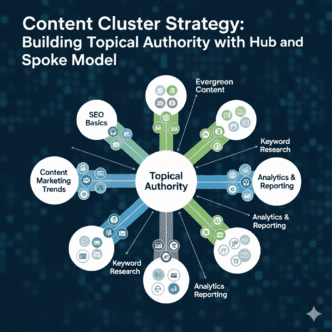
The Topic Cluster Model for Blog Content
Topic clusters organize your content architecture around comprehensive coverage of core subjects, making both users and search engines understand your expertise.
Topic cluster structure:
Pillar Content (The Hub):
- Comprehensive guide covering topic broadly (3,000-5,000 words)
- Targets competitive, high-volume keywords
- Links to all related cluster content
- Gets updated regularly with new information
- Serves as the authoritative reference
Cluster Content (The Spokes):
- Focused articles on specific subtopics (1,000-2,500 words)
- Targets long-tail and niche keywords
- Links back to pillar and to related cluster posts
- Provides depth on particular aspects
- Easier to rank than pillar (lower competition)
Benefits of cluster organization:
✓ Faster rankings – New cluster content inherits pillar authority
✓ Better internal linking – Natural, strategic connections
✓ Improved user experience – Readers find related content easily
✓ Clearer site architecture – Search engines understand topic relationships
✓ Compound traffic growth – Each piece amplifies others
Example topic cluster for food blog:
Pillar: “Complete Guide to Meal Prep for Beginners”
Cluster Content:
- “Meal Prep Containers: What to Buy and Avoid”
- “How to Meal Prep Chicken 5 Different Ways”
- “Vegetarian Meal Prep Ideas for Work Lunches”
- “Meal Prep on a Budget: Feed Yourself for $30/Week”
- “Freezer-Friendly Meal Prep Recipes”
- “Meal Prep Storage: How Long Does Food Last?”
- “Kitchen Tools Essential for Meal Prep”
- “Weekly Meal Prep Routine for Busy Professionals”
Each cluster post targets specific long-tail keywords, links to the pillar and related clusters, and collectively builds massive topical authority on “meal prep.”
Pro Tip: Don’t create the pillar first. Publish 5-7 cluster posts, get some rankings and validate topic interest, then create your comprehensive pillar that links to proven content. This approach builds momentum before investing in a massive pillar post.
What Are Content Pillars and How Do You Choose Them?
Content pillars strategy involves identifying 3-7 core topics that define your blog’s focus and expertise. These become the foundation for all your content planning.
Identifying Your Content Pillars
Your content pillars should align with three critical factors: audience needs, your expertise, and business goals.
The content pillar selection framework:
1. Audience Need (Search Demand)
- Are people actively searching for information on this topic?
- Is there sustained search volume (not just a trend)?
- Can you identify 50+ subtopic keywords?
Validation: Use keyword research tools, Google Trends, forum discussions
2. Your Expertise (Credibility)
- Do you have genuine knowledge or experience?
- Can you provide unique insights competitors can’t?
- Are you willing to become an expert through research and practice?
Validation: Honest self-assessment, existing content performance
3. Business Alignment (Monetization)
- Does this topic support your revenue goals?
- Are there affiliate, product, or service opportunities?
- Will traffic from this topic convert to your goals?
Validation: Market research, competitor monetization analysis
Example pillar selection for personal finance blog:
Potential pillars:
- Credit card strategies
- Student loan management
- Retirement planning
- Real estate investing
- Side hustle income
- Tax optimization
- Budgeting methods
Selected pillars (choosing 4): ✓ Credit card strategies – High search volume, strong affiliate commissions, expertise area ✓ Side hustle income – Growing search trend, audience interest, aligns with target demographic ✓ Budgeting methods – Fundamental topic, huge keyword opportunities, entry point for audience ✓ Tax optimization – Seasonal traffic spike, complex topic with less competition, high value
Rejected pillars: ✗ Retirement planning – Too competitive, requires credentials you don’t have ✗ Real estate investing – Outside expertise, difficult to monetize without capital
How Many Content Pillars Should You Have?
The optimal number depends on your blog’s maturity and resources:
| Blog Stage | Recommended Pillars | Rationale |
|---|---|---|
| Brand New (0-6 months) | 2-3 pillars | Focus builds authority faster |
| Growing (6-18 months) | 3-5 pillars | Proven success allows expansion |
| Established (18-36 months) | 4-7 pillars | Authority supports broader coverage |
| Authority (36+ months) | 5-10 pillars | Scale expertise across topics |
Pro Tip: Start narrow, go deep. Publishing 20 interconnected articles on one topic builds more authority than 5 articles each on four random topics. Depth before breadth wins in SEO.
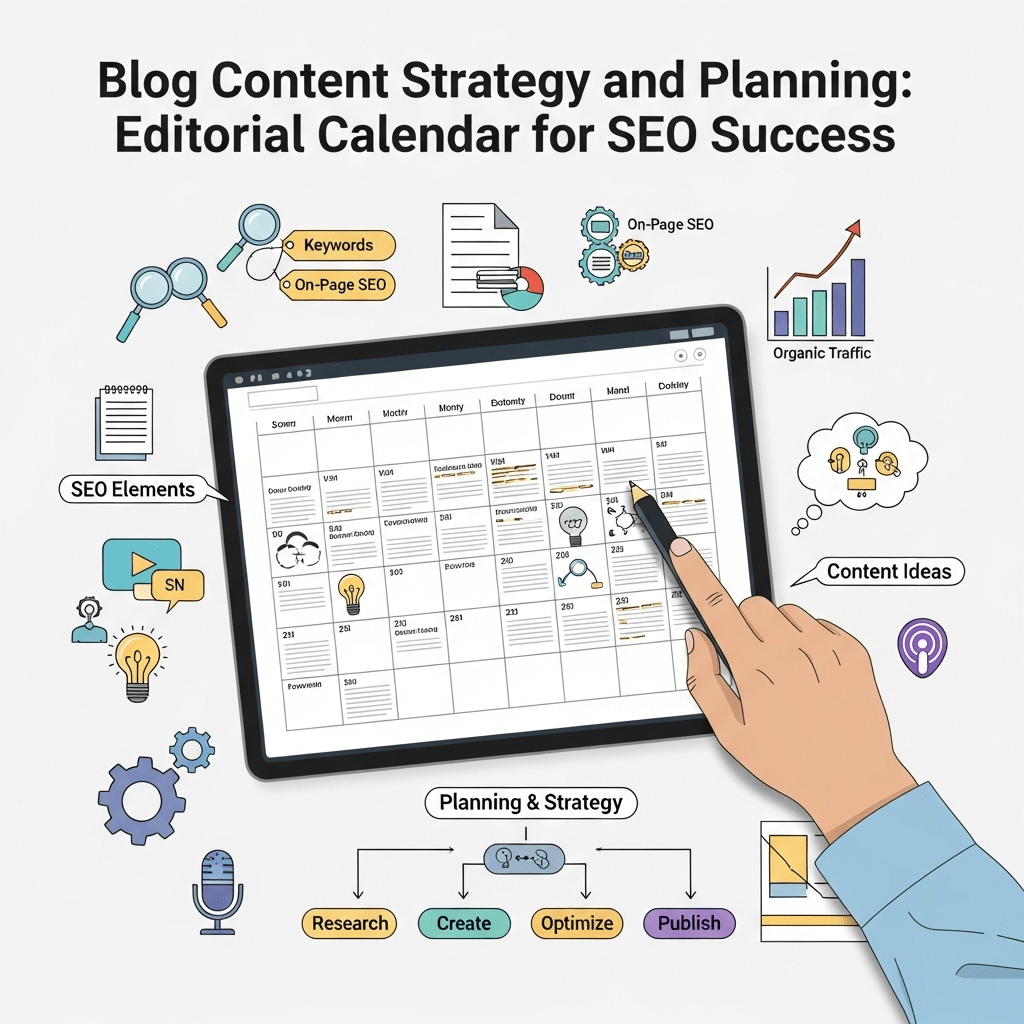
How Do You Create an Editorial Calendar That Drives SEO Results?
Editorial calendar planning transforms strategy into execution—it’s your roadmap for what to publish, when, and why.
Essential Components of an SEO-Focused Editorial Calendar
Your content calendar planning should track more than just dates and titles. Include strategic elements that guide optimization and measure success.
Required calendar fields:
Basic Information:
- Publication date
- Article title/topic
- Target keyword (primary)
- Word count target
- Author/owner
Strategic Elements:
- Content pillar assignment
- Cluster relationship (pillar vs cluster content)
- Content type (how-to, listicle, guide, comparison)
- Search intent (informational, commercial, navigational)
- Internal linking plan (which posts to link to/from)
SEO Data:
- Keyword difficulty
- Search volume
- Current ranking (if updating existing content)
- Secondary keywords to target
Performance Tracking:
- Publication date (actual)
- Indexing date
- First ranking date
- Current position
- Monthly traffic
- Conversion/engagement metrics
Tools for editorial calendar management:
| Tool | Best For | Key Features | Price |
|---|---|---|---|
| Notion | Flexible planning | Database views, collaboration, templates | Free-$10/mo |
| Airtable | Data-driven planning | Spreadsheet + database, automations | Free-$20/mo |
| Trello | Visual workflow | Kanban boards, simple interface | Free-$10/mo |
| Google Sheets | Simple tracking | Accessible, collaborative, familiar | Free |
| CoSchedule | Marketing teams | Social integration, analytics | $29+/mo |
| ContentCal | Multi-platform planning | Social + blog, team collaboration | $17+/mo |
Pro Tip: Start simple with Google Sheets or Notion. Don’t let tool complexity paralyze you. A basic spreadsheet with dates, titles, keywords, and pillar assignments is enough to 10x your strategic planning.
Planning Content Sequencing for Maximum Impact
The order you publish content matters significantly for SEO results. Strategic sequencing builds authority progressively.
The cluster-building publication sequence:
Phase 1: Foundation (Weeks 1-4)
- Publish 3-5 cluster posts targeting easiest keywords (KD 0-10)
- Focus on ultra-specific long-tail opportunities
- Get initial rankings and traffic validation
- Build basic internal linking structure
Phase 2: Expansion (Weeks 5-12)
- Publish 10-15 additional cluster posts
- Target medium difficulty keywords (KD 10-20)
- Strengthen internal linking between cluster content
- Begin seeing compound traffic effects
Phase 3: Pillar Creation (Weeks 13-16)
- Create comprehensive pillar content
- Link to all established cluster posts
- Target more competitive keywords (KD 15-30)
- Update cluster posts with links to new pillar
Phase 4: Optimization (Weeks 17-24)
- Refresh cluster content with new information
- Fill identified content gaps
- Build external backlinks to pillar
- Create additional supporting cluster content
Why this sequence works:
Building blocks first: Cluster content ranks faster (easier keywords), validating topic interest before massive pillar investment
Progressive difficulty: Start with wins to build confidence and momentum
Internal linking power: Established cluster content passes authority to new pillar
Validation: Confirm topic resonates before committing to comprehensive coverage
Real-world sequencing example:
A productivity blog launching “Time Management” pillar:
Month 1: Publish 5 cluster posts
- “Pomodoro Technique for ADHD Students” (ranked #3 in 4 weeks)
- “Time Blocking Template for Freelancers” (ranked #5 in 6 weeks)
- “Best Time Tracking Apps for Mac Users” (ranked #7 in 5 weeks)
- “Morning Routine for Night Owls” (ranked #4 in 3 weeks)
- “How to Stop Procrastinating on Important Tasks” (ranked #9 in 7 weeks)
Month 2-3: Publish 10 more cluster posts, building on validated interest
Month 4: Create pillar “Complete Time Management Guide” linking to 15 cluster posts
Result: Pillar ranked #8 for competitive term within 8 weeks (vs typical 16-24 weeks) due to supporting cluster authority
For comprehensive keyword research that informs content planning, see Blog SEO: The 2025 Blueprint.
How Do You Balance Trending Topics vs Evergreen Content?
Strategic blog content strategy requires balancing immediate opportunities (trending topics) with long-term assets (evergreen content).
The 70/30 Evergreen-to-Trending Ratio
The optimal content mix for sustainable growth:
70% Evergreen Content:
- Timeless topics with consistent search demand
- Builds lasting traffic that compounds
- Easier to plan and produce in batches
- Foundation of topical authority
30% Trending/Seasonal Content:
- Captures traffic spikes from current events
- Demonstrates freshness and relevance
- Opportunities for quick wins
- Can go viral on social media
Evergreen content characteristics:
- Solves fundamental problems that don’t change
- Maintains search volume year-round (check Google Trends)
- Requires minimal updates (annual refresh sufficient)
- Examples: “How to write a resume,” “What is SEO,” “Beginner’s guide to meditation
Trending content characteristics:
- Time-sensitive relevance (news, events, seasonal)
- Search volume spikes then declines
- Requires rapid publication to capture traffic
- Examples: “iPhone 16 review,” “2025 tax changes,” “Super Bowl predictions”
Strategic approach by blog type:
| Blog Type | Evergreen % | Trending % | Focus |
|---|---|---|---|
| Niche Authority | 80% | 20% | Deep expertise, long-term value |
| News/Industry | 40% | 60% | Timely coverage, rapid publishing |
| General Interest | 70% | 30% | Balanced approach, sustainable growth |
| Seasonal Business | 60% | 40% | Capitalize on peaks, maintain base |
Pro Tip: Publish evergreen content consistently year-round, but time publication of related evergreen pieces to coincide with trending topics. Example: When “iPhone 16” is trending, publish your evergreen “How to choose the right smartphone” guide—it captures overflow traffic from the trending topic while building lasting value.
Seasonal Content Planning for Predictable Traffic Spikes
Seasonal keywords follow predictable patterns, allowing strategic planning for maximum traffic capture.
The seasonal content calendar approach:
Step 1: Identify seasonal opportunities
Use Google Trends:
- Enter your core topics
- Set date range: “Past 5 years”
- Look for repeating annual patterns
- Note peak months
Step 2: Plan publication timing
Publish 6-8 weeks before peak:
- Google needs time to crawl and rank
- Early publication captures entire spike
- Allows time to build initial rankings
Step 3: Update annually
Refresh seasonal content before each new season:
- Update year in title/content (2024 → 2025)
- Add new information/products
- Verify all links work
- Improve based on previous year’s performance
Example seasonal calendar for finance blog:
| Topic | Peak Season | Publish By | Update Schedule |
|---|---|---|---|
| Tax deductions | Jan-April | November | Annually (November) |
| Summer side hustles | May-July | March | Annually (March) |
| Back to school budgeting | July-September | May | Annually (May) |
| Holiday shopping strategies | Oct-December | August | Annually (August) |
| New Year financial goals | December-January | October | Annually (October) |
Layered seasonal strategy:
Evergreen base: “Complete guide to tax deductions”
Annual update: “Tax Deductions for 2025: What’s New”
Trend-jacking: “How the [recent tax law change] affects your deductions”
This three-layer approach captures different search intents and maximizes seasonal traffic while building lasting authority.
What’s the Content Gap Analysis Process for Planning?
Content gap analysis reveals what your audience needs that you haven’t created yet—the foundation of strategic planning.
Identifying Content Gaps in Your Topic Clusters
Systematic gap identification ensures comprehensive topic coverage that Google rewards with higher rankings.
The 4-part gap analysis framework:
1. Keyword Coverage Gaps
Process:
- List all target keywords in your topic cluster
- Identify keywords you haven’t created content for
- Prioritize by search volume and difficulty
- Schedule content creation
Tool: Keyword research exports, competitor analysis
2. Subtopic Depth Gaps
Process:
- Analyze “People Also Ask” for your pillar topics
- Note questions you haven’t answered comprehensively
- Review competitor content outlines
- Identify aspects of the topic you haven’t covered
Tool: AlsoAsked, AnswerThePublic, manual SERP analysis
3. Content Format Gaps
Process:
- Audit existing content types (all text? no video?)
- Identify underserved formats (infographics, checklists, templates)
- Survey audience for preferred content types
- Plan diverse format creation
Tool: Content inventory, audience surveys
4. User Intent Gaps
Process:
- Categorize existing content by intent (informational, commercial, etc.)
- Identify underserved intents in your topic area
- Create content for missing intent categories
- Balance intent distribution
Tool: Search Console query analysis, intent categorization
Real-world gap analysis example:
Topic cluster: “Email Marketing for Small Business”
Existing content (12 posts):
- All how-to guides (format gap)
- All beginner-focused (expertise level gap)
- All informational intent (intent gap)
- Only covers strategy, not tools (subtopic gap)
Identified gaps:
- Tool comparisons (Mailchimp vs ConvertKit vs ActiveCampaign)
- Advanced tactics (segmentation, automation workflows)
- Email templates and swipe files (format: downloadables)
- Case studies showing results (format: narrative)
- Troubleshooting guides (problem-solving intent)
Planned content: 10 new articles addressing gaps = more comprehensive cluster = stronger topical authority
Competitive Content Gap Analysis
Your competitors have already done content planning—learn from their coverage and identify opportunities they’ve missed.
Competitor gap analysis process:
Step 1: Identify comparable competitors
- Similar authority level (within 20 DR points)
- Cover same topic areas
- Target similar audience
Step 2: Export competitor keywords (Ahrefs method)
- Enter competitor domain in Site Explorer
- Go to “Organic Keywords”
- Filter: Positions 1-20, KD within your range
- Export to spreadsheet
Step 3: Run Content Gap tool
- Ahrefs: Content Gap (enter 3-5 competitors, your domain)
- Semrush: Keyword Gap tool
- Results show keywords they rank for that you don’t
Step 4: Analyze content approaches
- What formats do their top posts use?
- How comprehensive is their coverage?
- What unique angles do they take?
- Where are their content quality gaps?
Step 5: Create superior content
- Target their ranking keywords with better content
- Fill gaps they’ve missed
- Provide unique value they don’t offer
- Use updated data and examples
Pro Tip: Don’t just copy competitor content topics. Identify where they’re weak—thin content, outdated information, poor examples—and create demonstrably better resources. Skyscraper technique still works when you genuinely improve on what exists.
How Do You Plan Content for Different Stages of the Buyer’s Journey?
Content pillars strategy must address readers at every stage—from just discovering your topic to ready-to-convert.
The Content Funnel Framework
Map content to buyer journey stages ensuring you attract, nurture, and convert readers.
Awareness Stage (Top of Funnel):
Reader mindset: “I have a problem but don’t know solutions exist”
Content types:
- Educational blog posts
- “What is” and “Why” articles
- Problem identification content
- Beginner guides
Keywords: Broad, informational
- “why am I always tired”
- “what is SEO”
- “how to start a blog”
Goal: Attract maximum traffic, introduce your expertise
Consideration Stage (Middle of Funnel):
Reader mindset: “I know solutions exist, researching options”
Content types:
- How-to guides and tutorials
- Comparison articles
- Tool/product reviews
- Best practices guides
Keywords: Specific, solution-oriented
- “how to do keyword research”
- “best email marketing tools”
- “mailchimp vs convertkit”
Goal: Demonstrate expertise, build trust
Decision Stage (Bottom of Funnel):
Reader mindset: “Ready to take action, need final validation”
Content types:
- Detailed product reviews
- Case studies with results
- Templates and resources
- Service/product pages
Keywords: Commercial intent, specific
- “mailchimp pricing review”
- “best budget SEO tool”
- “hire content strategist”
Goal: Convert readers to customers/subscribers
Example funnel content for project management software blog:
Awareness:
- “What is Project Management and Why It Matters”
- “Signs Your Team Needs Project Management Software”
- “Common Project Management Challenges”
Consideration:
- “How to Choose Project Management Software”
- “Project Management Software Features Explained”
- “Agile vs Waterfall Project Management”
Decision:
- “Asana vs Monday.com: Complete Comparison”
- “Best Project Management Software for Teams Under 10”
- “How We Increased Productivity 45% with [Tool]”
Strategic calendar balance:
60% Awareness content – Drives traffic, builds authority 30% Consideration content – Nurtures readers, demonstrates expertise 10% Decision content – Converts traffic to revenue
For keyword research strategies that inform funnel planning, explore Blog SEO: The 2025 Blueprint.
What Are the Best Practices for Content Calendar Execution?
Planning is useless without execution. These systems ensure your editorial calendar SEO strategy actually gets implemented.
Creating Sustainable Publishing Rhythms
Consistency beats intensity in content marketing. A sustainable pace you maintain beats aggressive publishing you abandon after two months.
Realistic publishing frequencies by team size:
| Team Size | Weekly Articles | Monthly Output | Focus |
|---|---|---|---|
| Solo blogger | 1-2 articles | 4-8 articles | Quality, sustainable pace |
| Small team (2-3) | 3-5 articles | 12-20 articles | Strategic coverage |
| Medium team (4-6) | 5-8 articles | 20-32 articles | Comprehensive clusters |
| Large team (7+) | 8-15 articles | 32-60 articles | Multiple pillar development |
Pro Tip: Start conservatively. Publish once weekly consistently for three months before increasing frequency. Burnout from overcommitment kills more blogs than starting slowly. Build sustainable habits first.
Batching Content Production for Efficiency
Content batching dramatically increases productivity by reducing context switching and creating production flow.
The batch production workflow:
Research Phase (Day 1-2):
- Research 10-15 topics simultaneously
- Conduct keyword research in bulk
- Analyze SERPs for all topics
- Create content briefs for each
- Organize by pillar/cluster
Writing Phase (Days 3-7):
- Write 4-6 articles in focused sessions
- Use templates for consistent structure
- Focus on drafts, not perfection
- Batch similar content types together
Optimization Phase (Days 8-9):
- Optimize all articles for SEO
- Add internal links
- Compress and add images
- Write meta descriptions
- Format for readability
Scheduling Phase (Day 10):
- Schedule publications throughout the month
- Prepare social promotion
- Set up email notifications
- Plan follow-up optimization
Benefits of batching:
✓ 3-5x productivity increase – Deep work vs constant context switching
✓ Higher content quality – Flow state produces better writing
✓ Reduced decision fatigue – Batch similar decisions together
✓ Strategic perspective – See connections between pieces
✓ Consistent publishing – Buffer protects against off weeks
Real-world batching example:
A productivity blogger batches monthly:
- Week 1: Research 12 topics, create outlines
- Week 2: Write 6 articles (2,000 words each)
- Week 3: Write 6 more articles, optimize all 12
- Week 4: Schedule next month, promote current content
Result: 12 high-quality articles published consistently weekly, produced in 15-20 focused hours monthly instead of 30+ hours of scattered effort.
Building Internal Linking Strategy into Your Calendar
Internal linking shouldn’t be an afterthought. Plan it strategically as you create your content calendar.
The systematic internal linking approach:
1. Pre-publication planning:
- Identify which existing posts new content should link to (2-5 links)
- Identify which existing posts should link TO new content
- Plan anchor text for contextual relevance
2. At publication:
- Add planned internal links to new content
- Update 3-5 older posts with links to new content
- Ensure bidirectional linking within clusters
3. Quarterly audits:
- Review internal linking structure
- Identify orphan content (no internal links)
- Add connections between related content
- Update pillar content with new cluster links
Internal linking calendar fields:
- Links to: Which posts this article will link to
- Links from: Which posts should link to this article
- Priority linking: High-value pages that need link equity
- Cluster connections: Related cluster content
Example internal linking plan:
New article: “How to Choose Email Marketing Software”
Links to (in new article):
- Pillar: “Complete Email Marketing Guide” (authority passing)
- Cluster: “Email Marketing Metrics Explained” (related topic)
- Cluster: “Building Email List from Scratch” (related context)
Links from (update these existing posts):
- Pillar: “Complete Email Marketing Guide” → add link to new article
- “Best Marketing Tools for Startups” → add in software section
- “Small Business Marketing Stack” → add in email section
This systematic approach ensures every new article strengthens your internal linking structure and topic authority.
How Do You Track and Optimize Content Performance?
Blog content strategy evolves based on performance data. Track the right metrics and adjust your calendar accordingly.
Essential Content Performance Metrics
Track these KPIs for every published article:
Traffic Metrics (Google Analytics):
- Pageviews: Total views over time
- Unique visitors: Actual readers
- Organic traffic: Visitors from search engines
- Traffic trend: Growing, stable, or declining?
Engagement Metrics:
- Average time on page: Are people actually reading?
- Bounce rate: Do they immediately leave?
- Scroll depth: How far down do they read?
- Pages per session: Do they explore more content?
SEO Metrics (Google Search Console):
- Impressions: How often you appear in search
- Clicks: Actual traffic from search
- Average position: Where you rank
- CTR: Click-through rate from search results
Conversion Metrics:
- Email signups: List building effectiveness
- Affiliate clicks: Monetization potential
- Product/service inquiries: Business value
- Social shares: Viral potential
ROI Calculation Framework:
Time Investment: Hours spent researching, writing, optimizing
Traffic Value: Organic traffic × Average session value
Conversion Value: Conversions × Average customer value
Content ROI: (Traffic Value + Conversion Value) ÷ Time Investment
Pro Tip: Create a “Top 20 Posts” dashboard tracking your highest-traffic articles. Monitor these weekly—they’re your traffic engines. When performance dips, update immediately. Protecting existing rankings is often easier than capturing new ones.
The Content Refresh and Update Strategy
Content updates often deliver faster results than creating new content. Strategic refreshing keeps your best posts performing.
When to update vs create new:
Update existing content when: ✓ Ranking positions 11-20 (close to page 1) ✓ Traffic declining for previously successful posts ✓ Information becomes outdated (stats, examples, tools) ✓ Competitors publish better content on same topic ✓ Keyword opportunity increases (rising search volume)
Create new content when: ✓ Content gap identified (topic not covered) ✓ Search intent mismatch (wrong content type for keyword) ✓ Can’t improve existing (fundamentally flawed) ✓ New subtopic or angle worth separate coverage ✓ Keyword cannibalization issue (consolidate or differentiate)
The systematic refresh process:
Step 1: Identify refresh candidates (monthly)
- Posts ranking 11-20 (opportunity)
- High-traffic posts losing rankings
- Seasonal content approaching season
- Posts over 12 months old
Step 2: Analyze why refresh is needed
- Outdated information?
- Thin coverage compared to competitors?
- Poor SEO optimization?
- Weak internal linking?
Step 3: Execute comprehensive update
- Add 500-1,000+ new words
- Update statistics and examples
- Improve title/meta for better CTR
- Add new images or visual elements
- Strengthen internal linking
- Update publication date
Step 4: Republish and promote
- Update “Last modified” date
- Request re-indexing in Search Console
- Share on social media as “updated guide”
- Build new internal links to refreshed content
Real-world refresh results:
A marketing blog refreshed 10 articles ranking positions 12-18:
- Added 800 words average per article
- Updated all statistics and screenshots
- Improved internal linking
- Refreshed title tags for better CTR
Results after 60 days:
- 7 of 10 moved to page 1 (positions 4-10)
- Average position improved from 15.3 to 7.1
- Traffic increased 340% for those articles
- Total investment: 15 hours vs 30+ hours for new content
What Are Advanced Content Planning Strategies?
Once you’ve mastered the fundamentals, these advanced tactics accelerate growth and competitive advantage.
The Content Sprint Strategy
Content sprints are intensive production periods that rapidly build topical authority in specific areas.
How content sprints work:
1. Choose a focused topic cluster (one pillar with 10-15 supporting pieces)
2. Block dedicated time (2-4 weeks of focused production)
3. Batch produce all cluster content simultaneously
4. Publish strategically over 6-8 weeks (not all at once)
5. Monitor results and adjust ongoing strategy
Sprint benefits:
✓ Rapid authority building – Comprehensive coverage signals expertise
✓ Mental focus – Deep immersion produces better insights
✓ Efficiency – Research and writing flow when focused
✓ Quick validation – Learn what works in specific niche
✓ Momentum – Visible progress motivates continued effort
Example sprint plan:
Week 1-2: Research and outline
- 1 pillar topic (3,500 words)
- 12 cluster topics (1,200-1,800 words each)
- Complete keyword research
- Analyze competitor content
- Create detailed outlines
Week 3-4: Write and optimize
- Draft all 13 articles
- Optimize for SEO
- Create visual elements
- Plan internal linking
- Schedule publications
Week 5-12: Strategic publication
- Publish 2 articles weekly
- Monitor rankings
- Build backlinks
- Promote on social
- Update internal links
Pro Tip: Run 2-3 content sprints annually, each focused on a different pillar. This concentrated effort builds comprehensive coverage faster than scattered publishing, and the focused research often reveals insights that improve all your content.
The Reverse Engineering Competitor Strategy
Competitor content mapping reveals what’s working in your niche and informs smarter planning.
The reverse engineering process:
Step 1: Identify top-performing competitor content
Use Ahrefs:
- Enter competitor domain in Site Explorer
- Go to “Top Pages” report
- Sort by organic traffic (high to low)
- Export top 20-30 articles
Step 2: Analyze content patterns
Document:
- Topics covered: What subjects drive their traffic?
- Content formats: Listicles, guides, reviews, comparisons?
- Word count: How comprehensive is their content?
- Content age: How old are their top performers?
- Update frequency: Do they refresh content?
- Keyword targets: What keywords do they rank for?
- Internal linking: How do they structure site architecture?
Step 3: Identify weaknesses
Look for:
- Outdated information you can refresh
- Thin content you can expand
- Missing subtopics you can cover
- Poor formatting you can improve
- Weak examples you can strengthen
- Technical issues you can avoid
Step 4: Create superior alternatives
Don’t copy—outperform:
- More comprehensive coverage
- Better examples and case studies
- Superior visual elements
- Current data and information
- Clearer structure and formatting
- Unique insights or perspectives
Step 5: Plan content calendar based on insights
Priority order:
- High-traffic topics you haven’t covered (quick wins)
- Topics with weak competition (easy rankings)
- Topics aligning with your expertise (authority building)
- Topics with commercial intent (monetization)
Real-world reverse engineering case:
A tech blogger analyzed top competitor (DR 45):
Discovered:
- 60% of their traffic from 10 articles
- Most articles 1,500-2,000 words
- Published 2-3 years ago, never updated
- Strong on “beginner” topics, weak on “advanced”
- Minimal visual elements, text-heavy
Strategic response:
- Created updated versions of their top 10 topics
- Extended to 2,500-3,000 words with recent examples
- Added screenshots, diagrams, and videos
- Filled “advanced” content gap they ignored
- Published consistently over 6 months
Result: Captured 30% of their traffic for those topics within 9 months by strategically outperforming their content.
For comprehensive strategies on building blog authority, revisit Blog SEO: The 2025 Blueprint.
What’s Your 90-Day Content Strategy Implementation Plan?
Turn strategy into action with this practical, step-by-step blog content planning for topical authority and traffic growth roadmap.
Month 1: Strategic Foundation
Week 1: Topic and Pillar Selection
- [ ] Choose 3-4 content pillars based on audience need, your expertise, business goals
- [ ] Validate search demand using Google Trends and keyword tools
- [ ] Document why each pillar aligns with strategy
- [ ] Identify competitors covering these topics
Week 2: Keyword Research and Gap Analysis
- [ ] Research 50-100 keywords per pillar
- [ ] Categorize by difficulty, volume, intent
- [ ] Identify competitor content gaps
- [ ] Create preliminary cluster outlines (pillar + 10-12 supporting topics per pillar)
Week 3: Editorial Calendar Setup
- [ ] Choose calendar tool (Notion, Airtable, Google Sheets)
- [ ] Set up calendar structure with required fields
- [ ] Map first 90 days of content (focus on one pillar)
- [ ] Establish publishing frequency (realistic pace)
- [ ] Plan internal linking strategy
Week 4: Systems and Templates
- [ ] Create content brief template
- [ ] Establish SEO optimization checklist
- [ ] Set up performance tracking dashboard
- [ ] Define content production workflow
- [ ] Schedule dedicated writing time
Month 2: Content Production
Week 5-6: Cluster Content Creation
- [ ] Write 4-6 cluster posts targeting easy keywords (KD 0-15)
- [ ] Optimize each for on-page SEO
- [ ] Add high-quality images
- [ ] Implement internal linking plan
- [ ] Schedule publications (2 per week)
Week 7-8: Continued Production
- [ ] Write 4-6 more cluster posts
- [ ] Focus on medium difficulty keywords (KD 15-25)
- [ ] Maintain consistent publishing schedule
- [ ] Monitor initial rankings in Search Console
- [ ] Adjust strategy based on early performance
Month 3: Optimization and Expansion
Week 9-10: Pillar Content and Analysis
- [ ] Create comprehensive pillar post (3,000-4,000 words)
- [ ] Link to all published cluster content
- [ ] Optimize for competitive pillar keyword
- [ ] Publish and promote heavily
- [ ] Analyze first 60 days of performance data
Week 11-12: Refinement and Planning
- [ ] Identify best-performing content (replicate success)
- [ ] Update underperforming content
- [ ] Fill identified content gaps
- [ ] Plan next 90 days (expand to second pillar)
- [ ] Document lessons learned and process improvements
Pro Tip: Don’t deviate from the plan for “shiny object” syndrome. Stick to your chosen pillars for full 90 days before evaluating and adjusting. Consistency and focus beat random opportunism every time.
Ongoing: Quarterly Content Strategy Review
Every 90 days, conduct comprehensive strategy review:
Performance Analysis:
- Which content pillars drive most traffic?
- Which topic clusters perform best?
- What content types engage readers most?
- Where are unexpected wins and failures?
Competitive Landscape:
- How have competitors evolved their content?
- What new opportunities have emerged?
- What threats to your rankings exist?
- What gaps can you exploit?
Strategic Adjustments:
- Should you expand successful pillars?
- Should you pivot from underperforming topics?
- Should you adjust publishing frequency?
- What new pillars should you consider?
Calendar Updates:
- Refresh seasonal content calendar
- Plan new cluster development
- Schedule content updates for top performers
- Adjust resource allocation based on ROI
Frequently Asked Questions About Blog Content Strategy
Q: How far in advance should I plan my content calendar?
Plan strategically 90 days ahead, tactically 30 days ahead. Have the big-picture topic clusters and keyword targets mapped for 3 months, but create detailed content briefs and commit to specific articles only one month out. This balance provides direction while maintaining flexibility for opportunities and adjustments based on performance.
Q: What if I don’t have time to create comprehensive content pillars?
Start smaller than you think necessary. One solid pillar with 10 supporting cluster posts beats three half-finished pillars. Focus on depth in one area first, then expand. Even solo bloggers can build one cluster in 2-3 months publishing once weekly. Sustainable progress beats ambitious failure.
Q: How do I choose between multiple promising content pillar ideas?
Use the three-factor test: (1) Strong search demand you can validate, (2) Genuine expertise or willingness to become expert, (3) Clear path to monetization. If an idea fails any factor, it’s not the right pillar. Also consider: can you create 50+ articles on this topic? If not, it might be too narrow.
Q: Should I finish one topic cluster before starting another?
Not necessarily. Publish 5-7 cluster posts to validate interest, then you can start a second cluster while continuing the first. This parallel approach prevents boredom and hedges against a pillar not performing. But don’t start more than 2-3 clusters simultaneously—spreading too thin defeats the topical authority strategy.
Q: What if my content isn’t ranking despite following this strategy?
Give it time—most content takes 8-16 weeks to rank. If you’ve waited that long: (1) Verify keyword difficulty isn’t too high for your authority, (2) Check if you’re matching search intent, (3) Analyze if competitor content is demonstrably better, (4) Build internal links from existing content, (5) Consider building backlinks if all else checks out.
Q: How do I maintain consistency when motivation drops?
Build systems that don’t require motivation. Batch content production so missed weeks don’t stop publishing. Create accountability (publishing schedule shared publicly, content partner, editor). Lower publishing frequency if needed—once weekly sustained beats three weekly for two months then zero. Consistency > intensity always.
Q: Can I change my content pillars if they’re not working?
Absolutely, but give them fair chance first—at least 6 months and 15-20 published articles. Early performance isn’t always predictive. However, if research was flawed (no actual search demand, impossible competition, doesn’t align with expertise), pivot quickly rather than investing more in a failed direction.
Q: How do I balance content planning with spontaneous topics or news?
Reserve 20-30% of your calendar for flexibility. If your plan is 3 articles weekly, schedule 2 from your strategic calendar and leave 1 slot for timely opportunities. This captures trending topics while maintaining strategic momentum. Never let reactive content completely derail your planned clusters.
Q: What’s the minimum content needed before topical authority kicks in?
You’ll start seeing authority benefits around 10-15 quality articles in a cluster, with significant effects at 20-30 articles. The more comprehensive your coverage, the stronger the authority signal. But even 5-7 interconnected articles on a topic create more authority than 5 random articles on different subjects.
Q: How often should I update my editorial calendar and strategy?
Update tactically (specific articles, dates) weekly as you produce content. Review strategically (pillar performance, cluster effectiveness, resource allocation) monthly. Conduct comprehensive strategy review and 90-day planning quarterly. Annual deep dive reassessing all pillars and competitive positioning. Too frequent adjustments create chaos; too infrequent causes drift.
Final Thoughts: From Random Posts to Strategic Authority
Here’s the fundamental truth about blog content success: strategy beats effort every single time.
You can publish five articles weekly for a year—260 articles—on random topics and build modest traffic. Or you can publish two strategic articles weekly—104 articles—organized into cohesive topic clusters and build 5-10x the traffic with half the content.
The difference isn’t writing quality, publishing frequency, or even SEO tactics. It’s strategic organization.
The three pillars of blog content strategy success:
- Focused topic selection – Choose 3-5 pillars, go deep, build recognized expertise
- Systematic cluster building – Organized, interconnected content that signals comprehensive coverage
- Consistent execution – Sustainable publishing rhythm maintained over months and years
You don’t need to implement everything in this guide immediately. Start with the foundation: choose two content pillars, research keywords for 10-12 supporting articles per pillar, create a basic editorial calendar tracking what you’ll publish when.
Your immediate next steps:
This week: Select your first content pillar using the audience need + expertise + business alignment framework.
This month: Research keywords and plan your first topic cluster (1 pillar + 10 supporting articles).
This quarter: Execute the 90-day implementation plan—produce and publish your first complete cluster.
The compound effect is real. Your first cluster builds authority. Your second cluster builds on that foundation. By your third and fourth clusters, you’re ranking faster, attracting more backlinks naturally, and Google starts trusting your new content before it’s even fully indexed.
The choice is simple:
Continue publishing random articles hoping something sticks, or invest a few hours in strategic planning that transforms scattered efforts into exponential growth.
Start planning today. Your future traffic depends on the strategy you build now.
Additional Resources:
Blog Content Strategy Dashboard
Interactive Planning Guide for Topical Authority & Traffic Growth
🎯 Strategic Insight
Blogs publishing 100 articles organized into 5 topic clusters generate 7x more organic traffic than blogs with 100 random articles. The difference isn't volume—it's strategic organization that builds topical authority, strengthens internal linking, and signals expertise to Google.
Content Pillar Selection Framework
- Active search demand
- Sustained volume (not trends)
- 50+ subtopic keywords
- Validated with tools
- Genuine knowledge
- Unique insights
- Credible experience
- Sustainable interest
- Monetization potential
- Conversion opportunity
- Revenue support
- Strategic goals
Topic Cluster Architecture Model
Comprehensive Guide
3,000-5,000 words
Specific Subtopic
Long-tail Keyword
Question-based
How-to Guide
Comparison
Tool Review
Case Study
Tutorial
Best Practices
Troubleshooting
Each cluster post links to the pillar and related clusters, creating a comprehensive topic authority network
Publishing Strategy by Blog Stage
| Blog Stage | Content Pillars | Weekly Articles | Strategy Focus | Priority |
|---|---|---|---|---|
| Brand New (0-6 mo) | 2-3 pillars | 1-2 articles | Depth over breadth | High Focus |
| Growing (6-18 mo) | 3-5 pillars | 3-5 articles | Cluster expansion | Strategic Coverage |
| Established (18-36 mo) | 4-7 pillars | 5-8 articles | Authority solidification | Scale & Optimize |
| Authority (36+ mo) | 5-10 pillars | 8-15 articles | Comprehensive coverage | Dominate Topics |
Content Mix Strategy
Evergreen Content (70% of Calendar)
Trending Content (20% of Calendar)
Seasonal Content (10% of Calendar)
90-Day Implementation Timeline
Content Strategy ROI Calculator
Content Funnel Distribution
| Funnel Stage | Content % | Content Types | Goal | Keywords |
|---|---|---|---|---|
| Awareness (Top) | 60% | Educational posts, beginner guides | Attract traffic | "What is," "Why," "How to start" |
| Consideration (Middle) | 30% | How-tos, comparisons, reviews | Build trust | "How to," "Best," "vs" |
| Decision (Bottom) | 10% | Product reviews, case studies | Convert readers | "Buy," "Pricing," "Review" |
💡 Pro Strategy
The most successful content strategies follow the "Cluster Sprint" approach: Choose one pillar, batch-produce 10-12 cluster posts over 2-3 weeks, publish strategically over 8 weeks, then analyze results before moving to the next pillar. This focused intensity builds topical authority 3x faster than publishing scattered content across multiple topics simultaneously.
Powered by SEOProJournal.com | Blog Content Strategy Insights
© 2025 SEOProJournal.com - Strategic content planning for traffic growth