

Remember the last time you Googled something and couldn’t quite find the right words? Maybe you typed “that movie with the guy who talks to the volleyball” instead of “Cast Away Tom Hanks.” Yet somehow, Google knew exactly what you meant.
That’s not search engine sorcery—that’s RankBrain algorithm working its magic behind the scenes.
If you’re a marketer, blogger, or business owner trying to crack the SEO code in 2025, understanding how RankBrain works isn’t optional anymore. It’s the difference between appearing on page one and disappearing into the digital abyss.
Let me break down this AI-powered ranking factor in plain English—no computer science degree required.
Table of Contents
ToggleWhat Is Google’s RankBrain Algorithm? (The Simple Explanation)
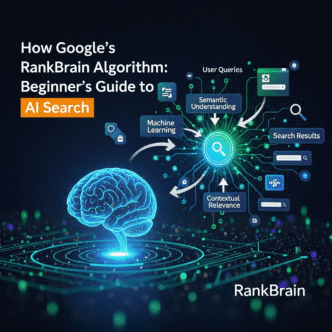
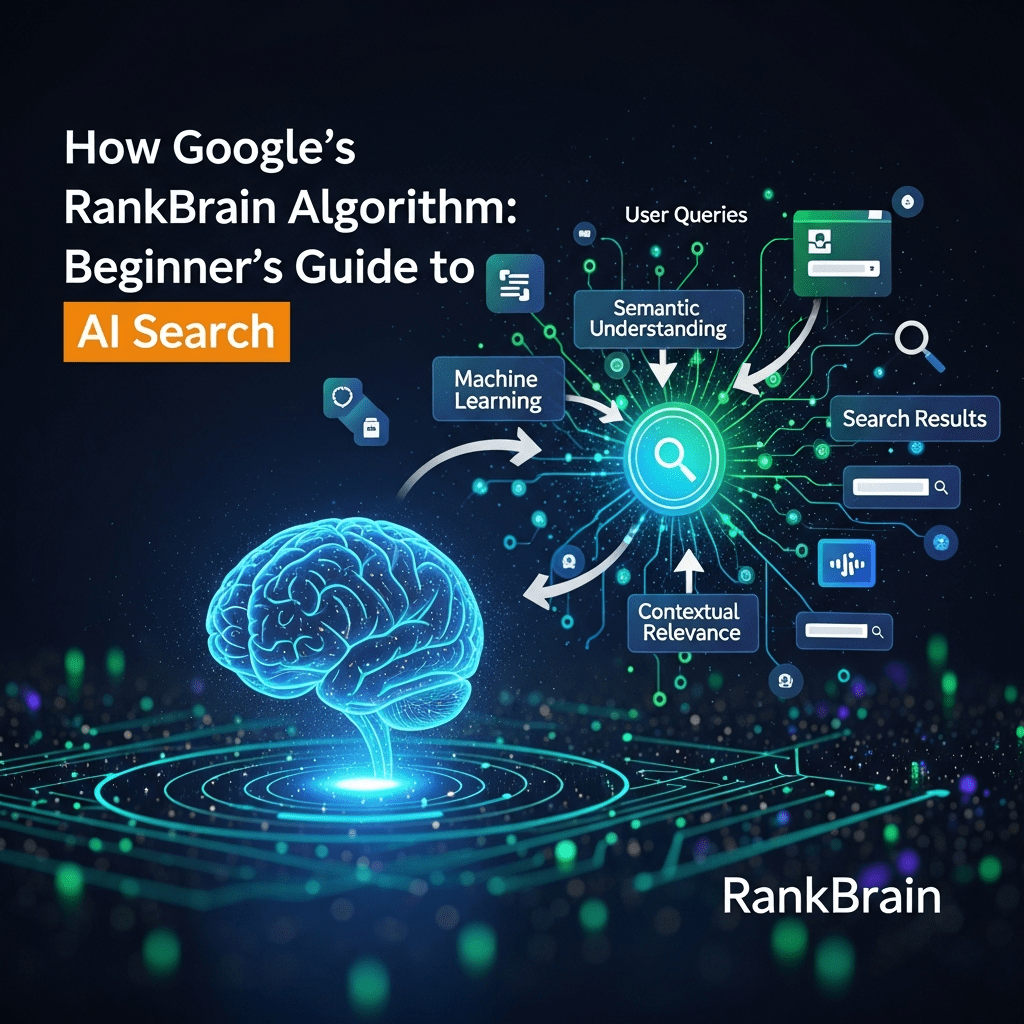
RankBrain is Google’s machine learning artificial intelligence system that helps process search results. Launched in October 2015, it was Google’s first major AI ranking signal and remains one of the most important factors determining where your content appears in search results.
Think of Google RankBrain as the algorithm’s translator and quality detective rolled into one. When someone searches, RankBrain does two critical jobs:
First: It figures out what you really mean—not just what you typed. It understands that “best budget smartphone 2025” and “cheap good phones this year” are essentially asking the same question.
Second: It measures how satisfied people are with the results. If searchers click a result, stay there, and don’t immediately bounce back to Google, RankBrain learns that result is valuable. If they click and immediately return (called “pogo-sticking”), RankBrain downgrades that result.
Here’s what makes RankBrain revolutionary: Traditional algorithms followed rigid rules programmed by engineers. RankBrain machine learning teaches itself which results work best by analyzing patterns in billions of searches.
Pro Tip: Google confirmed that RankBrain is the third most important ranking signal overall. Only content and links matter more—and RankBrain heavily influences how Google evaluates both.
The bottom line? RankBrain transformed Google from a keyword-matching machine into an intent-understanding intelligence. And if you’re still optimizing like it’s 2014, you’re playing a game that no longer exists.
How Does Google RankBrain Algorithm Work Behind the Scenes?
Let’s pull back the curtain on RankBrain explained in a way that actually makes sense.
The Query Understanding Process
When you hit search, RankBrain springs into action in milliseconds:
Step 1: Vector Embeddings (Words Become Math)
RankBrain converts your query into mathematical vectors—essentially, it translates words into numbers that represent their meaning. Similar concepts cluster together in this mathematical space.
Example: “Canine” and “dog” sit very close together. “Dog” and “sandwich” are far apart. But “hot dog” creates interesting relationships because context matters.
This is how Google’s RankBrain understands that:
- “running shoes” ≈ “jogging sneakers” ≈ “athletic footwear”
- But “running business” ≠ “running shoes”
Step 2: Intent Recognition
RankBrain analyzes the query to determine what you’re trying to accomplish:
- Informational: “how to train a puppy” (learning something)
- Navigational: “Amazon” (going to a specific site)
- Commercial: “best laptops under $1000” (researching before buying)
- Transactional: “buy iPhone 15 near me” (ready to purchase)
Understanding this distinction is crucial for RankBrain SEO because the algorithm shows dramatically different results depending on detected intent.
Step 3: Historical Pattern Analysis
Here’s where machine learning shines. RankBrain examines:
- Similar past queries (what worked before?)
- Click-through patterns (which results did people choose?)
- Engagement signals (did they find what they needed?)
- Refined searches (did they search again with different words?)
If millions of people searching “how to lose weight” clicked on comprehensive guides rather than product pages, RankBrain learns that informational content satisfies this intent—even if a product page is technically more “optimized.”
The Ranking Adjustment Mechanism
Once RankBrain understands your query, it adjusts rankings dynamically:
User Behavior Signals RankBrain Watches:
- Click-through rate (CTR): Are people clicking your result?
- Dwell time: How long do they stay on your page?
- Pogo-sticking rate: Do they immediately return to Google?
- Bounce rate: Do they leave without engaging?
- Task completion: Did they find what they needed?
A 2023 study by Backlinko analyzing 11.8 million search results found that pages with above-average dwell time ranked 3.2 positions higher on average than those with similar on-page optimization but lower dwell time.
Real Example: The “Weather” Query Evolution
Pre-RankBrain: Search “weather” → Show pages with the word “weather”
Post-RankBrain: Search “weather” → RankBrain understands:
- You want current conditions, not the definition of weather
- Location matters (your city, not global weather)
- Visual format works better (forecast widget, not articles)
- Hourly breakdown is more useful than weekly
Result: Google shows a weather widget for your location, not the Wikipedia page about meteorology.
This is how RankBrain works—connecting queries to actual user needs through continuous learning from behavior patterns.
RankBrain vs Traditional Google Algorithm: What Actually Changed?
Understanding RankBrain vs traditional Google algorithm helps clarify why old SEO tactics stopped working.
The Old Way: Rules-Based Ranking
Before RankBrain (pre-2015), Google’s algorithm was primarily rules-based:
Traditional Algorithm Logic:
- IF page contains keyword 10+ times → Boost ranking
- IF page has .edu backlinks → Trust signal
- IF title tag includes exact keyword → Relevance signal
- IF user is in New York + page mentions New York → Local relevance
Limitations:
- Couldn’t handle new or ambiguous queries well
- Easy to manipulate with keyword stuffing
- Missed synonyms and related concepts
- Struggled with conversational or complex queries
The New Way: Machine Learning Ranking
RankBrain Machine Learning changed the game completely:
RankBrain Logic:
- LEARN which results satisfy users for similar queries
- UNDERSTAND semantic relationships between concepts
- ADAPT rankings based on actual user behavior
- PREDICT which results will work for new, never-seen queries
Advantages:
- Handles 15% of queries Google has never seen before
- Understands context, not just keywords
- Adapts automatically without engineer intervention
- Rewards genuine user satisfaction over optimization tricks
Side-by-Side Comparison Table
| Aspect | Traditional Algorithm | RankBrain Algorithm |
|---|---|---|
| Query Processing | Exact keyword matching | Semantic meaning & intent |
| New Queries | Struggled with novelty | Handles 15% daily never-seen queries |
| Learning Method | Manual engineer updates | Self-learning from user data |
| Ranking Basis | Predetermined factors | User satisfaction signals |
| Synonym Understanding | Limited | Advanced semantic comprehension |
| Manipulation Risk | High (keyword stuffing worked) | Low (user behavior can’t be faked) |
| Optimization Target | Search engine crawlers | Human users (measured by AI) |
| Update Frequency | Major updates quarterly | Continuously learning |
| Conversational Queries | Poor performance | Excellent understanding |
The Critical Shift:
Old SEO: “Make Google think my page is relevant” New SEO: “Make my page so good that users’ behavior proves its relevance to RankBrain
This is why content quality and user experience became dramatically more important after 2015. RankBrain ranking factor essentially deputized users as quality raters—when people love your content, RankBrain sees those engagement signals and rewards you.
What Is RankBrain and How It Affects SEO Strategy?
Now for the million-dollar question: what is RankBrain and how it affects SEO for your actual content and rankings?
The Three Core Impacts on SEO
1. Intent Matching Became Paramount
RankBrain doesn’t just match keywords—it matches intent. This means:
Before RankBrain:
- Blog post about “best coffee makers” → Ranked for “best coffee makers
- Product page for coffee makers → Also tried to rank for “best coffee makers”
After RankBrain:
- Query “best coffee makers” → Intent is comparison/research → Blog reviews rank
- Query “buy Keurig K-Elite” → Intent is purchase → Product pages rank
- Same topic, different intent, completely different results
SEO Implication: Stop trying to rank one page for every variation. Create different content for different intents within your topic cluster.
2. User Experience Signals Control Rankings
RankBrain SEO impact is clearest in engagement metrics. Your page can have perfect technical optimization, but if users hate it, you won’t rank.
Engagement Signals RankBrain Prioritizes:
- Dwell time (Time on page): Longer indicates value
- Scroll depth: Did they read or just glance?
- Click-through rate: Compelling title/snippet
- Return-to-SERP rate: Did they need to try another result?
- Navigation patterns: Did they explore other pages?
Real-World Example:
A SaaS company had technically perfect pages ranking on page 2-3. They made these changes focused on user engagement:
- Added interactive calculators (increased dwell time by 2.3 minutes)
- Rewrote intros to answer the main question immediately (reduced pogo-sticking by 41%)
- Embedded helpful videos (increased scroll depth by 67%)
- Added clear next-step CTAs (improved navigation to related content)
Result: Within 3 months, 12 pages moved to page 1, and organic traffic increased 127%. Technical optimization hadn’t changed—user satisfaction had.
3. Content Depth and Comprehensiveness Matter More
RankBrain machine learning recognizes that truly valuable content thoroughly addresses a topic from multiple angles.
Shallow Content (300 words): “The best coffee maker is the Keurig. It’s fast and convenient. Buy it here.”
Comprehensive Content (2000+ words):
- What makes a great coffee maker (brewing methods, features)
- Comparison of different types (drip, pod, espresso)
- Specific recommendations for different users (families, singles, offices)
- Setup and maintenance tips
- Common problems and solutions
- Expert opinions from baristas
- Real user experiences
RankBrain sees that users spend longer on comprehensive content, explore it more deeply, and rarely return to search for more information. This signals “query satisfied”—exactly what RankBrain algorithm rewards.
The Indirect Ranking Factors RankBrain Influences
While RankBrain itself is a ranking signal, it also affects how Google evaluates other factors:
Backlink Quality: RankBrain helps identify which backlinks come from genuinely authoritative sources versus manipulative link schemes. Sites that satisfy users in their niche are treated as authorities.
Content Freshness: RankBrain determines when freshness matters. For “tax law changes,” recent content is crucial. For “how photosynthesis works,” older comprehensive content might outrank newer surface-level pieces.
Mobile Experience: RankBrain weighs mobile satisfaction heavily because over 60% of searches happen on mobile devices. A poor mobile experience shows up clearly in engagement metrics.
Page Speed: Technical speed matters, but RankBrain evaluates the perceived speed through user behavior. A 3-second load time where users stay engaged beats a 1-second load time where users immediately bounce.
For more on how machine learning integrates with broader SEO strategy, check out how AI and ML transform search optimization.
Optimizing for RankBrain Algorithm: Practical Strategies That Work
Enough theory—here’s optimizing for RankBrain algorithm in actionable steps you can implement today.
Strategy #1: Master Search Intent Alignment
The Process:
- Research your target keyword’s intent by Googling it yourself
- Analyze the top 10 results (type of content, format, depth)
- Identify the dominant intent (what do most results satisfy?)
- Match that format and depth (or exceed it)
Example:
Search: “how to start a podcast”
Top 10 Analysis:
- 8 are comprehensive step-by-step guides (2000+ words)
- 2 are tool comparison posts
- All include equipment recommendations
- Most have embedded videos
- None are product pages trying to sell services
Your Strategy: Create a comprehensive guide with steps, equipment recommendations, and video tutorials. Don’t create a “hire us for podcast production” landing page—RankBrain has learned users want educational content here.
Strategy #2: Optimize for Click-Through Rate (CTR)
Your title and meta description are your first chance to signal relevance to RankBrain. Higher CTR tells RankBrain your result matches what people want.
Title Optimization for RankBrain:
❌ Bad: “Coffee Makers – Our Company” ✅ Good: “7 Best Coffee Makers for Every Budget (2025 Expert Review)”
Why it works:
- Specific number (creates curiosity)
- Benefit-focused (“every budget” addresses a concern)
- Timeliness (2025 indicates fresh content)
- Authority signal (“expert review”)
Meta Description Tactics:
- Answer the implied question directly in the first sentence
- Include emotional hooks (“stop wasting money on…”)
- Add specificity (actual numbers, dates, unique details)
- Create curiosity gaps (promise valuable information)
Pro Tip: Use Google Search Console to identify pages with high impressions but low CTR. These are optimization opportunities—you’re ranking, but your snippet isn’t compelling enough to earn clicks and prove relevance to RankBrain.
Strategy #3: Maximize Dwell Time Through Content Structure
You need people to actually read your content. Here’s how to engineer for engagement:
The Hook Formula (First 100 Words):
- Acknowledge the pain point (show you understand their problem)
- Promise a specific solution (what they’ll learn)
- Establish credibility (why they should trust you)
- Preview the value (tease what’s coming)
Example:
❌ Weak Opening: “In this article, we’ll discuss coffee makers. Coffee makers are important kitchen appliances that brew coffee. There are many types of coffee makers available.”
✅ Strong Opening: “Tired of expensive coffee shop runs draining your wallet? I tested 23 coffee makers over six months to find which ones deliver café-quality coffee at home without breaking the bank. Here’s exactly what I discovered—including the $47 machine that rivals my local Starbucks.”
The Engagement Boosters:
- Short paragraphs: 2-3 sentences max (mobile-friendly scanning)
- Subheadings every 200-300 words (creates natural stopping points)
- Bullet points for lists (easier to digest than dense paragraphs)
- Bold key takeaways (helps scanners extract value)
- Embedded visuals (images, charts, videos break up text)
- Internal links to related content (keeps users on your site)
- Interactive elements (calculators, quizzes, comparison tools)
A 2024 Content Marketing Institute study found that pages with 8+ formatting elements (headers, lists, images, bold text, etc.) had 63% longer average dwell time than text-heavy pages.
Strategy #4: Write Naturally for Humans, Not Algorithms
This seems obvious, but you’d be shocked how many people still write for “SEO” instead of readers.
RankBrain Natural Language Indicators:
✅ Do This:
- Use conversational tone (“let’s explore…” instead of “this article will examine…”)
- Vary sentence structure (mix short punchy sentences with longer explanations)
- Include natural keyword variations (“running shoes” / “jogging sneakers” / “athletic footwear”)
- Answer common questions directly
- Add personal experiences and examples
❌ Avoid This:
- Awkward keyword placement: “When looking for best coffee makers, best coffee makers are important because best coffee makers brew coffee.”
- Robotic formal language: “One must consider the parameters of coffee maker selection.”
- Keyword density obsession (RankBrain sees through this)
- Topic avoidance (staying so “on keyword” you miss related valuable information)
The Conversational Test: Read your content aloud. Does it sound like how you’d explain this to a friend at lunch? If not, it’s too “SEO-ified” and RankBrain will detect the unnatural patterns.
Strategy #5: Build Topic Clusters, Not Individual Pages
RankBrain algorithm explained in one sentence: It rewards topical authority, not just page optimization.
The Topic Cluster Model:
- Pillar Content: Comprehensive guide on a broad topic (like this article)
- Cluster Content: Detailed pages on subtopics
- Internal Linking: Connect everything strategically
Example Structure:
Pillar Page: “Complete Guide to Coffee Brewing at Home”
Cluster Pages:
- “How French Press Coffee Makers Work”
- “Espresso Machine Buying Guide”
- “Cold Brew vs. Hot Brew: Which Is Healthier?”
- “Coffee Bean Selection Guide”
- “Troubleshooting Common Brewing Problems”
Each cluster page links to the pillar, and the pillar links to all clusters. This signals comprehensive topical coverage to RankBrain.
Why It Works:
RankBrain recognizes when a site thoroughly covers a subject. Users spend more time exploring related content, send stronger engagement signals, and rarely return to Google—the trifecta of RankBrain SEO success.
For implementing this strategy, see building topic authority with machine learning optimization.
Strategy #6: Leverage Semantic Keywords Naturally
Google RankBrain understands semantic relationships—words related to your topic even if they’re not your exact keyword.
Practical Application:
Main keyword: “digital marketing”
Semantic terms RankBrain expects:
- SEO, PPC, social media marketing
- Content strategy, email campaigns
- Analytics, conversion optimization
- Target audience, customer journey
- ROI, engagement metrics
You don’t need to force these in—cover the topic comprehensively and they appear naturally. RankBrain recognizes comprehensive semantic coverage as a quality signal.
Tool Tip: Use tools like Surfer SEO or Clearscope to identify semantic terms RankBrain associates with your topic by analyzing top-ranking content.
Common RankBrain Myths Debunked (What Doesn’t Actually Work)
Let’s clear up dangerous misconceptions about how does Google RankBrain algorithm work:
Myth #1: “RankBrain is just about AI-written content”
Reality: RankBrain is Google’s system for evaluating content, not creating it. Whether your content is AI-written or human-written doesn’t matter—what matters is user satisfaction.
AI content that’s thin, generic, or unhelpful will fail. Human-written content that thoroughly satisfies users will succeed. RankBrain measures outcomes, not authorship.
Myth #2: “Keyword research is dead because of RankBrain”
Wrong: Keyword research is more important than ever, but how you use it changed. RankBrain understands synonyms and related terms, but you still need to know what people search for to match their intent.
Old approach: Target exact keywords RankBrain approach: Target topics and intent, use semantic variations naturally
Myth #3: “If users spend 5 minutes on my page, I’m guaranteed to rank”
Not quite: Dwell time is one signal among hundreds. RankBrain evaluates it in context:
- 5 minutes on a 200-word page → Something’s weird (suspiciously long for short content)
- 5 minutes on a 3000-word comprehensive guide → Good signal
- 5 minutes but 90% bounce rate → Users aren’t finding next steps
RankBrain looks at patterns across many signals, not individual metrics in isolation.
Myth #4: “RankBrain replaced all other ranking factors”
False: RankBrain ranking factor is one of the top three signals, but traditional factors still matter:
- Quality backlinks (still crucial)
- Technical SEO (site speed, mobile-friendliness)
- Content quality (E-E-A-T)
- On-page optimization (structure, headers, keywords)
RankBrain works with these factors, measuring how well your optimized content actually satisfies users.
Myth #5: “I can trick RankBrain with engagement hacks”
Dangerous thinking: Some marketers try:
- Paying for fake engagement signals
- Using click farms to manipulate CTR
- Creating “engaging” clickbait that doesn’t deliver value
RankBrain is sophisticated enough to detect anomalies. Fake engagement patterns look different from real ones. Sites caught manipulating signals get penalized hard.
The only sustainable approach: Create genuinely valuable content that naturally earns engagement.
Real-World RankBrain Success Stories (What Actually Worked)
Theory is great, but let’s look at actual RankBrain SEO implementations that drove results:
Case Study #1: The Home Improvement Blog
The Situation: A DIY home improvement blog ranked on pages 2-3 for target keywords. Technical SEO was solid, but organic traffic plateaued.
RankBrain-Focused Changes:
Intent refinement: Analyzed top results and realized users wanted step-by-step tutorials, not tool reviews
Content restructuring: Rewrote top 15 articles with:
- Clearer step-by-step instructions
- Embedded video walkthroughs
- Tools/materials lists at the top
- Common mistake warnings
- FAQ sections answering related questions
Engagement optimization:
- Added “time to complete” estimates in intros
- Included difficulty ratings
- Created printable PDF guides (increased dwell time)
- Built interactive cost calculators
Results (6 months):
- Average position improved from 14.2 to 4.8
- Organic traffic increased 214%
- Average dwell time went from 1:47 to 4:23
- 9 articles reached position 1-3
- Featured snippet wins: 0 → 7
Why It Worked: They stopped optimizing for Google and started optimizing for the humans whose behavior RankBrain measures.
Case Study #2: The E-commerce Product Category Pages
The Situation: An online outdoor gear retailer struggled with category pages (like “hiking boots”) ranking behind pure content sites.
Challenge: Product pages often have less text and lower dwell time than blog articles—seeming disadvantages for RankBrain.
RankBrain-Optimized Approach:
Enhanced product descriptions:
- Added comprehensive buying guides above products
- Included comparison tables
- Added expert staff recommendations
- Created filtering tools for user specifications
User experience improvements:
- One-click comparison feature (increased engagement)
- Customer photo galleries (visual social proof)
- Video reviews from real customers
- “Complete the look” suggestions (internal navigation)
Intent matching:
- Created separate pages for “best hiking boots” (comparison/informational) vs. “buy hiking boots” (transactional)
- Matched content format to search intent
Results (4 months):
- Category pages moved from avg. position 18 to position 6
- Conversion rate increased 34% (better-qualified traffic)
- Time on site increased 142%
- Return visitor rate improved 28%
Key Insight: Even transactional pages can optimize for RankBrain by enhancing user experience and providing genuine value beyond just “buy now.
Case Study #3: The Local Service Business
The Situation: A plumbing company in a competitive metro area couldn’t break into top 3 for valuable local terms.
RankBrain Local SEO Tactics:
Created comprehensive service pages answering specific questions:
- “How much does pipe replacement cost?” (with pricing transparency)
- “Emergency vs. scheduled service: when to call”
- “Common plumbing problems and DIY fixes” (built trust by offering free help)
Optimized for conversational queries:
- Targeted long-tail voice searches (“plumber near me open now”)
- FAQ sections using natural question phrasing
- Location-specific content (neighborhood guides)
Enhanced engagement signals:
- Added booking widget on every page (reduced bounce rate)
- Included before/after project photos
- Embedded customer testimonial videos
- Created problem diagnosis tool (interactive, increased dwell time)
Results (5 months):
- “Emergency plumber [city]” moved from position 11 to position 2
- Call volume from organic search increased 187%
- Average time on site: 47 seconds → 3:12
- Featured in 4 local pack results
- Review volume increased (prompted by better UX)
Lesson: Local businesses can leverage RankBrain by deeply understanding local search intent and creating genuinely helpful content—not just NAP and review optimization.
How RankBrain Integrates With Other Google AI Systems
RankBrain doesn’t work in isolation. Understanding how it fits into Google’s broader AI ecosystem helps you optimize holistically.
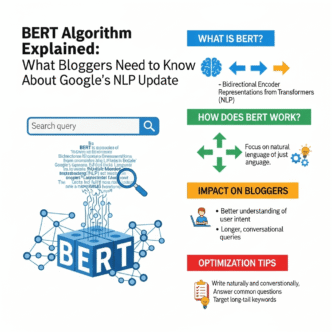
RankBrain + BERT: The Power Couple
RankBrain (2015): Understands query intent and measures satisfaction BERT (2019): Understands natural language and conversational context
How they work together:
When you search “how to get a prescription filled for someone else”:
- BERT processes the language: Understands “for someone else” is the critical context, distinguishing this from getting your own prescription
- RankBrain matches intent: Determines this is an informational query needing pharmacy policy information
- Combined evaluation: Shows results that both understand the language nuance AND satisfy the informational intent
SEO Implication: Write naturally (BERT) while thoroughly addressing user needs (RankBrain). They’re complementary, not competing systems.
RankBrain + Neural Matching
Neural Matching connects concepts beyond keywords. RankBrain then evaluates which of those conceptually-matched pages best satisfy users.
Example flow:
Query: “why does my cat yowl at night”
- Neural Matching: Connects to concepts like “feline vocalization,” “nocturnal behavior,” “cat anxiety,” “veterinary advice”
- RankBrain: Among pages about these concepts, ranks based on user satisfaction signals
Optimization: Cover topics comprehensively (helps Neural Matching find you) + create engaging, valuable content (helps RankBrain rank you).
RankBrain + MUM: The Future
MUM (Multitask Unified Model) represents the next evolution—understanding across languages, formats, and complex multi-step queries.
RankBrain still measures user satisfaction, but MUM expands what “satisfying” means:
- Cross-format understanding: Your text content + images + videos analyzed together
- Multi-step queries: “I’ve hiked Mt. Fuji, what training should I do differently for Mt. Kilimanjaro?”
- Knowledge transfer: Applying expertise from one domain to related queries
Future-proofing: Create content ecosystems (text + visual + video) around topics. RankBrain will measure satisfaction across the entire user journey, not just individual pages.
For deeper integration understanding, explore how multiple AI systems shape modern SEO.
RankBrain and Voice Search: What Marketers Need to Know
Voice search fundamentally changed how Google RankBrain evaluates queries—because people speak differently than they type.
The Voice Search Differences
Typed Query: “best Italian restaurant Denver” Voice Query: “What’s the best Italian restaurant with outdoor seating near downtown Denver that’s open now?”
Voice queries are:
- Longer (3-5 words vs. 7-15 words)
- More conversational (natural language phrasing)
- Question-based (who, what, where, when, why, how)
- Context-dependent (location, time, device matter more)
- Action-oriented (often ready to act immediately)
How RankBrain Handles Voice Differently
Enhanced Context Awareness:
RankBrain considers:
- Time of query (“restaurant” at 7pm ≠ “restaurant” at 9am)
- Previous searches (sequence matters in voice)
- Device type (mobile + voice = likely en route)
- Location signals (GPS, IP, search history)
Conversational Intent Matching:
Voice query: “Is it going to rain tomorrow?”
RankBrain understands:
- You want a weather forecast
- “Tomorrow” is relative to current date
- Local weather matters (not global)
- Simple yes/no answer preferred
- Follow-up questions likely (“should I bring an umbrella?”)
Optimizing Content for Voice + RankBrain
Strategy #1: Target Question-Based Keywords
Structure content around natural questions:
- “How do I fix a leaky faucet?”
- “What causes engine check light?”
- “When should I prune rose bushes?”
- “Where can I get an oil change near me?”
Strategy #2: Provide Concise Direct Answers
Voice assistants pull featured snippet content. Structure answers:
- Direct answer first (40-60 words)
- Detailed explanation follows
- Clear formatting (lists, steps, tables)
Example:
❌ Poor structure: “Leaky faucets are a common household problem affecting many homes. There are various causes and solutions. Let’s explore the fascinating history of plumbing first…”
✅ Voice-optimized structure: “A leaky faucet is usually caused by a worn-out washer, O-ring, or valve seat. To fix it, turn off the water supply, disassemble the faucet handle, replace the damaged part, and reassemble. Here’s the step-by-step process…”
Strategy #3: Optimize for Conversational Long-Tail Keywords
Voice searches are naturally long-tail. RankBrain rewards content matching this conversational style:
- what’s the difference between SEO and SEM for small businesses”
- “how long does it take to see results from content marketing”
- “what should I look for when hiring a web designer”
Pro Tip: Use tools like AnswerThePublic and AlsoAsked to discover question-based queries in your niche. These map perfectly to how RankBrain processes voice searches.
According to a 2024 BrightEdge study, 58% of consumers use voice search to find local business information. If you’re not optimizing for voice + RankBrain, you’re missing over half your potential local audience.
Tools and Resources for Monitoring RankBrain Performance
You can’t directly measure “RankBrain score,” but you can track the signals it evaluates.
Essential Tracking Tools
Google Search Console (Free):
- Performance report: Track CTR, average position, impressions
- Pages report: Identify underperforming content
- Queries report: See what people actually search to find you
Key metrics for RankBrain optimization:
- Declining CTR despite steady position = Title/description needs work
- High impressions, low clicks = Relevance mismatch RankBrain may downrank
- Position improvements correlating with engagement changes = RankBrain responding
Google Analytics 4 (Free):
- Engagement metrics: Average engagement time (replaces bounce rate)
- Scroll depth: Custom event tracking
- User flow: See how people navigate your site
- Landing page performance: Identify high-exit pages needing optimization
RankBrain-relevant metrics:
- Pages with <30 second engagement time = RankBrain likely devalues
- High scroll depth + low engagement = Content isn’t satisfying despite being read
- Strong internal link clicks = Good engagement signal
Third-Party Tools:
Semrush Position Tracking:
- Monitor ranking fluctuations
- Correlate changes with content updates
- Track SERP features (featured snippets RankBrain often rewards)
Ahrefs Site Audit:
- Identify technical issues affecting user experience
- Find slow-loading pages (impact dwell time)
- Discover broken internal links (hurt engagement flow)
Hotjar / Microsoft Clarity (Free):
- Heatmaps: See where users actually click and read
- Session recordings: Watch real user behavior
- Feedback widgets: Ask users what they need
These tools reveal what RankBrain sees: If users aren’t engaging with specific sections, RankBrain’s machine learning will detect the pattern and adjust your rankings accordingly.
Metrics That Matter for RankBrain Optimization
Track these engagement signals monthly:
- Organic CTR by position: Should be above average for your position
- Average time on page: Compare to content length (e.g., 3000 words should get 4+ minutes)
- Pages per session from organic: Higher = better engagement
- Return visitor rate: Indicates you satisfied previous needs
- Scroll depth: 75%+ scroll indicates value delivery
- Conversion rate from organic: Ultimate satisfaction measure
- Featured snippet wins: RankBrain trusts your content format
The Warning Signs:
- Rankings dropping despite no technical issues = User satisfaction problem
- Steady traffic but declining conversions = Intent mismatch
- High bounce rate on informational content = Not answering the question
- Good CTR but terrible dwell time = Title promises aren’t delivered
Future of RankBrain: What’s Coming Next?
RankBrain algorithm explained for 2025 and beyond—how to prepare for what’s next.
Predicted Developments
1. Deeper Personalization:
RankBrain will increasingly personalize results based on:
- Individual search history patterns
- Content consumption preferences
- Device and context signals
- Real-time behavioral indicators
Preparation: Build comprehensive topic clusters so you rank for various angles of topics, capturing personalized variations.
2. Multimodal Evaluation:
RankBrain will assess satisfaction across content types simultaneously:
- Did the article + video + tool complete the user journey?
- Does the visual content support the text claims?
- Are multimedia elements genuinely helpful or distracting?
Strategy: Create cohesive content experiences, not just pages with random images thrown in.
3. Predictive Intent Understanding:
RankBrain will better anticipate what users will search for next:
- Query sequence patterns
- Seasonal intent shifts
- Emerging topic trends
- Individual user journeys
Opportunity: Map complete user journeys and create content for each stage, interconnected through strategic internal linking.
4. AI-Generated Content Detection Sophistication:
As AI writing tools proliferate, RankBrain’s ability to detect thin AI content will improve:
- Pattern recognition in structure
- Authenticity signals (original examples, personal experience)
- Expertise indicators (depth beyond surface-level information)
Future-proofing: Use AI for efficiency, but add irreplaceable human expertise, original research, and unique perspectives.
How to Stay Ahead
The Evergreen Principles:
Regardless of how RankBrain machine learning evolves:
- Genuine value always wins: Create content that would rank well even if all algorithms disappeared tomorrow
- User signals can’t be faked long-term: Sustainable success requires actual user satisfaction
- Intent understanding beats keyword targeting: Focus on solving problems, not ranking for words
- Comprehensive coverage beats thin optimization: Depth and breadth signal expertise to machine learning
- Natural language beats SEO-speak: Write for humans; RankBrain measures their response
The Continuous Improvement Loop:
- Create comprehensive, intent-matched content
- Monitor user behavior signals (Search Console, Analytics)
- Identify underperforming elements (low dwell time, high exits)
- Test improvements (content restructuring, added value)
- Measure RankBrain’s response (ranking changes, engagement shifts)
- Repeat
For staying current with AI search developments, bookmark the latest in machine learning SEO updates.
Common Questions About Optimizing for RankBrain
Let’s address the questions that keep popping up in SEO communities:
Q: Does RankBrain completely replace PageRank?
No. Google RankBrain is one ranking signal among hundreds. PageRank (link analysis) still matters. Think of it this way: Links help you get into the ranking conversation. RankBrain determines where you rank based on how well you satisfy users compared to competitors.
Q: Can you see RankBrain scores or metrics?
No direct “RankBrain score” exists. You track the signals it evaluates: CTR, dwell time, bounce rate, pogo-sticking, and engagement patterns. Improvement in these metrics indicates RankBrain is responding positively.
Q: Does RankBrain affect local SEO?
Absolutely. RankBrain SEO impact is massive in local search. It evaluates:
- Click-through to Google Business Profiles
- Direction requests and calls
- User satisfaction with local results
- Review sentiment (beyond just star ratings)
Local businesses must optimize for user satisfaction just like national brands.
Q: How long does it take to see RankBrain improvements?
Variable, but typically:
- CTR improvements: Can impact rankings within days
- Content restructuring: 2-4 weeks for RankBrain to gather sufficient user signals
- Major topic cluster builds: 2-3 months for full topical authority recognition
RankBrain needs enough data to establish patterns. Quick traffic spikes don’t prove anything—sustained engagement improvements do.
Q: Does RankBrain work differently on mobile vs. desktop?
Yes and no. The core RankBrain machine learning is the same, but:
- Mobile queries are often more conversational/voice-based
- Intent differs (mobile = often ready to act immediately)
- Engagement patterns differ (shorter dwell times can be normal on mobile)
- Local context matters more on mobile
Optimize for both, but recognize mobile intent often requires different content formats (quick answers, click-to-call, directions).
Q: Can RankBrain hurt my rankings if I make my content “too engaging”?
No—this is a misunderstanding. Some worry that adding engaging elements (videos, tools, calculators) increases dwell time so much that users don’t click through to convert, hurting business goals.
Reality: RankBrain rewards satisfaction, whether that’s a quick answer or a long engagement. If users get what they need and don’t return to search for more info, that signals success. Your business model should adapt to serve satisfied users, not trick dissatisfied users into converting.
Final Thoughts: Winning With RankBrain in 2025 and Beyond
Here’s the beautiful truth about how does Google RankBrain algorithm work: It rewards exactly what you should be doing anyway—creating genuinely valuable content for real humans.
The days of “gaming” Google are over. RankBrain deputized billions of users as quality raters. When someone loves your content, stays engaged, explores more of your site, and doesn’t need to return to Google, that’s the ultimate SEO signal.
The RankBrain Success Formula:
- Understand intent better than your competitors (research what actually satisfies searchers)
- Match format to intent (comprehensive guides, quick answers, comparisons—whatever the query needs)
- Deliver exceptional value (be the best answer, not just an answer)
- Optimize for engagement (structure, readability, interactivity)
- Build topical authority (comprehensive coverage through content clusters)
- Monitor and improve (use data to identify what’s working)
- Stay natural (write for humans, measure with RankBrain’s lens)
The marketers struggling with RankBrain algorithm are those still trying to manipulate rankings rather than earn them. The ones thriving are those who recognized that RankBrain fundamentally aligned Google’s incentives with users’ needs.
Create content so good that when RankBrain measures how users interact with it, those signals scream “this is exactly what people need.” Do that consistently, and rankings become a natural byproduct rather than a constant struggle.
The algorithm isn’t your enemy—it’s your quality control system. When RankBrain ranks you highly, it’s because you earned it by genuinely helping people. And honestly, that’s how it should be.
Ready to dive deeper into machine learning SEO? Explore advanced AI optimization strategies or learn about how RankBrain integrates with BERT and MUM.
Frequently Asked Questions (FAQs)
Q: What exactly is Google’s RankBrain algorithm? RankBrain is Google’s machine learning artificial intelligence system that interprets search queries and measures user satisfaction with results. Launched in 2015, it’s Google’s third most important ranking factor and helps process all searches, especially ambiguous or never-before-seen queries.
Q: How is RankBrain different from Google’s main algorithm? Google’s algorithm is a combination of many systems. RankBrain is one component that specifically handles query interpretation and user satisfaction measurement using machine learning. Traditional algorithmic components follow engineer-programmed rules, while RankBrain teaches itself from user behavior patterns.
Q: Can you trick or manipulate RankBrain? No, not sustainably. RankBrain evaluates genuine user behavior—click-through rates, dwell time, bounce rates, and engagement patterns. These signals reflect actual user satisfaction, which can’t be faked long-term. Attempts to manipulate engagement metrics (click farms, fake traffic) are detectable and result in penalties.
Q: What’s the most important factor for RankBrain optimization? User intent alignment. If your content perfectly matches what searchers actually need (not just what they typed), users will engage positively. RankBrain measures this engagement and rewards intent-matched content above technically-optimized-but-unsatisfying alternatives.
Q: Does RankBrain affect every search query? Yes. Google confirmed RankBrain is involved in every query, though its influence varies. For clear, common queries (“Facebook login”), traditional signals dominate. For ambiguous, conversational, or new queries (15% of daily searches), RankBrain’s impact is more significant.
Q: How long does it take for RankBrain to recognize content improvements? Typically 2-4 weeks for meaningful user signal accumulation. RankBrain needs enough data to establish patterns. Quick traffic spikes don’t prove quality—sustained engagement improvements over weeks signal genuine value, prompting ranking adjustments.
Q: Is keyword research still important with RankBrain? Absolutely. While RankBrain understands synonyms and semantic relationships, you still need keyword research to understand what people search for and the intent behind those searches. The difference: Use keywords naturally within comprehensive content rather than forcing exact-match repetition.
Q: Does RankBrain penalize AI-generated content? RankBrain doesn’t penalize content based on authorship method. It penalizes content that fails to satisfy users, whether AI-written or human-written. Thin, generic AI content typically performs poorly because it lacks depth and genuine expertise that satisfies users—which RankBrain’s engagement metrics detect.
Q: What’s the relationship between RankBrain and BERT? They’re complementary systems. BERT (2019) understands natural language and conversational context within queries. RankBrain (2015) interprets overall query intent and measures user satisfaction with results. BERT helps Google understand what you’re asking; RankBrain helps ensure you get satisfying answers.
Author: Laura G. | AI & SEO Specialist
Translating complex algorithms into strategies that actually work for real businesses.
🧠 Google RankBrain Algorithm Explained
Interactive Guide to Understanding AI-Powered Search Rankings
🎯 What is RankBrain?
RankBrain is Google's machine learning AI system that interprets search queries and measures user satisfaction with results. Launched in October 2015, it's the 3rd most important ranking factor after content and links.
🔍 Query Understanding
Translates search queries into mathematical vectors to understand true intent, handling synonyms, context, and conversational language beyond exact keyword matching.
📊 Pattern Learning
Analyzes billions of searches to learn which results satisfy users. Self-improves without manual programming by identifying successful patterns.
👥 User Satisfaction
Measures engagement signals like click-through rate, dwell time, and pogo-sticking to determine if results truly answer user questions.
🎓 Continuous Learning
Unlike traditional algorithms, RankBrain constantly evolves by learning from user behavior, adapting to language changes and new query types.
RankBrain Processing Flow
The RankBrain Process
% represents RankBrain's impact on each query type
Query Input & Preprocessing
User enters search query. RankBrain receives preprocessed query including location, device, language, and search history context.
Semantic Understanding
Converts words to vectors in multi-dimensional space. Similar concepts cluster together, enabling synonym understanding and contextual meaning.
Historical Pattern Analysis
Compares current query to billions of past searches. Identifies which types of results satisfied similar queries based on user engagement data.
Dynamic Ranking
Adjusts standard algorithmic rankings based on predicted user satisfaction. Pages with strong engagement signals for similar queries rank higher.
Continuous Learning
Monitors how users interact with results. Successful patterns strengthen, unsuccessful ones weaken. The algorithm improves without manual updates.
User Signals RankBrain Measures
Data based on Backlinko study of 11.8M search results (2023)
✅ Positive Signals
Long dwell time: 4+ minutes on comprehensive content
Multiple page views: Exploring related content
Social shares: Content worth sharing
Direct traffic: Returning visitors
⚠️ Negative Signals
Immediate bounce: <30 seconds on page
Back to SERP: Trying another result
Query refinement: Searching again differently
No engagement: No clicks, scrolls, or interaction
Traditional Algorithm vs RankBrain
| Aspect | Before RankBrain (Pre-2015) | With RankBrain (2015+) |
|---|---|---|
| Query Processing | Exact keyword matching | Semantic meaning & intent understanding |
| Unknown Queries | Poor results for new searches | Handles 15% never-seen queries excellently |
| Learning Method | Manual engineer programming | Self-learning from user behavior |
| Synonym Understanding | Limited synonym database | Contextual semantic comprehension |
| Ranking Basis | 200+ predetermined factors | User satisfaction + traditional factors |
| Update Frequency | Major updates quarterly | Continuous real-time learning |
| Voice Search | Struggled with conversational queries | Excellent natural language processing |
| Manipulation Risk | High (keyword stuffing worked) | Low (user behavior can't be faked) |
| Content Quality | Measured by on-page signals | Measured by user engagement |
| Optimization Target | Search engine crawlers | Human users (monitored by AI) |
How to Optimize for RankBrain
🎯 Match Search Intent
Analyze top 10 results for your keyword. Identify the dominant format (guides, comparisons, products) and match or exceed it. RankBrain has learned what satisfies users for each query type.
✍️ Write Naturally
Use conversational language that sounds human. Avoid keyword stuffing and robotic phrasing. RankBrain detects unnatural patterns and rewards content that reads smoothly.
📈 Maximize Engagement
Hook readers in first 100 words. Use short paragraphs, subheadings every 200-300 words, images, videos, and interactive elements to keep users engaged longer.
🔗 Build Topic Clusters
Create comprehensive pillar content with related cluster pages. Internal linking shows topical authority. RankBrain rewards sites that thoroughly cover subjects.
🖱️ Optimize CTR
Write compelling titles with numbers, benefits, and current year. Create meta descriptions that answer the query's implied question. Higher CTR signals relevance to RankBrain.
💬 Use Semantic Keywords
Cover topics comprehensively using related terms naturally. RankBrain understands semantic relationships. Comprehensive coverage beats keyword density every time.
❓ Answer Questions
Structure content with question-based H2/H3 headers. Provide direct answers in first 40-60 words. Perfect for featured snippets and voice search optimization.
📱 Mobile Experience
Ensure fast loading, easy navigation, and readable text on mobile. 60%+ of searches are mobile. Poor mobile UX shows in engagement metrics RankBrain tracks.
💡 Pro Optimization Strategy
The Hybrid Approach: Use ML-friendly structure (clear H tags, strategic keywords, internal links) + Fill with DL-optimized content (natural language, comprehensive coverage, unique insights) + Add technical excellence (fast loading, mobile-optimized) + Optimize for engagement (compelling intro, scannable format, clear CTAs). This targets both traditional factors AND user satisfaction signals RankBrain measures.
RankBrain Impact Statistics
Average results from case studies implementing RankBrain optimization strategies
Source: aiseojournal.net - Your Guide to AI-Powered SEO
Data compiled from Google Research, Backlinko Studies, Search Engine Journal & Industry Case Studies (2023-2024)
Interactive visualization for educational purposes • Updated regularly with latest search algorithm insights