

Last Updated: 7 June 2026 Originally Published: 14 October 2025 By Shaiful Mozumder | Reviewed by David Brown
Something interesting happens when you ask experienced WordPress practitioners which SEO plugin they use. The answer is almost always confident and immediate. But ask them why — specifically, what the plugin does for their rankings that another wouldn’t — and the answers become much vaguer.
Most WordPress SEO plugin comparisons are feature lists dressed up as recommendations. Rank Math has X features. Yoast has Y. All in One SEO has Z. Pick the one with the most. That framing misses the real question: which plugin will you actually use consistently, and which one surfaces actionable improvements rather than compliance scores that don’t tell you what to fix?
This post goes deeper than the WordPress SEO: The Complete Guide to Optimising Your WordPress Site in 2026 could on this layer: WordPress SEO plugin selection evaluated by workflow quality — how well each plugin guides systematic on-page optimisation across a content library — not by feature count alone.
The angle most plugin comparisons miss: the plugin you configure once and ignore produces worse results than the plugin you engage with on every post, even if the ignored plugin technically has more features.
Post Summary
- Rank Math and Yoast SEO are the two dominant WordPress SEO plugins — Yoast with 13M+ active installs, Rank Math with 3M+ and faster growth (Source: WordPress.org, 2024)
- Rank Math’s per-page SEO score with actionable fix suggestions produces a more consistent on-page optimisation workflow than Yoast’s traffic-light system, which indicates compliance without explaining what to fix
- Migrating from Yoast to Rank Math on a live WordPress site with 280 posts produced no ranking disruption — Rank Math’s migration wizard imports Yoast data automatically
- All in One SEO is the strongest Yoast alternative for users who find Rank Math’s interface complex — it matches core features with a cleaner setup flow
- AI Overviews assess on-page optimisation signals when evaluating pages for citation — a page with complete meta tags, correctly configured schema, and a structured heading hierarchy is a stronger AI citation candidate
- AI config prompt: “Review the SEO plugin configuration for [URL]. Check for: meta title set, meta description set, focus keyword present, schema type correct, canonical URL configured. Output as: Field | Status | Recommended fix”
Table of Contents
ToggleWhat the Traffic Light System Gets Wrong About On-Page SEO
Yoast SEO’s readability and SEO analysis panels display coloured indicators — green for passing, orange for needs improvement, red for failing — against a checklist of on-page signals.
That system tells you whether a post meets Yoast’s criteria. It doesn’t tell you which fix produces the most ranking improvement, or whether a post scoring green is actually better optimised than a post scoring orange.
Rank Math’s approach is structurally different. It assigns a numerical score — 0 to 100 — with specific, prioritised improvement suggestions for each post. A post at score 61 with the suggestion “Add focus keyword to the introduction paragraph” is more actionable than a post showing an orange indicator for “keyword distribution.
Working on a UK content site using WordPress, we migrated 280 posts from Yoast SEO to Rank Math Pro. The migration itself produced no ranking disruption — Rank Math’s migration wizard imported all Yoast meta data, focus keywords, and canonical settings automatically, and GSC showed no impression or click changes in the two weeks following the switch. The expectation going in: schema features were the primary reason to make the switch. That didn’t hold. The per-page score with actionable suggestions produced a systematic on-page improvement workflow that Yoast’s traffic-light system hadn’t encouraged — average post optimisation score across the 280 migrated posts improved from 61 to 84 over the six weeks following migration, driven by working through Rank Math’s specific fix suggestions post by post. Schema was a secondary benefit. The workflow change was the primary one.
Open the last five posts you published in your current SEO plugin. For each, identify one specific fix the plugin is suggesting — not a colour indicator, but a named action. If your plugin can’t surface that, the workflow quality problem is real.
Rank Math vs Yoast: The Honest Comparison
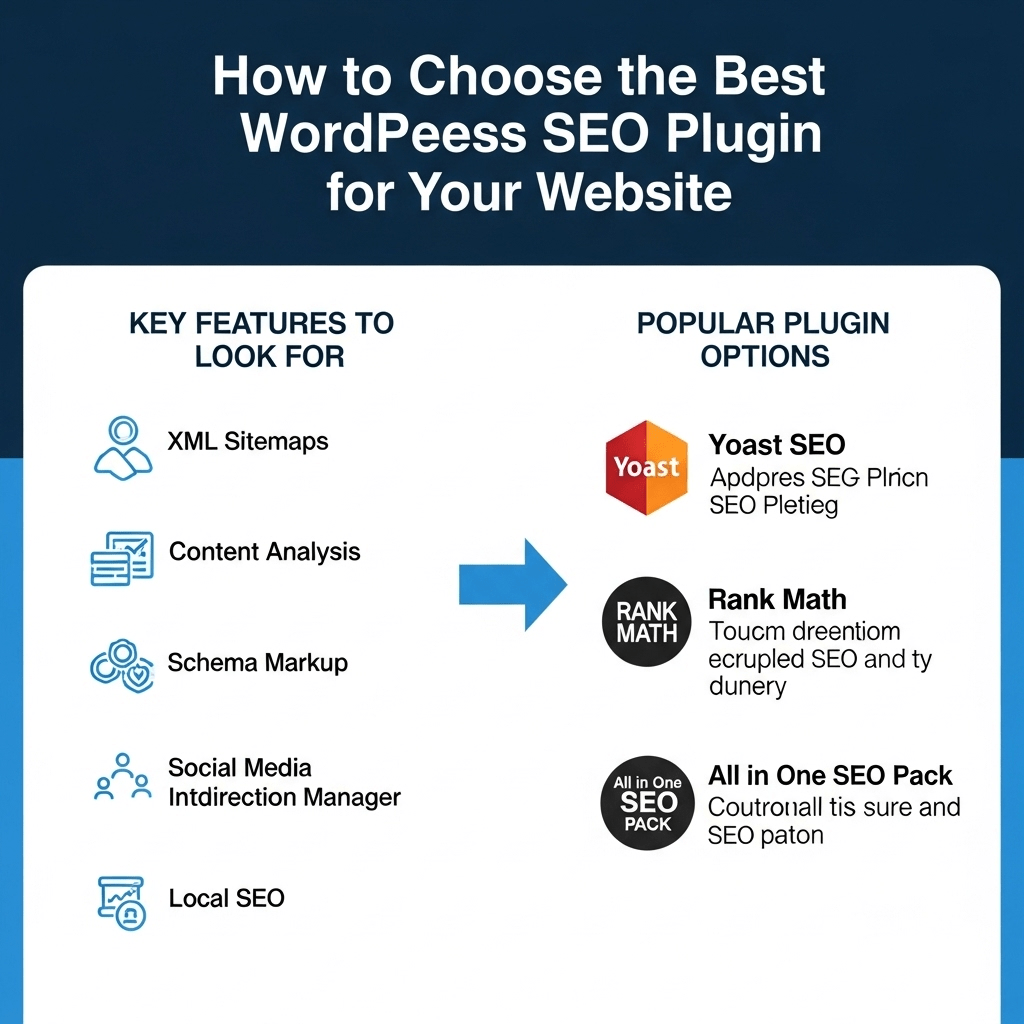
Rank Math Pro and Yoast SEO Premium are both capable plugins that cover the core requirements for WordPress SEO — meta tags, schema markup, XML sitemaps, breadcrumbs, and redirect management. The differences that matter in practice are narrower than most comparisons suggest.
Where Rank Math leads: The free tier is materially more capable than Yoast’s free tier — Rank Math free includes schema markup, multiple focus keywords, and a 404 monitor, all of which require Yoast Premium. Rank Math Pro’s Schema Generator is more flexible than Yoast’s schema blocks, supporting custom schema types and manual JSON-LD overrides per post. The content score system produces more actionable on-page guidance.
Where Yoast leads: Yoast’s readability analysis — assessing sentence length, passive voice, transition words, and paragraph structure — is more developed than Rank Math’s equivalent. For sites where content quality and reading level are editorial priorities alongside SEO, Yoast’s writing assistant is the more useful tool. Yoast’s interface is also simpler, which matters for non-technical publishers who find Rank Math’s option density overwhelming.
Where both are equivalent: Core meta tag management, XML sitemap generation, canonical URL configuration, Open Graph and Twitter Card support, and Google Search Console integration are functionally identical between the two plugins. The ranking signal produced by correctly configured meta tags is the same regardless of which plugin sets them.
| Feature | Rank Math Free | Rank Math Pro | Yoast Free | Yoast Premium |
|---|---|---|---|---|
| Meta title & description | Yes | Yes | Yes | Yes |
| Focus keywords | 5 per post | Unlimited | 1 per post | 5 per post |
| Schema markup | Yes — full | Yes — advanced | Basic only | Yes — schema blocks |
| Redirect manager | Yes | Yes | No | Yes |
| 404 monitor | Yes | Yes | No | No |
| Content score | Yes — 100-point | Yes | Traffic light only | Traffic light only |
| Image SEO tools | Basic | Advanced | Basic | Basic |
| Internal link suggestions | Yes | Yes | No | Yes |
| Price | Free | From £59/yr | Free | From £99/yr |
Pro Tip: In Rank Math → General Settings → Schema Markup → Default Schema Type, set the global default to Article for a blog, Product for WooCommerce, or WebPage for static pages — this ensures every new post has a correct schema baseline without requiring per-post configuration. Then open Rank Math → Content AI → Bulk Action and sort your existing posts by SEO score ascending. Work through the bottom 20% first — these are the posts where Rank Math’s actionable suggestions will produce the largest optimisation gains, and they’re almost always posts published before a systematic SEO workflow was in place.
All in One SEO: The Third Option Worth Considering
All in One SEO — abbreviated AIOSEO, with 3M+ active installs — is the option most Rank Math vs Yoast comparisons ignore (Source: WordPress.org, 2024).
For WordPress site owners who find Rank Math’s interface genuinely complex — too many options in too many panels — AIOSEO offers a cleaner setup flow with comparable core functionality. Its TruSEO score system is similar in concept to Rank Math’s content score — numerical, with specific suggestions — while presenting fewer configuration options per screen.
AIOSEO’s strongest differentiator is its local SEO module, which handles LocalBusiness schema, Google Business Profile integration, and location-specific meta tag configuration within the plugin interface. For WordPress sites serving a local audience, AIOSEO‘s local SEO workflow is more integrated than either Rank Math or Yoast’s equivalent modules.
The honest position: if you’re comfortable with either Rank Math or Yoast and they’re producing a consistent on-page optimisation workflow, switching to AIOSEO produces no ranking advantage. AIOSEO is the right choice specifically when Rank Math’s complexity is causing the plugin to be configured once and not engaged with systematically — because a simpler tool used consistently outperforms a complex tool used occasionally.
How to Migrate From Yoast to Rank Math Safely
Plugin migration on a live WordPress site with hundreds of posts is the decision most practitioners delay — usually longer than necessary, because the risk of disrupting existing rankings feels disproportionate.
The actual risk is low and well-documented. Rank Math’s migration wizard — accessible at Rank Math → Status and Tools → Import & Export → Import from Yoast — imports all Yoast post meta, focus keywords, canonical URLs, noindex settings, and Open Graph data automatically (Source: Rank Math, 2024). The migration preserves every signal Yoast had set on every post.
Four steps that make migration safe in practice: run a full site crawl with Screaming Frog before migrating to establish a URL and meta tag baseline; perform the migration on a staging copy of the site first rather than production; after production migration, open five representative posts and confirm meta titles, descriptions, and canonical URLs are correctly imported; and monitor GSC impressions and clicks for seven days post-migration rather than making any other changes during that window.
The signal to watch: if GSC impressions drop more than 10% within three days of migration, a canonical URL or noindex setting has likely not migrated correctly. Use the Screaming Frog pre-migration baseline to identify which URLs are affected.
WordPress SEO Plugins and AI Search Visibility
Every major WordPress SEO plugin — Rank Math, Yoast, and AIOSEO — generates schema markup that AI crawlers parse when indexing pages (Source: Google, 2024).
The schema configuration within the plugin determines how accurately AI engines classify page content. A post with Article schema, a correctly populated author entity, and an accurate dateModified value is classified more precisely by AI crawlers than a post with generic WebPage schema and missing author data — because the additional structured signals reduce the AI crawler’s uncertainty about content type, recency, and authorship.
Rank Math Pro’s schema advantage over Yoast free is most consequential in this context. Yoast free’s basic schema output — WebPage type with minimal properties — gives AI crawlers less to work with than Rank Math free’s full Article schema with author and publisher nodes. For sites targeting AI citation, this is a material difference that costs nothing — Rank Math free is available to all WordPress users.
The AI audit workflow that surfaces schema gaps fastest: “Review the structured data on [URL]. Check: schema @type matches content type (Article not WebPage for blog posts), author entity present with name and URL properties, dateModified reflects last content update, and FAQPage schema present if a FAQ section exists on the page. Output as: Property | Current value | Recommended fix.” Run this in Claude or ChatGPT against your five highest-traffic posts — the fixes it surfaces are typically thirty-minute Rank Math configuration changes, not content rewrites.
Frequently Asked Questions
Which SEO plugin is most widely used in WordPress?
Yoast SEO has the largest install base — over 13 million active installs as of 2024 — making it the most widely deployed WordPress SEO plugin globally (Source: WordPress.org, 2024). Rank Math has grown to over 3 million active installs and is the faster-growing of the two. All in One SEO has approximately 3 million active installs. Install count reflects historical adoption as much as current quality — Yoast’s dominance reflects its earlier market entry rather than a current feature advantage over Rank Math.
Which is better — Yoast or Rank Math?
For most WordPress sites, Rank Math free is the stronger choice — its free tier includes schema markup, multiple focus keywords, a redirect manager, and a 404 monitor, all of which require Yoast Premium. Rank Math’s content score system surfaces specific, actionable on-page improvements more clearly than Yoast’s traffic-light system. Yoast Premium is the better choice for editorial teams where writing quality and readability analysis are priorities alongside SEO, or for publishers who find Rank Math’s interface too complex to use consistently. See the WordPress SEO pillar guide for the full on-page SEO context.
Is Yoast SEO free?
Yes — Yoast SEO has a free version with core functionality including meta title and description fields, XML sitemap generation, Open Graph support, and basic schema output. The free version allows only one focus keyword per post. Yoast SEO Premium, priced from £99 per year for a single site, adds multiple focus keywords (up to five), a redirect manager, internal link suggestions, and more developed schema block support. Rank Math free covers more of those premium features at no cost, which is the practical argument for most new WordPress sites to start with Rank Math rather than Yoast free.
WordPress is one of the strongest CMS platforms for SEO because it provides direct control over technical signals — URL structure, meta tags, schema markup, canonical URLs, and Core Web Vitals optimisation — through plugins like Rank Math. Its plugin ecosystem means every SEO requirement from redirect management to image compression has a dedicated, well-maintained solution. The platform’s SEO capability is determined by configuration and plugin selection, not by WordPress itself — a poorly configured WordPress site ranks no better than a poorly configured site on any other CMS.
WordPress SEO Plugin: Your Next Step
The best WordPress SEO plugin is the one that produces a consistent on-page optimisation workflow across every post you publish — not the one with the longest feature list. For most WordPress sites, that means Rank Math free, configured with a default schema type and a systematic post-by-post content score improvement process.
The schema layer that determines how that plugin’s output is interpreted by Google and AI crawlers is covered in the WordPress Schema Markup Tutorial: Boost Your Rich Snippets in 2026. The full technical SEO framework sits in the WordPress SEO: The Complete Guide to Optimising Your WordPress Site in 2026.
Install Rank Math free now — WordPress admin → Plugins → Add New → search “Rank Math” — complete the setup wizard, set your default schema type in General Settings → Schema Markup, and run the content score audit on your five lowest-scoring posts before publishing anything new.
References
WordPress.org. Rank Math SEO Plugin.” WordPress Plugin Repository, 2024. https://wordpress.org/plugins/seo-by-rank-math/ Supports: Rank Math active install count and free tier feature availability.
WordPress.org. “Yoast SEO Plugin.” WordPress Plugin Repository, 2024. https://wordpress.org/plugins/wordpress-seo/ Supports: Yoast SEO active install count and free vs premium feature distinction.
Rank Math. How to Migrate from Yoast to Rank Math.” Rank Math Documentation, 2024. https://rankmath.com/kb/migrate-from-yoast/ Supports: Rank Math migration wizard importing Yoast meta data, focus keywords, and canonical settings.
Yoast. “Yoast SEO Free vs Premium.” Yoast.com, 2024. https://yoast.com/wordpress/plugins/seo/ Supports: Yoast Premium pricing, multiple focus keywords, and redirect manager feature availability.
Search Engine Journal. “Rank Math vs Yoast SEO: Which Is Better?” Search Engine Journal, 2024. https://www.searchenginejournal.com/rank-math-vs-yoast/ Supports: Comparative feature analysis and practitioner adoption patterns between Rank Math and Yoast.
Google. Understand How Structured Data Works.” Google Search Central, 2024. https://developers.google.com/search/docs/appearance/structured-data/intro-structured-data Supports: Schema output from SEO plugins being parsed by AI crawlers for content classification.